Pires gifts sublimely poetic Schubert and Debussy in Cleveland recital

Maria João Pires, piano
Mandel Concert Hall
Severance Music Center
Cleveland, OH
May 3, 2023

Schubert: Piano Sonata No. 13 in A major, D664
Debussy: Suite bergamasque, L75
Schubert: Piano Sonata No. 21 in B-flat major, D960

Encore:
Debussy: No.1 from Deux arabesques, L66

The Cleveland Orchestra’s inaugural recital series came to a divinely inspired close Wednesday evening, with Maria João Pires showing herself a true poet of the piano in works of Schubert and Debussy. Pires officially retired from the concert stage in 2017 – I sorely regretted missing her Cleveland appearance the previous year upon hearing that news – making the present recital all the more wonderful of an occasion, evidenced by the sizable and enthusiastic audience.

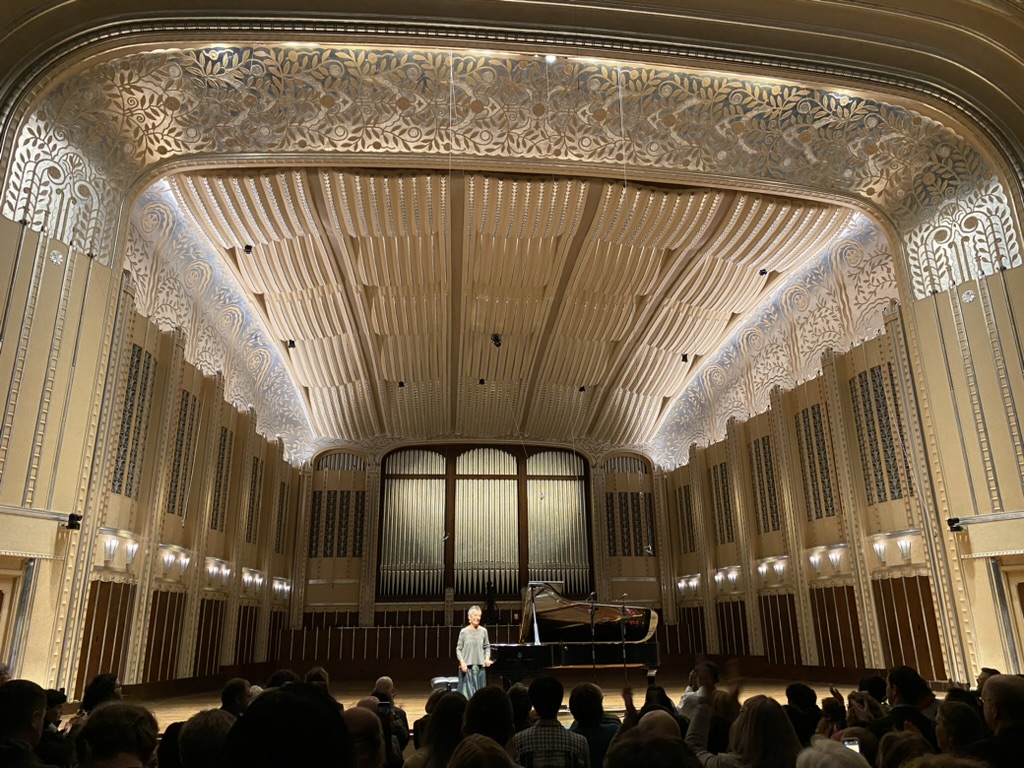
Maria João Pires at Severance Hall

Pires began with Schubert’s Piano Sonata No. 13 – middle period Schubert, still very much in the classical style insofar as it predated the sublime late sonatas, but not without the composer’s individual hallmark markedly apparent. Matters opened gracious and gentle, but colored by passing shadows in quintessentially Schubertian effect. Pires deftly shaped the phrasing and melody; stormier material in the development offered contrast but only for a fleeting moment before we returned to sunny A major. The Andante showed the pianist’s detailed voicing and nuance; the finale’s sprightly fingerwork playfully contrasted.

Debussy’s Suite bergamasque followed. The opening Prélude was given confident, self-assured beginnings, but not without an essential lyricism. Distinctive dance rhythms marked the Menuet, burgeoning to more impassioned material. Though Clair de lune is often presented as a standalone piece, it was quite intriguing hearing it in the context of the whole suite. Familiar a work as it may be, Pires’ lovely reading was anything but routine. A foil to its shimmering stasis came in the Passepied, an essay of near perpetual motion.

Schubert’s transcendent final piano sonata occupied the second half, and it truly was nothing short of a spiritual experience. An elegantly sculpted melodic line wondrously took shape, punctuated by profound silence after its first statement. Pires was particularly remarkable in the way she varied bringing out the inner voices, never content to merely repeat a phrase in the same way twice, and her keen attention to balance and coloring kept one in rapturous attention. The pianist took the long repeat of the first movement exposition, offering its dramatic first ending that would otherwise have been jettisoned. Distant keys were explored in the development before the movement’s serene close.

Pires opted for minimal pedaling in the Andante sostenuto, allowing the dotted rhythmic gesture to be strikingly detached, seemingly making the sumptuously gorgeous central section resound all the more lyrical. The scintillating scherzo was wonderfully charming, and the myriad guises in which the main theme recurred in the closing rondo oscillated between the insouciant and the dramatic.

For a lone encore, Pires returned to Debussy in the first of the Arabesques, an account limpid and lithe. Certainly a high bar on which to conclude the recital series, and kudos to the Cleveland Orchestra administration for such a successful endeavor. Next season’s offerings provide much to look forward to with solo recitals or chamber collaborations from Marc-André Hamelin, Emanuel Ax, Yefim Bronfman, and Evgeny Kissin.

Calidore Quartet contrasts elegant Mozart and Beethoven with contemporary works at Chamber Music Columbus

Calidore String Quartet
Southern Theatre
Columbus, OH
April 1, 2023

Hu: A Wondrous Hope
Mozart: String Quartet No. 17 in B-flat major, K458, The Hunt
Watkins: String Quartet No. 2
Beethoven: String Quartet No. 16 in F major, Op. 135

Encore:
Beethoven: Cavatina from String Quartet No. 13 in B-flat major, Op. 130

The penultimate installment of Chamber Music Columbus’ 75th season saw the Calidore Quartet – the third consecutive string quartet to be featured this season – in a program anchored by major works of Mozart and Beethoven. The next “puzzle piece” of Ching-Chu Hu’s ubiquitous fanfare opened the evening, titled A Wondrous Hope. Filled with yearning, it explored different combinations within the quartet in harmonious balance, and shifts in texture added variety and color.

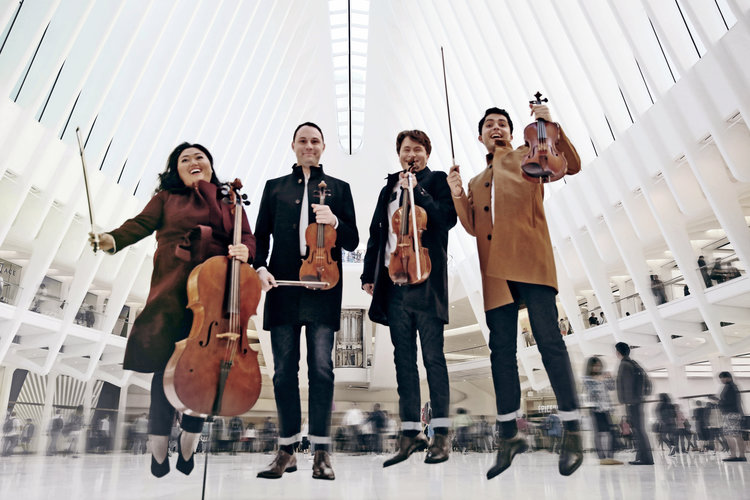
Calidore Quartet, photo credit calidorestringquartet.com

Mozart’s Hunt quartet was given with deft balance and clear articulation – particularly evident during the delicate ornaments – and a genteel approach at times tempered by a more rustic feel, fitting per its epithet. The minuet danced with light touch and an elegant melody from first violinist Jeffrey Myers (who also appeared on this stage during the season-opening performance with VIVO). The Adagio was a songful, flowing statement, and like the best of Mozart’s finales, the closing movement was of high spirits and exuberance.

Though unable to make it to Columbus in person, Huw Watkins conveyed to the trio his “thoughts of joy and optimism” when writing his String Quartet No. 2, premiered by Calidore at the Wigmore Hall last May, with Saturday counting as the first American performance. Starting with a single pluck, fragments of themes coalesced, signaling much potential to be explored. Matters took flight, fluttering into the strings’ high register, and was given an energetic workout. A central slow movement began sweetly nostalgic, growing in urgency as the composer explored more dissonant harmonies, though never straying too far from resolute tonality. The opening pluck returned to set off the finale of vigorous, pungent harmonies, closing in a burst of energy.

Beethoven’s final string quartet (the last major work he completed) closed the evening. A resonant gesture in the viola began, evidencing the ensemble’s keen attention to the inner voices for a reading refined and reflective. The Vivace was of rhythmic vitality and intricacy, and not without some unexpected syncopations. Deeply felt, the plaintive slow movement unfolded with eloquence, a divinely beautiful prayer. A discursive, questioning gesture initiated the wide-ranging finale, further demonstrating the quartet’s chemistry and cohesion.

Introducing the encore, Myers – a Columbus native – spoke fondly of the influence of two luminary violinists we have sadly lost in recent months, Charles Weatherbee and David Niwa. Dedicating the closing selection of Beethoven’s Cavatina from the op. 130 quartet to their memory, it was a gorgeous, loving tribute.

An eclectic mix prefaces a Mozart symphony at ProMusica’s neighborhood series

ProMusica Chamber Orchestra
David Danzmayr, conductor
Ellen Connors, bassoon
St Mary Catholic Church
Columbus, OH
March 19, 2023

Strauss: Serenade in E-flat major, Op. 7
Villa-Lobos: Ciranda das sete notas, W325
Tauský: Coventry: Meditation for Strings
Mozart: Symphony No. 38 in D major, K504, Prague

In a continued effort to reach wider audiences, ProMusica presents a “neighborhood series,” leaving their usual home at the Southern Theatre in favor of various locations throughout Columbus. I caught Sunday afternoon’s performance at the beautiful St Mary Church in German Village. A youthful Serenade by Richard Strauss opened. The winds and brass for which it was scored were warm and mellifluous in this classically-proportioned work, hardly foreshadowing the extravagant use of those instruments in the mighty tone poems that would follow. The ensemble filled the church almost like an organ; such a venue can suffer from excessive reverberation, though apparent, conductor David Danzmayr did much to adapt to the space.

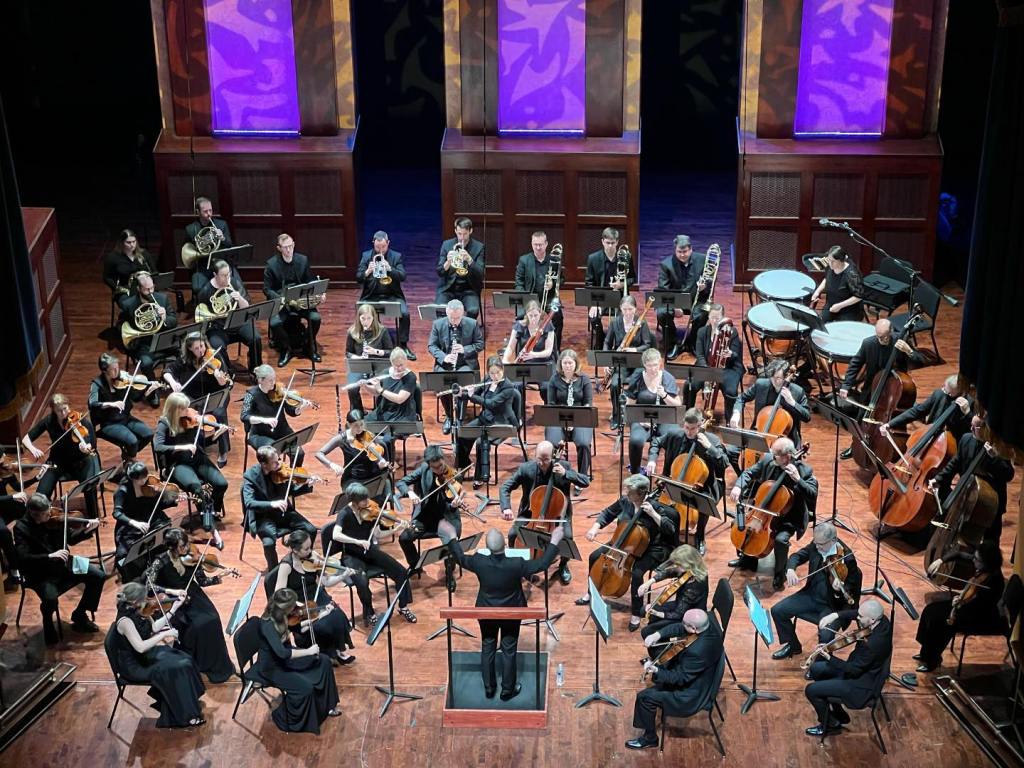
Ellen Connors with David Danzmayr and ProMusica at St Mary, photo credit ProMusica

Villa-Lobos’ single movement Ciranda das sete notas (“Round Dance of Seven Notes”) brought forth ProMusica’s principal bassoon Ellen Connors. There was a wonderful energy present from the onset, and the richly harmonized material captured one’s attention. Connors offered a clear tone with playing surprisingly limber for such a lumbering instrument. The work demanded a substantial range and speed, with barely a moment for the soloist the breathe even in the slower central section. The meditative final moments were especially lovely.

A work for strings from the Czech composer Vilém Tauský followed. A Jew, he was forced to flee in homeland in 1939, settling in England where he remained until his death in 2004. Coventry, written in 1979, reflects with raw emotion on the trauma of war. One was struck by the resonance of low strings that opened, soon to be joined by the violins. Lyrical at heart but peppered with dissonances pained and poignant, it was a piece of solemn intensity that painted a forlorn picture.

Mozart’s Prague symphony was a markedly cheerier affair. Only a small handful of the composer’s 41 symphonies begin with a slow introduction; the Prague has the most substantial, stately and weighty beginnings before one of Mozart’s most delightful themes took shape. Danzmayr opted for a brisk tempo choice, but clarity was maintained even during the bracing development. A graceful and measured slow movement served as a moment of repose before the whirlwind finale, wherein the ProMusica woodwinds were in especially fine form.

Columbus Symphony explores the confluence of classical and jazz

Columbus Symphony Orchestra
Rossen Milanov, conductor
Aaron Diehl, piano
Ohio Theatre
Columbus, OH
March 17, 2023

Perry: Study for Orchestra
Gershwin: Concerto in F
Tchaikovsky: Suite from The Nutcracker, Op. 71a
Ellington/Strayhorn: The Nutcracker Suite

The Columbus Symphony’s program served as a colorful depiction of elements of jazz seeping into the classical tradition – and vice-versa. Matters began on a different note, however, with an example of the considerable body of work from the often forgotten 20th century American composer Julia Perry. A native of Lexington, Kentucky who spent her final years in Akron, Ohio, her reputation was tragically stifled by the establishment’s prejudices towards an African-American woman.

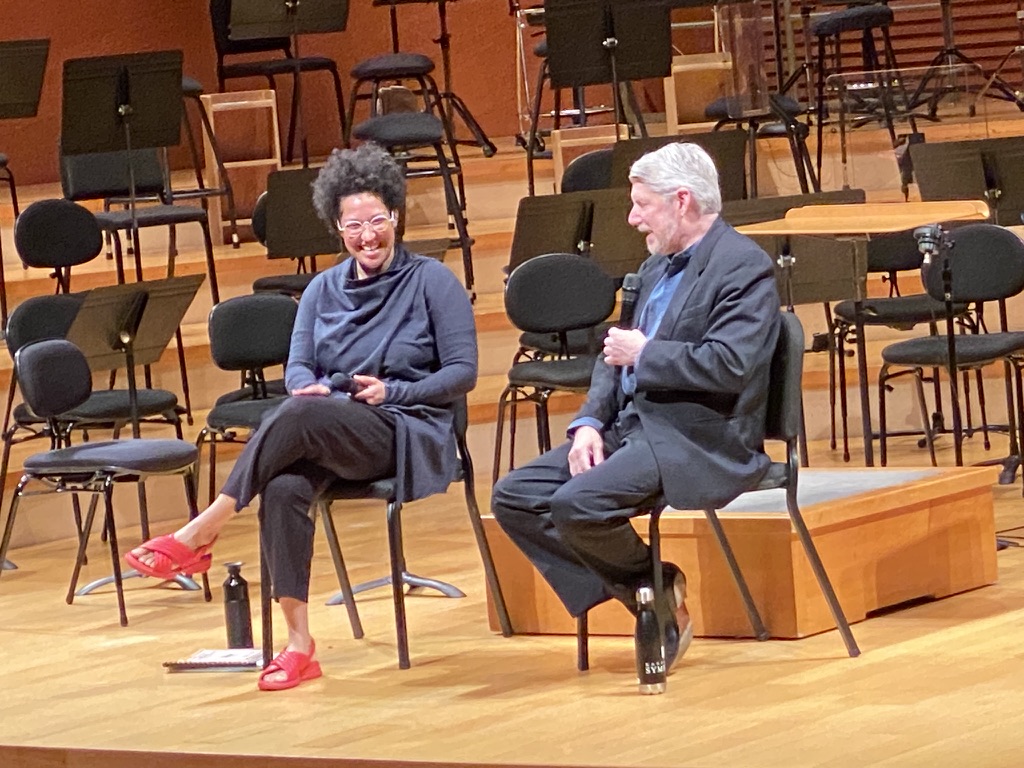
Aaron Diehl in conversation with Rossen Milanov

Nonetheless, she produced a substantial output – including more than ten symphonies – and the 1952 Study for Orchestra, included on the present program, was performed by the New York Philharmonic in 1965, certainly a major milestone. Bracing, strident beginnings gave way to more lyrical interludes. Albeit brief, it was a work of adroit craftsmanship, and certainly piqued my interest in discovering more of her music.

Gershwin’s great Concerto in F filled the balance of the first half, and was fitting platform for the belated CSO debut of Aaron Diehl – a Columbus native, Juilliard-trained, and equally at home in classical and jazz. A thunderous opening in the timpani pointed towards a lively Charleston rhythm. The pianist’s entry was graceful and elegant, with the virtuosity and vigor quickly ramping up. An impassioned lyrical melody served as the first movement’s climax, as lush as anything Rachmaninov wrote.

The brass with which the slow movement opened evidenced Gershwin’s skill at orchestration, much improved from the earlier Rhapsody in Blue for which he had the enlist the assistance of Ferde Grofé. The gently cascading piano was quite lovely, and the cadenza afforded Diehl the opportunity to improvise – and the orchestra musicians seemed to be watching him in awe. A motoric toccata-like movement closed the work with a big-boned finish. Diehl offered an encore (perhaps of his own composition?) that filled the theater with ethereal jazz harmonies.

In 1960, Duke Ellington released an album re-imagining Tchaikovsky’s Nutcracker as a jazz piece. Conductor Rossen Milanov cleverly devised a suite in which Tchaikovsky’s originals were interwoven with Ellington’s take, and it was quite fascinating to hear them juxtaposed. Delicate musical tinsel marked the opening Overture; in the ensuing Ellington version, the orchestra seamlessly morphed into a bona fide jazz band. Ellington’s adaptation of the Marche was styled as the “Peanut Brittle Brigade”; it expanded the rhythm and harmonies while the source material remained recognizable. In the “Dance of the Sugar Plum Fairy” the celesta sparkled; Ellington’s “Sugar Rum Cherry” retooled it for sax and brass. Tchaikovsky was given the final word, however, with a lush and lilting “Waltz of the Flowers.”

Dayton Philharmonic offers moving meditation on war and peace

Dayton Philharmonic Orchestra
Neal Gittleman, conductor

Sheridan K. Currie, viola
Jonathan Lee, cello
Kenneth Shaw, baritone
Kayla Oderah, soprano

Dayton Philharmonic Chorus
Steven Hankle, chorus director

Mead Theatre
Schuster Performing Arts Center
Dayton, OH
March 11, 2023

Boulanger: Pour les funérailles d’un soldat
Schelle: Resilience
Vaughan Williams: Symphony No. 3, Pastoral

Last weekend’s Dayton Philharmonic program was commendable for its organization around a common theme – reflections of war and aspirations for peace – as well selections that lie well outside the standard repertoire, likely unfamiliar quantities even to seasoned concertgoers. Lili Boulanger is one of the most tragic figures of 20th-century music, dying far too soon at age 24. Her work Pour les funérailles d’un soldat, written when she was 19, provided a captivating introduction to her compositional potential.

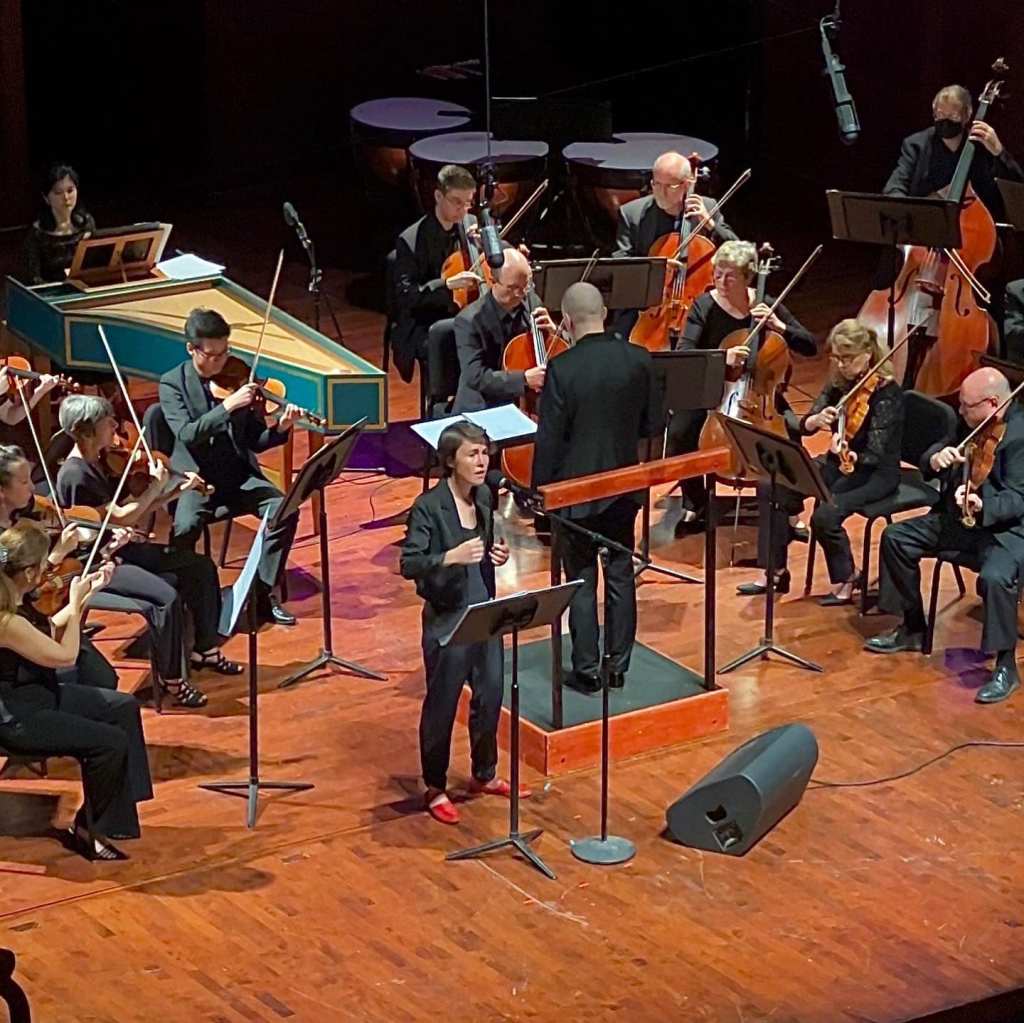
Kayla Oderah and Neal Gittleman with the Dayton Philharmonic and Chorus

Music director Neal Gittleman – one of the last Americans to study with the composer’s better-known older sister, Nadia – fittingly described the work as a “mini-requiem,” scored for orchestra with choir and baritone soloist. Rumbling timpani opened, soon to be joined by funereal brass. The choir joined in with French text of a poem by Alfred de Musset; on cue with the line “Qu’on dise devant nous la prière des morts” (“Let the prayer of the dead be said before us”), the Dies irae appeared hauntingly in the strings. Kenneth Shaw delivered a powerful baritone, imposing in its solemnity, and the work faded away with the beating pulse of the timpani. A composer with the prodigious gifts of a Mendelssohn, writing fully polished works as a mere teenager.

Michael Schelle’s 2014 work Resilience was written to commemorate the 70th anniversary of World War II, of which his father was a veteran and his mother a nurse. A double concerto for viola and cello, it featured DPO principals Sheridan Currie and Jonathan Lee. Cast in three movements, the first concerns the European theater, the second the Pacific, and the last amounts to a prayer for peace. As the title suggests, the work takes inspiration from resilience in the face of adversity.

Percussive beginnings opened the work in shocking intensity in the first movement “Dachaulieder.” Dense textures pervaded, and the soloists entered with an eloquent invocation of a theme from Mendelssohn’s String Quartet No. 2. A further musical allusion came in the shape of quite literally a song from Dachau – namely, a melody found carved into the prison walls. As with the Mendelssohn, it celebrated the voices of Jewish composers which the Nazi regime attempted to silence. The soloists played with committed intensity and fervor, bringing clarity to chaos. A mournful clarinet passage, later answered by the duo, was another striking moment.

Double concertos for violin and cello are somewhat common (think Brahms), but turning things a notch lower by way of the viola here fittingly gave the music a more somber tone. The central “Rising Sun, Falling Sky” opened in stillness. Sighing gestures took form, with pizzicato passages angular and uneasy. A large metal spring – one of Schelle’s signature musical effects – made for striking sounds from the percussion section, but this was a movement generally inward and introspective. The clash of the beginning resurfaced in the closing “Blast of Silence”, in due course arriving at a serene lyricism with particularly lovely and intimate material from the duo, and the work faded away in hopeful resolution.

If there’s one composer who wrote a substantial body of symphonies that tend to be overlooked, surely it would be Ralph Vaughan Williams with nine major entries to his name. In his 150th anniversary year, I’ve enjoyed turning attention to them (and have particularly fond memories of hearing the Sixth in Cincinnati). This weekend the DPO offered the Third, known as the Pastoral. The composer was deeply moved by the startling emptiness of the English countryside following the mass casualties of the First World War; hardly a bucolic affair, the symphony captures those emotions. Pastoral-sounding winds opened – though I found Gittleman’s tempo choice a bit fast – introducing a striking, coloristic chord progression. Concertmaster Aurelian Oprea articulated a theme with fragile lyricism.

A forlorn horn solo opened the Lento moderato, and the strings meandered into mournful depths. An extended passage for solo trumpet – intentionally meant to sound out of tune to mimic an amateur military bugler – resounded to desolate effect. Though functioning as the scherzo and the most extrovert of the four movements, the Moderato pesante was hardly festive, lumbrous and weighed down, even including a thorny fugue. The closing Lento opened with a haunting wordless vocal from offstage, given with feeling by soprano Kayla Oderah. As one final elegiac paragraph, the movement was further highlighted by a touching flute solo, and Oderah was given the last word before music drifted to silence.

Neal Gittleman, Michael Schelle, Sheridan K. Currie, and Jonathan Lee during the post-concert discussion

Journeys of Faith at the Louisville Orchestra: contemplating nature, time, and life itself

Louisville Orchestra
Teddy Abrams, conductor

TJ Cole, synthesizer
Amanda Majewski, soprano
Keisha Dorsey, speaker

Louisville Chamber Choir
University of Louisville Collegiate Chorale
Kent Hatteberg, director
Youth Performing Arts School Chamber Choir
Jacob Cook, director

Whitney Hall
Kentucky Center for the Performing Arts
Louisville, KY
March 4, 2023

TJ Cole: Phenomenal of the Earth
Neuwirth: Masaot/Clocks Without Hands
Bernstein: Symphony No. 3, Kaddish

It isn’t often that a work from the 1960s is the oldest work on a program from a major symphony orchestra. But such was the case on the Louisville Orchestra’s enterprising selection Saturday evening, the first of their “Journeys of Faith” series which thoughtfully explores connections of faith and music. Opening the program was a product of the LO’s Creators Corps, in which they have not one, but three composers in residence this season.

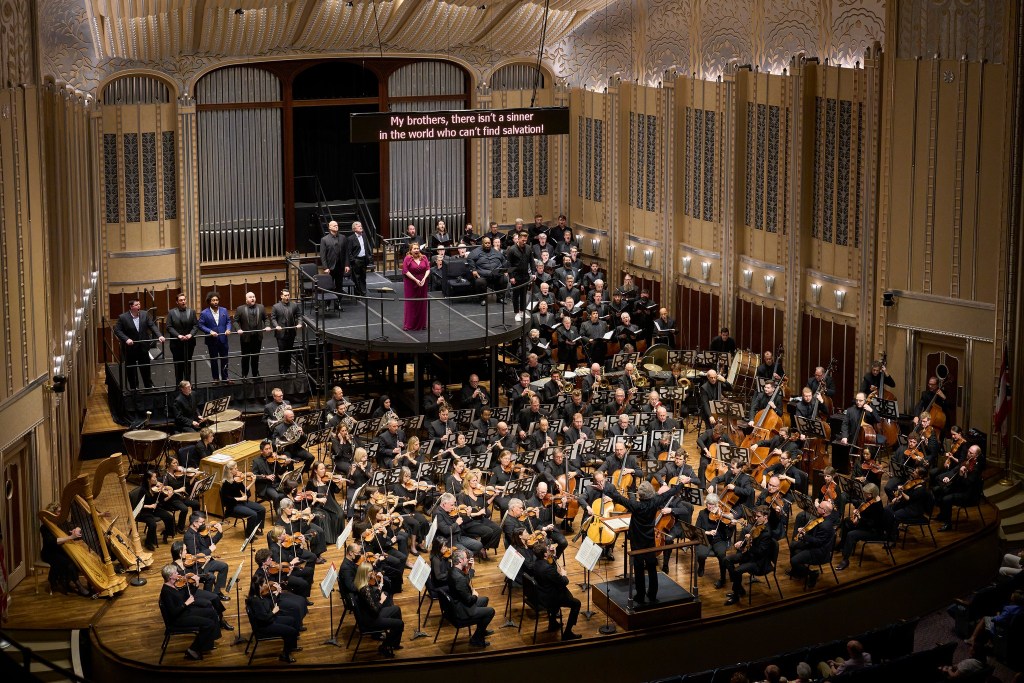
L-R: Teddy Abrams, Kent Hatteberg, Nicholas Claussen, Katie Cook, Jacob Cook, Amanda Majewski, and Keisha Dorsey with the Louisville Orchestra and Choruses

Featured Saturday was TJ Cole in the world premiere of Phenomenal of the Earth, scored for synthesizer and orchestra – with the composer also serving as soloist on the synth. Clad in a dress adorned with sunflowers, Cole’s attire gave a not so subtle hint as to the work’s central theme, an expression of their love for the natural world. There’s a bit of a duality at play in selecting an electronic instrument to represent nature, but the synthesizer has the ability to adapt in real time, responding to the natural world’s constant state of flux.

Matters began with a barely audible drone, soon to build to a wash of cacophony, as if overwhelmed by the natural surroundings – much of the work was written during the composer’s residency in Bernheim Forest, a place with a longstanding connection to the arts. The synthesizer blended well with the orchestra in a way that didn’t feel terribly contrived, illuminating the possibilities of a concerto for synthesizer. I was somewhat reminded of the work of Mason Bates who has an uncanny ability to meld acoustic instruments with electronica. Cole’s piece felt a bit repetitive at times, but drew novel sounds from the musicians on stage – most memorably, with plastic tubes to generate the sound of the wind, as well as Cole’s own vocalizations, later joined by other members of the orchestra. A work of great energy, it was a lovely paean to nature, ending much like it began in mirror of the cyclical quality of its inspiration.

Olga Neuwirth’s 2013 work Masaot/Clocks Without Hands was written on a commission from the Vienna Philharmonic to commemorate the centennial of Mahler’s death. Winner of the Grawenmeyer Award in 2022 – awarded just a few miles away at the University of Louisville – the Austrian composer also attended music director Teddy Abrams’ alma mater, the San Francisco Conservatory of Music. Abrams had such an engaging way of introducing the work, it made one excited to dive in, certainly quelling any anxieties about an unfamiliar contemporary piece. The work was inspired by a dream the composer had about her grandfather, whose experience of anti-Semitism in fin de siècle Vienna likely mirrored Mahler’s.

The titular “clocks without hands” refers to the inner rhythm we all have, represented in the scoring by ticking metronomes. Its opening went from quiet to clangorous in the blink of an eye, with brassy material offering stark juxtapositions and simultaneous strands à la Mahler. (I have heard this work once before, when it was quite fittingly paired with a Mahler symphony during a Cleveland Orchestra performance). Concertmaster Gabriel Lefkowitz had some fine solo passages, including a bit of klezmer-sounding material. The work proceeded very much in phantasmagoric stream of consciousness, densely textured, only to be suddenly distilled to the ever-ticking clocks. A work of searing impact, it retreated to silence at its conclusion.

None of Leonard Bernstein’s three symphonies bear much resemblance to the conventions of the form. The Third – titled Kaddish – is an oratorio in all but name, with parts for narrator, chorus, and soprano soloist. Central to the work is the Hebrew Kaddish, and the work bears a dedication to the memory of JFK who was assassinated just weeks before its December 1963 premiere. A wordless drone in the choir set a background for the narration, given with authority by Keisha Dorsey. Plaintive opening material in the orchestra was colored by thorny dissonances, and played with an innate understanding of Bernstein’s musical language – quite far removed here from the more populist idioms with which one might associate the composer. A setting of the Kaddish concludes each of the three movements; in the first, one was struck by the richness of the choir and orchestra, arresting in its urgency.

The second movement Din-Torah began with a vibrant array of percussion, echoed by cacophony and discord amongst the choir. The ensuing Kaddish had calming effect, encouraged by Amanda Majewski’s lustrous soprano in rejuvenating prayer, melding with the angelic voices of the women of the choir. Fleeting and rapid-fire playing marked the concluding movement, more unsettling than playful despite its moniker of “scherzo.” The music built to a terrifying climax, answered by a richly lyrical theme for the final Kaddish. The inclusion of children’s choir resounded with a certain purity before the contrapuntal complexity of the closing fugue that led towards a thunderous end. A deeply moving evening, with the works selected offering thought-provoking contemplations of respectively nature, time, and life itself.


Milanov leads Columbus Symphony in a Mahlerian farewell to life

Columbus Symphony Orchestra
Rossen Milanov, conductor
Ohio Theatre
Columbus, OH
March 3, 2023

Mahler: Symphony No. 9 in D major

In his preconcert remarks, Columbus Symphony music director Rossen Milanov noted it has long been his dream to conduct Mahler’s final completed work, the Ninth Symphony. That opportunity finally arrived this weekend, leading the CSO – expanded to over 80 players – in this autumnal, valedictory canvas.

The work began tentatively, hesitantly, almost as if unsure of its footing – some have suggested the limping rhythmic figure was meant to mirror the composer’s irregular heartbeat. Nonetheless, the work soon found its stride in sighing, calming lyricism. The music surged to grating climaxes at key inflection points in the long paragraph of the opening Andante comodo, yet they tended to come across a bit thin, lacking the robustness one desires for Mahler. The tolling of the tubular bells was of striking effect, heralding the welcome return of the main theme after a long journey. A solo passage from concertmaster Joanna Frankel was quite tenderly played.

The following movement brought us back down to the corporeal world from the philosophical musings of the opening. A spunky ländler took shape, with Mahler ever keen to invoke his affinity for folk traditions, even (or perhaps especially) in this late work. A panoply of striking timbres colored the movement, with the orchestra sounding quite a bit more polished here. The ensuing Rondo-Burleske opened with a strident, angular trumpet call, and a vigor that inexorably pulled matters forward, only to be later stopped in its tracks by an impossibly high passage for trumpet, echoed in the strings and winds – and a preview of the plaintive finale to come. At one point, Milanov’s baton was launched airborne, as sure a sign as any of the intensity with which he conducted!

The finale is simply quite unlike anything else in the repertoire. A heartwrenching chorale resonated through the Ohio Theatre, with the Columbus strings shining in their aching, arching lyricism. In the final bars, matters were all but disembodied, drifting away to peaceful, serene resolution, and Milanov managed to hold the audience in contemplative silence – perhaps the most appropriate response to such a singular statement.

Uchida embarks on spiritual journey in Beethoven’s final piano sonatas

Mitsuko Uchida, piano
Mandel Concert Hall
Severance Music Center
Cleveland, OH
February 26, 2023

Beethoven: Piano Sonata No. 30 in E major, Op. 109
Beethoven: Piano Sonata No. 31 in A flat major, Op. 110
Beethoven: Piano Sonata No. 32 in C minor, Op. 111

After seeing the stage of Severance Hall filled to the brim the night before for an opulent Strauss tone poem, it was quite a contrast to enter Sunday afternoon to the sight of a lone grand piano. A welcome sight to be sure, however, the setting for one of Cleveland’s most cherished musical guests to offer the next installment of this season’s piano series. This is the always remarkable Mitsuko Uchida, presenting perhaps the weightiest of all solo piano programs: the final three piano sonatas of Beethoven – and a fitting follow-up to her 2019 program of Schubert sonatas on the same stage.

Mitsuko Uchida in recital at Severance Hall

The bright E major of op. 109 opened graciously and generously lyrical, soon to be contrasted by the rhythmic snap and punch of the Prestissimo. A noble, expansive set of variations closed the work, with the singing theme showing the notoriously stormy composer wholly at peace with the world. Uchida did much to bring out the distinct character and nuance of each variation, and it was quite striking how much musical ground was traversed in a mere six variations. A fugue surfaced in the fifth variation, a signal of the importance of the form to this sonata trilogy and to late Beethoven more broadly speaking.

Thought certainly worthy of applause, Uchida requested the audience to withhold following op. 109 – a directive not followed, and it seemed to take her some time to get back in the zone. Once she did, op. 110 opened in amber warmth, and a sublimely songful melody decorated by fleeting arabesques given with utter weightlessness. I was reminded of Evgeny Kissin’s performance of the sonata on his program here last April. A fiery scherzo followed, sharply accented.

Thus far, the work very closely mirrored its predecessor. The Adagio ma non troppo that followed served as something of a spiritual contemplation – with a longing melody of deepest tenderness – as if the composer was pondering what direction to go next. A fugal finale then broke through, clearly the destination all along. Uchida cut through the counterpoint with exacting clarity, though in no way sacrificing its wondrous musicality.

Op. 111 was certainly worthy of occupying the entire second half. Many pianists will play the opening octaves with both hands instead of the left hand alone as Beethoven notated, but Uchida respected that wish as the composer wasn’t one to create technical challenges without valid musical reasons. Arresting beginnings plunged us into the darkness of C minor, with Uchida unrelenting in weight and power, and even more so in the penetrating, unforgiving fugato.

There’s few things in the repertoire more calming than the opening gesture of the Airietta, an Everest in of itself. There was entrancing purity in the simplicity of the theme, though rhythmic complexities amassed on the note-spattered pages – and while the virtuosity was there in spades, it always took a backseat, in service of the composer, not the pianist. Only Beethoven could make something as seemingly mundane as a trill, the mere oscillation of two consecutive pitches, sound so utterly transcendent. The climax of the movement pushed towards an even higher spiritual plane, only to a retreat to a direct, unadorned final statement to close this spellbinding performance.

Columbus Symphony spotlights principal clarinet

Columbus Symphony Orchestra
Rossen Milanov, conductor
David Thomas, clarinet
Ohio Theatre
Columbus, OH
February 18, 2023

Price: Andante ma non troppo from Symphony No. 3 in C minor
Berio/Brahms: Op. 120 No. 1
Schubert: Symphony No. 4 in C minor, D417, Tragic

It has been deeply gratifying to see renewed attention given to the formidable work of Florence Price in the past few years. Last year’s Grammy for best orchestral performance went to the Philadelphia Orchestra’s warmly recommended recording of her First and Third symphonies under Yannick Nézet-Séguin – an ensemble of which Rossen Milanov served as assistant conductor for almost a dozen years before coming to Columbus. Last weekend’s Columbus Symphony program opened with the slow movement of the Third Symphony.

David Thomas, photo credit Columbus Symphony

A plaintive choir of winds began, with a tuneful melody gently unfolding. Like Dvorák before her (as in the New World symphony, heard here two weeks prior), Price purveyed a language steeped in folk tradition without making use of specific quotations. A passage for brass chorale was particularly affecting and distinctly American in character before the movement reached a serene ending, aided by a touch of harp. It certainly whetted one’s appetite for more, and I hope the complete symphony can be programmed in an upcoming season.

Though at the forefront of the avant-garde, Luciano Berio had a knack for faithfully transcribing other composers’ works for various media (including a particularly delightful selection of Beatles songs). A 1986 commission from the Los Angeles Philharmonic saw him transcribe Brahms’ late Clarinet Sonata in F minor, Op. 120 No. 1 for soloist and orchestra. Championing the work was David Thomas, serving as the CSO’s principal clarinet since 1989.

Passionate, brooding beginnings were had, with Berio’s orchestration inimitably Brahmsian as he left his iconoclastic proclivities far behind – the work sounded almost as the clarinet concerto Brahms never wrote. Thomas’ rich tone was well-suited to this autumnal work, finely balanced with the larger ensemble, and conveying a natural chemistry with his orchestral colleagues. The slow movement proceeded as a long-breathed song without words – really gorgeous – while an Allegretto grazioso charmed with its inflections of the ländler in both rhythm and spirit. A repeated motif marked the closing Vivace, a finale of appropriate vigor.

Another C minor symphony closed the program, namely Schubert’s Tragic. Weighty introductory material announced the minor tonality in no uncertain terms; the movement proper brimmed with Sturm und Drang in this early expression of Romanticism. The primary theme was deftly articulated in the strings, and a development section traversed distant keys before the movement landed – quite surprisingly – in the major.

The Andante boasted one of Schubert’s loveliest melodies, first presented in the strings with a touching countermelody in the oboe, searching for peace amidst the tumult of the rest of the work. The minor key shading gave the minuet added vigor, a contrast heightened by the lilting trio. Milanov leapt right in the to the finale – perhaps in reaction to some of the audience’s insistence on applauding after every movement. Matters felt a tad rushed, but this was an energetic outing nonetheless, leading to a dramatic finish.

Callisto Quartet pairs new and old at Chamber Music Columbus

Callisto Quartet
Southern Theatre
Columbus, OH
February 18, 2023

Haydn: String Quartet in F major, Op. 77 No. 2, Hob. III:82
Fujiwara: Sunsets, Like Childhood
Hu: As Hope Builds
Debussy: String Quartet in G minor, Op. 10

February’s Chamber Music Columbus concert was originally slated to feature the St. Lawrence String Quartet; following the very sad passing of their first violinist Geoff Nuttall, a substitute was booked in the Callisto Quartet – an ensemble currently serving as quartet in residence at the Yale School of Music. Kudos to Callisto for presenting a very fine, polished program on short notice that included two world premieres along with two cornerstones of the quartet repertoire.

Callisto Quartet, photo credit callistoquartet.com

The program opened with Haydn’s final completed quartet (Op. 77 No. 2) from his vast output in the form (a projected sixty-eighth string quartet would follow as Op. 103, but was left incomplete). The opening Allegro moderato was elegant and deftly balanced. Bucking the tradition the composer himself largely established, a Menuetto was placed ahead of the slow movement. Sprightly and harmonically adventurous, it was almost more akin to something of Beethoven. The theme and variations Andante was given with careful attention to detail, bringing out its rhythmic intricacies. Despite being the composer’s final quartet, there was certainly nothing valedictory about the finale, spirited and vivacious, with some particularly energetic playing from first violinist Cameron Daly.

As the 75th anniversary celebrations continue, the next featured composer was Korine Fujiwara. Though now based in the Pacific Northwest, she is someone with strong local connections (describing Columbus as her “emotional home” during her spoken remarks): violinist in the Columbus Symphony for many years, composer of a new work for Opera Columbus, and founding member of the Carpe Diem String Quartet. Sunsets, Like Childhood alludes to a quote from author Richard Paul Evans, and seeks to capture the energy of a sunset, and childlike sense of wonder many of us continue to have for this daily occurrence.

A short cello line opened, soon joined by the rest of the ensemble in lush harmony. Rapid tremolos and arpeggios conveyed a sense of evanescence like the fleeting sunset. The piece was simply full of life – celebratory, almost exuberant, yet still wistful and reflective with a particularly lovely theme surfacing about halfway through before the work peacefully drifted away into the night.

Ching-chu Hu’s next “puzzle piece” of the 75th anniversary fanfare opened the second half, entitled As Hope Builds. A self-described “eternal optimist,” that mindset was very much reflected in the work’s theme and character, amassing strength and vigor through the titular hope.

The recital closed with Debussy’s sole entry in the string quartet medium, and a fine one at that. A rich sound opened, with the quartet communicating as a seasoned ensemble as the conversation on stage naturally shifted to Debussy’s impressionist language. Striking pizzicato sonorities marked the scherzo, and not without a certain wit one doesn’t always associate with the Frenchman. The Andantino was the heart of the work, gorgeous and serene with the quartet purveying a singing tone throughout, an essay of repose before cleanly negotiating the thorny textures of the finale.