Manfred Honeck and the Pittsburgh Symphony herald springtime with Beethoven’s Pastoral

Pittsburgh Symphony Orchestra
Manfred Honeck, conductor
Francesco Piemontesi, piano
Heinz Hall
Pittsburgh, PA
March 30, 2025

Eisendle: heliosis
Liszt: Piano Concerto No. 2 in A major, S125
 Encore:
 Schubert: Impromptu in G-flat major, Op. 90 No. 3
Habibi: Jeder Baum spricht
Beethoven: Symphony No. 6 in F major, Op. 68, Pastoral

Over the closing weekend of March, Manfred Honeck and the Pittsburgh Symphony offered a program anchored by Beethoven’s Pastoral symphony, certainly an apt way to mark the arrival of spring (and I’m happy to report I spotted some cherry blossoms on the way to Heinz Hall!). In the graceful material that opened the symphony, the PSO radiated a joyous exuberance from the stage.
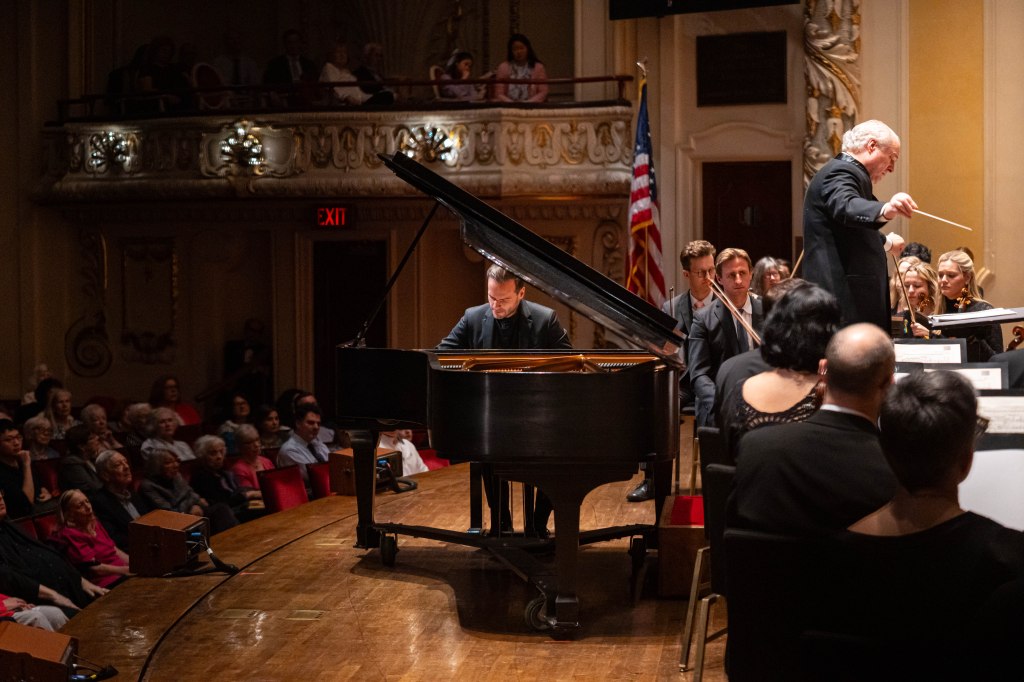
Francesco Piemontesi, Manfred Honeck, and the PSO, photo credit JMilteer Photography

I was particularly touched by the warmth of the clarinet in the gentle slow movement, hardly portending the storm that lay ahead. The PSO romped through the minuet that followed, with Honeck inviting the musicians to stomp their feet, perhaps giving the authentic air of a country dance. Ample drama painted the ensuing storm in vivid realism, making the closing Shepherd’s Song all the more rewarding.

Prefacing the Beethoven was the 2019 work Jeder Baum spricht (“Every Tree Speaks”) by Iranian composer Iman Habibi. Written for the Philadelphia Orchestra’s celebration of Beethoven’s 250th anniversary, it was explicitly conceived to precede the Fifth and Sixth symphonies, and makes numerous if somewhat veiled references to both. The title comes from Beethoven’s diaries, and in his prerecorded video remarks, Habibi noted a further resonance to the current climate crisis. An invocation of the fate motif from the Fifth opened, and a panoply of nature sounds abounded in this brief, five-minute prelude.

Opening the program was another contemporary work, a 2021 piece by Austrian composer Hannah Eisendle entitled heliosis (a medical term for sunstroke). Following an attention-grabbing opening, there was a retreat to a desolate, sun-drenched soundscape. The scoring emphasized the percussion, and its driving rhythms to my ears echoed Stravinsky’s Rite of Spring.

The program further featured pianist Francesco Piemontesi in Liszt’s Second Piano Concerto (a work I also heard him play at the Chicago Symphony just a few months earlier). Gentle winds began, answered by rolling arpeggios across the piano, as if gingerly exploring the potential of the instrument. Virtuosity was quickly ramped up, however, with the theme being transformed into an energetic march. In a more serene moment, the piano was in a richly lyrical duet with the cello (Anne Martindale Williams), a moment of respite before the fiery end. As an encore, the pianist selected Schubert’s G-flat impromptu — lovely and lyrical, and also a favorite of Piemontesi’s mentor Alfred Brendel.
Leif Ove Andsnes contrasts Chopin with Norwegian piano sonatas in Cleveland recital

Leif Ove Andsnes, piano
Mandel Concert Hall
Severance Music Center
Cleveland, OH
March 27, 2025

Grieg: Piano Sonata in E minor, Op. 7
Tveitt: Piano Sonata No. 29, Op. 129, Sonata etere
Chopin: Preludes, Op. 28

Encore:
Debussy: La cathédrale engloutie, from Préludes Book I

The first half of Leif Ove Andsnes’ Thursday night piano recital in Cleveland plunged into wholly unfamiliar territory in an exploration of the Norwegian piano sonata. The pianist proved to be an incisive guide to the music of his home country, beginning with the Piano Sonata in E minor from the pen of a 22-year-old Edvard Grieg.

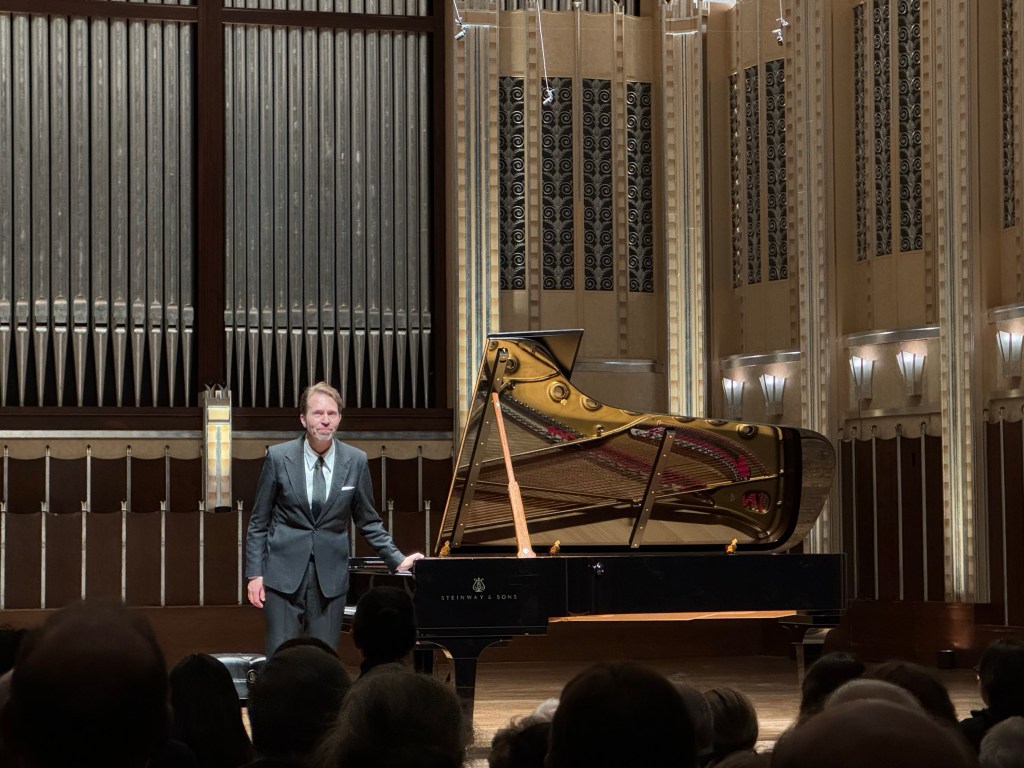
Leif Ove Andsnes at Severance Hall

Brimming with youthful energy, the piece balanced both the lyrical and the dramatic. A slow movement was delicate in its simplicity, though it built in density and traversed some striking harmonic modulations. The sonata very much bore the influence of Schumann above all, but the brief third movement was quite original, showing the composer finding his individual voice. The finale capped off this attractive work with a bravura march.

The real rarity came in the Piano Sonata No. 29 of Geirr Tveitt. Like Grieg, Tveitt studied in Leipzig, but returned to Norway where he developed his unique style. He settled in an isolated area in Norway’s Hardanger region, though tragedy would strike when a fire in 1970 would destroy nearly 300 of his unpublished manuscripts, the majority of his body of work. The Sonata etere (“Ethereal Sonata”) is the only surviving piano sonata — astonishingly, number 29 out of an unknown quantity lost to the flames.

A startlingly original work, there are perhaps nods to Prokofiev or Bartók in its percussive gestures or the French impressionists in its coloristic writing, but one imagines the composer writing in isolation, free from outside influences. A large-scale, 35-minute conception, the first movement (titled In cerca di — “In search of”) was propelled forward with driving energy — and I found Andsnes even more compelling than the composer’s own recording.

The central Tono Etereo in Variazoni consisted of 19 variations, most strikingly featuring a cluster of notes depressed with the pianist’s entire left arm, an ethereal resonance that would recur throughout. Overtop this were spiky jabs in the right hand the drew out the skeleton of a theme on which the variations were based. The variations were largely lyrical, and with subtle yet captivating effects. The closing Tempo di Pulsazione was virtuosic and bracing, though not purely percussive with its lyrical interludes, in due course fading away into the ether.

Chopin’s magnificent set of 24 preludes comprised the second half. Andsnes gave each one of these gems loving attention to detail, bringing out their unique personalities and sharpening contrasts across the set. I was struck by the majestic take on #9 and the ferocious energy given to #12, only outdone by the chillingly dramatic closing prelude. I loved the way he deftly voiced the chords in #20, and the warmly poetic readings he gave to #13 and #17 were deeply rewarding.

Andsnes offered a single encore from another great cycle of preludes in Debussy’s Sunken Cathedral, painting a wondrous soundscape.

While several artists have justly announced boycotts of the US in response to the current political climate, upon his arrival in this country, Andsnes thoughtfully mused on the potential music has to bring people together. A further post saw him marveling at the beauty of the Severance Hall stage. The pianist certainly proved that a captivating performance in a gorgeous venue can offer much-needed solace.

Kanneh-Mason bares the soul of the cello with Pittsburgh Symphony players

Sheku Kanneh-Mason, cello
David McCarroll, violin
Anne Martindale Williams, cello
Dale Jeong, cello
Bronwyn Banerdt, cello
Alexandra Lee, cello
Additional Strings and Harp of the Pittsburgh Symphony

Heinz Hall
Pittsburgh, PA
March 22, 2025

Bach: Komm, süßer Tod, komm selge Ruh, BWV 478 (arr. Kanneh-Mason)
Bach: Nun komm, der Heiden Heiland, BWV 659 (arr. Kanneh-Mason)
Bach: Adagio from Toccata, Adagio and Fugue in C major, BWV 564 (arr. Kanneh-Mason)
Finnis: Five Preludes for Solo Cello
Villa-Lobos: Prelude from Bachianas Brasileiras No. 1 (arr. Simon Parkin)
Clapton: Layla (arr. Parkin)
Ravel: Sonata for Violin and Cello, M. 73
Dvořák: Nocturne in B major for String Orchestra, Op. 40
Bloch: From Jewish Life (arr. Christopher Palmer)

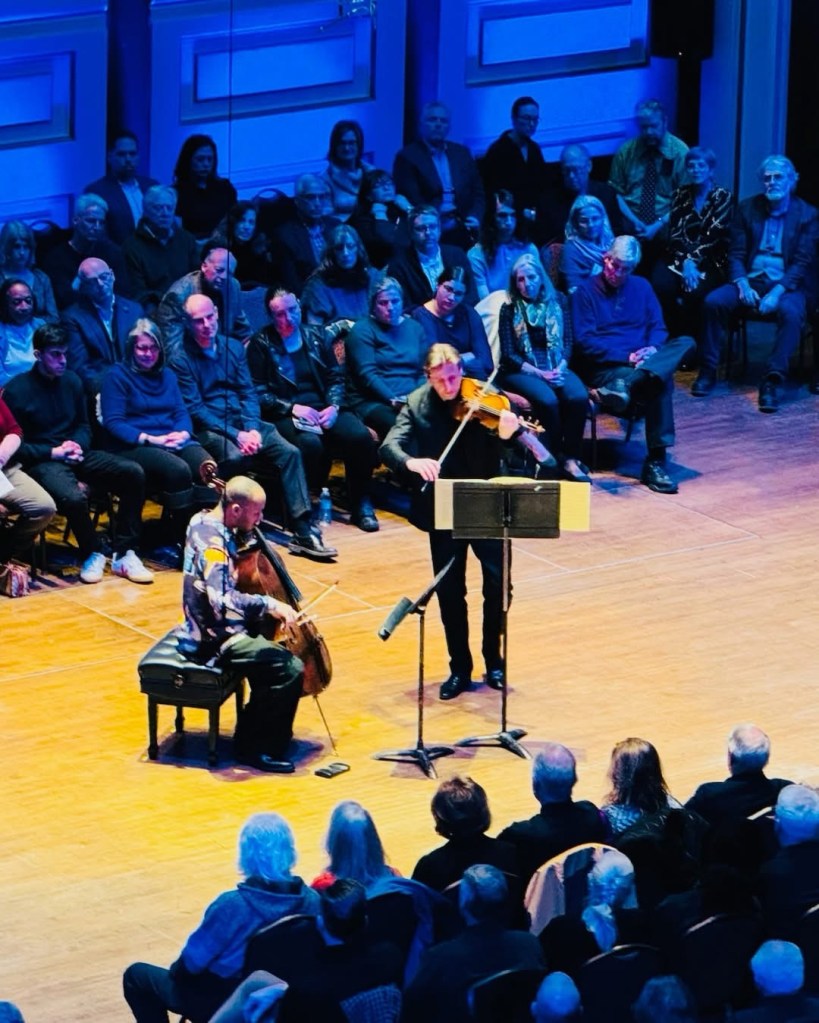
Following the Pittsburgh Symphony debut of Sheku Kanneh-Mason the night before, local concertgoers got to see many more sides of the cellist during an entry of the innovative and intimate PSO360 series. An indispensable offering at the PSO, for those who haven’t been, a guest artist bands together with select PSO musicians, and a small audience is seated in the round on the Heinz Hall stage. Entitled Soul of the Cello, the enterprising program showed the diverse potential of the instrument, and leaned heavily into music originally for other forces transcribed for cello — several of which were recorded on Kanneh-Mason’s Song album.

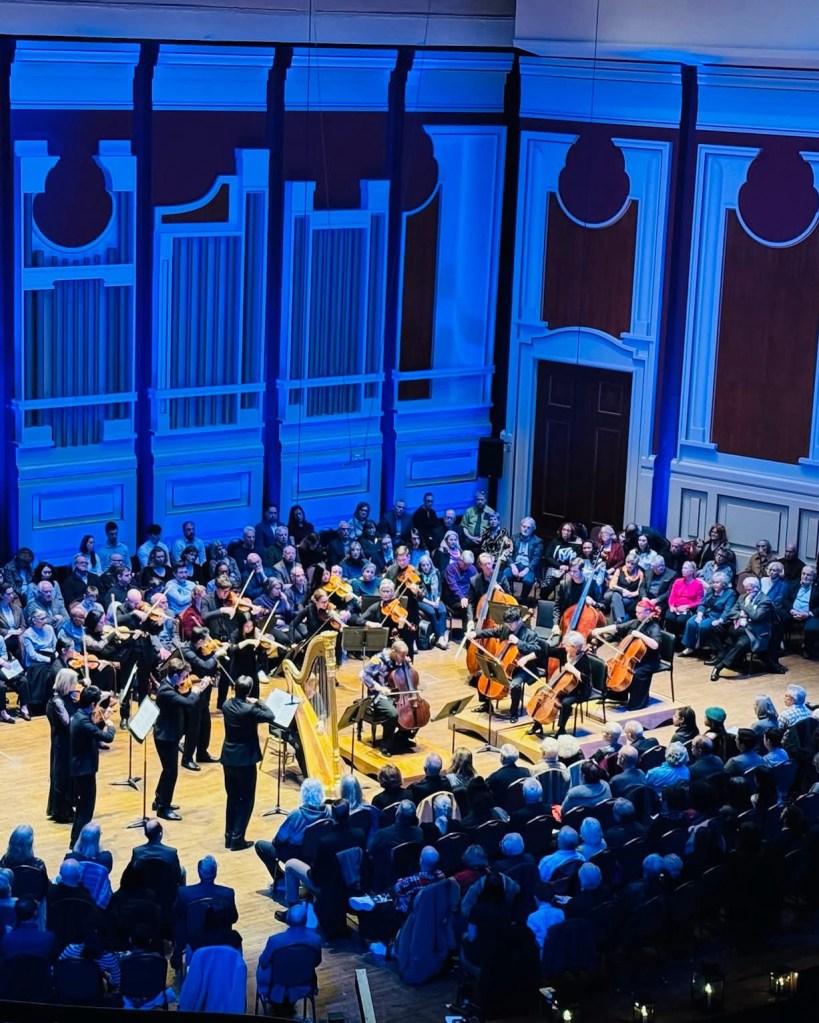
Sheku Kanneh-Mason with members of the PSO, photos credit Sheku Kanneh-Mason on Facebook

A trio of works by J.S. Bach began, all in transcriptions by Kanneh-Mason himself. The chorale prelude Komm, süßer Tod, komm selge Ruh opened, cast for a quintet of cellos. Deeply felt, and the resonance of five cellos was quite striking. A further chorale prelude in Nun komm, der Heiden Heiland followed — this one scored for four cellos — showing that this is music so universal it transcends the medium on which it is performed (the Busoni transcription for piano is a favorite of this writer). A pensive Adagio extracted from an organ work thoughtfully capped of this unique exploration of Bach.

Written for Kanneh-Mason in 2021 were the Five Preludes for Solo Cello by British composer Edmund Finnis. Each one of these pearls achieved a captivating expressive range in just a short span. Melodic contours were deftly shaped in the opening prelude, the second, marked Fleeting, was of minimalist gestures à la Philip Glass. The penultimate piece was underpinned by a drone, surfacing as a calming presence.

Returning to scoring for cello quintet, a pair of widely contrasting works rounded off the first half. In the remarkable suites titled Bachianas Brasileiras, composer Heitor Villa-Lobos wove Brazilian musical tradition into the style of Bach. Each is for a different combination of instruments; the first is for eight cellos. Redistributed amongst the five players on stage, it was like listening in on a close conversation amongst friends, a sentiment further encouraged by the cello’s proximity to the human voice. An energetic transcription of Eric Clapton’s Layla followed, filled with glissandos and other techniques to capture the effects of Clapton’s electric guitar. A sheer delight to see Kanneh-Mason rock out with the PSO cello section!

Opening the second half was Ravel’s remarkable duo sonata for violin and cello, a work the composer dedicated to the memory of Debussy. Kanneh-Mason teamed up with PSO concertmaster David McCarroll in a work that explored the different personalities of these string instruments. Taut communication between the two negotiated the score’s complexities. Textures in the second movement were strikingly spiked with pizzicato, and I was taken by the drive and vitality with which the work closed.

Dvořák’s Nocturne for string orchestra was sole work performed without the participation of Kanneh-Mason, affording the cellist a well-earned respite. An expanded version of the slow movement from his G major string quintet (the first movement of which was heard following a recent PSO performance), the PSO strings offered a serene, arching lyricism in this loveliest of creations.

Closing the memorable evening was Ernest Bloch’s From Jewish Life, a work originally for cello and piano. An arrangement by Christopher Palmer thoughtfully rescored the piece for solo cello buttressed by string orchestra and harp. A powerful “Prayer” began, showing the beauty of the cello and richness of the harp (Gretchen Van Hoesen). The central “Supplication” was of growing urgency, marked by a long cello line inflected by Jewish folk gestures; “Jewish Song” closed the piece in a manner more reflective than celebratory.

Sheku Kanneh-Mason and David McCarroll

Cellist Kanneh-Mason makes memorable Pittsburgh Symphony debut

Pittsburgh Symphony Orchestra
Manfred Honeck, conductor
Sheku Kanneh-Mason, cello
Heinz Hall
Pittsburgh, PA
March 21, 2025

Shekhar: Lumina
Shostakovich: Cello Concerto No. 1 in E-flat major, Op. 107
 Encore: I Say a Little Prayer
Strauss: Don Juan, Op. 20
Strauss: Symphonic Fantasy from Arabella, Op. 79 (arr. Honeck/Ille)

The Pittsburgh Symphony is to be commended for its advocacy of contemporary music, with many of this season’s programs introducing a recent work by a living composer. This week’s program began with the 2020 work Lumina by Nina Shekhar. Shekhar is currently a doctoral student in music composition at Princeton (presumably classmates with Hannah Ishizaki, featured on a PSO program a month ago). The composer also draws from an engineering background, evident in the present work that concerns the spectrum of light.

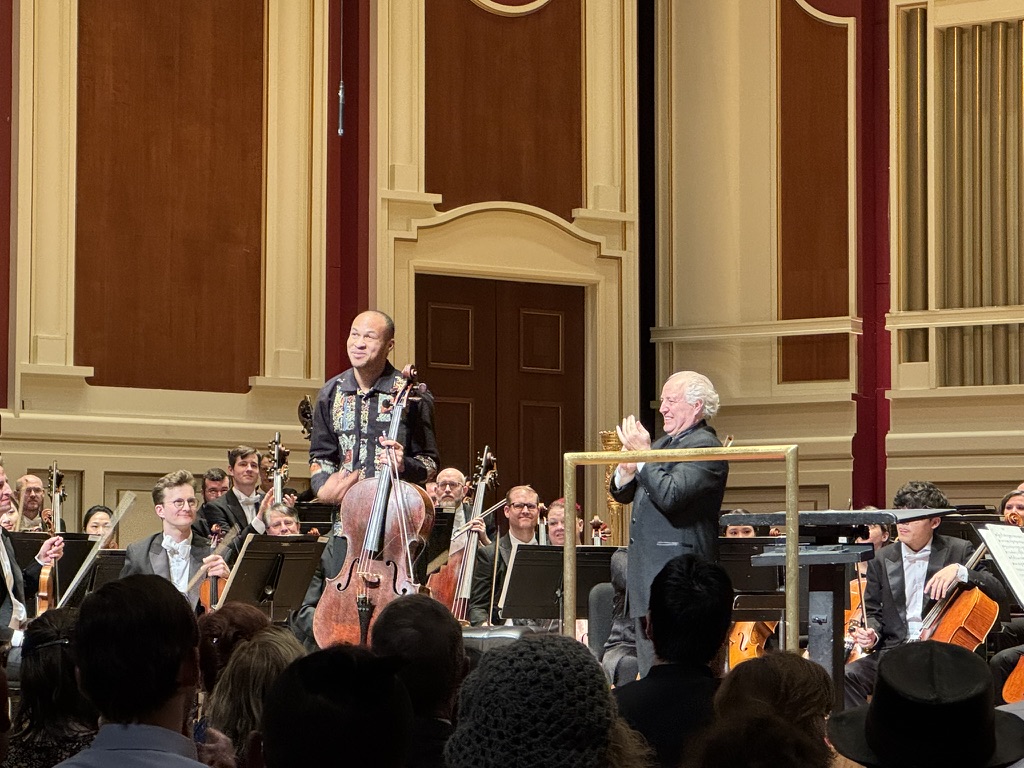
Sheku Kanneh-Mason with Manfred Honeck and the Pittsburgh Symphony

It’s a work that demands attention from both performers and audience. Silence is just as important as sound, and effects are achieved through subtle, nearly imperceptible gestures: microtones, harmonics, bowing of the vibraphone. A soft-spoken essay, it occasionally burgeoned into strident climaxes. I’m not sure this is a piece that fully earned the attention it required, yet I appreciate the PSO’s attention to a rising composer.

The main draw of the evening was the Pittsburgh debut of cellist Sheku Kanneh-Mason in the Cello Concerto No. 1 of Shostakovich. Kanneh-Mason drew a fittingly gritty tone out of his Matteo Goffriller instrument that dates from 1700, delivering a variation on the composer’s musical signature with a caustic bite. The cellist was flexible and limber, imbuing the score with character and color. Manfred Honeck and the PSO supported the soloist with piquant accompaniment. Unusually for Shostakovich, the horn is the only brass instrument used — a tip of the hat to William Caballero for single-handedly serving as the brass section. The Moderato was of desolate, pained lyricism, reduced to a skeletal orchestration.

Like the composer’s First Violin Concerto, an extended cadenza served as effectively a standalone movement in the heart of the work. One was struck by Kanneh-Mason’s expressive range — and while not an overtly virtuosic affair, the cellist showed a deep command of his instrument. The finale was quintessential Shostakovich in both its urgency and coloristic writing, up to the blistering end. As an encore, Kanneh-Mason offered a transcription I Say a Little Prayer, the Burt Bacharach song made famous by both Dionne Warwick and Aretha Franklin — a lovely piece in its jazzy pizzicato (for a recording, see Kanneh-Mason’s warmly recommend album Song).

The second half was devoted to Richard Strauss, beginning with his iconic tone poem Don Juan. Its opening was akin to drinking from a firehose, with blazing virtuosity and brassy splendor. The music crested to searing passions, highlighted by a long and languid oboe solo from Cynthia Koledo DeAlmeida. By the coda, matters came crashing down for a tragic, somber end.

Closing the program was an appealing alternative to the more well-worn tone poems, in the world premiere of a suite based on Strauss’ opera Arabella. Conceived by Manfred Honeck and arranged by Tomáš Ille (a team that has previously devised suites based on Elektra and Janáček’s Jenůfa), it captured the essence of the opera in a span of eighteen minutes. A bold, dense opening was arresting in its rich chromaticism. A lilting waltz — in a similar spirit to Rosenkavalier — contrasted, and the PSO’s superb playing brought out a gorgeous lyricism, leading to a brilliant close.

PUBLIQuartet challenges convention at Chamber Music Pittsburgh

PUBLIQuartet
PNC Theatre
Pittsburgh Playhouse
Pittsburgh, PA
March 10, 2025

PUBLIQuartet: What is American? Improvisations on Dvořák’s “American” Quartet
Vijay Iyer: Dig the Say
Mazz Swift: Digging Gold; Deeper Blue 
Henry Threadgill: Sixfivetwo
Jeff Scott: Blues for Buddy
Jlin: Baobab
Sun Ra: Interstellar Low Ways
Duke Ellington: “Come Sunday” from Black, Brown, and Beige
Julia Perry: Prelude for Piano (arr. Hamilton Berry)
PUBLIQuartet: Wild Women Don’t Get the Blues. Improvisations on Tina Turner’s “Black Coffee,” Betty Davis’ “They Say I’m Different,” Alice Coltrane’s “Er Ra,” and Ida Cox’s “Wild Women Don’t Have the Blues”

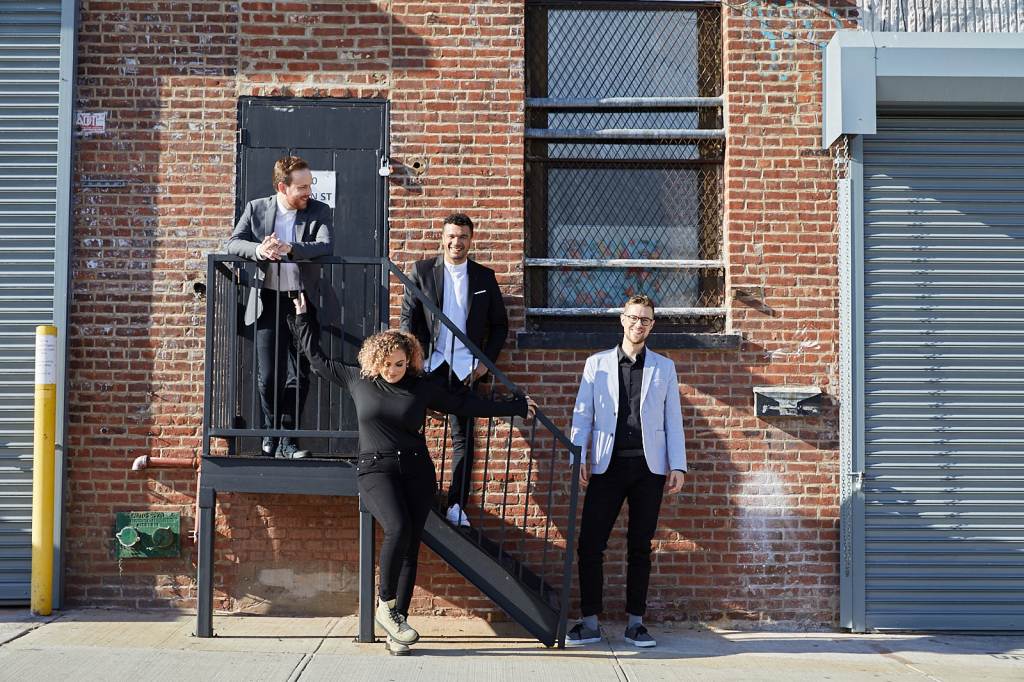
Monday evening saw the Pittsburgh debut of the New York-based PUBLIQuartet in a diverse, inventive program at Chamber Music Pittsburgh. Entitled “Found Futures”, the program focused on particularly forward-thinking composers as part of the quartet’s larger project, What is American. An ambitious offering, the selections offered bore little resemblance to what one might expect at a typical string quartet recital.

PUBLIQuartet, photo credit publiquartet.com

The evening began with one of PUBLIQuartet’s own creations, an improvisation based upon Dvořák’s American quartet (and the original version will be heard at Chamber Music Pittsburgh’s next event with the Dover Quartet). PQ has recast the entire work in their invigoratingly idiosyncratic style, but offered just the first movement on Monday. Nebulous beginnings were achieved through a panoply of extended techniques, and Dvořák’s sunny theme emerged out of the ether. A tapestry of American styles were woven into Dvořák’s music, traversing elements of blues, jazz, rock, and hip-hop.

Vijay Iyer’s Dig the Say was a tribute to the music of James Brown — never before have I heard a string quartet sound so groovy! Pizzicato cello served as a funky bass line, and the ensemble was asked to clap and stomp to further enliven this colorful score. Digging Gold; Deeper Blue by Mazz Swift followed. With elements of improvisation, it was a complex, multi-threaded score of interlocking intricacies, akin to solving a puzzle.

Henry Threadgill’s Sixfivetwo came about as part of the Kronos Quartet’s staggeringly ambitious 50 for the Future endeavor (see here for my review of Kronos performing several works from that project). PUBLIQuartet astutely negotiated the complex score, though to my ears it wasn’t a piece particularly approachable on first listen. A work by Jeff Scott (horn player and founding member of the Imani Winds) closed the first half, Blues for Buddy. Scott revealed to the quartet that Buddy was his late uncle, and the brief but touching work looked inward, sounding as a bluesy elegy.

Like the Scott piece, Jlin’s Baobab was also commissioned by the PUBLIQuartet. An electronic music composer, Jlin had the group improvise over pre-recorded electronica, oftentimes evoking an African drumming ensemble. Three transcriptions for string quartet followed, beginning with music based upon Sun Ra’s Interstellar Low Ways in its first performance. “Come Sunday” from Duke Ellington’s jazz symphony Black, Brown, and Beige was languid and pensive, proving to be effective when cast for these forces.

Originally for solo piano, a prelude by Julia Perry was given in a transcription by PQ’s cellist Hamilton Berry, showing its rich, forward-looking harmonic palette (one is further referred to a recent recording of Perry’s violin concerto by PQ violinist Curtis Stewart). Closing the evening was another PQ original, Wild Women Don’t Get the Blues, featuring the group’s improvisations and musical reflections on female singer-songwriters from generations past: Tina Turner, Betty Davis, Alice Coltrane, and Ida Cox.

Ólafsson and Wang dazzle in spectacular two piano recital

Yuja Wang, piano
Víkingur Ólafsson, piano
Mandel Concert Hall
Severance Music Center
Cleveland, OH
February 23, 2025

Berio: Wasserklavier (No. 3 from Six Encores)
Schubert: Fantasie in F minor, D940
Cage: Experiences No. 1
Nancarrow: Study No. 6 (arr. Adès)
Adams: Hallelujah Junction
Pärt: Hymn to a Great City
Rachmaninoff: Symphonic Dances, Op. 45

Encores:
Brahms: Waltz in A-flat major, Op. 39 No. 15
Dvořák: Slavonic Dance in E minor, Op. 72 No. 2
Brahms: Hungarian Dance No. 1 in G minor
Brahms: Waltz in E major, Op. 39 No. 2
Brahms: Waltz in G-sharp major, Op. 39 No. 3

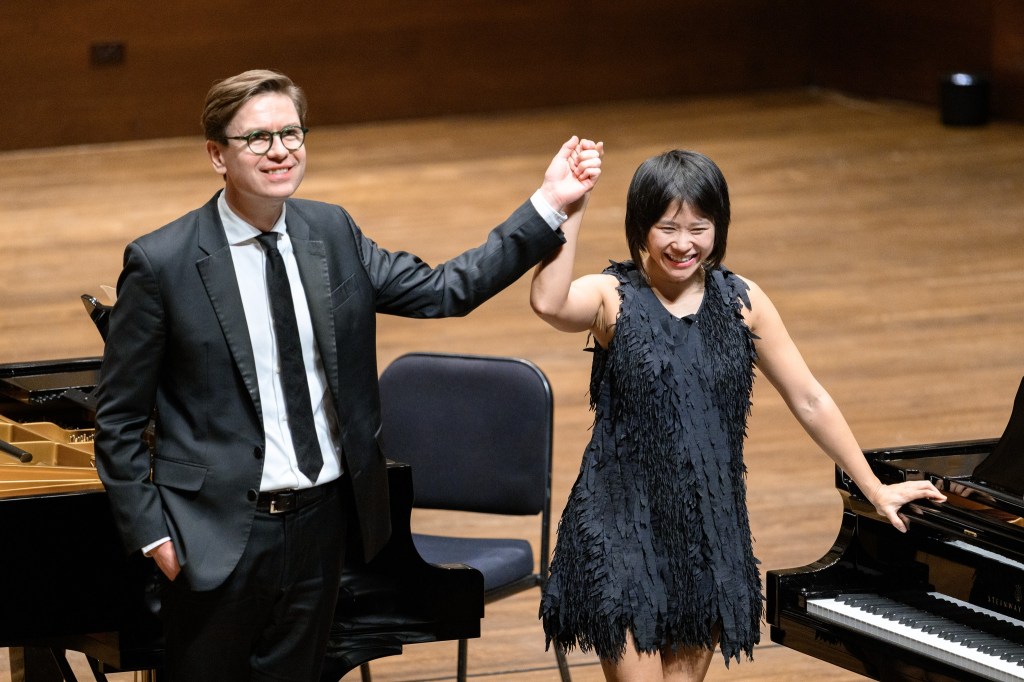
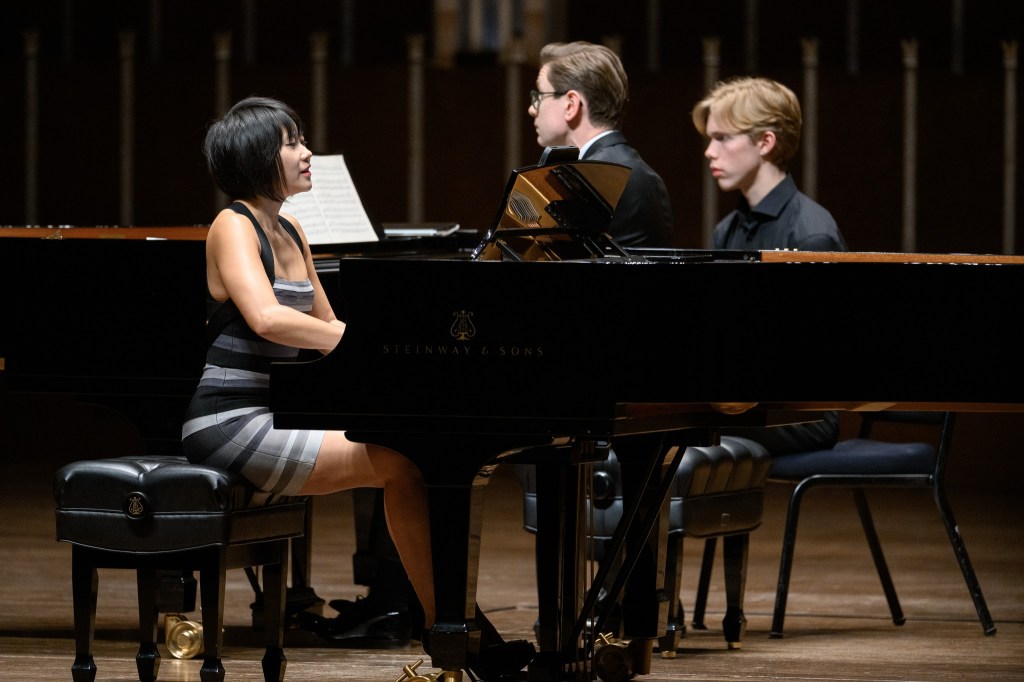
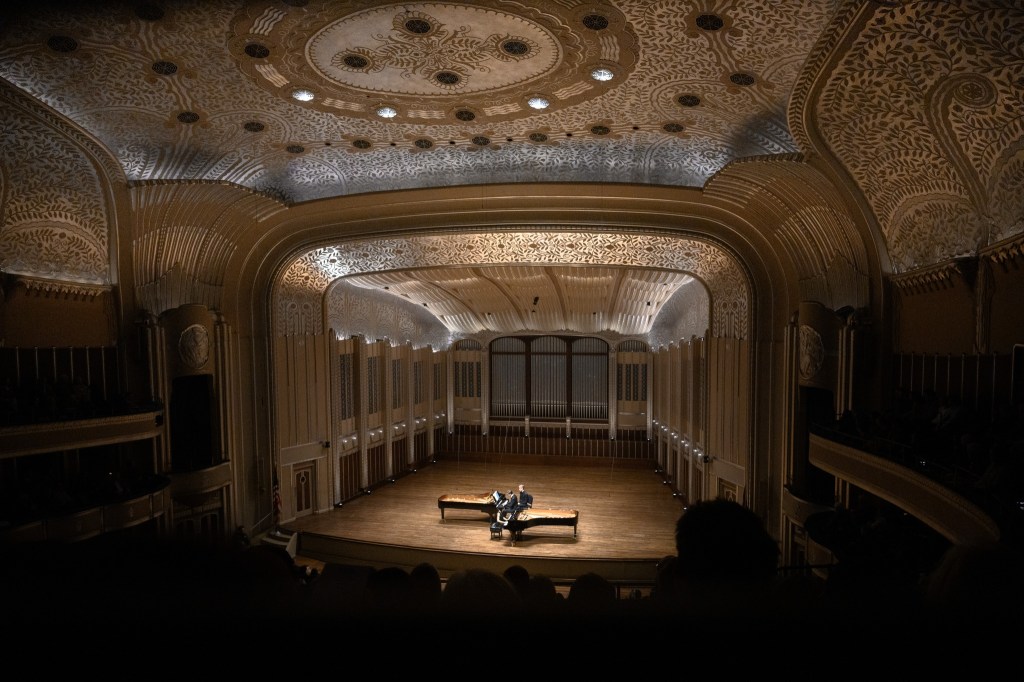
Sunday afternoon marked a remarkable high point in The Cleveland Orchestra’s immensely rewarding recital series, with pianists Yuja Wang and Víkingur Ólafsson joining forces in a stop at Severance Hall on a brief US tour. Both superstar soloists in their own right, it was truly electrifying seeing these two band together. Yet this was more than just a celebrity pairing calculated to maximize box office receipts: their artistic temperaments complemented each other well, showing the whole can be greater than the sum of its parts.

Víkingur Ólafsson and Yuja Wang at Severance Hall, photos credit Human Artist Photography + Cinema 

The program was ripe with discovery, skirting some of the more commonly played fare for two pianos. Luciano Berio’s Wasserklavier began, a meditative opening with liquescent textures freely flowing. The piece made subtle nods to Brahms and Schubert, and fittingly, the pianists artfully segued directly into the latter’s own Fantasie in F minor. Usually played four hands on a single piano, hearing it spread across two instruments gave the work a greater resonance and depth of sound.

Crisply articulated dotted rhythms began, plunging into penetrating drama — rarely will one hear Schubert played with such intensity. Dance-like sections contrasted, exuding joy with the twenty fingers at work, intricately choreographed. A fascinating selection of works from the late 20th-century followed, beginning with John Cage’s Experiences No. 1. The composer’s characteristic minimalist textures were piquantly harmonized, punctuated by silence.

The sixth of Conlon Nancarrow’s 49 studies for player piano followed, made humanly playable in its two-piano arrangement by Thomas Adès (who local concertgoers had the chance to see conduct a remarkable Cleveland Orchestra program just the night before). In this case, the two pianos seemed to be at odds with one another, yet the jagged rhythms fit together in interlocking fashion.

The first half closed with John Adams’ Hallelujah Junction, to my mind, the highlight of the program. Pulsating energy filled Severance Hall with pianistic brilliance. Music of almost perpetual motion — quite a contrast to the minimalism of Cage — gave a larger-than-life portrayal of the namesake town on the California-Nevada border, and demonstrated in no uncertain terms the electric chemistry between these two pianists. The more lyrical pulses of a downtempo section captivated in their rhythmic intricacies, only to build back up to a dazzling density of sound.

Arvo Pärt’s Hymn to a Great City was marked by Wang’s playing in the upper register that rang with the purity of bells, and some delicate filigree that decorated the otherwise barren textures. Rachmaninoff’s Symphonic Dances — his final work — closed the printed program. Hammering out the main theme with pile-driving intensity, an almost manic energy between the two created a rich orchestral sonority. Yet matters were still clear and articulate, with a contrasting theme of haunting lyrical beauty. Sultry waltz rhythms in the central dance were given with stylish playing, and the finale was bold and grandiose, with broad gestures cascading spectacularly.

No less than five encores followed, a delightful selection of dances by Brahms and Dvořák, performed on a single piano, four hands. A charming, convivial close to a memorable afternoon.

Honeck leads lavish program of varied Viennese repertoire in Pittsburgh

Pittsburgh Symphony Orchestra
Manfred Honeck, conductor
Emanuel Ax, piano
Heinz Hall
Pittsburgh, PA
February 21, 2025

Ishizaki: Spin
Mozart: Piano Concerto No. 25 in C major, K503
 Encore:
 Chopin: Nocturne No. 7 in C-sharp minor, Op. 27 No. 1
Korngold: Symphony in F-sharp major, Op. 40

All three works on Manfred Honeck’s generous Pittsburgh Symphony engaged in some fashion with the rich musical heritage of Vienna. The opening turned to a local voice, 24-year-old Pittsburgh area native Hannah Ishizaki, currently a doctoral student in music composition at Princeton (see NEXTpittsburgh for a lovely interview). Receiving its world premiere was Spin, a five-minute curtain-raiser that drew on dance traditions as disparate as Viennese waltz and electronic dance music.

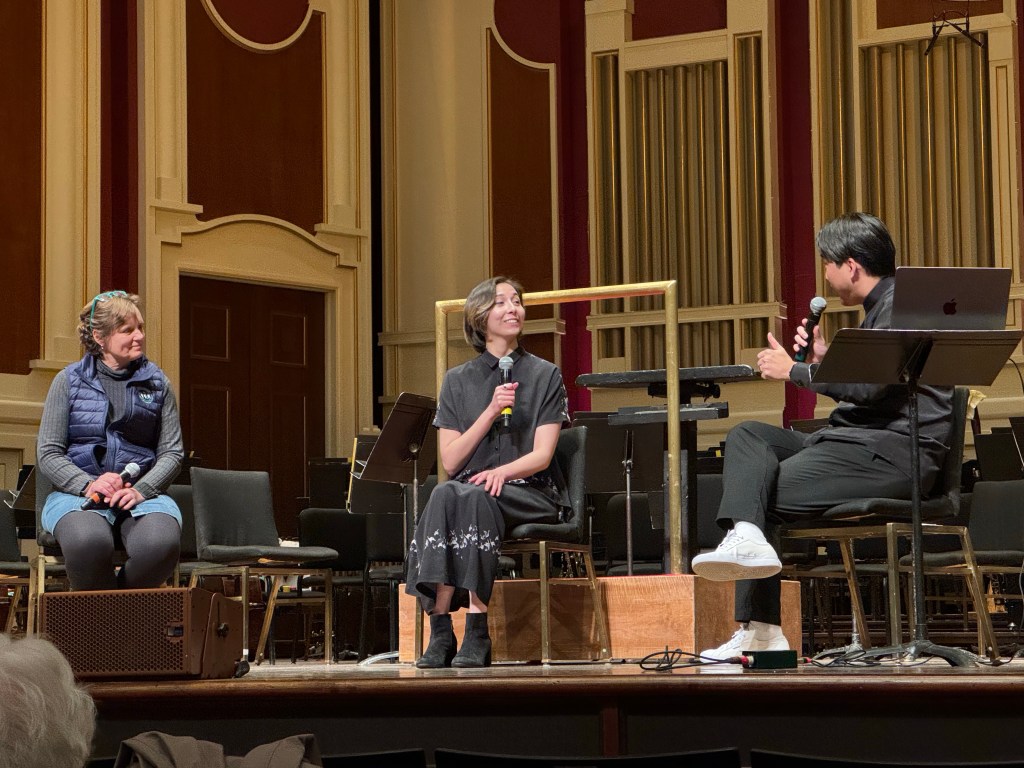
Pre-concert interview with piccolo Rhian Kenny, composer Hannah Ishizaki, and assistant conductor Moon Doh

The work began almost in media res, as if it had always been in motion, dropping the needle in the thick of things. Driving rhythms made for an exciting listen, and Ishizaki made skillful use of the large orchestra she employed. A homecoming for the composer, writing for this orchestra in this hall is not without deep personal significance. A solo passage invoking a kinetic dance club beat was given to the contrabassoon, whom the composer counts as a mentor.

There’s hardly a more choice soloist in a Mozart piano concerto than Emanuel Ax, and the regal no. 25 in C major was a particularly fine vehicle for the pianist’s pearly technique and refined interpretation. A bold opening was fitting for one of the composer’s grandest conceptions in the medium, and the orchestra offered a nuanced reading, with detailed inflections and attention to the inner voices. The pianist’s entry was in the shape of just a single line, hesitant at first, before its full flourishing, displaying the crystalline, rippling playing of this masterful Mozartean.

Easily surmounting the decorative trills, rapid scales, and other technical demands, Ax also offered his own cadenza, an essay artfully expressive and wide-ranging. The central Andante served as a songful blending of piano and orchestra, and the finale brimmed with Viennese elegance, pointed and articulate. More so than the typical Mozart finale, it also probed the lyrical, particularly when Ax was in a lovely dialogue with the winds. A warmly enthusiastic reception — Ax seemed visibly moved — brought him back for an encore in a Chopin nocturne, a quantity which starkly contrasted the languid and the dramatic.

Something of a Mozart of his day, Erich Wolfgang Korngold was a prodigy in Vienna of extraordinary precocity. Fleeing the Nazis, he then found fame and fortune in Hollywood where he became one of the first major composers of film scores (John Williams cites him as a major influence). His sole symphony dates from the mid-1950s and is cast in the unusual key of F-sharp major. It’s not a work one encounters in concert often, but seems to have had a resurgence lately — a performance by the Berlin Philharmonic was quite memorable for this listener, and The Cleveland Orchestra has also programmed it in a recent season.

A jagged primary theme took shape in the clarinet, teetering on the brink of tonality, but firmly residing in the late Romantic tradition. Honeck and the PSO delivered a bracing, razor-sharp reading of this dense score with singular drama. As sumptuous as it gets, it’s almost to the point of excess and — as if one perhaps had a few too many slices of sachertorte. A high-octane scherzo followed, further showing the variegated color spectrum, with particularly piquant splashes from the piano and celesta. Matters were at the very edge of control without ever falling into chaos, and the brass passages had the cinematic effect of a film score.

Korngold looked towards Austrian compatriot Anton Bruckner in the towering slow movement, conceived in this case as a memorial to FDR. Brass and strings resounded through Heinz Hall, swelling to lush textures, though a solo passage for flute was delicately forlorn. The finale returned to the vigor and angular gestures of the opening, and militant brass fanfares threaded George M. Cohan’s Over There into the score. A welcome opportunity to hear a major if infrequently performed work — and certainly a highlight of the PSO season thus far.

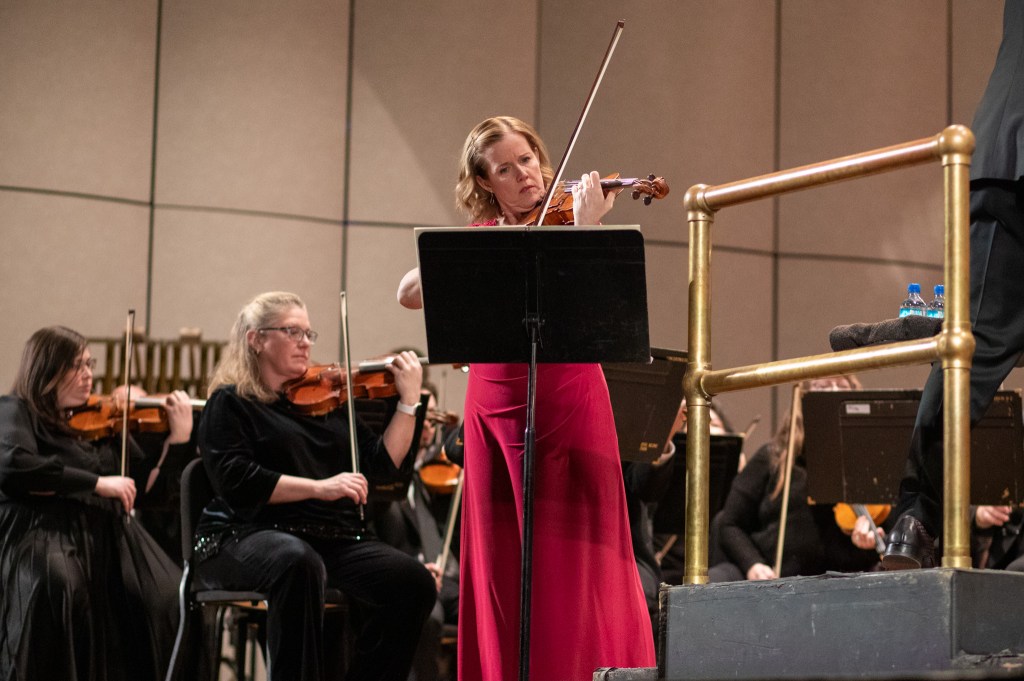
In a brief post-concert performance, a quintet of PSO string players offered the first movement of Dvořák’s String Quintet No. 2, Op. 77. The use of double bass gives this work an orchestral heft, and made for a delightful capstone to the Dvořák heard the previous week.

Manfred Honeck, Emanuel Ax, and the Pittsburgh Symphony

A celebration of the national parks at the Wheeling Symphony

Wheeling Symphony Orchestra
Josh Devlin, conductor
Madeline Adkins, violin
Capitol Theatre
Wheeling, WV
February 8, 2025

Jackfert: Foggy Moon Over the Gorge
Lincoln-DeCusatis: The Maze
Tchaikovsky: Symphony No. 4 in F minor, Op. 36

Legendary as the US national park system is, there isn’t all that much music directly inspired by it (Grofé’s Grand Canyon and Death Valley suites, Messiaen’s From the canyons to the stars – am I missing any others?). Saturday afternoon’s performance by the Wheeling Symphony Orchestra celebrated the wonders of the park system with two recent additions to the list, acknowledging West Virginia’s own New River Gorge and Utah’s Canyonlands.

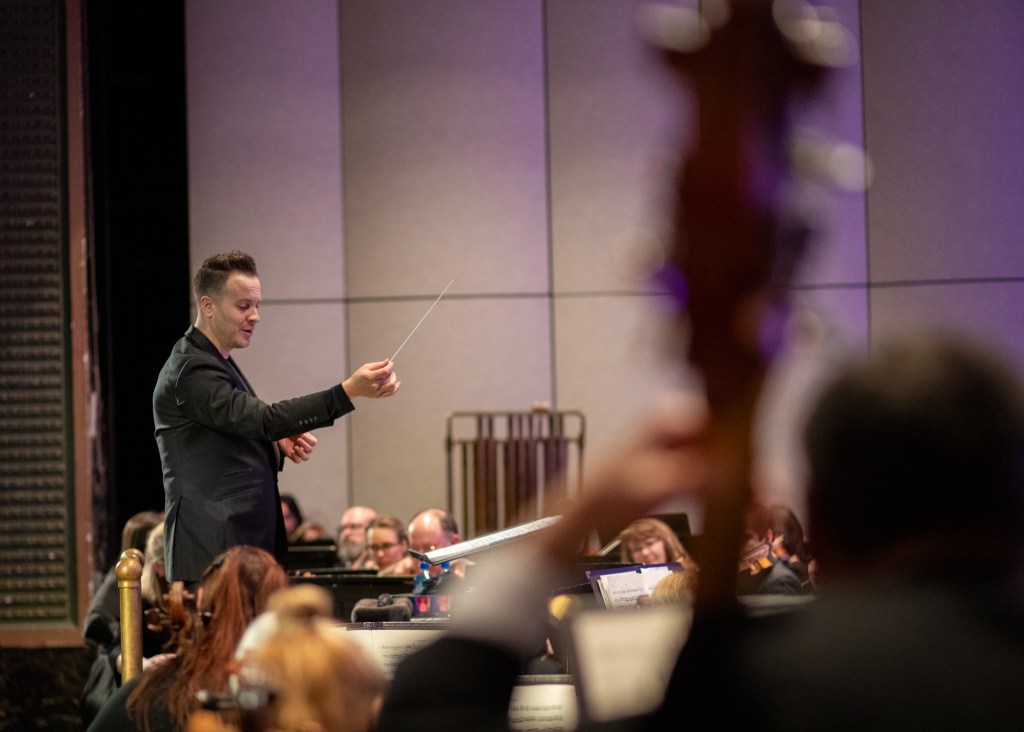
Josh Devlin conducts the Wheeling Symphony Orchestra, photos credit WSO

A native of Charleston, WV, composer Matthew Jackfert cites a late-night drive over the Glade Creek Bridge just outside of New River Gorge as inspiration for Foggy Mountain Over the Gorge, a seven-minute essay that artfully captures its striking scenery (an excerpt may be heard here). Colorful, individualistic writing painted the foggy nightscape, a lovely homage to the natural beauty of the composer’s home state.

In an effort to reach out to the community at large, local students were asked to create art inspired by West Virginia’s scenery, on display in the theater’s ballroom and projected onstage during the performance of Jackfert’s piece. In addition, the WSO was enhanced by string students from the Wheeling Symphony Youth Orchestra performing side-by-side.

Moving matters westward was The Maze, a 2021 violin concerto by Nathan Lincoln-DeCusatis, inspired by the titular formation in Canyonlands. Written for Madeline Adkins, concertmaster of the Utah Symphony, she served as a commanding soloist here in Wheeling as well. In his prefatory remarks, the composer explained that the soloist serves as a lone explorer of the canyon, and the orchestra represents the landscape itself. A kaleidoscopic chord opened and would recur throughout, serving as a re-orienting signpost amidst the labyrinthine walls of the craggy canyons. Adkins was almost in perpetual motion, as if a particularly enthusiastic explorer, and a dazzling cadenza heralded a final push to the close.

Tchaikovsky’s Fourth Symphony rounded off the program with a mainstay of the repertoire. An arresting brass fanfare opened, and music director Josh Devlin guided the orchestra through the vast swath of the expansive first movement with a keen sense of direction and purpose. A languid oboe solo marked the slow movement, and one was particularly struck by the richness of the strings, with inflections of Russian folk music. In an almost solely pizzicato affair, the strings exerted control and precision during even the softest moments of the scherzo. Bombastic as it was, the finale capped the work off with vigor, not excess.

Madeline Adkins with the WSO

Elder leads Pittsburgh Symphony in brooding Sibelius, Shostakovich – and an interlude in the English countryside

Pittsburgh Symphony Orchestra
Sir Mark Elder, conductor
Cynthia Koledo DeAlmeida, oboe
Heinz Hall
Pittsburgh, PA
January 31, 2025

Sibelius: Pohjola’s Daughter, Op. 49
Vaughan Williams: Concerto in A minor for Oboe and Strings
Shostakovich: Symphony No. 15 in A major, Op. 141

Sir Mark Elder is certainly a conductor with a knack for devising intriguing and offbeat programs, and his Friday night appearance with the Pittsburgh Symphony was no exception. Sibelius’ tone poem Pohjola’s Daughter opened, beginning with darkly brooding material from the cellos. Vigorous brass joined in the lush orchestration, though any glimmers of hope in this grisly tale from the Kalevala were duly snuffed out for its quiet, somber ending. On either side of the stage, plot events from the source material were projected in sync with the music — though Sibelius’ writing is so detailed, one hardly needed it.

Sir Mark Elder, Cynthia Koledo DeAlmeida, and the Pittsburgh Symphony, photo credit Josh Milteer

Vaughan Williams’ 1944 Oboe Concerto followed, featuring PSO principal Cynthia Koledo DeAlmeida. This is a work the PSO has performed only once before, and nearly 30 years ago. DeAlmeida served as soloist in that performance as well, and in prerecorded remarks, she reflected on playing it as a relatively new addition to the PSO’s ranks, to now revisiting it decades later as a seasoned member.

Because the oboe doesn’t project particularly well, Vaughan Williams reduced the orchestral accompaniment to strings alone. The concerto serves as a companion piece to the composer’s Fifth Symphony (the “Pastoral”): it, too, purveys a ponderous pastoralism, and the concerto’s finale came from sketches originally intended for the symphony. DeAlmeida offered a lyrical, songful tone, keenly phrased and in delicate balance with her stringed colleagues. Cadenzas at various intervals showed her limber and dexterous.

The central movement took its cue from English country dances, sprightly and charming. The closing scherzo traversed the oboe’s range, and saw the soloist in fleet interplay with the orchestra. A closing section returned to the tender and reflective, and theme that perhaps interpolates The Last Rose of Summer in quintessential English fashion.

Shostakovich’s Fifteenth and final symphony occupied the latter half. Quite unlike any of the composer’s previous groundbreaking works in the form — or any symphony that came before or after, for that matter — it reflects on a lifetime of turmoil and triumphant in idiosyncratic fashion. Pings in the glockenspiel began, answered by a silvery flute — flippant and unsettled as only Shostakovich could do. Themes from William Tell and other works were seamlessly woven in, an eerie soundscape with the composer in a dreamlike trance of music by others that resonated with him.

A low brass chorale opened the lugubrious slow movement, highlighted by a devastatingly austere cello solo (Anne Martindale Williams). Angular material in the clarinet marked the Allegretto, along with a fine solo from concertmaster David McCarroll. Echoes of Wagner and many others were heard in the eclectic finale, as if Shostakovich wanted to use the final movement of his final symphony to comprehensively reflect on all that inspired him. The ticking of clocks, achieved through woodblocks (a device previously used in his iconoclastic Fourth Symphony), made for an ending as extraordinary as it was enigmatic.

Pittsburgh Opera resident artists shine in Haydn’s Armida

Pittsburgh Opera
Antony Walker, conductor
Haley Stamats, director

Matthew Soibelman, Idreno
Lauryn Davis, Armida
Fran Daniel Laucerica, Rinaldo
Erik Nordstrom, Ubaldo
Audrey Welsh, Clotarca
Shannon Crowley, Zelmira

CAPA School Theater
Pittsburgh, PA
January 28, 2025

Haydn: Armida, Hob. XXVIII:12

The overwhelming majority of the standard opera repertoire dates from the 19th and into the early 20th centuries. Hearing a work outside that admittedly fertile era is always a welcome opportunity, afforded locally in late January by Pittsburgh Opera’s presentation of Haydn’s 1784 dramma eroico, Armida. The subject matter deals with the First Crusade, and inspired a litany of music, including earlier operatic treatments by Handel (Rinaldo) and Lully (Armide).

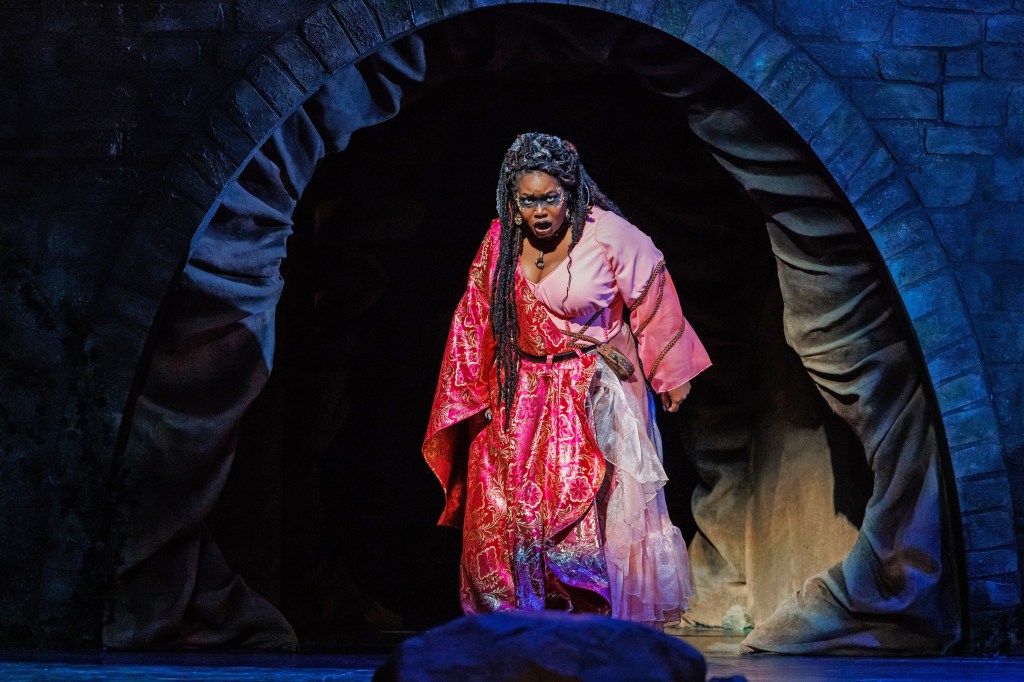
Armida (Lauryn Davis), photos credit David Bachman Photography for Pittsburgh Opera

The forces Armida required conveniently allowed all eight members of this year’s corps of resident artists a moment in the spotlight — six vocalists, along with pianist Maeve Berry and assistant stage director Dana Kinney. The Pittsburgh Opera Orchestra under the baton of Antony Walker opened crisp and articulate, just as adept in the late 18th-century style as they are in Puccini — though I did find the obvious electronic sound of the continuo a bit jarring. Bass Matthew Soibelman made the first vocal appearance in a declamatory recitative.

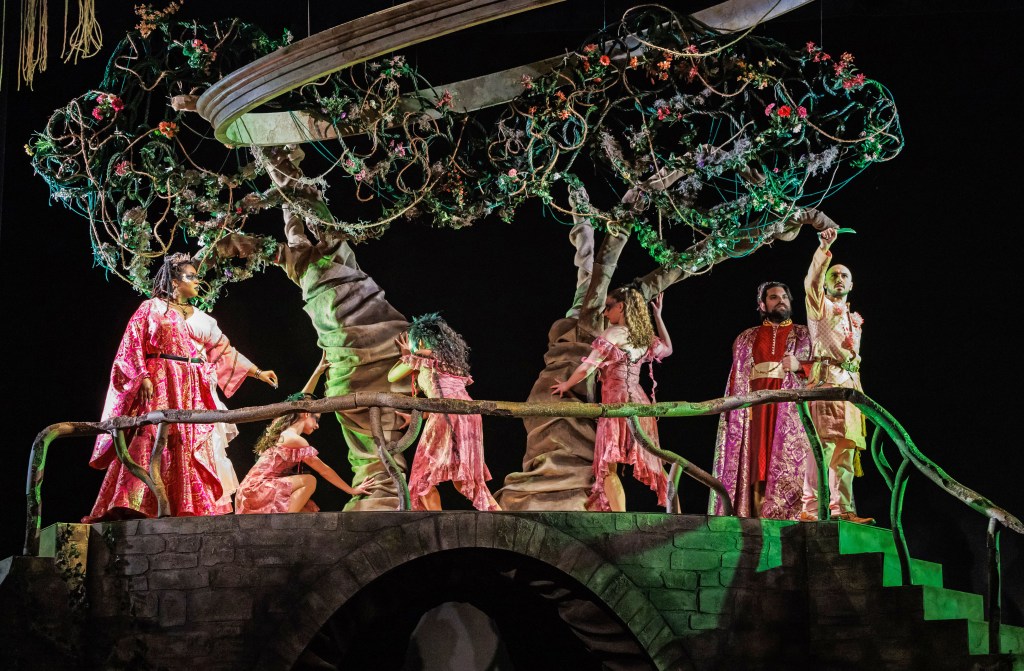
A troupe of dancers from Attack Theatre added a further expressive dimension to the performance, and provided narrative in the absence of text. I particularly enjoyed the various duets when the singers’ voices harmoniously blended — Audrey Welsh as Clotarca (originally, a tenor named Clotarco, but rescored and renamed here to fit the mezzo-soprano) with Shannon Crowley as Zelmira, and certainly the two leads: Fran Daniel Laucerica’s loving and longing take on Rinaldo, with Lauryn Davis as the imposing titular sorceress. With elements of the supernatural achieved through clever staging, the work ultimately drew to a dark and stormy end in this quintessential opera seria.

Armida (Lauryn Davis), nymphs (dancers courtesy of Attack Theatre), Idreno (Matthew Soibelman), Rinaldo (Fran Daniel Laucerica)