Sumptuous Sibelius anchors Boston Symphony’s diverse program

Boston Symphony Orchestra
Andris Nelsons, conductor
Lisa Batiashvili, violin
Symphony Hall
Boston, MA
October 14, 2021

Still: Threnody (In Memory of Jan Sibelius)
Strauss: Symphonic Fantasy on Die Frau ohne Schatten
Sibelius: Violin Concerto in D minor, Op. 47

Encore:
Machavariani: Doluri

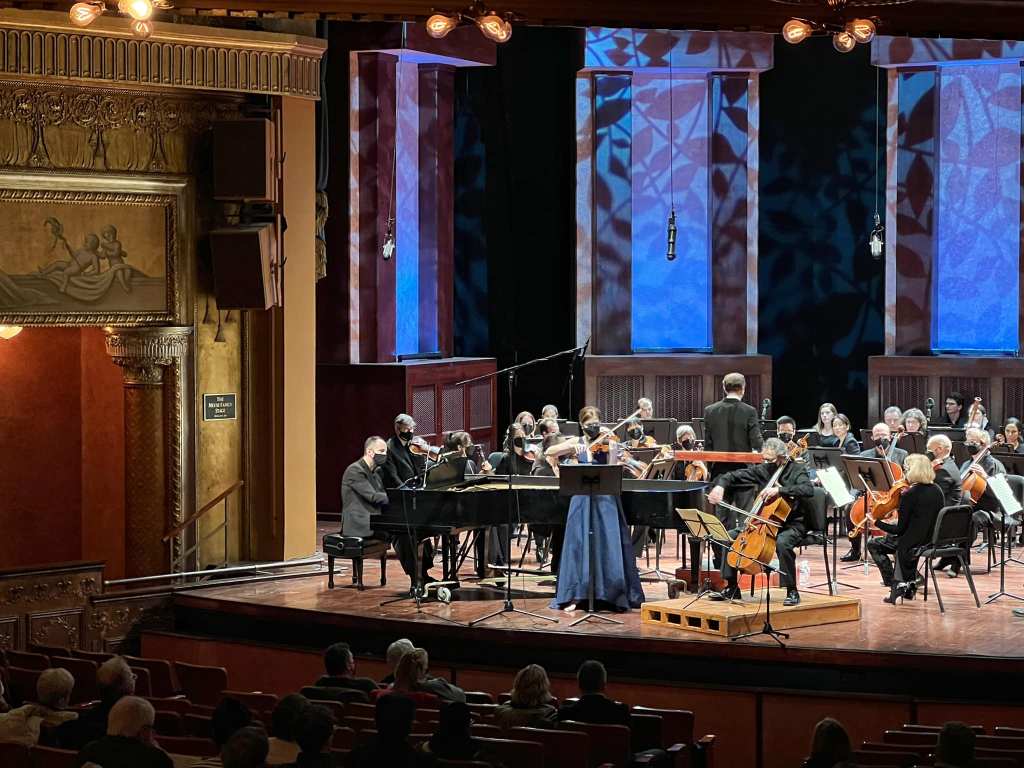
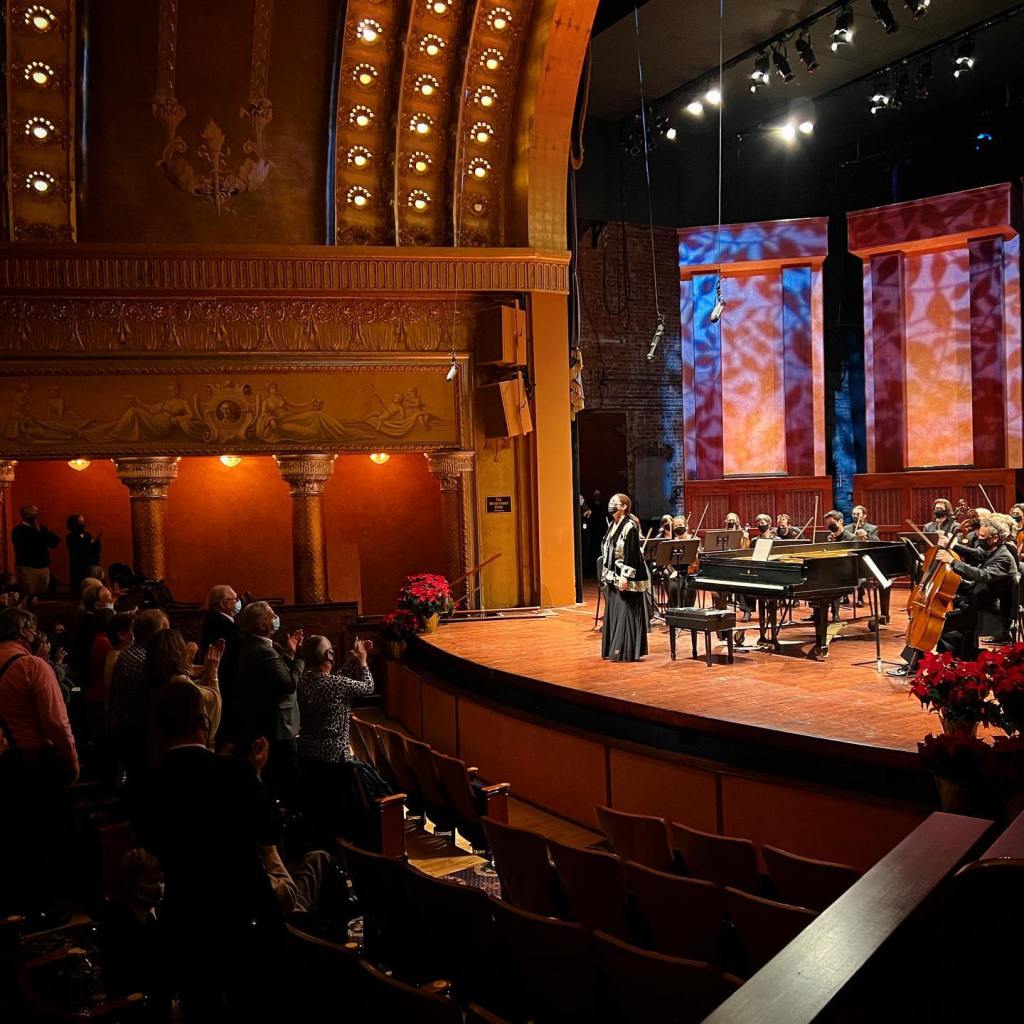
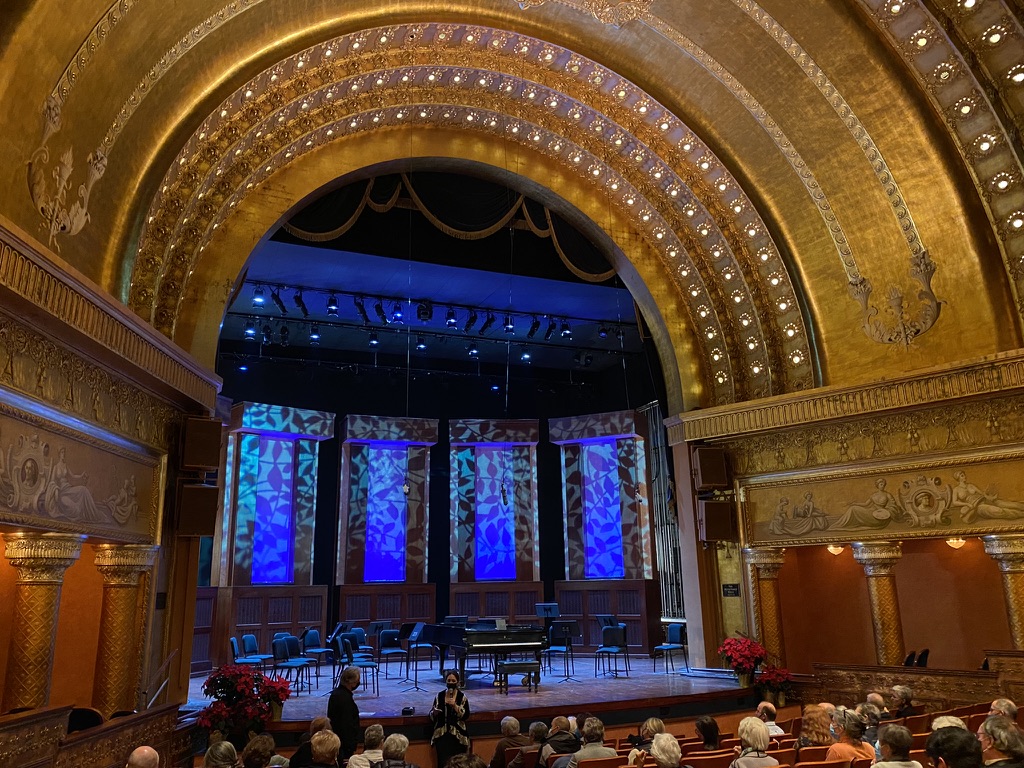
The Boston Symphony and music director Andris Nelsons offered a program that not only boasted very fine playing, but presented three selections that while outwardly diverse, revealed fascinating connections. The evening opened with music of William Grant Still, namely his 1965 Threnody, written to elegize Jean Sibelius. Sibelius was familiar with Still’s scores, and had nothing but high praise for the American. The Threnody was brief but of powerful impact. An arresting beginning gave way to a melancholic, Sibelius-like melody. The work proceeded in the manner of a doleful funeral march, punctuated by tolling bells – a touching tribute from one great composer to another.

Andris Nelsons and Lisa Batiashvili, photo credit Aram Boghosian

Continuing last weekend’s exploration of Strauss, the ensemble next turned to the Symphonic Fantasy on Die Frau ohne Schatten in its first BSO performance (as with the Still). Strauss returned to his 1919 opera near the end of his life, completing the present fantasy in 1947, in twenty or so minutes capturing the essence of the opera – much like Liszt did for piano in his major operatic fantasies. A cataclysmic opening statement pointed towards a lush, coloristic workout for the orchestra, seamlessly blending together the opera’s themes in a vibrant tapestry. The low brass were a particular standout as the music surged and swelled in this powerful performance, one that surely made the case for including this all too often overlooked work alongside the composer’s best-known tone poems.

Sibelius’ incomparable Violin Concerto occupied the entire second half, tying the program together: after the opening selection, it was only fitting to include a work by Sibelius himself, and moreover, the concerto’s 1905 premiere in its now standard revised version had no less than Strauss at the podium. Lisa Batiashvili proved to be a choice soloist right from the opening bars. Imbued with a stylistically appropriate Nordic chill, her deeply burnished tone resounded with searing passion, and I was especially struck by her complete control as the music soared far into the violin’s highest register. The massive cadenza, a structural underpinning of the opening movement, further put Batiashvili’s stunning virtuosity on display. After the fire and passion, the central Adagio di molto countered with a muted lyricism. Both soloist and orchestra alike deftly brought out the music’s subtleties while the dance rhythms of the work’s finale were delivered with a singular intensity. As a well-deserved encore, the soloist offered Alexi Machavariani’s Doluri, a jaw-dropping study in double stops and perpetual motion.

The 3 Bs: Blomstedt, Beethoven, and Blossom

Cleveland Orchestra
Herbert Blomstedt, conductor
Garrick Ohlsson, piano
Blossom Music Center
Cuyahoga Falls, OH
August 1, 2021

Beethoven: Piano Concerto No. 4 in G major, Op. 58
Beethoven: Symphony No. 7 in A major, Op. 92

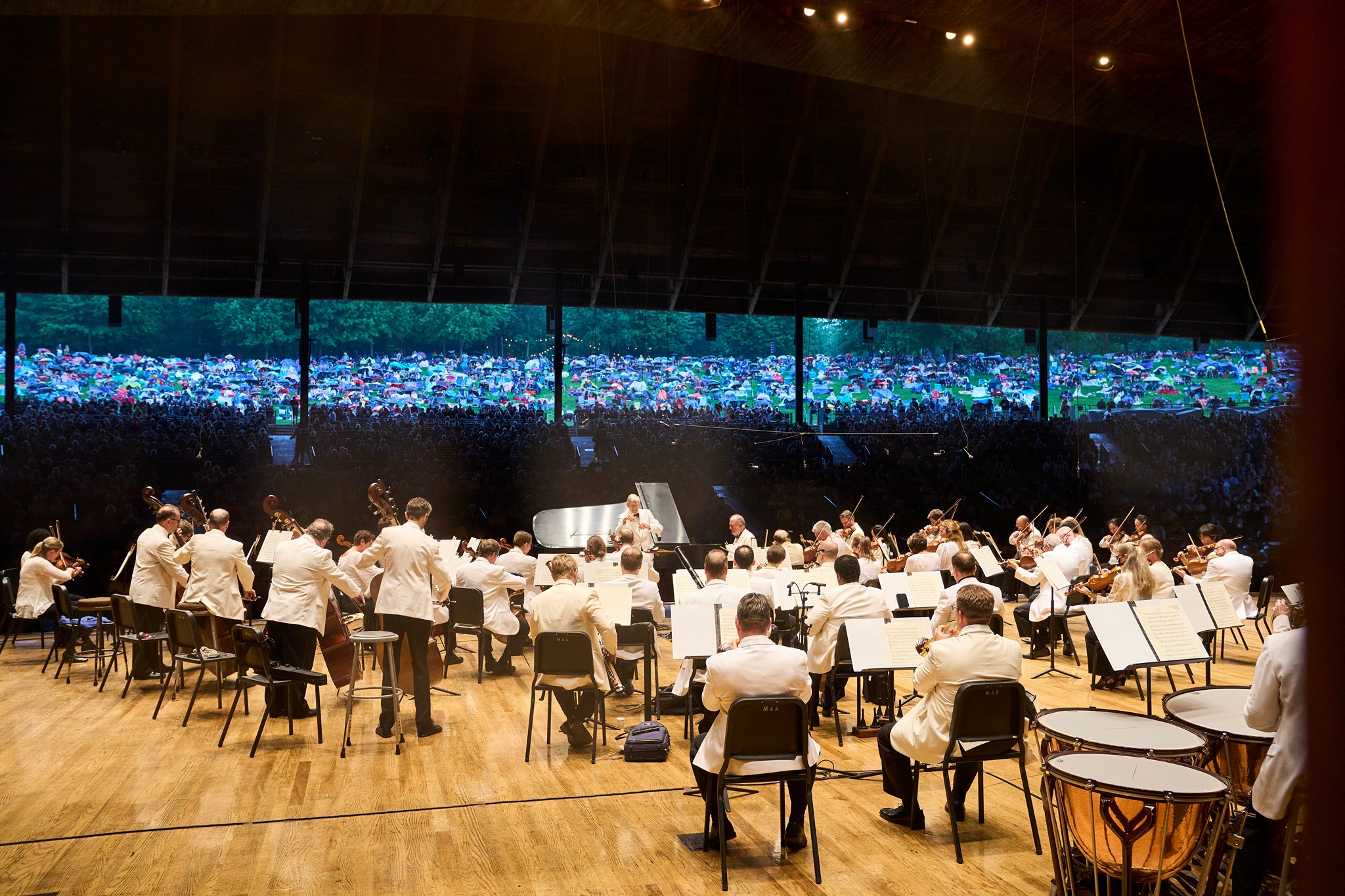
Two of The Cleveland Orchestra’s veteran collaborators – Herbert Blomstedt (now a remarkable 94 years old!) and Garrick Ohlsson – combined forces for a memorable summer evening at Blossom, offering an emblematic piano concerto and symphony of Beethoven. On a personal note, this was my first time seeing a full orchestra in person since before the pandemic, and what a pleasure it was to be back in the audience.

The entire trajectory of the Fourth Piano Concerto is set by the brief but beguiling opening statement in the piano. Ohlsson offered a gentle sound, deftly voiced and articulated. A lyrical presentation of the movement’s primary themes followed in the orchestra, a supple accompaniment encouraged by Blomstedt’s graceful direction. Ohlsson blended beautifully with the orchestra with his sterling technique being used for the noblest of causes. Still, the stormier passages were perhaps a bit too genial, certainly when considering what one might expect from the often fiery playing of a pianist known for his mastery of the Romantic repertoire. A wondrous purity of tone was cultivated in the slow movement, and what ensued was an enigmatic dialogue between pianist and orchestra. At this point, the clouds opened up for a heavy rainstorm, but the performers onstage remained unfettered. The finale served as a fitting foil to the seriousness of the preceding, jocular and elegant.

While the Seventh Symphony had bellicose beginnings, it was the gracefulness of Blomstedt’s baton-less conducting that made the strongest impact; the rhythmic motifs that propelled matters forward were lithe and stylish. Top-drawer playing was heard throughout the orchestra, although it was the winds that made for particular standouts with Joshua Smith’s pivotal flute solo pointing the way to the heart of the symphony. The indelible Allegretto was of chilling effect, intensified by the long-bowed strings. In the latter two movements, Blomstedt did much to capitalize on the vivaciousness of the omnipresent dance rhythms, music as joyous and vigorous as anything Beethoven wrote.

2021 Cleveland International Piano Competition: Semi-final round

Gartner Auditorium
Cleveland Museum of Art
Cleveland, OH
July 29 – August 1, 2021

Inevitably postponed last summer due to the pandemic, the Cleveland International Piano Competition has made a remarkable comeback here in 2021, a wonderfully exciting return to in-person performances. An initial pool of over 250 applicants from more than 40 countries was pared down to 26 contestants, all of whom performed in the Competition’s first two rounds. Owing to the travel and health restrictions that still persist, these rounds were conducted virtually, filmed at venues across the world – and available for free viewing on YouTube. Eight outstanding semi-finalists were selected to proceed onsite in Cleveland, a cohort to be further narrowed down to four finalists who will perform a chamber music round with the Escher Quartet and a concerto round with The Cleveland Orchestra under the baton of Jahja Ling.

Compared to the relative brevity of the first two rounds, the semi-finals offer an even more in-depth portrait of each artist, performing a recital of approximately 40 minutes. A few new and welcome additions for this year’s edition: each semi-finalist included in their program a popular song transcription commissioned from composer Alexey Kurbatov. Four selections were available, namely “America” from Bernstein’s West Side Story, Queen’s “Bohemian Rhapsody”, themes from Mission Impossible, and John Williams’ Olympic Fanfare. Regrettably, none of the eight selected the Williams piece, but perhaps a recording can be posted in due course. I also hope publication of these scores is imminent as they undoubtedly can serve as particularly enjoyable encore pieces.

Also for the first time was the inclusion of piano duets – the two performers from each session teamed up following their solo material for either the Fantasie in F minor by Schubert or Mozart’s Sonata for Two Pianos in D major. A lovely addendum that not only tested the contestants’ ability to collaborate with another pianist, but encouraged a spirit of camaraderie. Finally, excellent program notes for every piece performed – from the first round to the finals – were provided by Marissa Glynias Moore, Anna M. O’Connell, and Marco Ladd. Indispensable reading for attendees and a veritable crash course in piano literature. Below are some brief impressions I had of each semi-finalist.

Session 1
July 29, 2021

Ying Li
Mozart: Piano Sonata No. 13 in B-flat Major, K. 333
Grainger: “Ramble on Love” from Der Rosenkavalier
Bartók: Piano Sonata, Sz. 80
Schifrin: Themes from Mission Impossible (arr. Kurbatov)

Honggi Kim
Schifrin: Themes from Mission Impossible (arr. Kurbatov)
Chopin: Twelve Etudes, Op. 25

Schubert: Fantasie in F Minor, D. 940

Ying Li (China) opened the semi-final round with a Mozart sonata, delicate and balanced, exuding the pearly classical style. I found her pacing of the slow movement a bit hard to follow but was quite taken by the sprightly finale. Grainger’s so-called Ramble on Love, paraphrasing themes from Strauss’ Rosenkavalier, gave sumptuous treatment to the source material’s lush and languid melody. Bartók’s Piano Sonata was for me the highlight of her performance, opening with a manic energy – and the live video screens did much to enhance the audience experience, offering close-ups of the intricate hand-crossings.

Honggi Kim (South Korea) opened with the same piece with which Li closed, namely the Kurbatov Mission Impossible transcription. Kim was perhaps a bit more percussive than Li; both displayed how the composer brilliantly interpolated the familiar themes. All contestants are required to present a Chopin etude in the first two rounds – here in the semi-finals, Kim offered all twelve etudes from Op. 25. An ambitious undertaking to be sure, though I found his playing fitfully uneven. No. 2, for instance, would have benefitted from greater clarity, although I did like the way he brought out melodic material in the left hand. In No. 5, one wanted more accentuated contrast between the dissonant sections and the lyrical. The rapid double thirds of No. 6 were quite impressive, however. Op. 25 is certainly an end-weighted set, and perhaps one’s performance should be judged primarily on the final three which concluded on a high note: the rapid octaves of No. 10, a chillingly dramatic “Winter Wind”, and a rather marvelous finish in the intense depths of the “Ocean” etude.

Li and Kim were impressive four-hands partners in the Schubert Fantasie, bringing out contrasts from the brooding to the dancing.

Session 2
July 30, 2021

Jiarui Cheng
Scarlatti: Sonata in B Minor, K. 87
Chopin: Barcarolle in F-sharp Major, Op. 60
Rachmaninov: Variations on a Theme of Corelli, Op. 42
Bernstein: “America” from West Side Story (arr. Kurbatov)

Yedam Kim
Chopin: Polonaise-Fantaisie in A-flat Major, Op. 61
Prokofiev: Sonata No. 4 in C Minor, Op. 29
Mercury: Bohemian Rhapsody (arr. Kurbatov)

Mozart: Sonata for Two Pianos in D Major, K. 448

Jiarui Cheng (China) selected one of the more introspective of the Scarlatti sonatas, emphasizing its lyrical quality. Continuing the thread, he did much to bring out the wistful melancholy in Chopin’s late gem, the Barcarolle. In Rachmaninov’s Corelli Variations, Cheng sculpted an individual character in each variation – an excellent performance. Kurbatov’s transcription of Bernstein’s “America” ended matters on a jovial note.

Yedam Kim (South Korea) opened with a mesmerizing account of Chopin’s Polonaise-Fantaisie – contemporaneous with the previously-heard Barcarolle – the composer’s crowning achievement in the polonaise form. A commanding performance of Prokofiev’s Fourth Sonata followed, with searching, unsettling material leading to a bright and brilliant finale. In the Queen original, “Bohemian Rhapsody” is something of a mini tone poem with its wealth of thematic material and operatic narrative and dramatic flow – qualities very much brought out in Kim’s performance, perhaps the most impressive of the Kurbatov transcriptions.

Session 3
July 31, 2021

Rafael Skorka
Bernstein: “America” from West Side Story (arr. Kurbatov)
Leighton: Fantasia Contrappuntistica, Op. 24 (“Homage to Bach”) (1956)
Brahms: Sieben Fantasien, Op. 116

Martín García García
Schubert: Wanderer-Fantasie in C Major, D. 760
Liszt: “Les cloches de Genève (Nocturne)” from Années de Pèlerinage I, S. 160
Liszt: Étude de Concert, S. 145, No. 2 (“Gnomenreigen”)
Liszt: Transcendental Etude, S. 139, No. 10
Mercury: Bohemian Rhapsody (arr. Kurbatov)

Schubert: Fantasie in F Minor, D. 940

Rafael Skorka (Israel) had confident beginnings with a memorable account of Bernstein’s “America”. The most intriguing discovery during the semi-final round came in the shape of Kenneth Leighton’s Fantasia Contrappuntistica, a 1956 homage to Bach (and to Busoni, given the elder composer’s monumental work of the same title). A virtuosic opening gave way to a pensive chorale and a pair of fugues rounded off the work. Skorka deftly negotiated the contrapuntal intricacies to bring matters to a vigorous close. The pianist continued to make a strong showing in Brahms’ Fantasies, Op. 116, just as convincing in the lyrical selections (nos. 2, 4, and the touching chorale of no. 6) as the more extrovert ones, giving the first piece an energetic workout and reserving the most overt virtuosity for the seventh and final fantasy.

Martín García García (Spain) offered an arresting account of Schubert’s ingenious Wanderer-Fantasie. While his tone at times veered a bit too percussive for my taste, he did much to bring out a wide dynamic and dramatic contrast and a keen sense of the work’s large-scale architecture. An interesting selection of three Liszt pieces followed. Deft use of the pedal did much to bring out the sonorities of the titular bells in Les cloches de Genève while García conveyed much charm in the impish legerdemain of Gnomenreigen. The Transcendental Etude No. 10 was technically impressive, although I found myself longing for even more firepower.

Session 4
August 1, 2021

Byeol Kim
C. Schumann: Notturno in F Major, Op. 6, No. 2
Schumann: Arabeske in C Major, Op. 18
Mendelssohn: Fantasie in F-sharp Minor, Op. 28
Mercury: Bohemian Rhapsody (arr. Kurbatov)
Jalbert: Toccata (2001)
Gottschalk: The Union, Op. 48

Lovre Marušić
Scarlatti: Sonata in E Major, K. 380
Schumann: Kreisleriana, Op. 16
Mercury: Bohemian Rhapsody (arr. Kurbatov)

Mozart: Sonata for Two Pianos in D Major, K. 448

Byeol Kim (South Korea) assembled the most diverse and wide-ranging semi-final program, beginning with music from both the Schumanns. Clara’s Notturno boasted a haunting, Chopinesque melody, a performance which should put Kim in the running for the Female Composer Prize, one of over a dozen special prizes being offered. A limpid account of Robert’s Arabeske followed, and Mendelssohn’s Fantasie in F sharp minor was given a passionate and dramatic performance. I really enjoyed the way Kim brought out the sweeping lyrical main theme in her take on the “Bohemian Rhapsody” transcription. Jalbert’s Toccata was a breathless study in perpetual motion, and Gottschalk’s Union, a wonderfully inventive cornucopia of Americana, put Kim’s searing virtuosity and vast dynamic range on full display. A clear audience favorite, she was the only one of the eight to receive a standing ovation.

Lovre Marušić (Croatia) began with a stately account of Scarlatti’s K380 sonata. Schumann’s extensive Kreisleriana followed. I felt Marušić’s reading would have been even more engaging with sharper contrasts between the wide range of expressions the work explores, but I certainly sensed the pianist becoming increasingly self-assured as the work progressed. Sunday’s session was a high note on which to conclude the semi-finals as we await the jury’s announcement of the four finalists, and the fine level of pianism we can expect from them in the subsequent chamber and concerto rounds.

Alexi Kenney and Renana Gutman celebrate the return of live chamber music

Alexi Kenney, violin
Renana Gutman, piano

St. Paschal Baylon
Highland Heights, OH
April 27, 2021

Bach: Sonata for Violin and Keyboard No. 3 in E major, BWV 1016
Strozzi: L’Eraclito amoroso – No. 14 from Cantate, ariette e duetti, Op. 2 (arr. Kenney)
Messiaen: Thème et variations
Kurtág: Hommage à J.S.B., from Signs, Games and Messages
Messiaen: Louange à l’Immortalité de Jésus, from Quatuor pour la fin du temps
Schumann: Fantasiestücke, Op. 73
Mozart: Violin Sonata No. 35 in A major, K526

Encore:
Paradis: Sicilienne

In a sure sign of light at the end of the tunnel, the Cleveland Chamber Music Society returned to live, in person performances Tuesday evening. Instead of the usual venue at Plymouth Church, an alternative was to be found in the bright and airy St. Paschal Baylon in Highland Heights, a space rather more conducive to the requisite social distancing (the remaining two performances on the calendar will take place here as well). Violinist Alexi Kenney and pianist Renana Gutman offered a thoughtfully-curated recital, generously filled with curiosities and discoveries.

Bach is always a fine choice with which to begin a recital, and the Sonata for Violin and Keyboard No. 3 was indeed such a selection. The bright E major tonality made for a stately opening, and the lively Allegro that followed purveyed seamless blending of violin and piano: these duo sonatas were pivotal amongst the composer’s output insofar as they gave both instruments roughly equal prominence. A passacaglia movement served as the emotional core of the work, given a heartfelt reading, while the finale was as uplifting as anything Bach wrote. Barbara Strozzi’s brief song L’Eraclito amoroso was presented in a transcription by Kenney. Long-breathed playing drew out a beguiling melody, delicately ornamented.

Following Baroque beginnings, the balance of the first half was rounded out by works from the 20th century. Messiaen’s Thème et variations is an early work, dating from 1932. Even in this early incarnation, the rich chromaticism made its composer unmistakably recognizable, with splashes of color hinting at all that was to come. Despite its the work’s brevity in five variations, Messiaen nonetheless found the space and time for matters to crest to a searing passion. Kurtág’s Hommage à J.S.B. (J.S. Bach, that is) made for a thoughtful connection to the program’s opening. A monologue for violin, the textures obliquely hinted at Baroque dance rhythms. (Local audiences might recall Isabelle Faust memorably presenting a Kurtág piece from the same collection during a Cleveland Orchestra performance a few seasons ago). 

The duo revisited Messiaen once more in Louange à l’Immortalité de Jésus, the final movement from Quatuor pour la fin du temps. Though written for clarinet, violin, cello, and piano (the instruments available to him composing while imprisoned in a German POW camp), most movements are scored for various subsets of the quartet, with the closing movement distilled to violin and piano. This performance had an otherworldly effect. The music proceeded at a wondrously glacial pace, ending high in the stratosphere.

The latter half retreated to rather more familiar territory, but hardly less insightful. The first of Schumann’s three Fantasiestücke was brooding and passionate in its flights of fancy, while the middle piece made for a playful, light-hearted foil before the blistering finale. Mozart’s Violin Sonata in A major, K526 was his last of a long series of violin sonatas (notwithstanding the very brief K547), and served as a substantive conclusion. Sparkling, pearly playing in the opening Molto allegro was further encouraged by Gutman’s stylish accompaniment. There was a nuanced beauty of tone in the lyrical slow movement, always tinged with an ineffable melancholy. The closing Presto was a high-octane affair, though its vigor was deftly interlaced with more lyrical material. As an encore, the duo offered the Sicilienne by Maria Theresia von Paradis (purported dedicatee of Mozart’s Piano Concerto No. 18): a beautiful pendant to a wonderful program.

Cleveland, 2019-20: Top 10 classical music performances

It wasn’t long ago that a world in which cultural life – amongst virtually everything else – dictated by a microscopic pathogen seemed almost unimaginable, more likely to be the plot of a dystopian novel than day-to-day reality. Among the casualties was nearly a third of the concert season, cancellations as necessary as they were heartbreaking given the musical riches foregone. Perhaps most regrettable was The Cleveland Orchestra’s festival centered on Berg’s opera Lulu, in what was to be a fascinating exploration of works suppressed by the Nazis. The summer season as well has been jettisoned, and looking ahead, I suspect the fall season too hangs in tenuous balance. Nonetheless, such unprecedented action allows for better times to come, and moreover, the extant torso of the 2019-20 season had more than a few high points to speak of, my picks of which are detailed below.

img_2197
Severance Hall on May 2, 2020 – by which point the music inside had all but stopped

Top 10 classical music performances in Cleveland, 2019-20

  1. Blomstedt’s Bruckner – At 93 years old, Herbert Blomstedt is showing no signs of slowing down, and his reading of Bruckner’s Fifth was simply to die for. Amber brass, arching strings, and the proverbial cathedrals of sound gave one goosebumps for its hour-plus duration.
  2. Uchida plays Schubert – One of my fondest musical memories of living in Chicago is the Sunday afternoon piano recitals at Orchestra Hall. Solo recitals from pianists of stature are comparatively rarer here in Cleveland, but Mitsuko Uchida’s mesmerizing performance of Schubert piano sonatas broke the trend – and certainly whetted one’s appetite for more. I hope that in future seasons piano recitals can become an increasingly integral part of the offerings at Severance Hall.
  3. Mahler 5 – Welser-Möst and Mahler seems to be at least an annual union with this season turning attention towards the Fifth – later performed in New York and Miami. Imposing, powerful, and grippingly intense, it not only showed the orchestra at peak performance, but served as a daunting initiation for newly-appointed principal horn Nathaniel Silberschlag. FWM thoughtfully paired the Mahler with an intriguing work from Olga Neuwirth.
  4. MTT – Exemplifying his dual role as composer and conductor, the first half of Tilson Thomas’ program was devoted to his own very recent composition, the Meditations on Rilke. Something of a Mahler-meets-Copland panoply, the work was as thought-provoking as it was enjoyable, and since the Cleveland performance has been recorded with the San Francisco Symphony. The remainder of the evening gave us a dynamite Symphonie fantastique, one of MTT’s specialities.
  5. Phaeton Piano Trio – The Rocky River Chamber Music Society outdid themselves, providing some of the finest chamber music locally in recent memory with the Phaeton Piano Trio. The German trio gave definitive performances of pillars of the piano trio literature – Beethoven’s Ghost, Mendelssohn’s D minor, and Dvořák’s Dumky – ending with the loveliest of encores in the slow movement of Beethoven’s Op. 11.
  6. Lorenzo Viotti & Yuja Wang – Over the Thanksgiving weekend, Lorenzo Viotti made a very fine TCO debut, filling Severance Hall with delights from the French and Russian repertoires. The incomparable Yuja Wang joined forces for Rachmaninov’s “forgotten” Fourth Piano Concerto.
  7. Babayan/Trifonov – As a gala concert for CIM, two of the most distinguished pianists associated with the Institute teamed up for a duo recital which included both the Rachmaninov suites and an assortment of shorter pieces. An evening of steel-fingered, powerhouse pianism.
  8. Ehnes plays Beethoven – Perhaps the most noteworthy local acknowledgement of Beethoven’s 250th (sestercentennialapparently), was James Ehnes’ cycle of the composer’s violin sonatas with pianist Andrew Armstrong at the Cleveland Chamber Music Society. Alas, the final of three projected installments was inevitably canceled, but one couldn’t have asked for finer interpreters, culminating in a robust Kreutzer sonata.
  9. Schubert/Prokofiev – TCO’s season opened with a further installment of FWM’s dual exploration of Schubert and Prokofiev. Schubert was represented in the charming Third Symphony, Prokofiev in the complete first act of Romeo and Juliet, the latter a quantity much more representative of the composer’s ambition than the perennial, pedestrian suites.
  10. Lobgesang – The unexpected end to the Cleveland Orchestra season, but on gratifyingly high note with two rarities: Křenek’s Statisch und Ekstatisch and Mendelssohn’s Lobegesang, the latter calling upon the lush resources of the Chorus. A premature farewell, and also, given the repertoire, a preview for the above mentioned festival that never came to be.

Honorable mentions

Apollo’s Fire began its season with a colorful evocation of the rich musical tradition of Venice. The O Jerusalem! program was successfully reprised – and served as essentially the final public performances in town before venues began shuttering.

At the Cleveland Chamber Music Society I deeply enjoyed Till Fellner‘s piano recital of Schubert and Schoenberg. The Dover and Apollon Musagète quartets both made strong impressions, and I hope to see these youthful ensembles become mainstays at CCMS. This also marked the Society’s landmark 70th season: kudos to the industrious archivist who included images of past programs in the emails sent out this season, offering a fascinating glimpse into their distinguished history.

I would be remiss not to mention Jakub Hrůša’s Cleveland Orchestra appearances. This season he was deservedly granted a two-week stint, opening with a program pairing Beethoven and Shostakovich, and concluding with another thoughtful counterpoint in Adams and Mahler.

With all the attention to Beethoven this year, there’s another anniversary of a composer still very much alive to be recognized: George Crumb’s 90th. Students from the New Music Ensemble at the Cleveland Institute of Music gave a stunning performance of his iconic Black Angels (available for viewing here).

Pianist Pierre Réach is familiar to me by way of a noteworthy disc of Alkan (a quantity which includes the namesake of the present blog!). Appearing through Tri-C Presents, he showed himself to be a thoughtful interpreter of Beethoven in a recital comprised of four of the composer’s piano sonatas.

A highlight of Arts Renaissance Tremont has been the Amici Quartet‘s ongoing cycle of the complete Beethoven string quartets. This season’s penultimate installment included the Harp and Op. 18 No. 1.

Notable debuts

Two youthful conductors made TCO and/or Severance Hall debuts this season – both strong showings which should surely earn them an invite back: the aforementioned Lorenzo Viotti, along with Klaus Mäkelä who surfaced as a late substitute for Jaap van Zweden in a program that concluded in a particularly rousing Beethoven 7.

In the meantime…

While live performance remains in limbo, The Cleveland Orchestra in particular has been assiduous about providing alternate avenues, the three of which highlighted below are absolutely essential listening:

  • A New Century – This 3-CD box set is emblematic of TCO’s adventurous repertoire choices, traversing works by Beethoven, Varèse, Staud, Strauss, Deutsch, and Prokofiev, and preserves many fine concert memories from the past few seasons.
  • On a Personal Note – A fascinating podcast, comprised of detailed and colorful interviews from Welser-Möst and several orchestra members.
  • TCO Classics – A treasure trove of live recordings from seasons past, many not aired before, with the selection available rotating the third Thursday of each month.

Previous Top Tens: 2018-19 | 2017-18

Apollo’s Fire explores a colorful confluence of cultures in O Jerusalem!

Apollo’s Fire
Jeanette Sorrell, conductor

Amanda Powell, soprano
Jeffrey Strauss, baritone
Sorab Wadia, tenor
Jacob Perry, tenor
Daphna Mor, winds and vocals
Zafer Tawil, oud and qanun

Gartner Auditorium
Cleveland Museum of Art
Cleveland, OH
March 11, 2020

I. O Jerusalem!
Ir me kero, Madre a Yerushalayim
Kuándo el Rey Nimrod
Bani Adam

II. The Jewish Quarter
Tzur mishelo akhalnu
Nani Nani
A la Una yo nací

III. The Christian & Armenian Quarters
Havun-Havun
Falconieri: Passacaglia in G minor
Rossi: La Bergamasca
Santa Maria, Strela do Dia, No. 100 from Cantigas de Santa Maria Codex

IV. Mosque, Synagogue, & Cathedral
Muslim Call to Prayer
Sancta Maria succure miseris
Monteverdi: Nigra sum sed formosa, from Vespers of 1610
Nigra sum sed formosa
Tzur mishelo akhalnu
Ki eshmera Shabbat
Monteverdi: Gloria Patri and Lauda Jerusalem, from Vespers of 1610

V. The Arab Quarter
Qanun improvisation
Lamma bada
Longha Farahfaza
Longha Nahawand

VI. Neighborhood Fiesta
La Komida la Manyana

First presented to enthusiastic audiences last year, Apollo’s Fire’s O Jerusalem! is a fascinating travelogue through its titular city’s tapestry of musical cultures. In addition to AF’s usual circuit around the Cleveland area, the program this year was also performed further afield in both New York and Chicago. Cleverly conceived in six sections, each gathered around a common a common theme – including each of the quarters of the Old City – the program thoughtfully illuminated Jerusalem’s rich and diverse heritage through music, further enhanced by a kaleidoscope of projected images.

90101632_10157996240692398_3048093935843934208_o
Apollo’s Fire in O Jerusalem, photo credit Apollo’s Fire

A pair of medieval Sephardic songs opened, featuring soloists Jeffrey Strauss, Sorab Wadia, and Amanda Powell. The violins entered in procession from the back of the hall, enveloping the Gartner Auditorium in a spiritual longing, buttressed in due course by the chorus. Bani Adam closed the first segment on a lively and festive note. Daphna Mor (who along with Brian Kay was on hand for an informative preconcert talk) served as a commendable vocalist in the sacred Hebrew poem Tzur mishelo akhalnu, and there was a touching wistfulness to Amanda Powell’s rendition of the lullaby Nani Nani, countered by rumblings in the plucked strings. Rather more celebratory was the Sephardic ballad A la Una yo nací to round off the exploration of the Jewish Quarter.

The sacred Armenian chant Havun-Havun brought cellist René Schiffer in the spotlight, expertly navigating the subtle modal intricacies. Pivoting to the secular repertoire, the Passacaglia in G minor of seventeenth-century composer Andrea Falconieri unfurled as an animated dialogue between slices of the orchestra. Santa Maria, Strela do Dia rallied the whole ensemble to end the first half in blistering energy. The Muslim call to prayer brought the audience back from intermission, halting the mundane day-to-day in its moving solemnity. In an analogous vein, the Gregorian chant Sancta Maria succure miseris was of dignified unity. Nigra sum sed formosa was intriguingly presented in both Monteverdi’s setting from the Vespers and in its roots as plainchant. The former featured the excellent tenor Jacob Perry, and in the winding melismas of the latter one saw parallels to the similarly discursive inflections of a muezzin. A further sequence of Jewish material highlighted Strauss’ natural affinity for the repertoire, while two additional selections from the Vespers again called upon Perry, there with angelic echoes from the women of the chorus.

The penultimate segment musically traversed the Arab Quarter, opening with a dazzling improvisation on the qanun by Zafer Tawil, who introduced the work by speaking of his hopes for peace in the conflict-laden region – a sentiment which received enthusiastic applause. Tawil joined forces with Powell in Lamma bada, an Arab/Andalusian mwasha, and the segment concluded with a pair of jaunty instrumentals, the latter featuring extended improvisations from several orchestral soloists. La Komida la Manyana closed the evening, a veritable celebration of all the preceded. An enjoyable, festive evening – and while matters proceeded largely business as usual on Wednesday, this has unexpectedly become perhaps the last local public performance for the time being as the spreading coronavirus has necessitated cancellation of such gatherings through at least the coming weeks.

Tilson Thomas shines as both composer and conductor with The Cleveland Orchestra

Cleveland Orchestra
Michael Tilson Thomas, conductor
Sasha Cooke, mezzo-soprano
Dashon Burton, bass
Severance Hall
Cleveland, OH
February 20, 2020

Tilson Thomas: Meditations on Rilke
Berlioz: Symphonie fantastique, Op. 14

Now in his twenty-fifth and final season as music director of the San Francisco Symphony, Michael Tilson Thomas has increasingly devoted his time to composition, following in the footsteps of the composer-conductor luminaries with whom he closely worked – Stravinsky, Copland, and Bernstein amongst them. His freshly-minted song cycle Meditations on Rilke was given its second set of performances last weekend, following the San Francisco world premiere in January. It’s a work, however, which has been gestating in the back of Tilson Thomas’ mind for some time: in a recent interview, he referred to it as a “pages of [his] musical diary.” Structurally, the piece immediately brings to mind Mahler’s Das Lied von der Erde in its scoring for large orchestra with mezzo-soprano and bass soloists alternating between the six Rilke poems. While not on as large a scale as the Mahler, it’s still quite substantial, clocking in at just under forty minutes – the program was originally slated to open with Berlioz’s Roman Carnival Overture, a quantity which was excised when the MTT work burgeoned to its current dimensions.

164968-clo-022020-270c-roger-mastroianni--courtesy-of-the-cleveland-orchestra
Sasha Cooke, Michael Tilson Thomas, and Dashon Burton with The Cleveland Orchestra, photos credit Roger Mastroianni, courtesy of The Cleveland Orchestra

A deliberately out-of-tune, honky-tonk sounding upright piano had the first word in the opening “Herbsttag,” setting the scene in a small-town dive bar where the pianist introduces influences from the classical repertoire in addition to the standard pub fare, setting in motion the present set of stream-of-consciousness reflections. The texture grew from the solo piano to an orchestral landscape of colorful effects, remaining resolutely tonal and approachable. Dashon Burton offered a deep and powerful tone, yet was often touchingly pensive, and the spirit of Mahler was never far away – hardly a surprise in a work from such a distinguished Mahlerian as MTT. “Ich lebe mein Leben” was given a lushly gorgeous setting, sweetly sung by Sasha Cooke, and an oboe passage from Frank Rosenwein served as a further highlight. “Das Lied des Trinkers” again brought to mind Das Lied von der Erde in its apparent affinity for drinking songs. A rather more rambunctious counterpart to the preceding song, matters began plaintively but soon crested to the thorny and dissonant.

“Immer wieder” featured a glowing brass chorale, and as elsewhere, extensive paragraphs for orchestra alone. Cooke had a natural feel for MTT’s language in this gem of the cycle, which the composer colorfully likened to a “Schubert cowboy song” – Morricone came to my mind as well. The crack of a whip epitomized the vigor given to “Imaginärer Lebenslauf” which called upon both singers, often quite ingeniously blended. The concluding “Herbst” opened with a long flute solo very finely given by Joshua Smith. The harp and pizzicato strings gave matters an ineffably autumnal quality, and the cycle closed with Burton’s repeated incantation of “fallen”, serving a similar function as “ewig” in the work’s Maherlian predecessor.

MTT has a long history of not only conducting the Berlioz Symphonie fantastique, but conducting it in Cleveland, having first performed it with this orchestra in 1977. It made for a choice pairing with the Rilke songs with both works deeply autobiographical and evidencing their respective conductors’ acute ear for orchestral color. The dreamy “Rêveries” that opened was meditative yet never shying away from building to hypnotic passions. The first presentation of the ubiquitous idée fixe was refined, hardly hinting at the grotesque mutations to come, and the pious solemnity of the coda was another highpoint of this first movement. “Un bal” began as lilting waltz, emanating a Gallic elegance, only to dissolve in making way for the idée fixe. There was sharp clarity even given the sprawling orchestra, paying dividends in the blazing conclusion.

The “Scène aux champs” was given with ample breathing room, a capacious portrait of the quietude of the countryside. The dialogue between English horn Robert Walters and offstage oboe Jeffrey Rathbun was expertly articulated – and at the long movement’s end, Walters was answered not by Rathbun, but by the rumbling timpani, signaling the impending storm. “Marche au supplice” was tautly concentrated, erupting with brilliant brass anchored by a backbone of bassoons (four of them, no less). Daniel McKelway’s shrill interjections on the E-flat clarinet made for arresting effect in the closing “Songe d’une nuit du sabbat”, perhaps only outdone by the tolling cathedral bells and goosebumps-inducing low brass.

164966-clo-022020-473c-roger-mastroianni--courtesy-of-the-cleveland-orchestra
Tilson Thomas and The Cleveland Orchestra

CIM pianists Babayan and Trifonov dazzle in gala concert

Sergei Babayan, piano
Daniil Trifonov, piano
Mixon Hall
Cleveland Institute of Music
Cleveland, OH
February 19, 2020

Schumann: Andante and Variations for Two Pianos, Op. 46
Pärt: Pari intervallo
Mozart: Sonata for Two Pianos in D Major, K448
Rachmaninov: Suite No. 1 for Two Pianos, Op. 5, Fantasie-Tableaux
Rachmaninov: Suite No. 2 for Two Pianos, Op. 17

Encore:
Prokofiev, transc. Babayan: Idée fixe from The Queen of Spades, Op. 70

To inaugurate the celebrations surrounding the Cleveland Institute of Music’s landmark centennial year, two of the most distinguished pianists associated with the institution teamed up for a duo recital on Wednesday night. Sergei Babayan has held the title of CIM’s Artist-in-Residence since 1992, shortly after taking first prize in the Cleveland International Piano Competition, and at the second piano was his former student Daniil Trifonov. Trifonov’s meteoric rise is surely indebted in part to CIM where he earned an artist certificate in 2013, with an artist diploma following in 2015. Both pianists generously donated their time for the evening, and this benefit concert raised over $100,000 for the student scholarship fund. In his opening remarks, CIM’s president and CEO Paul Hogle further underscored the Institute’s role in the dynamic classical music scene of northeast Ohio, epitomized by over half of The Cleveland Orchestra being connected to CIM as alumni or faculty – if not both.

img_1899
Sergei Babayan and Daniil Trifonov at Mixon Hall

Two pianos on the stage of intimate Mixon Hall made a bold impression, and while both instruments were oriented in opposite directions, their keyboards were aligned to enhance the natural communication between this teacher-student duo. Schumann’s Andante and Variations began the program. An intensely lyrical presentation of the theme opened, burgeoning into quintessentially Schumannesque music of Romantic fantasy and imagination. A militant march variation made for a powerful climax, with matters eventually giving way to a lovely, ruminative conclusion. Arvo Pärt’s Pari intervallo was quite far removed from any other selection performed, but certainly a highlight in spite of its brevity. Evaporated to the essential, its monastic austerity was enchantingly pensive and otherworldly in its repeated bell-like invocations, with the pianists sustaining a meditative state of unblinking concentration.

Mozart’s effervescent Sonata for Two Pianos in D major closed the first half, recalling Babayan’s memorable recital with Martha Argerich two seasons ago. Vigorous energy opened this pearl of the two piano literature, with seamless, crystalline playing evidencing the innate understanding amongst the duo. Rapid passages were crisply in sync, a must in the unforgiving transparency of this repertoire. A singing quality, almost akin to an operatic aria, was given to the central Andante, heightened by its delicate ornaments. The music became rather more unbuttoned in the finale, interspersed with varied material but inexorably gravitating back towards the joyous main theme, of dancing lightness and sparkling articulations.

The latter half was devoted to both of Rachmaninov’s hyper-Romantic Suites for Two Pianos. The “Barcarolle” of the First flowed with liquescent ease, and the pianists cleanly negotiated the detailed filigree. “La nuit… L’amour…” proceeded as a love song of often hypnotic beauty, and the following “Les larmes” was marked by its melancholy cantilena. While both pianists have a reputation for their leonine power, here we saw them turn inwards in music of quiet intimacy: perhaps the description of Rachmaninov possessing “fingers of steel and a heart of gold” applies to them as well. It was the former persuasion, however, that had the last word in the “Pâques” finale. Babayan introduced the theme at a moderate, measured pace, before matters erupted into a modal frenzy to close the suite with formidable weight and power.

A commanding, kinetic opening to the Second Suite showed in no uncertain terms that neither pianist was waning in energy as we neared the end of the program, cutting through the thickness of the dense chordal textures with ease. Here, for the first time, Trifonov assumed the primo role. The “Valse” was handled with rapid legerdemain, varied by an entrancing waltz theme, and the “Romance” offered a wonderfully lyrical interlude. An inevitable tour de force was to be had in the “Tarantelle”: a powerhouse conclusion punctuated by the relentless rhythms of the titular dance. As an encore, the pianists turned to one of Babayan’s own remarkable Prokofiev transcriptions (which can be heard on his emphatically recommended recording with Argerich), namely, the “Idée fixe” from The Queen of Spades, closing the festive evening in pile-driving intensity.

Mälkki and Josefowicz champion Sibelius, Knussen with The Cleveland Orchestra

Cleveland Orchestra
Susanna Mälkki, conductor
Leila Josefowicz, violin
Severance Hall
Cleveland, OH
February 6, 2020

Sibelius: En saga, Op. 9
Knussen: Violin Concerto, Op. 30
Sibelius: Symphony No. 1 in E minor, Op. 39

Ever the dynamic podium presence, Susanna Mälkki brought to The Cleveland Orchestra a pair of imposing yet less-trodden Sibelius scores, bookending a seminal 21st-centruy concerto from the late Oliver Knussen. Sibelius’ early tone poem En saga is the work of a confident young composer self-assuredly finding his voice, not heard at Severance Hall since a 1965 performance under George Szell. Undulating strings gave this single-movement essay an epic sense of scale, countered by thornier winds with the composer masterfully spinning a tale worthy its saga designation. A particularly memorable theme was articulated through the burnished, musky warmth of the violas and cellos, while a solo from clarinetist Daniel McKelway pointed towards a somber end: a mere whisper in the strings, fading away with remarkable control at the ppp dynamic level.

DSC_0072_nolamp-1024x683
Susanna Mälkki, photo credit Jiyang Chen

Knussen is a man who had a wonderfully fruitful relationship with TCO up to his untimely passing in 2018, both as composer and conductor. His 2002 violin concerto received its second Cleveland hearing, this time with champion of the contemporary violin repertoire Leila Josefowicz. Orchestral bells opened the work in striking fashion, with rapid runs high in the violin’s stratosphere. Despite the modernist dissonances, Josefowicz delivered with a luminous clarity. In many regards, this is a Romantic work at heart, a persuasion most pronounced in the resonant lyricism of the central Aria. The closing Gigue thrilled in its intricate web of rhythmic intricacies, negotiated with aplomb and finesse by all.

While the influences of the late Romantic milieu abound in Sibelius’ First Symphony, its opening of a solo clarinet – gorgeously played by Afendi Yusuf – over a rumbling timpani is pure Sibelius, unmistakably the composer’s own rarefied language, even in this inaugural symphonic effort. The strings entered in their celestial radiance for the movement proper with the music lush and rewarding. A dose of Nordic chill was introduced in the development, and perhaps it was Mälkki’s shared heritage with the composer that gave her such innate Sibelian fluency in this thoroughly convincing performance.

The endless melody of the Andante could easily be mistaken for a Tchaikovsky slow movement: he we saw not the forward-thinking Sibelius we would later come to know, but one firmly – and comfortably – rooted in the 19th-century. The scherzo was in turn a nod to Bruckner, and the orchestra remained in tight cohesion even at vigorous speed. A slow, measured introduction to the finale was seeped in melancholy and tragedy, yet in due course gave way to a boisterous, unrelenting affair, occasionally contrasted by a rich melody that resided deep in the strings. The brash coda proceeded with confident swagger, only to turn inward at the last moment to close in unexpected anticlimax.

20150924_C000231cRikimaru_Hotta
Leila Josefowicz with Oliver Knussen in 2015, photo credit Rikimaru Hotta

Rare Prokofiev highlights Welser-Möst’s offbeat Cleveland Orchestra program

Cleveland Orchestra
Franz Welser-Möst, conductor
Severance Hall
Cleveland, OH
January 30, 2020

Prokofiev: Symphony No. 6 in E flat minor, Op. 111
Bridge: The Sea, H100
Dukas: The Sorcerer’s Apprentice

Following their annual residency in Miami, The Cleveland Orchestra is back home for a hearty stretch of concerts leading up to another tour this spring that will take them to Europe and the Middle East. Franz Welser-Möst, continuing his often revelatory exploration of Prokofiev, opened the program with the composer’s seldom heard Sixth Symphony. If the Fifth Symphony celebrates the glories and triumphs of World War II, the Sixth takes a much darker approach in its bracing depiction of the war’s tragedies and losses. As Welser-Möst noted in his spoken introduction, here we have the usually complacent Prokofiev living on the “knife’s edge” of what was acceptable artistically to the Soviet authorities – with its ambiguities and underlying tragedy, it draws comparison to the subversive works of Shostakovich.

prok6
Title page of Prokofiev’s Sixth Symphony

The opening Allegro moderato was thorny and unforgiving, foregoing the familiar cohesion of sonata form for a structure underpinned by garish thematic transitions, through which Welser-Möst guided the orchestra with exacting precision. Stark textures were drawn from the low brass and rather busy piano, and the metallic climaxes depicted in no uncertain terms the true trauma of war. The central Largo served as the emotional crux, with arching strings introducing a pained lyricism. A percussive section, however, ensured this was far from a purely meditative affair, and the celesta added another striking timbre. The motoric finale, patently Prokofiev, delivered rapid fire repeated notes with a Haydnesque wit. An interjection of sparse and forlorn material gave pause before the conclusion – cacophonous, bombastic, and in apparent triumph, albeit only skin-deep.

An even rarer quantity followed after intermission in Frank Bridge’s orchestral suite The Sea. The Cleveland Orchestra gave the US premiere of the work under first music director Nikolai Sokoloff in 1923, and remarkably, hasn’t touched it since. Its four movements depict the titular entity in various guises, and would be a clear inspiration for the Four Sea Interludes from Peter Grimes by Britten, Bridge’s one and only composition student. Additionally, Bridge spent much time on the coast at Eastbourne, where Debussy too gleaned inspiration for another indelible musical sea portrait, La mer.

“Seascape” opened in lavish orchestration with a flowing melody in clear evocation of the sea – music of great beauty and appeal. The scherzo-like frothiness of “Sea Foam” depicted the ever-changing surface, while “Moonlight” unfolded as a nocturne with a delicate flute melody in counterpoint with the harp. Thundering timpani and dissonant brass conjured the closing “Storm”, but the sun shone through for a resplendent end – let us hope it is not nearly another century before we hear the work again!

Dukas’ one-hit wonder The Sorcerer’s Apprentice closed the evening in exciting fashion. Quiet mystery opened, setting the stage for the indestructible march theme, giving the bassoon and contrabassoon a rare moment in the spotlight. The orchestra amassed to vigor in bringing Goethe’s fantastical poem to life in musical terms, only to dissipate in a closing gesture as blistering as it was sudden.