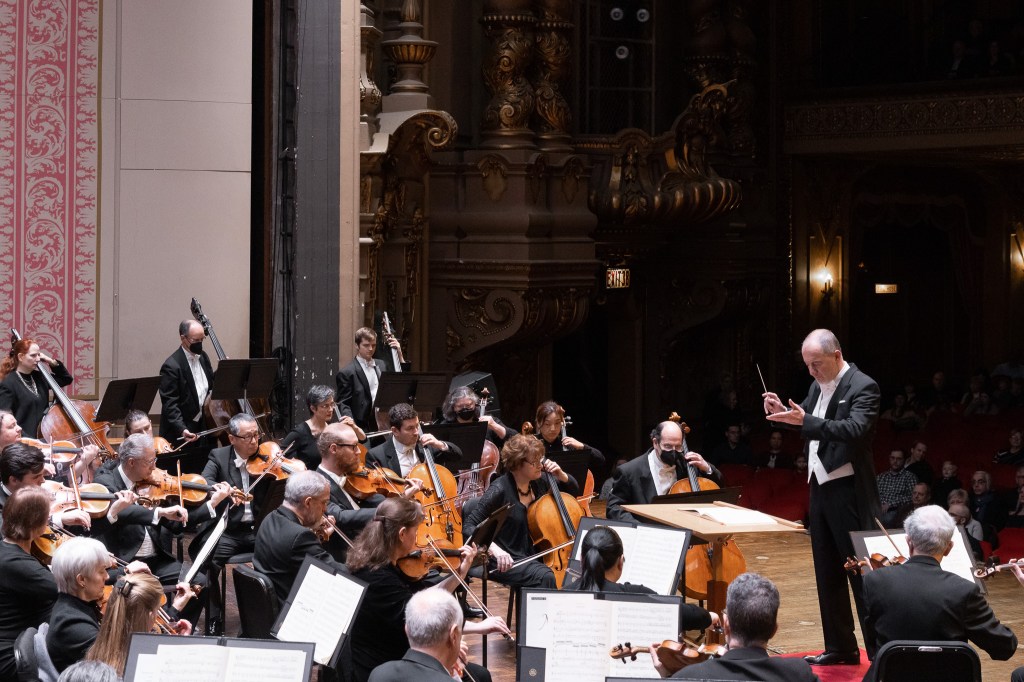
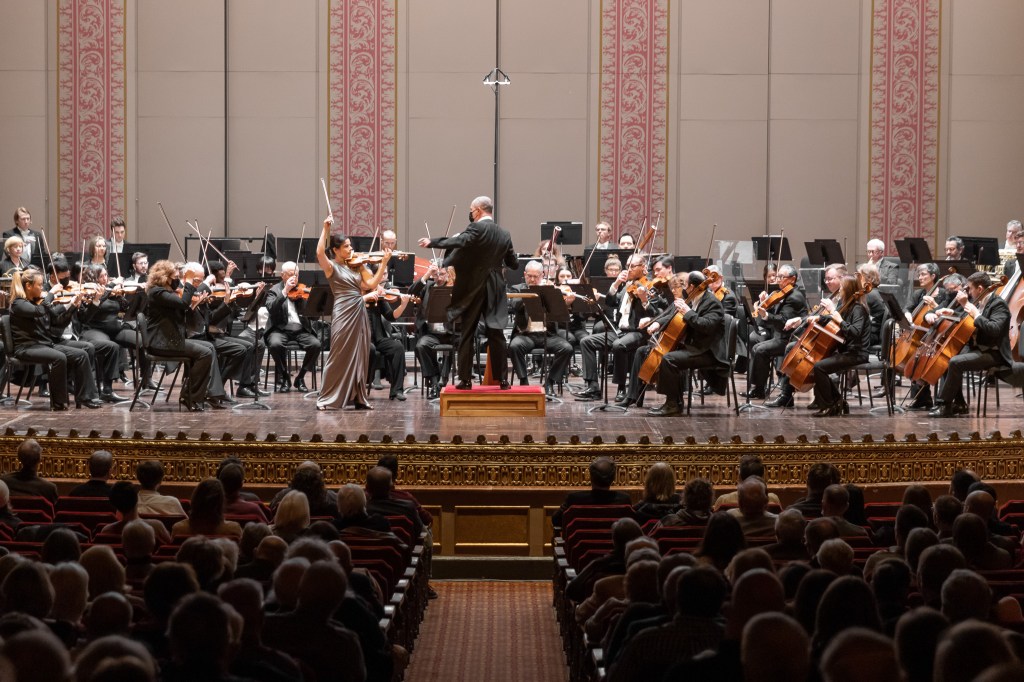
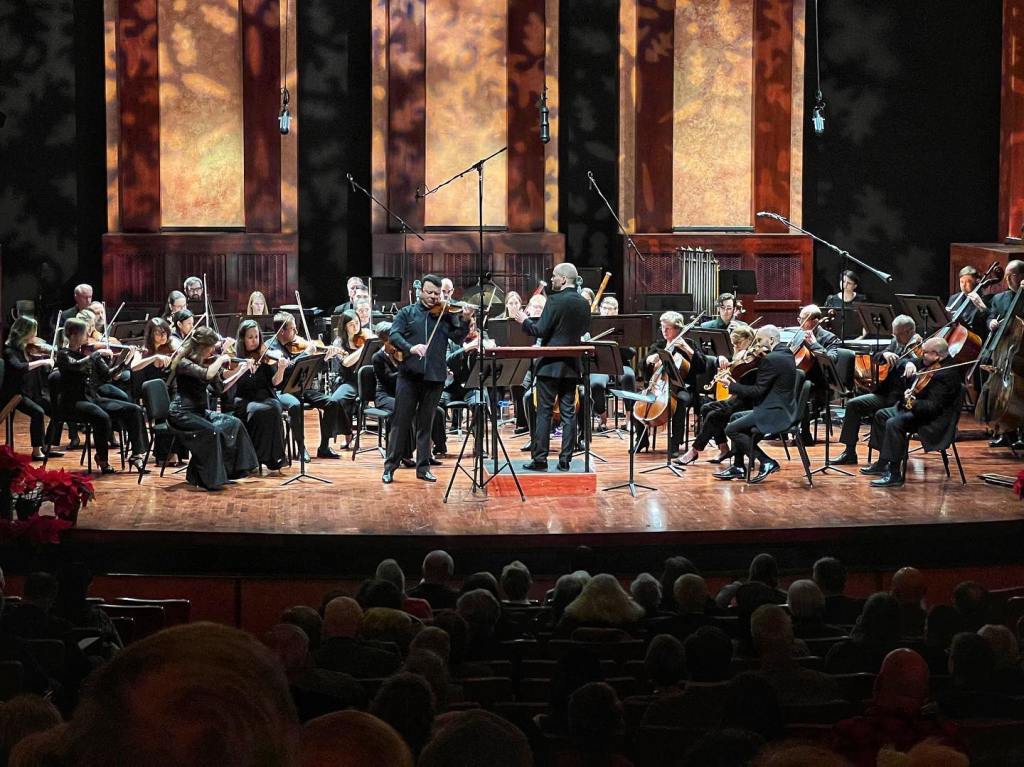
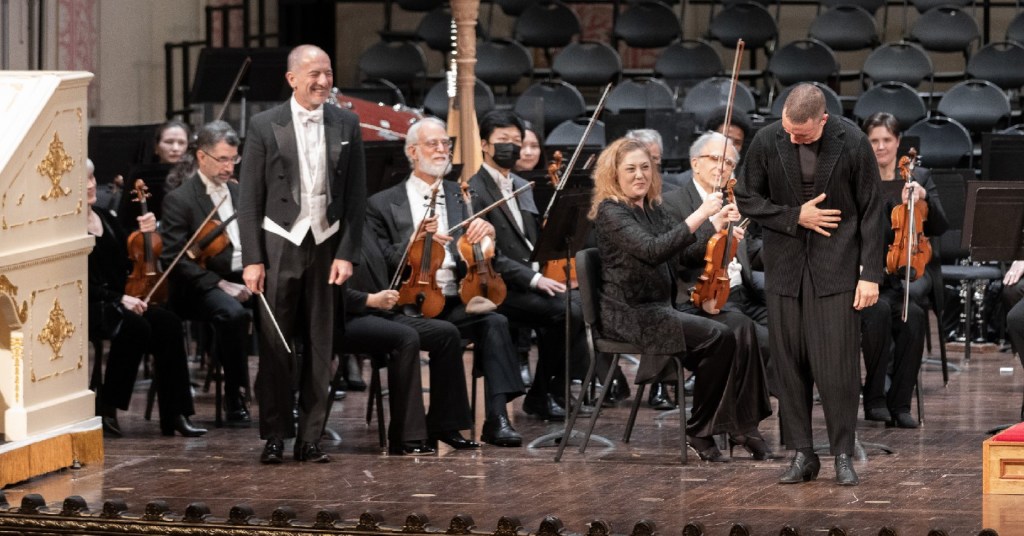
Cincinnati Symphony musicians delight in Chamber Players concert

Musicians from the Cincinnati Symphony Orchestra*
Wilks Studio
Music Hall
Cincinnati, OH
October 28, 2022

Gounod: Petite symphonie
Schumann: Piano Quartet in E-flat major, Op. 47
Beethoven: String Quintet in C major, Op. 29

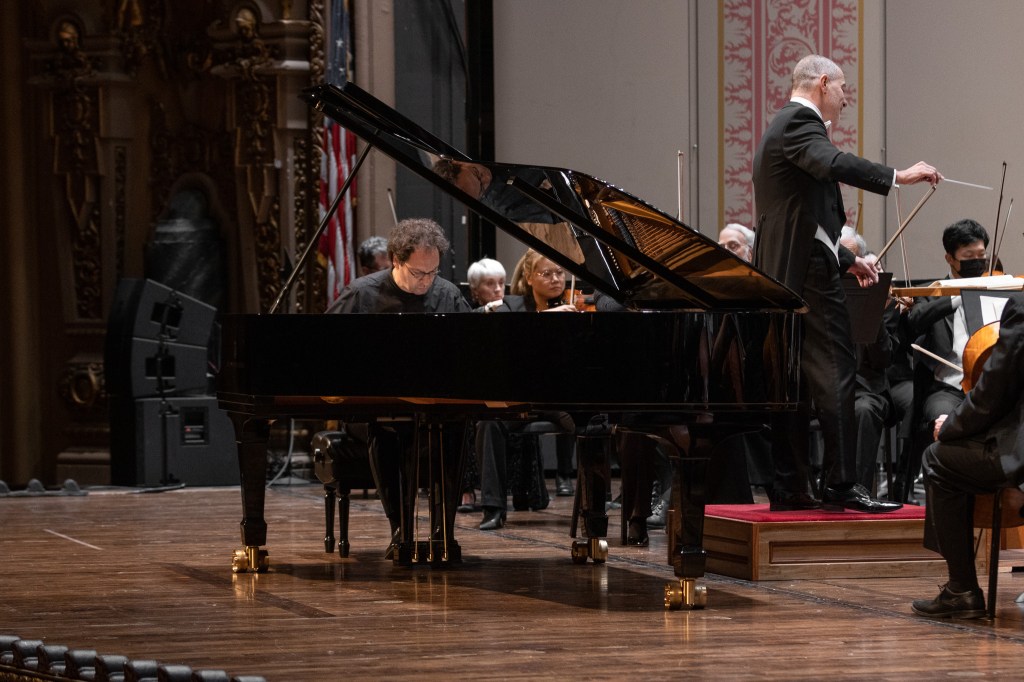
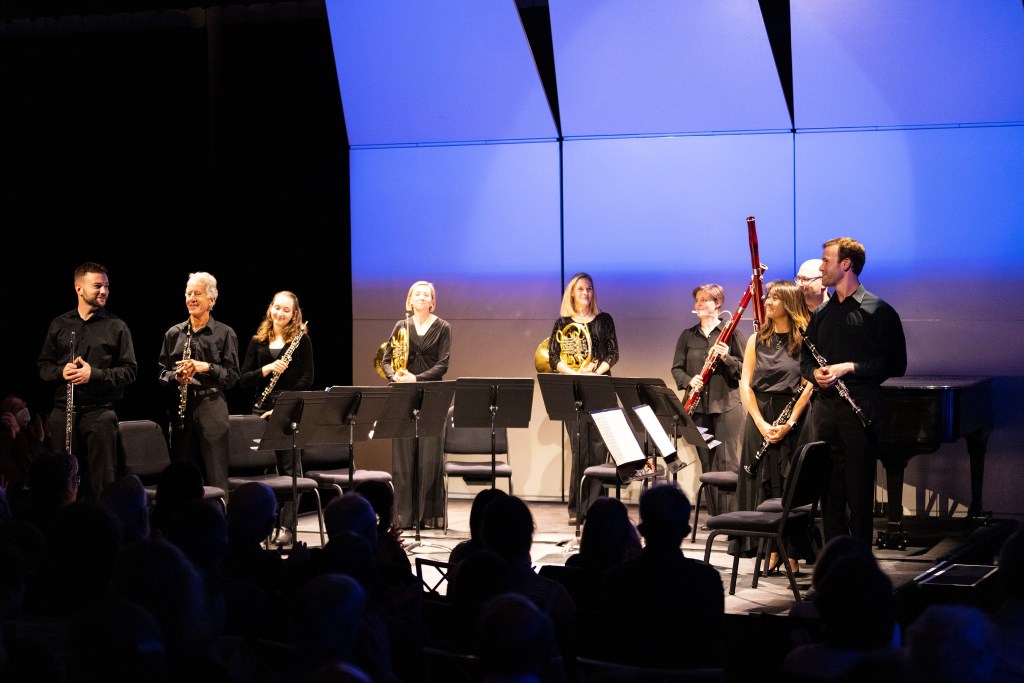
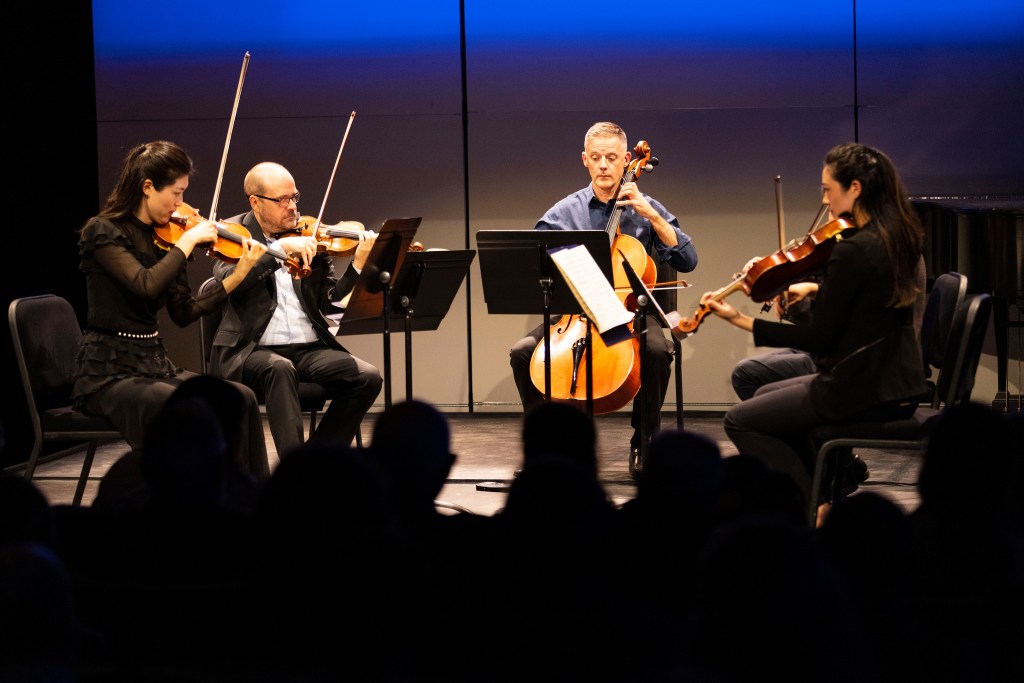
The evening prior to a particularly memorable Cincinnati Symphony program, one had the distinct pleasure of hearing select CSO musicians band together for a varied selection of chamber music. Held in the Wilks Studio – a rather more intimate space than the Springer Auditorium – the trio of works presented spanned the nineteenth-century, traversing configurations as diverse as wind nonet, piano quartet, and string quintet.

Going in reverse chronological order, the program opened with Gounod’s delightful Petite symphonie, scored for nine winds – a work which flautist Henrik Heide aptly introduced as one of the “pearls of the wind chamber music repertoire.” A stately, classical introduction initiated, an enticing set up for the movement proper’s pure joie de vivre, its Gallic lightness a sparkling contrast to the weightier Germanic works that would follow. A limpid, singing flute line highlighted the Andante cantabile, while the scherzo saw its march-like material regally announced by the horns. The finale rounded matters off with insouciant charm.

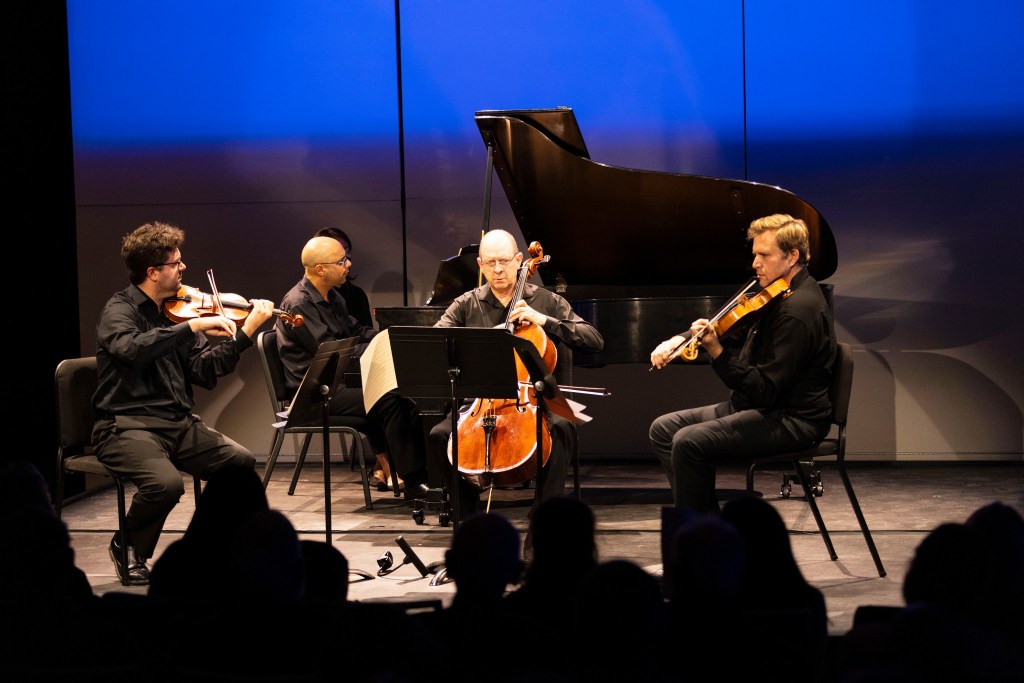
Schumann’s Piano Quartet occupied a vastly different soundworld – and also makes for an interesting contrast to the composer’s more frequently heard but contemporaneous Piano Quintet, also in E-flat major: though not without ample drama, the Quartet tends to be more restrained and intimate. Introductory material functioned a bit like a rhapsodic warmup, and a richly flowing melody built to fervent passions, encouraged by the powerful pianism of Dror Biran. Schumann took a cue from Beethoven in placing the scherzo second, a movement played by this group of musicians seamlessly even at breakneck speed. The slow movement that followed was truly gorgeous, with especially generous material from the cello (Daniel Culnan) and a searching line in the violin (Charles Morey), and the melody was increasingly decorated – very much in the spirit of the lieder pouring from the composer’s pen at the time. An energetic affair, the finale was especially striking in its fugato passage, expertly and crisply articulated.

Beethoven’s String Quintet in C major is, perhaps surprisingly, his only work in the medium, save for some adaptations of other pieces. The work opened graceful and genial, varied by sprightly filigree, occasionally leading to stormier sections – especially in the development. A slow movement was sweetly lyrical by contrast, while the scherzo saw a tenuous balance of drama and buoyancy – although a handful of passages could have been served by better intonation. As Beethoven was oft to do in closing movements, the final Presto was replete with contrapuntal textures, though it was the more playful material that was given the last word.

*
Gounod:
Henrik Heide, flute
Lon Bussell, oboe
Emily Beare, oboe
Christopher Pell, clarinet
Ixi Chen, clarinet
Martin Garcia, bassoon
Jennifer Monroe, bassoon
Elizabeth Freimuth, horn
Lisa Conway, horn

Schumann:
Charles Morey, violin
Christopher Fischer, viola
Daniel Culnan, cello
Dror Biran, piano

Beethoven:
Minyoung Baik, violin
Eric Bates, violin
Caterina Longhi, viola
Gerry Itzkoff, viola
Theodore Nelson, cello

ProMusica opens season with the brilliance of cellist Kian Soltani

ProMusica Chamber Orchestra
David Danzmayr, conductor
Kian Soltani, cello
Southern Theatre
Columbus, OH
October 8, 2022

Kernis: Musica Celestis
Haydn: Cello Concerto No. 1 in C major, Hob. VIIb:1
Vali: “The Girl from Shiraz” from Persian Folk Songs
Beethoven: Symphony No. 5 in C minor, Op. 67

ProMusica’s 2022-23 season opener was particularly auspicious in that it served as a platform for the local debut of Kian Soltani, a rapidly rising star in the cello world. The program began with the 1990 work for string orchestra Musica Celestis by American composer Aaron Jay Kernis. At the time of composition, the composer had been immersed in the work of Hildegard von Bingen, and the spirit of her work was woven into Kernis’ idiosyncratic texture. The piece unfolded glacially, with soaring passagework for both concertmasters. It reached celestial heights, ultimately arriving at peaceful resolution.

Kian Soltani, David Danzmayr, and ProMusica, photo credit ProMusica

A crisp, rhythmically punctuated introduction opened Haydn’s Cello Concerto No. 1. Soltani entered with a richly burnished tone, brimming with Viennese elegance, effortlessly fluent. Matters weren’t all pearly, however, with appropriate vigor given to the stormier sections. The cellist boasted a long-bowed, graceful melody in the central Adagio, and the finale rounded things off in the highest of spirits, with blistering virtuosity and vivacity.

Born in Austria of Iranian parentage, it was only fitting for Soltani to follow the Haydn with a work by Iranian composer Reza Vali – and Vali had in fact went to school with the cellist’s father in Iran. “The Girl from Shiraz,” a selection from the composer’s Persian Folk Songs – a work that just received its premiere earlier this year – made for an enticing contrast to the Haydn. A languid, winding melody in the cello introduced the titular melody, and the percussion scoring gave the work a decidedly non-Western feel. The latter section, known as “Love Drunk,” was a rambunctious and boisterous foil, pointing to a thunderous closing gesture.

Following the brilliance and intriguing programming choices of the first half, the balance of the program was rather more prosaic in Beethoven’s Fifth Symphony which nonetheless served as an exciting work with which to open the season. Danzmayr led a taut and focused performance, bringing out the work’s essential dramatic qualities.

Chamber Music Columbus opens 75th season in the splendor of the American Brass Quintet

American Brass Quintet
Southern Theatre
Columbus, OH
October 8, 2022

Hu: Chamber Music Columbus Fanfare: Celebrating 75 Years
Three English Fancies (edited by Raymond Mase)
       William Simmes: Fancy a 5
       John Ward: Fancy No. 11 “Cor Mio”
       Giovanni Coperario: Fancy a 5
Garrop: Helios
Hu: A Distant Hope
Tower: Copperwave
Higdon: Selections from Book of Brass
Maurer: Selections from Twelve Little Pieces for Brass                          
Ewazen: Frost Fire

On the heels of the joint presentation with VIVO just over a month prior, Chamber Music Columbus’ 75th season proper officially opened with the dynamic American Brass Quintet. In the spirit of celebration, the first music heard was Ching-chu Hu’s Chamber Music Columbus Fanfare, a work which we will continue to revisit throughout the season for the various combinations of instruments on the docket. The brief work was fittingly celebratory, in this incarnation, leveraging the brightness of the brass to exciting effect.

American Brass Quintet, photo credit americanbrassquintet.org

The repertoire for brass quintet tends to fall into two categories: music for Renaissance brass ensemble recast for modern instruments, and contemporary works – with little in between. The next selections fell into the former category, collectively titled Three English Fancies which included a work from Simmes, Ward, and Coperario. Elegant, refined glances towards a distant time, they readily adapted to modern brass ensemble. Stacy Garrop’s 2011 work Helios followed. Dense textures opened, contrasted by a more solemn central section and a pensive conclusion. In introducing Hu’s A Distant Hope, receiving its world premiere, trumpeter Louis Hanzlik noted a personal connection to the composer who was his music theory TA at the University of Iowa. The work is an extension of the Fanfare; Hu described his objective as “deconstructing a fanfare” to create a work “hoping for hope.”

The opening “Skyward” began with the fanfare theme, a call to attention, but ultimately more mellow material took over, of a resonant lyricism. A busier texture was to be had in the closing “Voyaging,” with the uses of mutes offering a varied, colorful timbre, and an ebullient ending that inspired hope and celebration. Joan Tower’s 2006 work Copperwave was a striking close to the first half. The title evokes South American copper mines, and the work captivated in its rhythmic intensity and vast variety of color. ABQ performed with great energy and virtuosity with their individual talents highlighted by solo cadenzas.

Jennifer Higdon’s Book of Brass officially receives its world premiere at Bowling Green the following Wednesday, but Columbus audiences were treated to a preview of two movements from the suite. “Glide & Fade” was of arching lyricism and piquant dissonances; “Punch it Up” was apt description for its vivacity. Ludwig Maurer’s Twelve Little Pieces for Brass is the odd work from the 19th-century scored for brass quintet. ABQ offered five selections, charming vignettes – what they lacked in depth they made up for in appeal. Eric Ewazen’s 1990 work Frost Fire closed the program, its sonorous scoring making use of the energy and rich resources of the quintet, setting the stage for a tour de force ending. It’s worth noting that several of the featured composers have an Ohio connection – Hu is on faculty at Dennison, Garrop was recently featured as guest composer at Bowling Green’s New Music Festival, and Ewazen is a Cleveland native. An auspicious opening to a banner season!

Columbus Symphony opens season in the exuberance of Carmina Burana

Columbus Symphony Orchestra
Rossen Milanov, conductor 

Ashley Fabian, soprano 
Arthur W. Marks, tenor
Ethan Vincent, baritone 

Columbus Symphony Chorus 
Ronald J. Jenkins, chorus director 
Columbus Children’s Choir 
Jeanne Wohlgamuth, artistic director

Ohio Theatre
Columbus, OH
September 30, 2022

Orff: Carmina Burana

There’s only a handful of works from the twentieth century and later that generate an enduring popular appeal, and Orff’s 1937 cantata Carmina Burana is certainly one of them. A choice opener for the Columbus Symphony’s 2022-23 season, it also marked the first full-fledged return of the Chorus post-pandemic, having been relegated to more minor roles in the handful of repertoire last season that called for chorus. Adding to the sense of occasion on opening night was the presence of the League of American Orchestras CEO Simon Woods and Ohio Lt. Governor Jon Husted, introduced by CSO executive director Denise Rehg.

L-R Ronald J. Jenkins, Jeanne Wohlgamuth, Ethan Vincent, Ashley Fabian, Arthur W. Marks, Rossen Milanov with the Columbus Symphony & Chorus and Columbus Children’s Choir, photo credit Corinne Mares

The chorus is certainly the star of Carmina Burana, evident from the onset with the iconic “O Fortuna” that set the dramatic tone sustained for the remainder of the work. Finely prepared by Ronald J. Jenkins in his final season as chorus director, they negotiated no less than three languages – and dead languages at that: Latin, Middle High German, and Old French. The choral scoring more often than not puts the chorus in unison, and a strophic structure dominates, maximizing a directness of expression – this isn’t a work where one gets lost in a web of contrapuntal intricacies. Still, there were times where one wanted better projection over the large orchestra and greater clarity of diction (the texts and translations were fortunately provided in the program books).

It wasn’t all drama and bombast, however, with “Veris leta facies” bringing to life gentler, vernal delights, and the Round Dance sharply contrasting bacchanalia with the more introspective. The Columbus Children’s Choir under the direction of Jeanne Wohlgamuth offered a further choral layer in this lavish tapestry, almost angelic when in dialogue with soprano Ashley Fabian in “Amor volat undique.” Fabian was fittingly clothed in red, evoking the titular red tunic of “Stetit puella rufa tunica,” and served as a fitting foil to her male counterparts. She boasted an impressive command of labyrinthine melismas in “Dulcissime, totam tibi subdo me!”

Tenor Arthur W. Marks appeared offstage (and feathered) in “Olim lacus colueram”, dramatically one of the most striking moments of the work, singing high into his range in a pained dialogue with the masses of the chorus, although I felt the sense of tortured struggle could have been conveyed even more convincingly. I found baritone Ethan Vincent – who last appeared on this stage as Marcello in in La bohème – the most compelling of the trio of soloists. His first appearance in “Omnia Sol temperat” was given with charismatic delivery, and subsequently, he lumbered onstage, pantomiming inebriation in “Estuans interius” – yet ultimately, his delivery bordered on a sumptuousness more fit for Puccini. His command of the wide range demanded in “Dies, nox et omnia”, however, was where he was truly a standout.

Though the chorus rightly deserves the spotlight, the extensive orchestral forces were certainly an entity to be reckoned with. The dance movement for orchestra alone that opens “Uf dem anger” was given a vigorous workout, capped off with a silvery flute solo. “Were diu werlt alle min” was bursting with brassy splendor. The piano (Caroline Hong) features quite prominently in the score, perhaps most strikingly in “Veni, veni, venias.” The occasional uncoordinated entrance notwithstanding, music director Rossen Milanov commanded the disparate forces as a unified whole for a satisfying first entry of the season. As noted in both the program notes and Christopher Purdy’s preconcert lecture, Carmina Burana is in fact the first in a trilogy of related works. Despite the popularity of the first, the latter two remain largely uncharted territory – a potentially fascinating exploration for the CSO to undertake in future seasons.

VIVO closes festival in style with French repertoire, Choi premiere

Alicia Hui, violin †
Siwoo Kim, violin †‡
Henry Kramer, piano *‡
Jeffrey Myers, violin *
John Stulz, viola *†
Alice Yoo, cello *
Matthew Zalkind, cello †‡
Gabriel Campos Zamora, clarinet †

* Fauré / † Choi / ‡ Ravel

Southern Theatre
Columbus, OH
September 4, 2022

Fauré: Piano Quartet No. 1 in C minor, Op. 15
Choi: With Winds III
Ravel: Piano Trio

VIVO Music Festival closed the eighth edition of its annual chamber music celebration Sunday afternoon at the Southern Theatre, an event which also served to unofficially open Chamber Music Columbus’ banner 75th season. As with all of the elder organization’s upcoming concerts, Sunday’s included a newly commissioned work, as well as poem from the season’s poet laureate, Jennifer Hambrick – known to listeners of WOSU, as well as the host of VIVO’s “Beer & Beethoven” held a few nights prior. Hambrick’s entry “Stones to join the mountain with the rock” fit the spirit of the occasion, the joining of forces of two very fine chamber music organizations.

L-R: Jaehyuck Choi, Jeffrey Myers, John Stulz, Gabriel Campos Zamora, Alicia Hui, Alice Yoo, Siwoo Kim, Henry Kramer, Matthew Zalkind. Photo credit VIVO Music Festival

Fauré’s Piano Quartet No. 1 boasted dark-hued, dramatic beginnings, rather Brahmsian in persuasion, with the virtuosic piano writing and its tumultuous octaves (Henry Kramer) a standout. The scherzo was markedly more Gallic and of irresistible charm, while the Adagio was a gorgeous respite, with a particularly affecting and resonant cello line (Alice Yoo). The finale recalled the virtuosity of the beginning to bring the opening selection to an enthusiastic close.

South Korean composer Jaehyuck Choi was present to introduce his clarinet quintet With Winds III, the first of Chamber Music Columbus’ seven commissions to come to life. A taste of Choi’s work was sampled at the aforementioned Beer & Beethoven event in which violinist Alicia Hui performed his Self in Mind I. In addition to VIVO, violist John Stulz also counts himself a member of the Paris-based new music group Ensemble intercontemporain, and it was there he first became acquainted with Choi. Choi’s commission served as a tribute to CMC’s founder James N. Cain, and moreover, the clarinet quintet medium was apropos as one of the organization’s first performances featured the Walden Quartet with clarinetist Donald McGinnis. Choi spoke of finding influence from contrasting works of visual arts, a thread he discussed at length during my interview with him a few months prior.

Terse, rapid gestures in the strings opened, punctuated by a long-breathed tone in the clarinet (Gabriel Campos Zamora), emblematic of the work’s near obsession with pointed contrasts. The work’s dense textures made substantial use of extended techniques, pushing the capabilities of both the musicians and their instruments alike. A passage cast in the violin’s highest possible range was otherworldly in effect, while a mute in the clarinet provided yet another striking sonority in work’s final segment before matters evaporated into silence.

The afternoon closed with Ravel’s remarkable Piano Trio. The opening Modéré was dreamy and evocative, with the performers adroitly negotiating the 8/8 meter – suggestive of the Basque zortziko – complexities that felt all but effortless in this musical conversation amongst friends. What followed was a rare scherzo from Ravel, its gossamer textures almost like a work of Saint-Saëns. The Passacaille easily serves as the heart of the work, searching probing depths. A solemn statement, it was a juxtaposition of the austere and the deeply felt. Decorative filigree was abundant in the finale, given with meticulous attention to detail, and the self-assured piano in particular pointed towards a big-boned finish.

Jaehyuck Choi: Inspiration from the visual arts

I had a chance to speak with South Korean composer Jaehyuck Choi ahead of the premiere of his clarinet quintet With Winds III, scheduled for Sunday, September 4 – an event which both closes the VIVO Music Festival and kicks off the landmark 75th season of Chamber Music Columbus. Below are some highlights from our fascinating conversation wherein Choi discusses his development as a composer, parallel career in conducting, and a multi-faceted array of influences and inspirations.

[My work] is an interpretation or emotional reaction to painting that crystallizes in the form of sound.

Jaehyuck Choi, photo credit Estro Studio

You have the makings of a rising star. Tell us about how you got to where you are today, and some highlights along the way.

My professional career as a composer and as a conductor started off by winning the Composition Prize at the Geneva International Music Competition in 2017. And that gave me opportunities to write for more people and organizations. One big thing right after winning the competition was that the Menuhin Competition asked me to write for them a short violin solo piece, which the finalists of the junior division had to play along with Vivaldi’s Four Seasons. And that was the first sign after winning the competition that things were starting to happen in front of an audience, rather than just at my desk.

I also had to write for the Perigord Noir Festival in France, and then last year, the Parker Quartet and the Banff Music Center in Canada asked me to write a piece for their festival. And also, applying here and there for opportunities in Korea, in the US, or in Europe, had brought me some more prospects. I have an attachment to France, because my previous professor at Juilliard was French. And his ensemble, the Ensemble intercontemporain, has played some of my music with him conducting. So that’s how my music has gotten to know more international audiences. I am currently based in Seoul and in Berlin, where I am continuing composition studies at the Barenboim-Said Akademie.

At what point did you know that you wanted to become a composer? Was there any experience you can point to that made you realize writing music was your calling?

As a kid, I had learned violin for a couple of years. There were many amateur youth orchestras in Seoul, and I joined one of them. Luckily, I played in the first violin section, which meant I got to play the melody part. Especially when it came to Haydn or Mozart, I found the melody charming and pretty, but at the same time, even from a child’s perspective, it was very simply composed, nothing complex. So I thought to myself, maybe I can try writing something like this, it doesn’t look so hard. And that’s how I encountered in the world of composing, as a game to catch up to Mozart’s prettiness. It was nothing serious, just a fun game to myself. And actually, now too, it is still fun – and that’s how it’s kept going.

What do you find inspires you when you’re writing a new piece?

The ideas I get now are usually from visual art works. So paintings or sculptures, or even movies, video clips, dance, and so on. But mostly painting and sculpture. I find it fun to imagine when looking at a painting what kind of sound that painting would be hiding behind the canvas. And, obviously, imagining that process is my interpretation of the painting. And so it is not a transcription of a painting into sound, but rather, an interpretation or emotional reaction to the painting that crystallizes in the form of sound.

I think the meaning of beauty changes all the time.

I’m really fascinated by these connections between sight and sound. Can you talk more about how you translate your interpretation of an artwork into music?

A couple years ago, I wrote a piece called Dust of Light for ensemble. It was to be played in Paris with the Ensemble intercontemporain. Back then I was living in New York, and I occasionally went up to MoMA or the Guggenheim. At MoMA, I found a painting by Marcos Grigorian. And the canvas had not oil nor acrylic, but dirt, all dried up. So it has some cracks, it has some textures. Not the prettiest form of art, but evocative, and it brought out some of my inner emotions. The kinds of emotions that words cannot describe, I could feel something like that from the painting and the textures. So I considered both the textures and my emotional reaction from the painting: does a particular texture suggest a more crunchy sound in music, or does it bring a more fluffy sound, because of the emotion that covers up the texture of the painting? So I searched for sound by looking at the painting. I took a picture of it, came back home, and kept looking at it imagining what could be behind the painting.

These days I am combining my two musical languages which come from the paintings of Grigorian as well as Ufan Lee. I consider Grigorian a maximalist not in the sense of many materials on the canvas at the same time, but how textures are neatly or roughly placed by intention, and it is very dense. On the other hand, Lee’s painting has a lot of spaces on the canvas, spaces composed by the artist. It comes from thin air, and it evaporates back into thin air. The mixture of these two aesthetics is what I’m trying to achieve, without combining them like oil and water, but merging them together to make one piece out of it.

I have an upcoming project which is a collaboration between composers and fashion designers. We’re going to be participating in the Milan Fashion Week, making clothes and music at the same time. The designer is sending me samples; based upon the textures I think about what music it sounds like. I compose a little bit and send it back to her, and she needles more.

For people hearing your music for the first time, what is something you want them to know about it?

Beauty – but not in the sense of the traditional meaning of beauty. I think the meaning of beauty changes all the time. For me, the beauty is not how it looks or how it sounds. But if a look or sound can move you – negative or positive – I find that beautiful, because that means the listener is affected.

Which composers would you cite as your greatest musical influences?

Many, but Beethoven, of course, comes number one. His imagination, his ideas, but above all, his compositional technique. Anyone can have an idea, but you need a technique to formalize it and make it a reality, and I think Beethoven had the best technique out of all. But I also pick Morton Feldman, some my aesthetic ideas came from him. Along with Feldman, Beat Furrer is a big influence, as is Salvatore Sciarrino. Sciarrino can be seen as an extension of Feldman in the way the emotion – not the texture, not the music itself, but how audiences perceive it — has a very similar effect.

Hearing [my] music live and having it alive in the air gives me a very deep, rewarding feeling.

Which of your compositions are you most proud of and/or feel represent you best?

Dust of Light represents different sides of my voice very well. Self in Mind (especially #1 and #3) might be easier than other things to attach to – it’s a series for solo instruments (I just finished #5), much like Luciano Berio’s Sequenzas. Both works are very different in the character of sound: Dust of Light is more active, and Self in Mind is loose and meditative.

Self-portrait was a series composed during my Juilliard undergrad years. The first was inspired again by a painting – a work of Picasso that showed two images of the same person. But the two figures looked different, even though they were the same person: the ideal image of how one looks at one’s self, and the reality image. I composed the piece for two cellos, imitating each other or betraying each other, or playing music which seemed completely different, but came from same root composition underneath. I wanted to capture what Picasso had painted on the canvas. But as the series grew, I got freer from that idea, and I just tried to put all my imagination in the music with no restrictions. Because once you’re in school, you are faced with a lot of restrictions and limitations. But in this work, I could escape from that.

You also maintain a parallel career as a conductor. How does conducting inform your work as a composer and vice versa?

It helps both ways. Composers are greedy – they want to achieve everything just by saying the minimal words on the paper, and they expect the performers to achieve it and to know how they imagined it. But coming from a conductor’s perspective, it is more practical, and from a performance point of view. Does that really explain what I’m going to do? Or is that not enough? A composer has to know how to control all the situations in order to achieve what he or she had imagined and get it across to the audience. Many practical questions come from the conductor’s point of view.

On the other hand, conductors coming from a composer’s point of view can guess a little bit better about the composer’s intentions. When you look at Stravinsky’s Petrushka or Rite of Spring, he has multiple revisions, which I think came from the conductor’s point of view. If you look at the first version, it sounds the same as the last version, but what he changed is just purely the notation of the score – how it looks and how comfortable it is to play. So I think we have a little bit of an advantage having two minds at the same time.

When I was an undergrad at Juilliard, I founded ensemble blank with fellow Korean students. It now has 35 members so it’s grown quite a bit. One interesting project we did a couple years ago was a series of programs based upon the theme what if Beethoven had had lived now? Starting from that idea, I came up with programs and music that may be what Beethoven would have written had he lived in this century. And we also programmed the Große Fuge, Beethoven’s most contemporary work – which some audience members felt sounded even newer than Stockhausen!

Thinking long term, what do you aim to accomplish as a composer and conductor?

I want to split my time 50/50 between composing and conducting. Composing is somewhat more difficult than conducting because it is very lonely work at your desk. But after all the work, hearing the music live and having it alive in the air, gives me a very deep, rewarding feeling, and it is just so fun to make music with an orchestra. You could say I’m simply addicted to both parts of music making!

Key Works:

Dust of Light
Self in Mind
Self-portrait

Brooklyn Rider offers healing through music at Chamber Music Columbus

Brooklyn Rider
Southern Theatre
Columbus, OH
May 21, 2022

Shaw: Schisma
Esmail: Zeher
Dutilleux: Ainsi la nuit
Beethoven: String Quartet No. 15 in A minor, Op. 132

In the concluding entry of Chamber Music Columbus’ 74th season, Brooklyn Rider presented a program drawing upon their recent commissioning project and subsequent album Healing Modes. Inspired by Beethoven’s Op. 132 quartet which the composer used as a means to express his profound gratitude upon healing from illness, the project engaged contemporary composers to explore the healing properties of music. The five works commissioned were premiered by Brooklyn Rider at various venues during the 2018-19 concert season.

Brooklyn Rider, photo credit Shervin Lainez

Caroline Shaw’s Schisma (literally translating from Greek to “cleft”) takes as inspiration the Greek islands which have become makeshift refugee camps for Syrians escaping war. The score was colored by harmonies and figures that wouldn’t have been out of place in a work by Philip Glass (a composer this quartet has recorded extensively), and Shaw made creative use of pizzicatos and the percussive potential of the string instruments’ wooden bodies. A brief work, but the textural variety made for a gripping listen. Reena Esmail’s Zeher (the Hindustani word for “poison”) reflects on the composer’s bout with a throat infection (the titular poison). The Hindustani vocal style was mimicked in the cello (Michael Nicolas – one of Esmail’s classmates at Juilliard), with astringent dissonances in the rest of the ensemble. The work ended with resolution and clarity, finally freed of the pathogen.

The first half was to include the remaining works of the Healing Modes project – traversing pieces of Gabriela Lena Frank, Du Yun, and Mantana Roberts, which I’m keen to explore on BR’s recording – but a previously unannounced program change instead offered a preview of the quartet’s next major endeavor, The Four Elements. The project will seek to explore the four classical elements in musical terms, with Dutilleux’s 1976 work Ainsi la nuit (“Thus the night”) representative of air. Cast in seven movements, Ainsi la nuit is one of the landmark works for string quartet from the late 20th century. A kaleidoscope of moods were traversed in this extensive meditation on the night. It’s a work that challenges the listener, but was made all the more approachable by way of Brooklyn Rider’s committed and incisive performance.

Beethoven’s penultimate string quartet was likewise a landmark of its own time, and certainly a work that continues to speak to listeners. Slow introductory material probed for meaning before the first movement took shape with energy and synergy, given with a poignant dramatic sweep. The minuet that followed was rather lighter fare before the great Heiliger Dankgesang. Even for a composer with so many profound and heart-wrenching slow movements to his name, this is certainly a standout, a gracious paean and the emotional core of the work. Far removed from those meditative musings was the jaunty but brief Alla marcia, and lastly, a darkly-hued, impassioned finale, with the quartet’s fiery playing making matters especially arresting.

ProMusica closes season with Beethoven and Mendelssohn

ProMusica Chamber Orchestra
David Danzmayr, conductor
Martina Filjak, piano
Southern Theatre
Columbus, OH
May 7, 2022

Clyne: Stride
Beethoven: Piano Concerto No. 3 in C minor, Op. 37
 Encore:
 Pärt: Für Alina
Mendelssohn: Symphony No. 4 in A major, Op. 90, Italian

This weekend saw the close of ProMusica’s 43rd season, and the first full season since the pandemic hit. The evening kicked off in particularly delightful fashion with young students from ProMusica’s Play Us Forward program performing two short works for strings. ProMusica then took to the stage with a recent work by Anna Clyne, written in 2020 for the Beethoven 250th anniversary. Stride takes its cue from Beethoven’s Pathétique sonata and its name comes from the broken octave figures in the bass that one finds in the sonata and would later be associated with stride piano playing. Clyne’s work is cast in three interconnected movements, mirroring the structure of the source material. As in the Pathétique, prominent dotted rhythm gestures opened, and the “stride” figures were interlaced with quotes from the sonata, some more veiled than others. I was particularly struck by theme of the rondo finale being presented at a slow tempo, revealing a languid character beneath the surface. A brilliant reimagining of this venerable sonata.

Martina Filjak, David Danzmayr, and ProMusica, photo credit ProMusica

Beethoven reserved C minor for some of his most personal works – a body of work that includes the Pathétique sonata as well as the Third Piano Concerto, the latter of which engaged Croatian pianist Martina Filjak. I remember seeing her last when she won the 2009 edition of the Cleveland International Piano Competition, and it was wonderful to see her again all these years later with a flourishing career to her name. The orchestral introduction was crisply articulated, although one perhaps wanted conductor David Danzmayr to draw out even greater dynamic contrasts and variety. Filjak’s entry had the requisite drama, but her playing was stylish and elegant at heart, showing Beethoven at his most urbane and cosmopolitan. It seemed that she approached the work more akin to a Mozart concerto; while the first two certainly show indebtedness to the composer’s predecessor, the Third marks a stark departure. Nonetheless, the cadenza was fiery and impassioned, and the first movement’s enigmatic ending was deftly executed.

The lovely Largo was prayer-like and plaintive, and the concluding Rondo started with a sudden burst of the energy, building to the brilliant switch to the major in the final few bars. As an encore, Filjak opted for a work worlds apart from Beethoven (despite any associations to Beethoven the title might suggest): Pärt’s Für Alina, strikingly wonderful in its barren textures and mystical musings.

This season has seen several major works of Mendelssohn performed – the Scottish symphony, the violin concerto – and the trend was continued with the ebullient Italian symphony. Some unevenness in the brass did little to detract from the first movement’s buoyancy, given with classical economy and balance. A really delightful performance, perhaps nowhere more so than in the kinetic energy of the vibrant, sunny saltarello that closed.

Dawn Upshaw brings Purcell into the 21st-century with Brentano String Quartet

Dawn Upshaw, soprano
Brentano String Quartet
Southern Theatre
Columbus, OH
April 30, 2022

Purcell: “Oh let me weep” from The Fairy Queen, Z.629 (arr. Mark Steinberg)
Purcell: Fantasia a 4 in B-flat major, Z.736

Matthew Locke: Suite No. 2 for Four Viols in D minor/major
Dowland: “Come again, sweet love doth now invite” (arr. Stephen Prutsman)
Dowland: “Can she excuse my wrongs” (arr. Stephen Prutsman)
Dowland: “Weep you no more, sad fountains” (arr. Stephen Prutsman

Thomas Tomkins: Alman in F
Byrd: Though Amaryllis dance in green
Robert Johnson: The Witty Wanton

Purcell: Fantasia a 4 in C minor, Z.738
Purcell: “When I am laid in earth” (Dido’s Lament) from Dido and Aeneas, Z.626

Melinda Wagner: Dido Reimagined

Dawn Upshaw joined forces with the Brentano String Quartet at Chamber Music Columbus for a fascinating program, the first half of which surveyed music from the English Renaissance and early Baroque, and a latter half which presented a contemporary response to the earlier work. An extensive series of songs and instrumental works traversing Purcell, Downland, Byrd, and others were presented in arrangements for modern string quartet, recalling some of the repertoire performed by the Aizuri Quartet earlier this season.

Brentano String Quartet, photo credit Peter Schaaf

Purcell’s “Oh let me weep” opened, the plaintive tears brought to life by Upshaw’s instantly recognizable voice. Movements of a suite by Matthew Locke – including a particularly touching Ayre – were interlaid with songs by John Downland. The Locke was a fascinating look at the genesis of the string quartet in this early work for viol consort, a direct ancestor to the contemporary ensemble. Dowland’s “Can she excuse my wrongs” benefitted from the character and personality with which Upshaw imbued it. Byrd’s “Though Amaryllis dance in green” delighted in its dancing energy, and the first half concluded as it began with a pair of works by Purcell, closing with the indelible aria “When I am laid in earth” – heart-wrenchingly beautiful, and grounded by the bass line of cellist Nina Lee.

Melinda Wagner’s Dido Reimagined, first premiered earlier this year, was written as a direct response to the Purcell aria. It’s an ambitious 40-minute piece, with a libretto by Stephanie Fleischmann that recasts the Dido tale with a decidedly feminist bent – an endeavor that broadly speaking reminded me of John Adams’ Scheherazade.2 which offers a modern, feminist take on the Arabian Nights. The textures in the string quartet seemed to suggest the Purcell source material, but otherwise this was a work very much in Wagner’s own language. The narrative would have perhaps been easier to follow had the text been provided in the program books – which would have also highlighted some subtle bits of humor, for instance, rhyming “Port Authority” with “purgatorio.” The work was performed with conviction by these artists for whom it was written, closing with a pensive, meditative statement. A piece I would be keen to give a second listen.

Dawn Upshaw, photo credit Brooke Irish

Mäkelä returns to Cleveland with stunning Shostakovich

Cleveland Orchestra
Klaus Mäkelä, conductor
Nikolaj Szeps-Znaider, violin
Mandel Concert Hall
Severance Music Center
Cleveland, OH
April 23, 2022

Sibelius: Violin Concerto in D minor, Op. 47
 Encore:
 Bach: Partita No. 2 in D minor, BWV 1004 – Sarabande
Shostakovich: Symphony No. 10 in E minor, Op. 93

Following one of the most memorable debuts in recent seasons, the amazingly youthful Finnish conductor Klaus Mäkelä made a much-anticipated return to Cleveland in a meaty program of Sibelius and Shostakovich. Sibelius was represented by way of his towering Violin Concerto, a work first performed in Cleveland in 1922 by Ferenc Vecsey, the concerto’s dedicatee. The work opened shrouded in mysterious tremolos, with soloist Nikolaj Szeps-Znaider pointing the way with resonant lyricism. Thornier material swiftly multiplied virtuoso demands, played with aplomb and searing passion – and the energetic orchestral accompaniment evidenced Mäkelä’s innate understanding of his fellow Finn.

Nikolaj Szeps-Znaider, Klaus Mäkelä, and The Cleveland Orchestra, photo credit Roger Mastroianni, courtesy of The Cleveland Orchestra

Szeps-Znaider’s command of his instrument was on full display in the extended cadenza, intriguingly placed in the center of the movement in emphasis of its structural significance. Much-need repose was to be had in the central Adagio di molto, noted for its wonderfully long-breathed melody. Contrast was once again found in the finale with its foot-tapping polonaise rhythms. As an encore, the violinist offered a deeply poignant Bach sarabande which he noted to be his token of gratitude for being back in Cleveland for the first time post-pandemic.

Quiet rumblings began Shostakovich’s mighty Tenth Symphony, reaching towards ponderous depths. A forlorn clarinet solo – which has been astutely compared to Mahler’s Urlicht – was profoundly moving, and the climaxes scaled cataclysmic heights – a pacing that benefitted from the conductor’s singular sense of architecture. An unexpected physical manifestation of the intensity with which he conducted came when he inadvertently knocked over the concertmaster’s music stand! The brief Allegro, often thought to be a portrait of Stalin, was unrelenting and uncompromising, not in the least during the machine gun fire of the percussion.

Rather flippant by comparison, the Allegretto introduced the DSCH motive, with the politically engaged composer ever keen to willingly inject himself into the commentary. The gleaming Elmira motive in the horn further solidified the composer’s personal connection to the work. A slow introduction – the closest thing to a proper slow movement in this symphony – opened the finale, as if the composer was gathering together his final thoughts. The DSCH returned in incessant prominence, hammered home for a powerhouse conclusion. Just a stunning performance from this dynamic podium presence.