
Youngstown Symphony Orchestra
Erik Ochsner, conductor
Stambaugh Auditorium
Youngstown, OH
January 19, 2025
Cherubini: Overture to L’hôtellerie portugaise
Cherubini: Symphony in D major
Beethoven: Symphony No. 3 in E-flat major, Op. 55, Eroica
For the first time in its almost 100-year history, the Youngstown Symphony Orchestra performed music of Luigi Cherubini. A representative overture and symphony comprised the first half of Sunday afternoon’s program at Stambaugh Auditorium. When asked who of his contemporaries he most admired, Beethoven cited Cherubini — quite a stamp of approval for the Italian composer who was once highly regarded for his operas, but to whom history has been much less kind. Kudos to conductor Erik Ochsner for devising an intriguing, historically informed program.
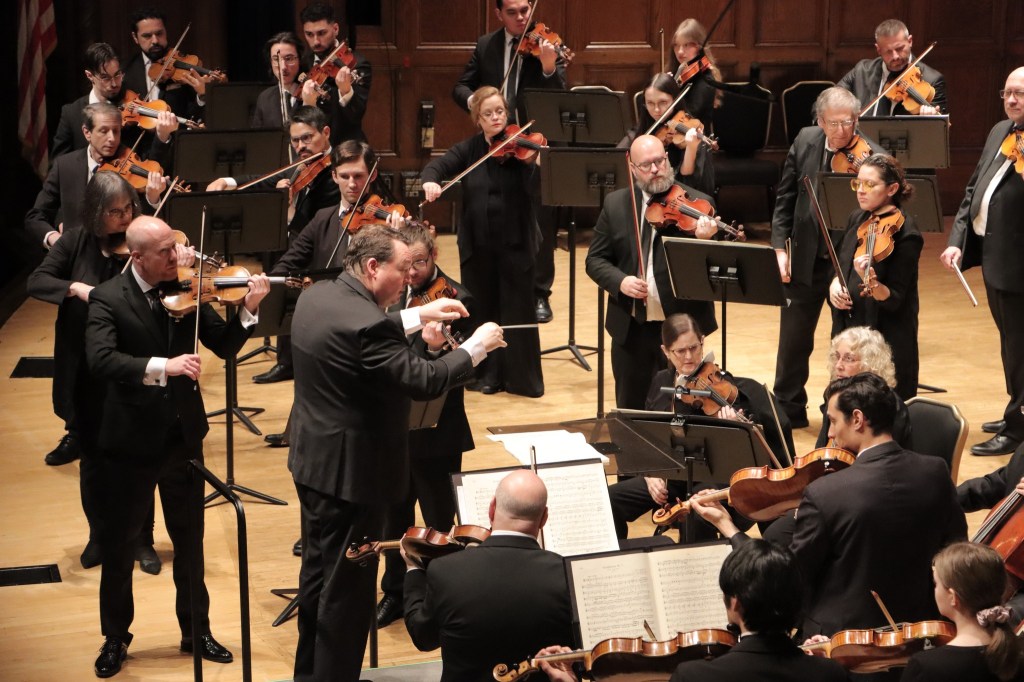
The program opened with the overture to his opera L’hôtellerie portugaise (“The Portuguese Inn”), proving to be quite an effective curtain-raiser. A playful, flippant gesture opened, countered by touchingly resonant strings. Given with joy and vivacity, it predicted the charm and ebullience that would become such hallmarks of Rossini’s overtures. The drama in the present overture was fittingly operatic, and left me intrigued to discover the rest of the opera.
Cherubini’s Symphony in D major followed, a somewhat uncommon medium for Italian composers. Much like early Beethoven and Schubert, it’s a work that bridges the gap between the Classical and Romantic styles, a key piece of the puzzle to the development of the aesthetic that would dominate most of the nineteenth century. The elegant slow introduction recalled the symphonies of Haydn (Cherubini, like Haydn, also spent formative years in London), and the first movement proper was marked by charming strings and touches of winds and brass.
The Larghetto cantabile served as a lyrical interlude conveyed with genuine feeling, decorated with delicate ornaments and deft layering of the inner voices. A foot-tapping scherzo followed, and the sprightly finale ranged from the lithe to the bellicose. A well-balanced performance evidenced the YSO’s committed advocacy for this rarely-heard work.
Familiar territory was reached in the second half devoted to Beethoven’s epochal Eroica. Pairing it with the Cherubini symphony went to show just how revolutionary and ahead of his time Beethoven was — the former dates from 1815, more than a decade after Beethoven’s, yet sounds so conservative by comparison. Given with a noticeably more polished reading than the Cherubini works, it’s certainly a piece more in the comfort zone of both players and audience alike. Yet ultimately Sunday’s performance was more inspired than routine, with the first movement spacious and exultant, and dramatic tension was teased out of the striking dissonances in the development.
In the somber funeral march, one was struck by the richness of the strings, and the glimmers of triumph during the brassy maggiore. The scherzo was vigorous but not rushed, though the brass intonation in its trio left something to be desired. A burst of energy opened the finale, followed by a pizzicato presentation of the theme which served as the source for the wide-ranging variations that ensued, showing the many sides of a seemingly simple subject.
 quasi-faust