A colorful and cinematic season opener at the Westmoreland Symphony

Westmoreland Symphony Orchestra
Daniel Meyer, conductor
Timothy Chooi, violin
Palace Theatre
Greensburg, PA
October 18, 2025

Khachaturian: Suite from Masquerade
Korngold: Violin Concerto in D major, Op. 35
 Encore:
 Corigliano: Red Violin Caprices
Borodin: Symphony No. 2 in B minor

Last weekend, the Westmoreland Symphony Orchestra opened its 57th season at Greensburg’s Palace Theatre. The repertoire selected for the occasion was not only alluring, but somewhat off-kilter for an evening that skirted any overly-familiar warhorses. Opening the program was the five-movement suite from Aram Khachaturian’s incidental music to the Lermontov play Masquerade.

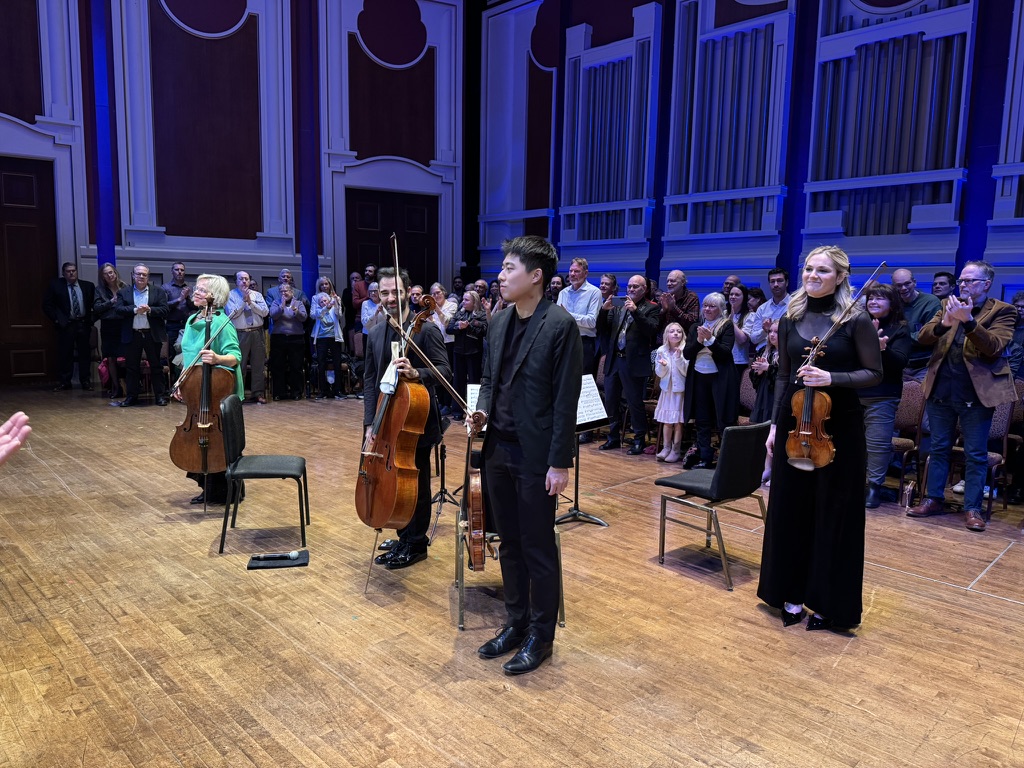
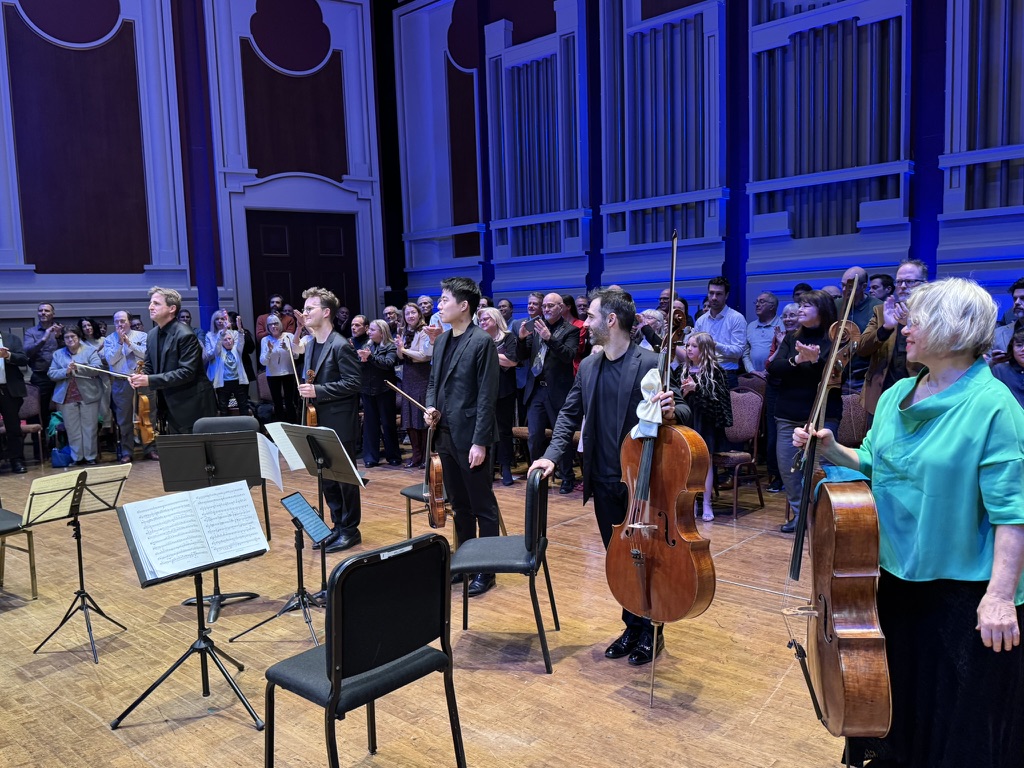
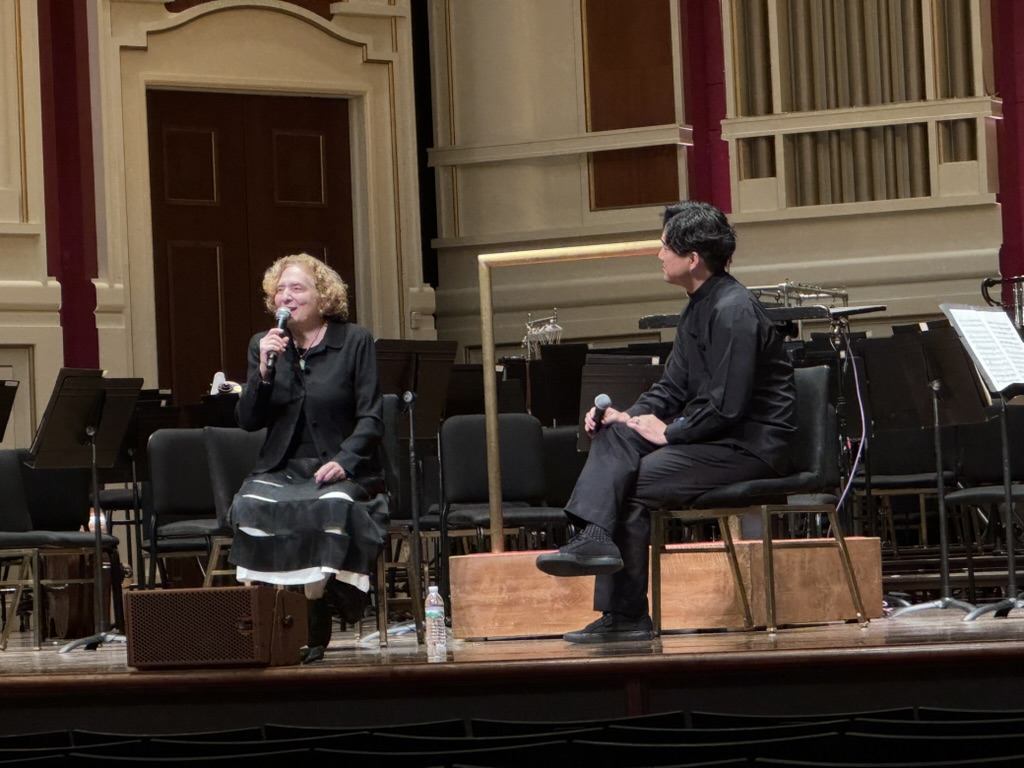
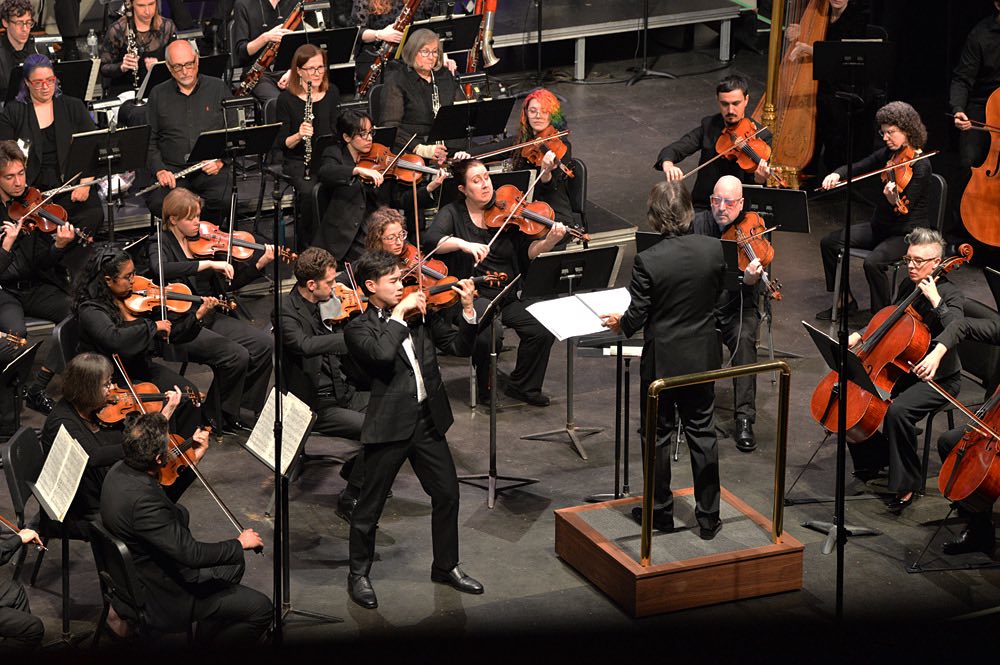
Timothy Chooi performs with Daniel Meyer and the Westmoreland Symphony, photo credit WSO

One of the Armenian composer’s most recognizable melodies came in the opening Waltz, given with panache. A languid Nocturne contrasted, with a fine solo from concertmaster Jason Neukom. Conductor Daniel Meyer gave the flamboyant Mazurka character by way of a flexible rubato. A lyrical trumpet solo (Adam Gillespie) highlighted the Romance ahead of the tongue-in-cheek Galop which closed.

The sumptuous Violin Concerto of Erich Wolfgang Korngold introduced Timothy Chooi as soloist. Lush, honeyed sounds of this late-Romantic idiom were searingly beautiful, and Chooi’s attention to detail conveyed its intricacies with artful phrasing. The central Romance was of quiet repose before energetic finale of coruscating virtuosity. As an encore, Chooi further impressed in a technically brilliant segment of the Red Violin Caprices by John Corigliano.

The real rarity came in Alexander Borodin’s Symphony No. 2 in B minor which occupied the second half. Though seldom-performed, it’s Borodin’s most important large-scale instrumental work, and one of few symphonic examples from the so-called Russian Five. A big-boned theme — this was not an evening for subtlety — that drew on Russian folk tradition made for an attention-getting opening. The writing is perhaps a bit heavy-handed, but Meyer’s careful balance ensured matters weren’t overdone.

A fleet scherzo danced by, almost in the manner of Mendelssohn, and a downtempo section was especially lovely — and included some striking scoring for flute and triangle. The Andante was noted for a gleaming horn solo (Mark Addleman), setting up the grandiose and jubilant finale.

WSO and Daniel Meyer at the Palace Theatre

Robin Ticciati makes notable Pittsburgh debut with impassioned Berlioz

Pittsburgh Symphony Orchestra
Robin Ticciati, conductor
Francesco Piemontesi, piano
Heinz Hall
Pittsburgh, PA
October 10, 2025

Beethoven: Piano Concerto No. 4 in G major, Op. 58
 Encore:
 Mozart: Piano Sonata No. 12 in F major, K332 – 2. Adagio
Berlioz: Symphonie fantastique, Op. 14

The second week of the Pittsburgh Symphony’s 2025-26 subscription season saw the first of several debuts on tap in British conductor Robin Ticciati. The program was comprised of two major and deeply rewarding works, one at the precipice of Romanticism, the other, the epitome of Romanticism. Beethoven’s genial Piano Concerto No. 4 brought back pianist Francesco Piemontesi, last appearing on this stage just a few months ago.

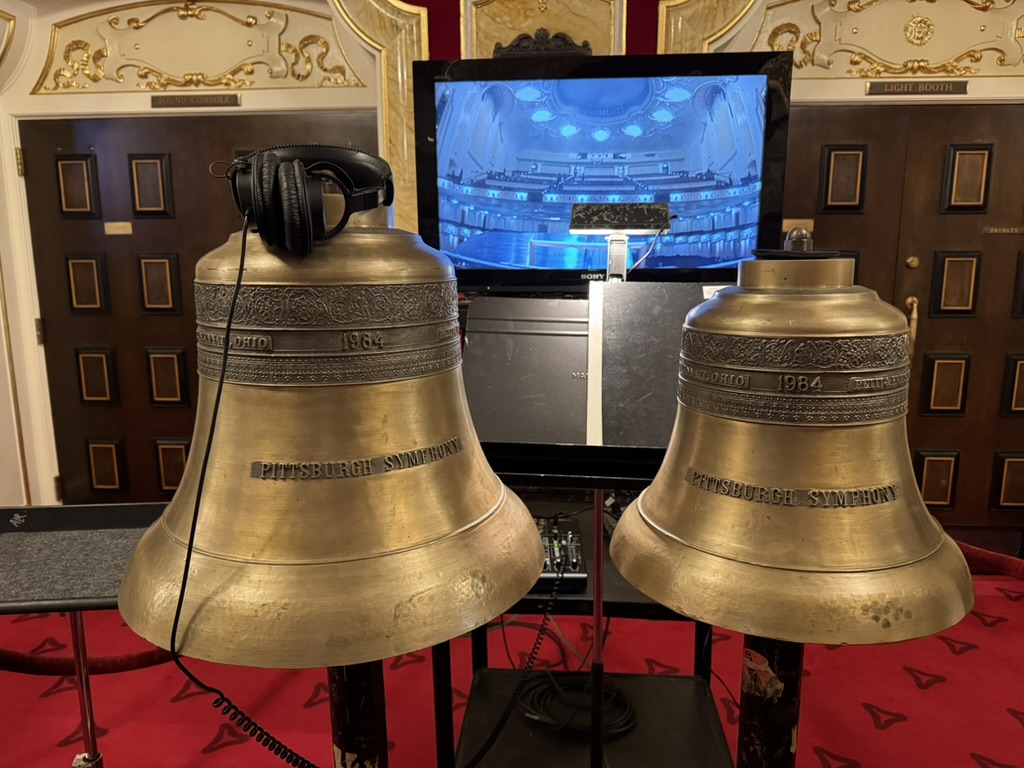
Offstage bells used in the Symphonie fantastique

The solo piano opened the work with a gentle resonance, followed by a long-breathed orchestral exposition. The most intimate and personal of Beethoven’s five piano concertos, Piemontesi drew deep reserves of expression. His thoughtful, probing playing perhaps recalled that of his mentor, Alfred Brendel, and he found great drama in the cadenza. In the Andante con moto, coarse strings introduced the plaintive piano, arriving at a spiritual stasis amidst moments of agitation. As if unsure what direction to go after, the closing rondo started in hesitation before robustly bursting forth with vigor and abandon. For an encore, the pianist selected a lovely slow movement from a Mozart sonata.

Revolutionary a work as it may be, Berlioz’s Symphonie fantastique was written only three years after Beethoven’s death. Tentative beginnings introduced a dreamlike trance, and Ticciati teased out the richness of the strings, favoring minimal vibrato. I was struck by his energetic conducting, nearly using his entire body as his baton danced along to the music. Still, at times the orchestral balance left something to be desired. The first presentation of the idée fixe that binds the work was graceful and filled with longing.

In Un bal, the harps introduced an elegant waltz theme; a striking dialogue between English horn and offstage oboe opened the central Scène aux champs. A widely contrasting portrait of nature, matters went from the calm to the passionate to the stormy, ending with the forlorn English horn all alone. Matters came alive in the iconic Marche au supplice, given an energetic workout in all its brassy splendor. The closing Songe d’une nuit du sabbat opened in an eerie soundscape, filled with the striking timbres of the shrill E-flat clarinet, tolling bells (performed offstage from the lobby), and a chilling invocation of the Dies irae chant in the low brass.

In a post-concert performance, Piemontesi teamed up with PSO wind players for the latter two movements of Beethoven’s Quintet for Piano and Winds. A lovely pendant to the evening, and given the pianist’s chemistry with these players, I’d love to see him perform as part of the orchestra’s PSO360 series.

Two personal notes. One of my fondest concert memories consists of this same Beethoven/Berlioz pairing. The first of many performances I attended at Vienna’s Musikverein during a formative college year in the Austrian capital, conductor and piano were respectively Claudio Abbado and Maurizio Pollini — two of my musical heroes who are sadly no longer with us.

I am eagerly anticipating Marc-André Hamelin’s next album Found Objects/Sound Objects, due for release at the end of the month. In quintessential MAH fashion, it’s an enterprising blend of little-known works mostly dating from the last half-century. The disc concludes with his own Hexensabbat (Witches’ Sabbath). With obvious allusions to the Berlioz (including use of the Dies irae), how fitting it was for the track to be released as a single the same day as the PSO performance — and it’s a thrilling listen.

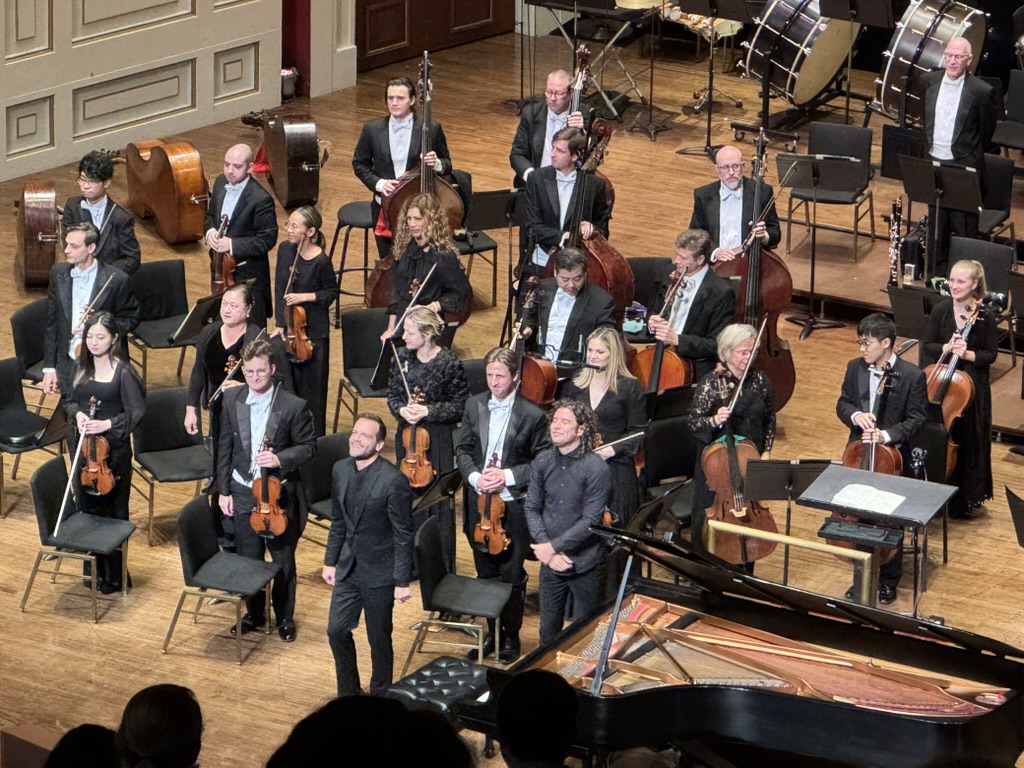
Francesco Piemontesi, Robin Ticciati, and the PSO

Yuja Wang headlines Pittsburgh Symphony’s glittering gala

Pittsburgh Symphony Orchestra
Manfred Honeck, conductor
Yuja Wang, piano
David McCarroll, violin
Justine Campagna, violin
Heinz Hall
Pittsburgh, PA
September 20, 2025

López: “Techno” from Fiesta!
Strauss Jr: Éljen a Magyár!, Op. 332 (arr. Nischkauer)
Shostakovich: “Waltz II” from Suite for Variety Orchestra No. 1
Sarasate: Navarra
Mascagni: “Intermezzo” from Cavalleria rusticana
Mancini: Strings on Fire
Tchaikovsky: Piano Concerto No. 1 in B-flat minor, Op. 23

A celebratory gala concert marked the start of the Pittsburgh Symphony’s 2025-26 concert season, featuring a potpourri of appealing orchestral works guided by music director Manfred Honeck before star pianist Yuja Wang took the Heinz Hall stage. A major fundraising event for the organization as well, and a successful one — reportedly raising nearly $1 million.

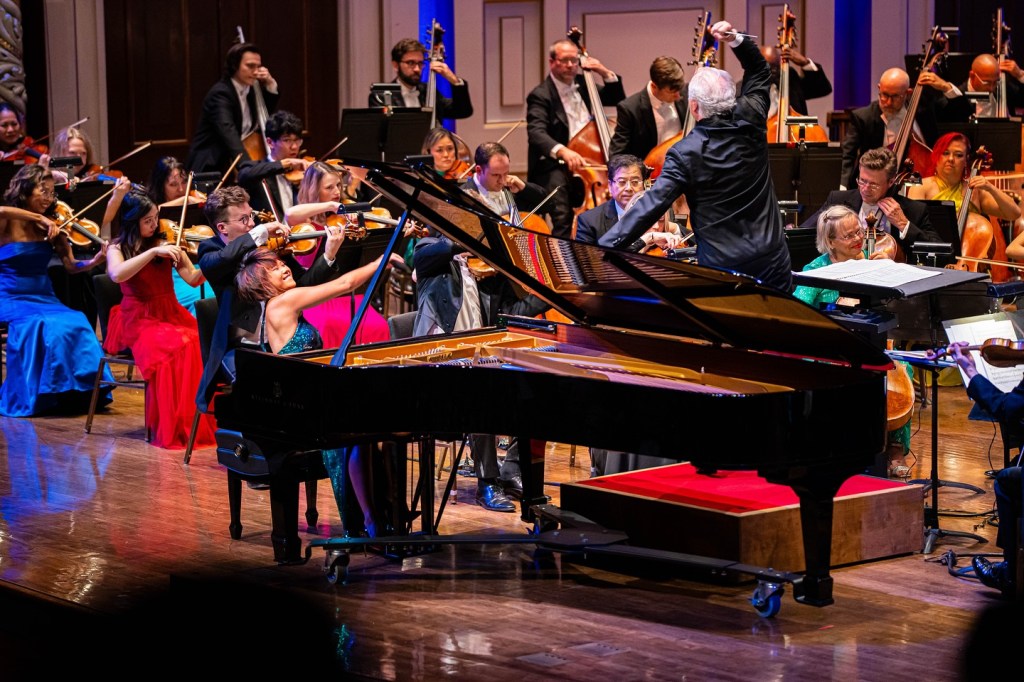
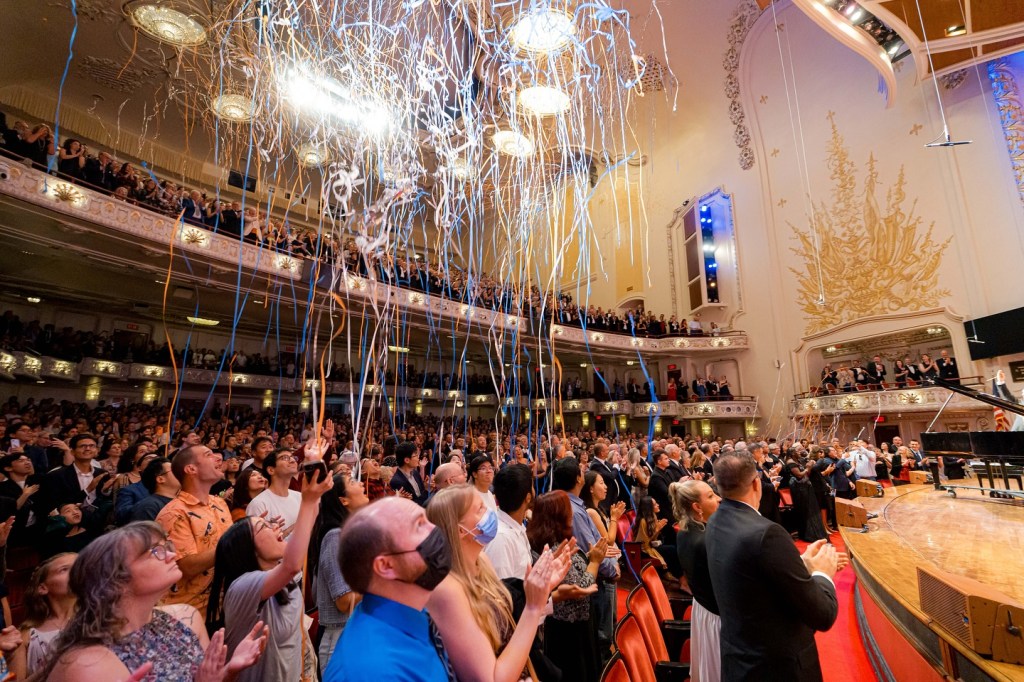
Yuja Wang with Manfred Honeck and the PSO, photos credit JMilteer Photography

Techno from the Fiesta! suite by Jimmy López certainly made for exciting first notes of the season with its driving kinetic energy, enhanced by an expanded percussion section. Strauss’ Éljen a Magyár! charmed in its infectiously lilting rhythms, and served as an acknowledgment of the composer’s 200th birthday.

Another anniversary was marked with Shostakovich, who we note died 50 years ago. A waltz from his Suite for Variety Orchestra No. 1 was nearly Chopinesque in its blending of elegance and melancholy. Sarasate’s Navarra featured dueling PSO violinists David McCaroll and Justine Campagna, playing the material with inimitable Spanish charm and coruscating virtuosity.

Mascagni’s indelible intermezzo from Cavalleria rusticana (which local audiences got to hear complete at Pittsburgh Opera last season) saw delicate strings blossom into the sumptuous. Finally, Henry Mancini’s (best remembered as composer of The Pink Panther and other films) Strings on Fire was just that — a sizzling, energetic workout.

I heard Yuja Wang play Tchaikovsky’s First Piano Concerto at The Cleveland Orchestra this past March, and was dazzled by her consummate virtuosity, command of the keyboard, and refined playing that revealed details I hadn’t heard before even in this overly familiar warhorse. There’s little else to say about it, but what a thrill it was to see her deliver such impassioned and assured playing with the Pittsburgh musicians, her first local appearance since 2013. Despite a thunderous ovation and numerous curtain calls, she didn’t indulge the capacity crowd with an encore, but perhaps it would have been all but gratuitous after such a satisfying take on Tchaikovsky.

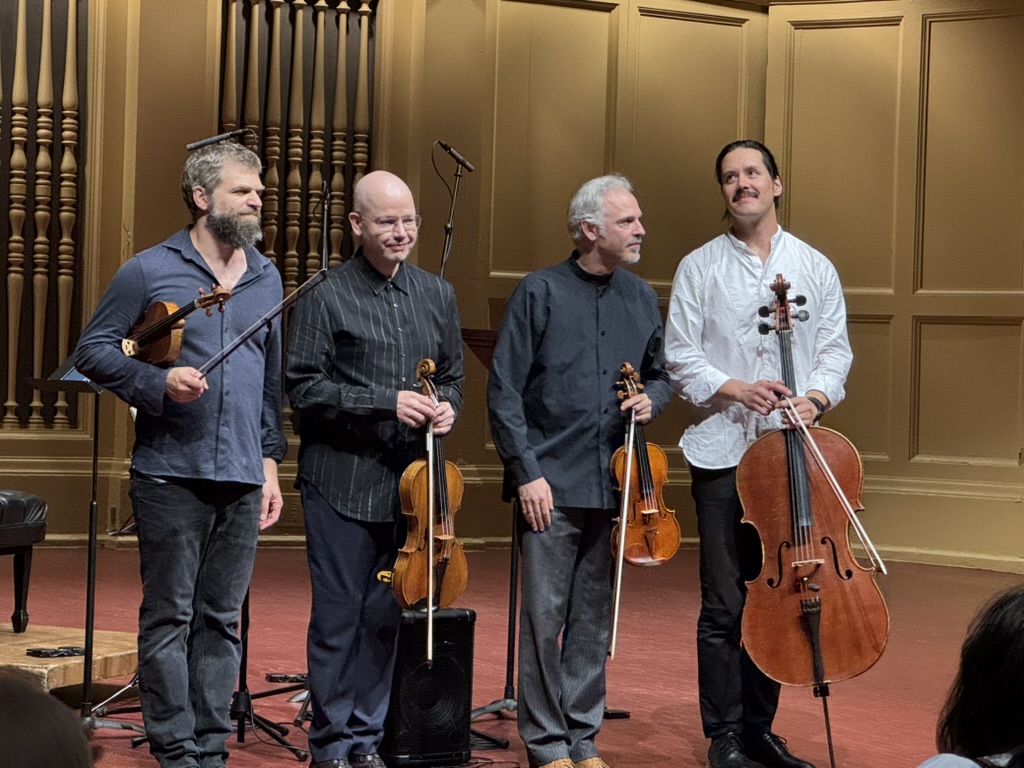
Brooklyn Rider opens Chamber Music Pittsburgh’s 65th season with thoughtful, politically-informed program

Brooklyn Rider
Carnegie Music Hall
Pittsburgh, PA
September 16, 2025

Haydn: String Quartet in F minor, Op. 20 No. 5, Hob. III:35
Byron: String Quartet No. 3
Hearne: We Are Working Tirelessly for a Ceasefire
Negrón: Our Children Speak English and Spanish
Dylan: The Times they are a-changin’ (arr. Colin Jacobsen)
Beethoven: String Quartet No. 9 in C Major, Op. 59 No. 3

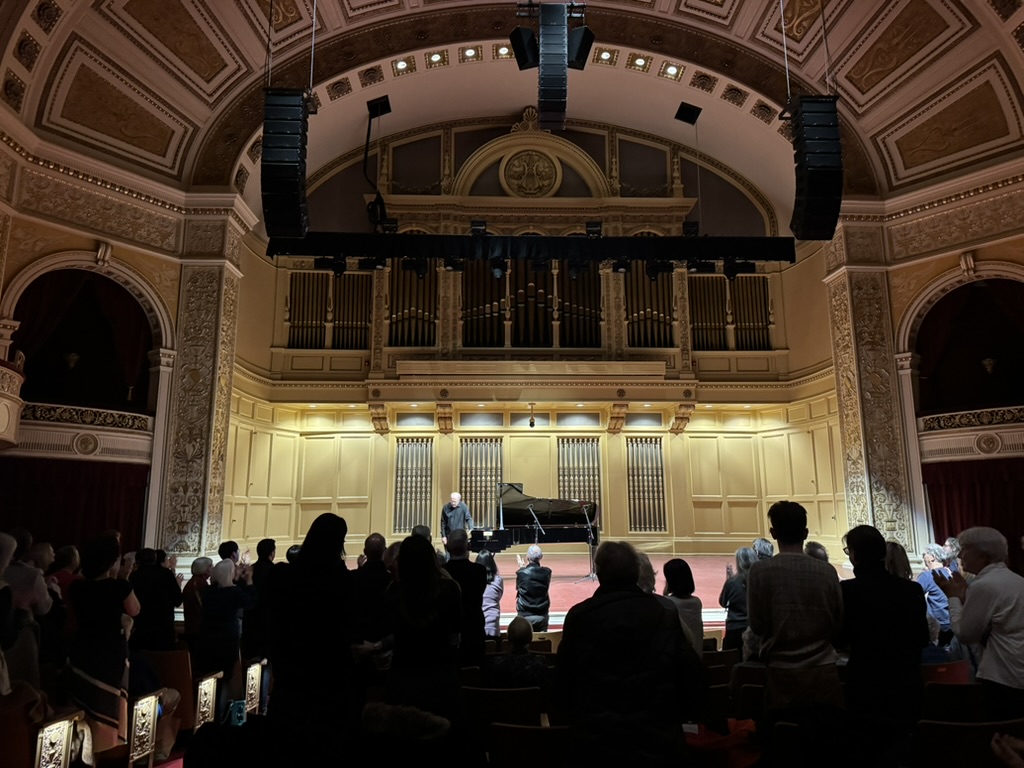
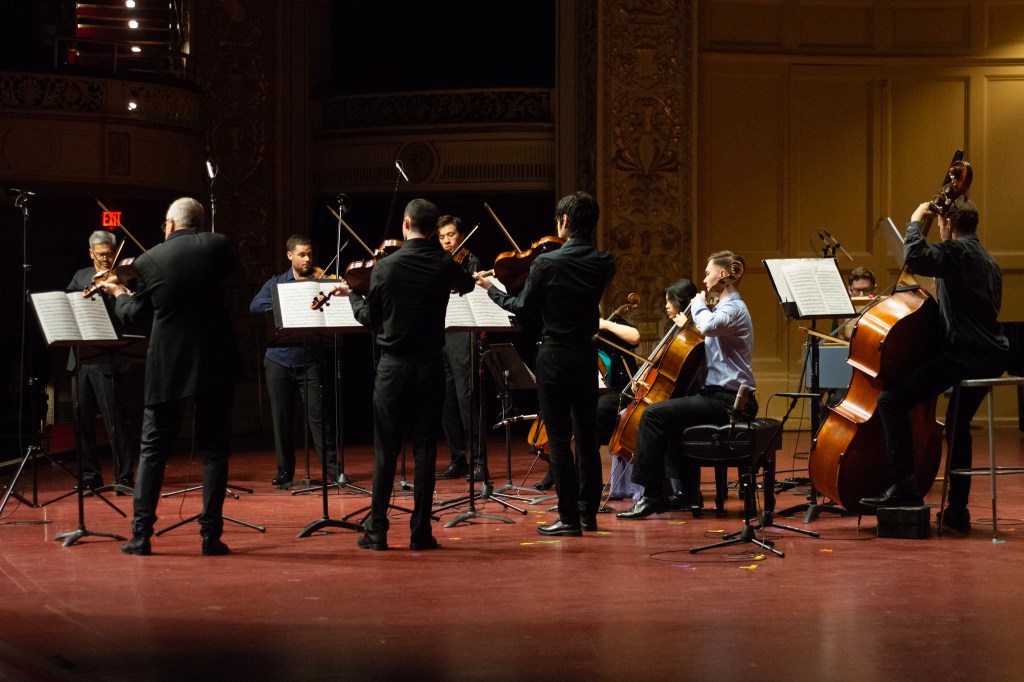
Returning to its former home at the Carnegie Music Hall for the first after the extensive renovation, Chamber Music Pittsburgh began its 65th season with the enterprising string quartet Brooklyn Rider. A banner year for the quartet as well, with this being its 20th anniversary. BR has a gift for thought-provoking recital programs that often become the basis for recordings (see my review of a program which touched on their Healing Modes and Four Elements projects). Tuesday’s offering introduced their Citizenship Notes initiative, celebrating democratic ideals through the string quartet, itself a microcosm of a functioning democracy with its four generally equal voices.

Brooklyn Rider at Chamber Music Pittsburgh

The evening opened with Haydn, whose works bear the ideals of the Enlightenment. The String Quartet in F minor is marked by unusually rich writing from the generally economic classicist, given by BR with ample heft and a refined clarity and balance between the four parts. The slow movement featured some graceful playing in triple meter before the fugal writing of the finale, whisked off with crisp precision. The fugue is perhaps the greatest musical expression of democracy with its lively discourse and equality amongst parts, and the present performance made one wish it was a form Haydn explored more.

A quartet of new commissions followed, all centered around the democratic theme — and the composers engaged were given much latitude on how they wished to express that. Don Byron’s String Quartet No. 3 makes only veiled reference to the theme. Rapid runs in endless succession made for chaotic beginnings, and a colorful employ of pizzicato yielded shifting, contrasting textures. The only overt acknowledgment of the politically charged theme was in the central second movement — denoted “Russian March,” with obvious implications against of the backdrop of the war in Ukraine. An ostinato was used to ominous effect, and the strife was unabated in the finale.

Ted Hearne’s We Are Working Tirelessly for a Ceasefire refers the oft-repeated line from politicians in reference to the Gaza war that amounts to all talk and no action. Incessant repetitions in the music seemed to evoke this deluge of platitudes, and with rhythms out of sync, one perhaps felt the cacophony of a session of Congress. Our Children Speak English and Spanish by Puerto Rican composer Angélica Negrón looked to the children as the surest hope for a democratic future, with pre-recorded bits of children’s voices interwoven with the strings.

Brooklyn Rider violinist Colin Jacobsen offered his own transcription of Bob Dylan’s anthem The Times they are a-changin’, and it was a remarkable way to hear a classic afresh. Much more ambitious than a straightforward transcription, it took the Dylan tune in a multitude of directions as members of the quartet sang the familiar lyrics.

The third and final of Beethoven’s so-called Razumovsky quartets closed the program, neatly bookending the contemporary works with masters of the form. A prolonged and rather static introductory passage was quite striking before a gently cascading main theme took shape, resonating with the brightness of C major. The first two of the Razumovsky quartets explicitly contain a Russian theme — although no such designation is made in the third, the captivating theme of the slow movement is likely of Russian origin (perhaps a connection to the Byron work heard earlier). Winding and wistful, the melodic line was underpinned by pizzicato cello. Like the selected Haydn quartet, Beethoven too closed with a fugue — indeed, the most appropriate way to conclude this program. Blazing by in a whirlwind, it made for one of Beethoven’s most thrilling finales.

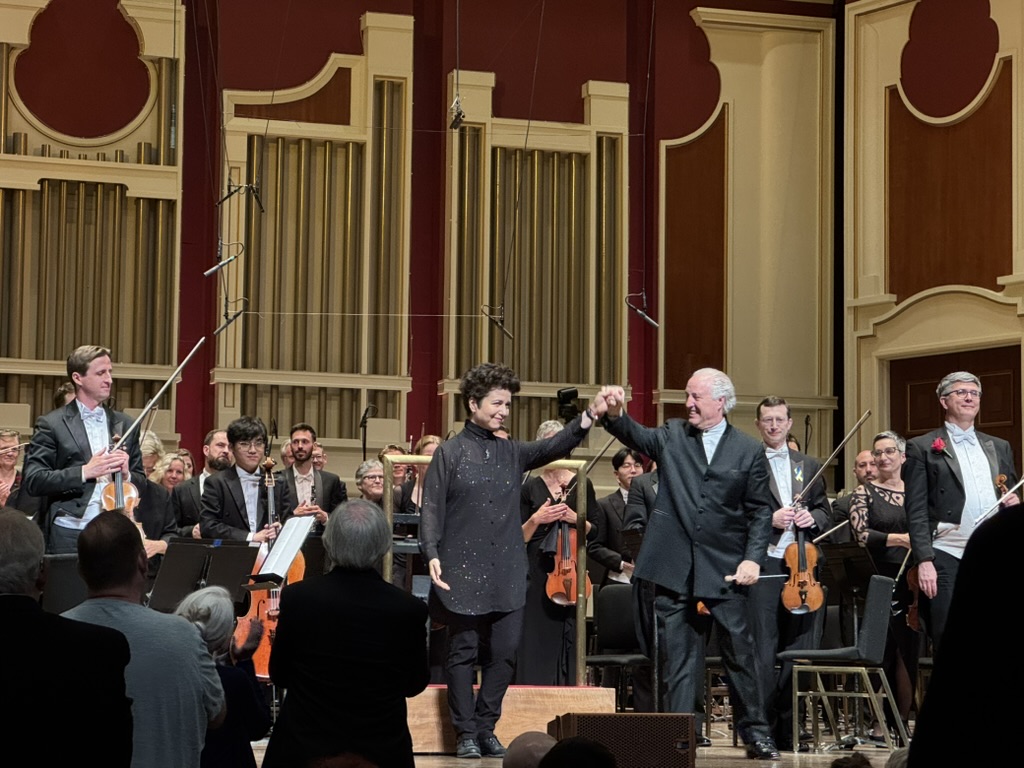
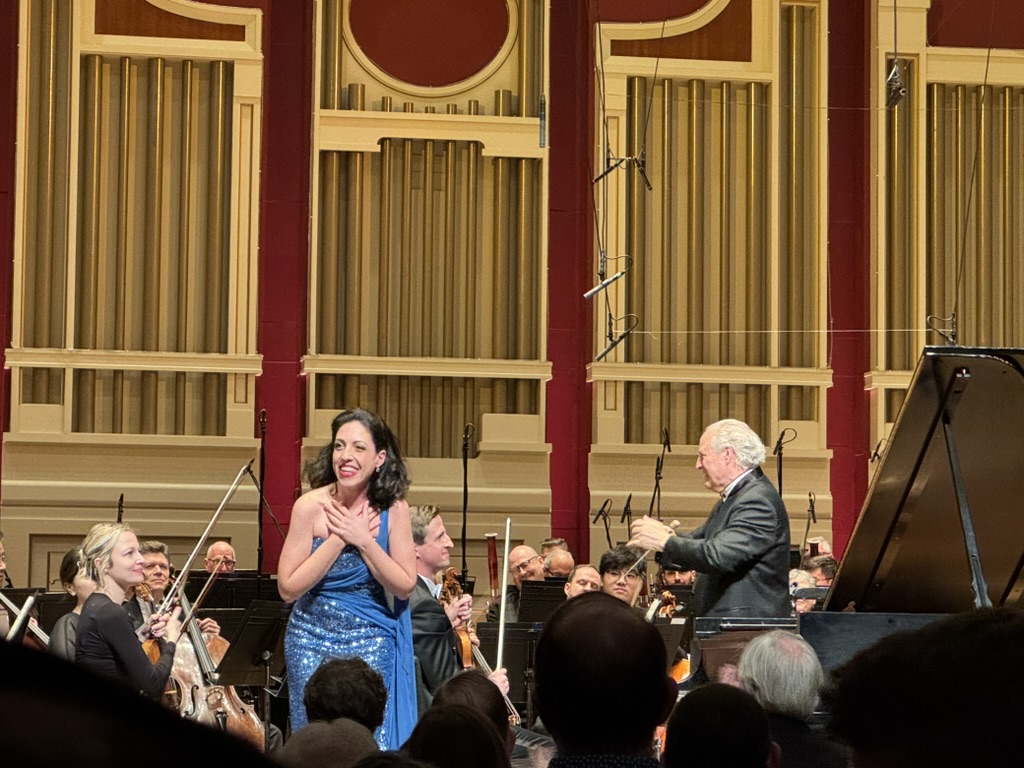
Honeck closes Pittsburgh season with scorching Shostakovich

Pittsburgh Symphony Orchestra
Manfred Honeck, conductor
Beatrice Rana, piano
Heinz Hall
Pittsburgh, PA
June 13, 2025

Auerbach: Frozen Dreams
Mendelssohn: Piano Concerto No. 1 in G minor, Op. 25
 Encore:
 Tchaikovsky/Pletnev: Intermezzo from The Nutcracker
Shostakovich: Symphony No. 10 in E minor, Op. 93

In the final subscription program of the season, Manfred Honeck and the Pittsburgh Symphony selected a program which has become a familiar format this season: a new work, a concerto with an impressive soloist, and a major symphony to cap things off. Friday’s new work was the world premiere of Lera Auerbach’s Frozen Dreams (which Honeck is due to conduct in Vienna the following weekend).

Lera Auerbach with Honeck and the PSO

Frozen Dreams had its roots in a 2020 work for string quartet. The expanded version for full orchestra gave the composer the opportunity to include some unique bits of instrumentation — for example, scraping the edge of the gong — to create an otherworldly, spiritual dimension, and a dreamy, phantasmagoric atmosphere. A folk-inspired theme took shape in a solo line from concertmaster David McCarroll. Pointillist-styled textures circulated around the orchestra in this captivating music that though required acute listening drew one in. The distinctive tones of the gong returned before matters faded to silence.

Mendelssohn’s brilliant Piano Concerto No. 1 saw the return of Italian pianist Beatrice Rana. A sizzling orchestral opening introduced her fleet fingers in playing that sparkled like the sequins of her dress. More lyrical passages were delicately shaped. Some lovely playing in the low strings and brass surfaced in the central Andante in service of Rana’s graceful pianism. The fiery finale saw the pianist in crisp command of the keyboard. As an encore, Rana had much to say in the lyrical and passionate Intermezzo from Tchaikovsky’s Nutcracker (part of an ingenious set of transcriptions by Mikhail Pletnev).

Shostakovich’s massive and shattering Tenth Symphony made for an imposing close to the season. A deep gravitas was felt from the very beginning, with the richness of the strings sounding world-weary, further answered by a lonesome clarinet. Gradually, the movement built to powerful and often ferocious climaxes, only to close on a forlorn flute. The Allegro served as an uncompromising portrait of Stalin’s brutality, a breathless aural assault. The following Allegretto began quietly unsettled, and morphed into a grotesque dance. Ponderous introductory material in the finale took flight into what seemed at first glance a jubilant fanfare, but a much grimmer reality was revealed in due course. The work ended, however, in what potentially could be felt as a glimmer of hope — but not without ambiguity and uncertainty.

Beatrice Rana with Honeck and the PSO

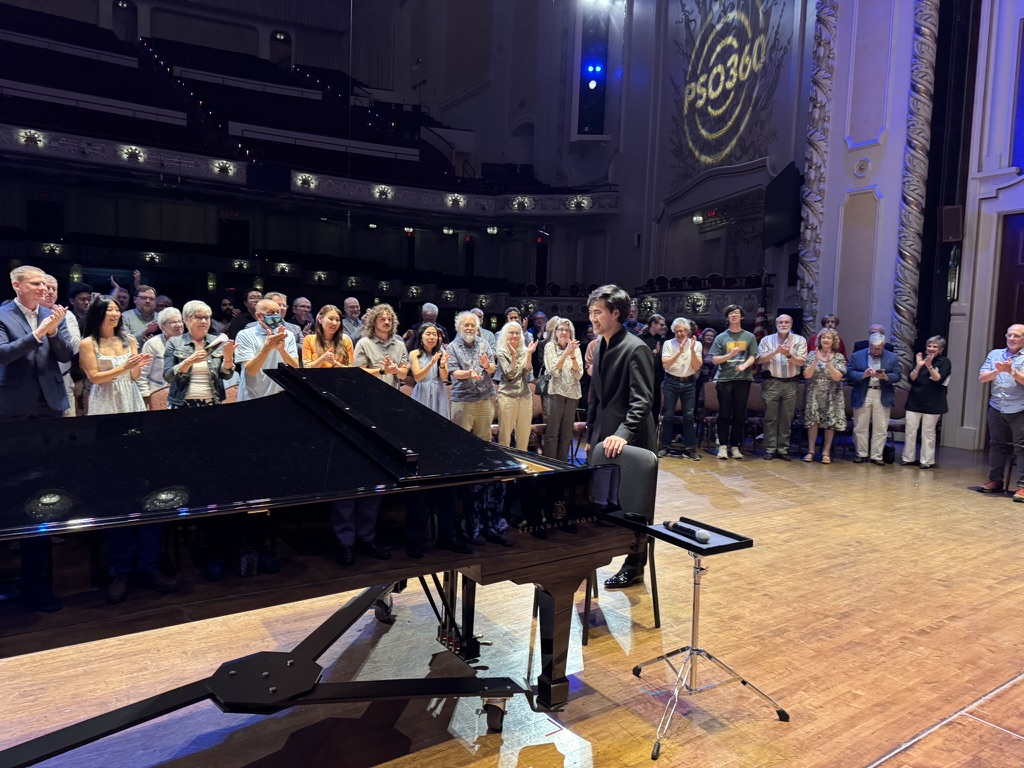
Bruce Liu offers colorful recital at Heinz Hall

Bruce Liu, piano
Heinz Hall
Pittsburgh, PA
June 7, 2025

Tchaikovsky: The Seasons, Op. 37a – January, February, May, June
Tchaikovsky (arr. Wild): “Dance of the Four Swans” from Swan Lake, Op. 20
Scriabin: Piano Sonata No. 4 in F-sharp major, Op. 30
Tchaikovsky: The Seasons, Op. 37a – July, August, October
Chopin: Fantasie-Impromptu in C-sharp minor, Op. 66
Prokofiev: Piano Sonata No. 7 in B-flat major, Op. 83 – mvts 2 & 3

Encore:
Chopin: Nocturne No. 20 in C-sharp minor, Op. posth.

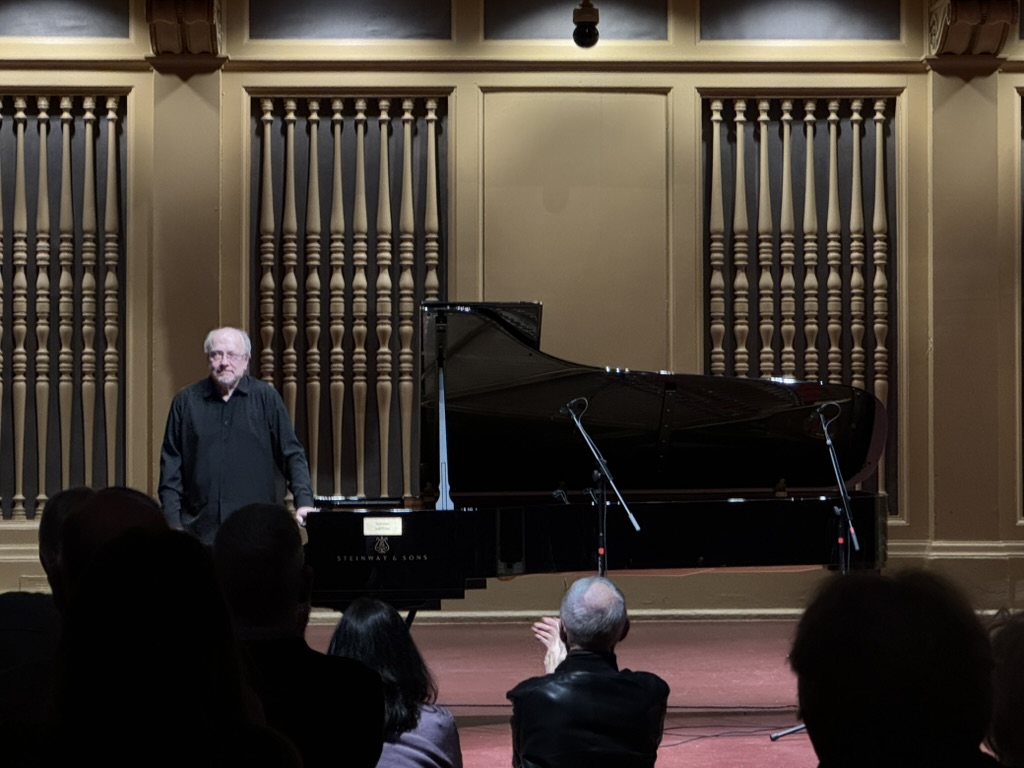
Filling in on short notice for Alice Sara Ott, pianist Bruce Liu was not only tasked with a Pittsburgh Symphony concerto appearance, but also an entry in the distinguished PSO360 series, an intimate chamber music presentation on stage at Heinz Hall. Instead of a collaboration with PSO players, Liu opted for a solo recital — the first to do so since the series’ inception in the 2017-18 season.

Bruce Liu’s PSO360 recital

A recent recording for Deutsche Grammophon featured Liu performing Tchaikovsky’s suite The Seasons, and Saturday’s recital was anchored by selections from that charming collection. The work shows the more intimate side of the composer — quite a contrast to the emotionally-fraught symphonies and concertos — and quite a perfect choice for the salon setting of a PSO360 performance. Liu imbued each with character and attention to detail, closing the first grouping with the beguiling June barcarolle.

A further Tchaikovsky work followed in Earl Wild’s transcription from Swan Lake in which Liu brought out the feathery filigree (as a sidebar: Earl Wild was a Pittsburgh native and attended Carnegie Mellon). The mystical world of Scriabin followed in the Piano Sonata No. 4 in F-sharp major. The opening movement was languid and atmospheric, further enhanced by the blue light which shrouded the stage — corresponding to the composer’s synesthetic association with F-sharp. The brief Prestissimo volando which closed was explosive, almost like a sudden burst of light and energy.

Three more excerpts from The Seasons followed, highlighted by the melancholic Autumn Song (October). One was certainly keen to hear Chopin played by a laureate of the Chopin Competition, and his Fantasie-Impromptu lived up to expectation. Why Liu jettisoned the first movement of Prokofiev’s Seventh Sonata I don’t know — musically it made little sense to present only a torso of the work. Regardless, the thrilling toccata finale made an exciting close to the recital. For a lone encore, Liu returned to Chopin with a pensive account of the C-sharp minor nocturne.

Angelic Mahler – and an unexpected debut – at the Pittsburgh Symphony

Pittsburgh Symphony Orchestra
Manfred Honeck, conductor
Bruce Liu, piano
Lilit Davtyan, soprano
Heinz Hall
Pittsburgh, PA
June 6, 2025

Vali: The Camel Bell
Beethoven: Piano Concerto No. 3 in C minor, Op. 37
 Encore:
 Chopin: Fantasie-Impromptu in C-sharp minor, Op. 66
Mahler: Symphony No. 4 in G major

Both of the Pittsburgh Symphony’s final two subscription programs of the season are scheduled to open with a world premiere, the first of which saw Reza Vali’s The Camel Bell come into being. Born in Iran, Vali is a composer with strong connections to Pittsburgh, having completed his PhD in composition at Pitt and subsequently teaching for many years at Carnegie Mellon. Additionally, this counts as his fourth PSO commission — the first three of which have been recorded on a recent Naxos release.

Bruce Liu with Manfred Honeck and the PSO

In his prefatory remarks, Vali likened the work to a “dialogue between great musical civilizations,” specifically noting it weaves together European, American, and Persian influences. A burst of energy began, and work explored the sounds of quarter tones – somewhat jarring to the Western ear, but a striking effect. Inflections even of jazz surfaced in this kaleidoscopic confluence of musical cultures, and I enjoyed the dueling solos between violinists David McCarroll and Jeremy Black. A tour de force closed one of the most impressive new pieces the PSO has introduced this season.

Pianist Alice Sara Ott was regrettably obliged to bow out of this weekend’s appearances due to acute tendinitis — much admiration to Bruce Liu for stepping in on short notice (as well as for the PSO360 recital situated between the two performances of this program). Liu has come to prominence after capturing first prize in the 2021 International Chopin Piano Competition, so a PSO debut from him was a welcome surprise.

Crisply articulated, the orchestral introduction to Beethoven’s Piano Concerto No. 3 introduced the C minor tonality, replete with requisite tension. Liu entered the fold by way of a fiery flourish on the keyboard, while nonetheless purveying a tone elegant and rippling, and the cadenza was given with dramatic flair. The unaccompanied piano opened the central Largo, prayer-like, and probing its great expressive potential. I was struck by Liu’s limber, flexible fingerwork in the stylishly elegant finale, ending in the brightness of C major. As an encore, Liu offered a marvelous account of Chopin’s impassioned Fantasie-Impromptu.

Mahler’s Fourth Symphony is a different animal than the composer’s other symphonies, slimmer and rather classically proportioned, yet still unmistakably Mahlerian. Music director Manfred Honeck drew the orchestral fabric with clarity and transparency, and a classical economy that brought out its details and nuances — and not without an infectious lilt. In the second movement, concertmaster McCarroll played a de-tuned violin, purveying a coarse, rustic quality further enhanced by a shrill clarinet.

In the sprawling Ruhevoll we were given the first glimpse of heaven, plaintive and serene, seemingly at peace — but still not without a certain strife with which to contend. The finale began with an innocent purity, free from world-weary concerns. Soprano Lilit Davtyan perhaps could have benefitted from clearer diction, but I was mostly taken by the angelic quality of her voice, and the way the orchestra deftly matched it.

Víkingur Ólafsson makes magnificent Pittsburgh Symphony debut with impassioned Brahms

Pittsburgh Symphony Orchestra
Manfred Honeck, conductor
Víkingur Ólafsson, piano
Heinz Hall
Pittsburgh, PA
April 27, 2025

Jani: Flare
Beethoven: Symphony No. 1 in C major, Op. 21
Brahms: Piano Concerto No. 1 in D minor, Op. 15

Encores:
Rameau/Ólafsson: The Arts and the Hours
Rameau: Le Rappel des oiseaux

With a Grammy award, an extensive discography, and appearances with the world’s leading orchestras and at the most prestigious concert halls, it’s a bit surprising it’s taken until 2025 for Icelandic pianist Víkingur Ólafsson to debut with the Pittsburgh Symphony. It was worth the wait, however, as he treated Pittsburgh audiences to an arresting, majestic performance of Brahms’ brooding First Piano Concerto (though he was originally scheduled to perform the Second Concerto).

Víkingur Ólafsson at the Pittsburgh Symphony

There was dramatic tension from bar one, with a dark and impassioned orchestral introduction. Ólafsson entered by way of a dulcet chorale, scaling to ferocious tremolos. He purveyed a bold and commanding tone, showing that music of great technical demands can be wholly devoid of showy virtuosity. A thoughtful and probing interpreter, Ólafsson’s absorption in the music was absolute, even bobbing his head during the orchestral interludes like a bona fide rockstar before the expansive first movement reached a bleak, uncompromising close.

The central Adagio was plaintive and filled with longing, and the pianist’s deft voicing and phrasing brought out a resonant lyricism. A ferocious fugato marked the closing rondo finale, with both pianist and orchestra seemingly running on endless reserves of dramatic energy. From the piano bench, Ólafsson eyed his orchestral colleagues with joy and admiration — there was some impressive contrapuntal playing to be heard — and the long journey pointed to a triumphant end.

With charismatic charm, Ólafsson addressed the audience and expressed his gratitude to be in Pittsburgh, reminiscing how impressed he was by the PSO’s playing when he caught them during a performance in Berlin in 2013 (reviewed by a colleague here). He generously offered a pair of encores, both by Rameau — his own transcription styled as The Arts and the Hours from Rameau’s final opera (Les Boréades), and the intricate gem Le Rappel des oiseaux. An impressive way to cap off the most significant local debut of the season.

The program began with the 2021 work Flare by German composer Sophia Jani. Loosely drawing inspiration from the poetry of Mary Oliver, Flare was of a colorful soundscape. Clangorous brass formed the backbone of the work, building to bold climaxes in a style that seemed to be a nod towards film scores.

Beethoven’s First Symphony rounded off the program — if there’s a connective thread, all three works program were by German composers, and all counted as one of their composers’ earliest forays into writing for orchestra. A work very much in Manfred Honeck’s wheelhouse, the weight of the introductory material in the youthful C major symphony gave way to buoyant textures that effervesced — though the development was not without fire and drama. The slow movement was articulate with careful detailing of the rhythmic inflections. Wholly at peace and untroubled, but contrasts were sharpened to add tension. A minuet sparkled with exuberance, a warmup for the boisterous finale, with perhaps the occasional hint to the dramatic style the composer would soon develop.

Dover Quartet presents decidedly American program at Chamber Music Pittsburgh

Dover Quartet
PNC Theatre
Pittsburgh Playhouse
Pittsburgh, PA
April 21, 2025

Montgomery: Strum
Fé: Rattle Songs (arr. Tate)
Tate: Woodland Songs
Dvořák: String Quartet No. 12 in F major, Op. 96, American

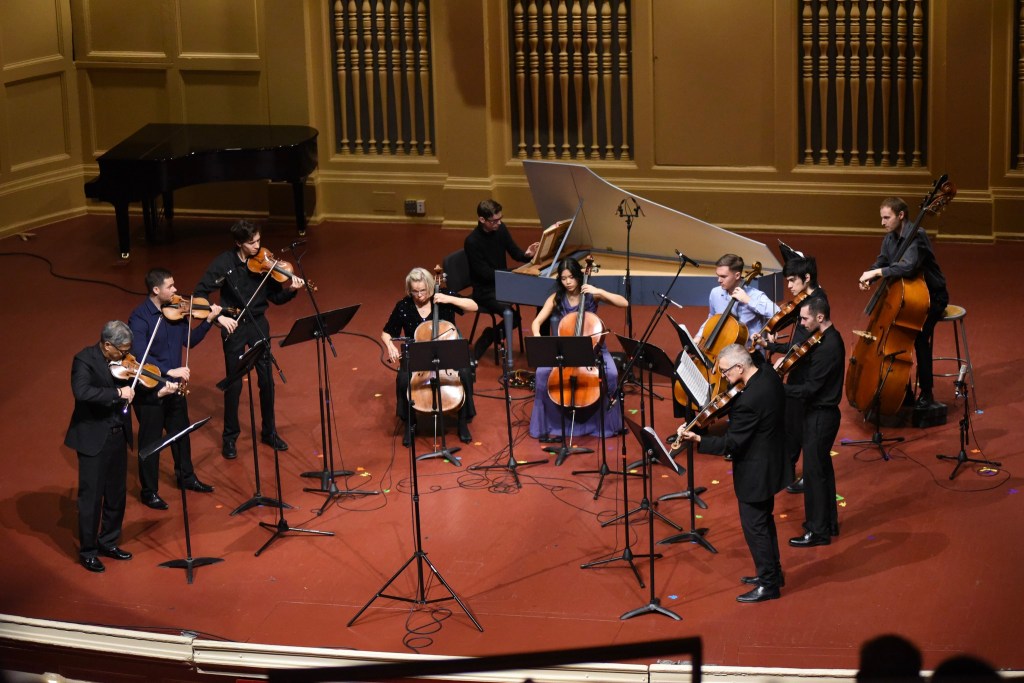
Closing Chamber Music Pittsburgh’s 64th season was the dynamic Dover Quartet. Challenging the Euro-centric associations one may have with the string quartet medium, the Dovers offered a thoughtful program of bona fide Americana, with a first half devoted to Black and Indigenous voices. Anchored by Dvořák’s American quartet (which one member described as his “gateway drug into string quartet playing”), the Dovers sought to explore the influences absorbed in Dvořák’s piece — an initiative that will also be captured on an upcoming recording.

Dover Quartet at Chamber Music Pittsburgh

Jessie Montgomery’s Strum has found a prominent place in the repertoire, and for good reason given its warm appeal. The viola was strummed like a guitar at the opening, and there was colorful interplay between bowed and plucked textures.

Camden Shaw, the Dover’s cellist, found himself quite taken by the album Mahk Jchi (“Our Hearts”) from the Native American a cappella group Ulali. The album features Native songs in a strikingly modernist bent, and includes the Rattle Songs by Ulali member Pura Fé. Shaw engaged Chickasaw composer Jerod Impichchaachaaha’ Tate to arrange the songs for string quartet. Seven brief pieces were conceived as a single entity, and the folk themes were artfully woven into the fabric of the sting quartet.

Generally lyrical works, the third piece stuck out as being gritty and percussive, bringing to life the titular rattles. “Women’s Shuffle” was somewhat bluesy, and the rapid repetitions in the closing “Great Grandpah’s Banjo” were an invigorating invocation of the instrument. It speaks to Tate’s skill as a composer and understanding of the repertoire for indigenous music to be so seamlessly transformed for string quartet.

Next, we got to hear a piece from Tate himself, written on commission for the Dovers in 2024. Woodland Songs paints a portrait of five woodland animals which also have a namesake Chickasaw clan. “Squirrel” opened vigorously — and not without a certain mischief. “Woodpecker” demanded great virtuosity from the quartet, countered by the quiet majesty of “Deer.” In “Fish,” one heard a lovely pizzicato line in the high register of the cello, set amidst swells of strings. The closing “Raccoon” — the clan to which the composer belongs — capped off the work with an autobiographical statement. For those interested in hearing more of Tate’s music, the Carnegie Mellon Philharmonic will be performing his Fire and Light this Sunday (April 27) at Heinz Hall.

Completing the program was a refreshing and energetic reading of Dvořák’s American. The genial main theme first surfaced in the viola, and Dover’s light and lithe textures painted the work as a lovely paean to the Czech composer’s adopted country. Still, there was ample drama and contrasts to capture one’s attention. The Lento was delicate and deeply felt, while the Scherzo radiated insouciant charm, an ethos that continued into the finale that closed in the highest of spirits.

One might also be reminded of Chamber Music Pittsburgh’s previous concert with PUBLIQuartet which featured improvisations on this quartet. Being the season finale, the upcoming 2025-26 was revealed, which most notably, will feature a return to the Carnegie Music Hall.

Manfred Honeck and the Pittsburgh Symphony herald springtime with Beethoven’s Pastoral

Pittsburgh Symphony Orchestra
Manfred Honeck, conductor
Francesco Piemontesi, piano
Heinz Hall
Pittsburgh, PA
March 30, 2025

Eisendle: heliosis
Liszt: Piano Concerto No. 2 in A major, S125
 Encore:
 Schubert: Impromptu in G-flat major, Op. 90 No. 3
Habibi: Jeder Baum spricht
Beethoven: Symphony No. 6 in F major, Op. 68, Pastoral

Over the closing weekend of March, Manfred Honeck and the Pittsburgh Symphony offered a program anchored by Beethoven’s Pastoral symphony, certainly an apt way to mark the arrival of spring (and I’m happy to report I spotted some cherry blossoms on the way to Heinz Hall!). In the graceful material that opened the symphony, the PSO radiated a joyous exuberance from the stage.

Francesco Piemontesi, Manfred Honeck, and the PSO, photo credit JMilteer Photography

I was particularly touched by the warmth of the clarinet in the gentle slow movement, hardly portending the storm that lay ahead. The PSO romped through the minuet that followed, with Honeck inviting the musicians to stomp their feet, perhaps giving the authentic air of a country dance. Ample drama painted the ensuing storm in vivid realism, making the closing Shepherd’s Song all the more rewarding.

Prefacing the Beethoven was the 2019 work Jeder Baum spricht (“Every Tree Speaks”) by Iranian composer Iman Habibi. Written for the Philadelphia Orchestra’s celebration of Beethoven’s 250th anniversary, it was explicitly conceived to precede the Fifth and Sixth symphonies, and makes numerous if somewhat veiled references to both. The title comes from Beethoven’s diaries, and in his prerecorded video remarks, Habibi noted a further resonance to the current climate crisis. An invocation of the fate motif from the Fifth opened, and a panoply of nature sounds abounded in this brief, five-minute prelude.

Opening the program was another contemporary work, a 2021 piece by Austrian composer Hannah Eisendle entitled heliosis (a medical term for sunstroke). Following an attention-grabbing opening, there was a retreat to a desolate, sun-drenched soundscape. The scoring emphasized the percussion, and its driving rhythms to my ears echoed Stravinsky’s Rite of Spring.

The program further featured pianist Francesco Piemontesi in Liszt’s Second Piano Concerto (a work I also heard him play at the Chicago Symphony just a few months earlier). Gentle winds began, answered by rolling arpeggios across the piano, as if gingerly exploring the potential of the instrument. Virtuosity was quickly ramped up, however, with the theme being transformed into an energetic march. In a more serene moment, the piano was in a richly lyrical duet with the cello (Anne Martindale Williams), a moment of respite before the fiery end. As an encore, the pianist selected Schubert’s G-flat impromptu — lovely and lyrical, and also a favorite of Piemontesi’s mentor Alfred Brendel.