Columbus Symphony opens new year with hearty Russian program

Rossen Milanov, conductor
Bella Hristova, violin
Columbus Symphony Orchestra
Ohio Theatre
Columbus, OH
January 6, 2023

Rimsky-Korsakov: Suite from The Snow Maiden 
Prokofiev: Violin Concerto No. 1 in D major, Op. 19
Shostakovich: Symphony No. 6 in B minor, Op. 54

The Columbus Symphony’s first program of 2023 surveyed three giants of the Russian repertoire – Rimsky-Korsakov, Prokofiev, and Shostakovich. A suite from Rimsky’s opera The Snow Maiden opened, an appealing selection of highlights, though its twelve minute duration barely scratches the surface of the expansive opera – a work which the composer considered his finest. The Introduction brimmed with a quintessentially Russian melancholy. “Dance of the Birds” unmistakably portrayed the subject material from this master of orchestration, and “Dance of the Buffoons” – the most recognizable excerpt – made for a rollicking close.
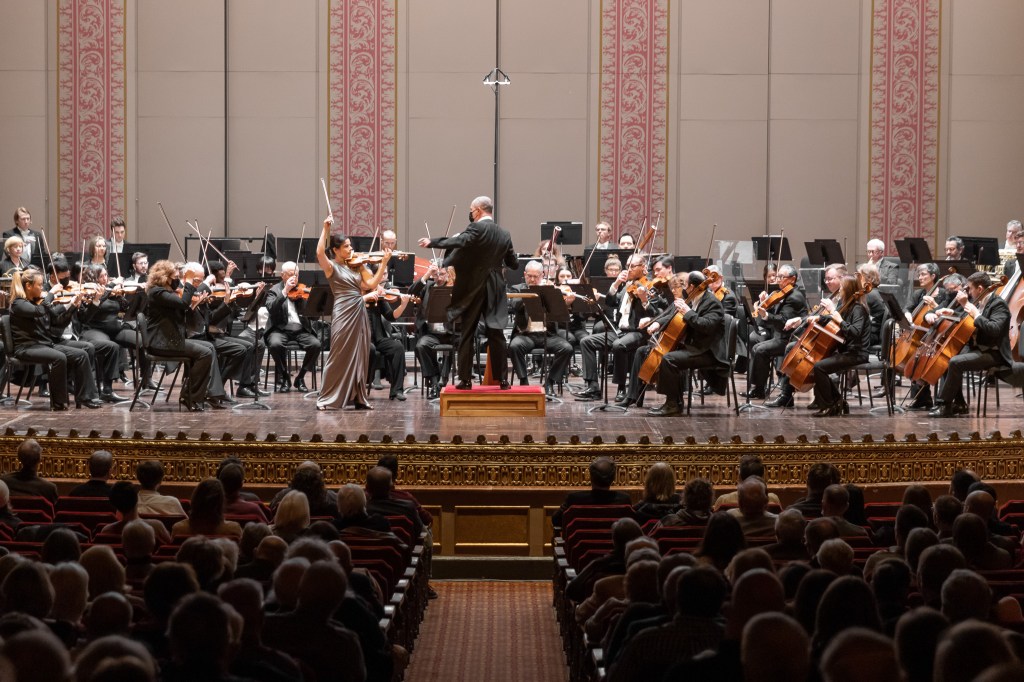
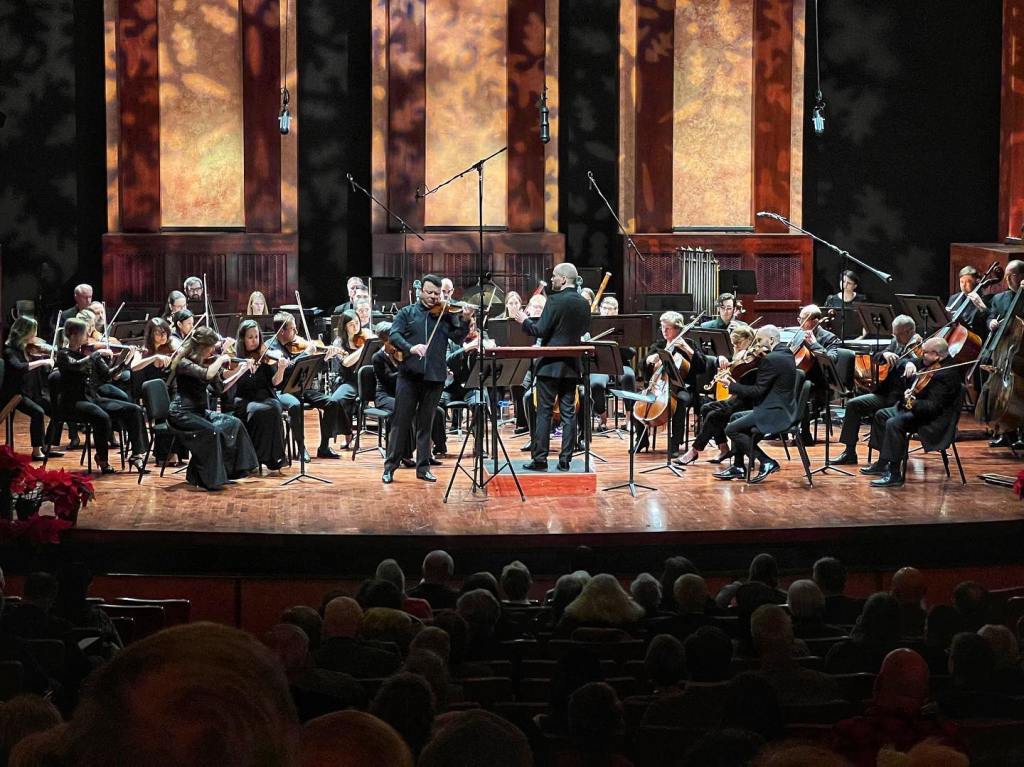
Bella Hristova, Rossen Milanov, and the Columbus Symphony, photo credit Corinne Mares

Prokofiev’s First Violin Concerto brought forth music director Rossen Milanov’s Bulgarian compatriot Bella Hristova – who was graciously on hand for a pre-concert interview with the conductor. Dreamy, meditative material opened, with a beguiling melody from the soloist. The movement gathered momentum, making relentless technical demands without being an overt display of showmanship. A thorny though brief scherzo as the concerto’s centerpiece showed the composer in a more recognizable guise as an enfant terrible. Severe challenges by and large met with aplomb, one nonetheless wanted cleaner intonation when the scoring reached high into the soloist’s register.

The finale served as the most wide-ranging segment of this compact concerto, at its endpoint landing on dreamy material in the spirit of where it all began. As an encore, Hristova offered the Bulgarian folk song “Ratchenitsa”, quipping that it would “break the mood of that gorgeous ending” – which it surely did, but in the best way possible!

Shostakovich’s Sixth Symphony dates from 1939, right on the cusp of World War II. It’s a powerful statement to be sure, but a perplexing work, not in the least because of its unusual structure: three movements, beginning with a vast Largo that occupies more space than the latter two fast movements combined. A searching melody in the low strings opened, not quite grounded. Sparse textures prevailed in this deeply personal, unembellished statement, sustaining a desolate atmosphere. A particularly striking moment came when string trills were pitted against strident brass.

The following Allegro was light-hearted, playful fare by contrast, gaining enormous vigor with its bombastic percussion. A oblique invocation of the Dies irae, however, suggested the darkness of the opening had hardly been overcome. The closing Presto was marked by a rambunctious dance-like theme, as caustic and sardonic as anything Shostakovich wrote.
ProMusica closes the year with lush Brahms and Mendelssohn

ProMusica Chamber Orchestra
David Danzmayr, conductor
Vadim Gluzman, violin
Southern Theatre
Columbus, OH
December 10, 2022

Chin: subito con forza
Brahms: Violin Concerto in D major, Op. 77
 Encore:
 Gluck: “Dance of the Blessed Spirits” from Orfeo ed Euridice (trans. Kreisler)
MacMillan: One
Mendelssohn: Symphony No. 5 in D major, Op. 107, Reformation

The final ProMusica program of the year presented two major scores from the 19th century (both in D major!), each prefaced by a brief but fitting contemporary work. Unusk Chin’s 2020 work subito con forza certainly made for an energetic opening. An homage of sorts to Beethoven, the opening gesture invoked the Coriolan overture before veering in a different direction, and powerful writing for the piano hinted at the Emperor piano concerto.

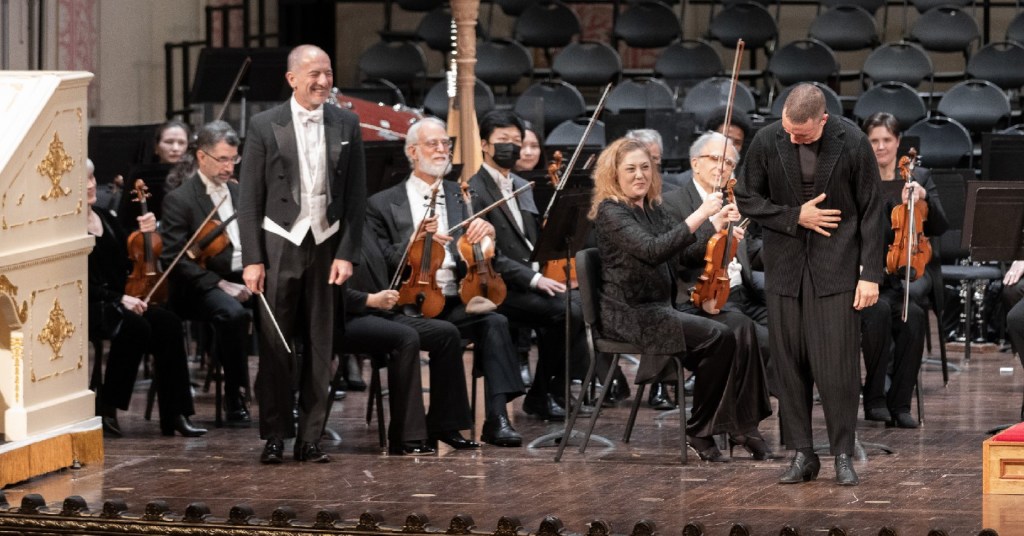
Vadim Gluzman, David Danzymar, and ProMusica, photo credit ProMusica

In her opening remarks, ProMusica CEO Janet Chen noted that this marks ten years since David Danzmayr and Vadim Gluzman assumed their current roles of music director and creative partner respectively. What followed was a veritable celebration of this now decade-long collaboration in Brahms’ Violin Concerto. The orchestral introduction was marked by an arching lyricism, and a fiery contrasting theme provided set up for the violin’s entrance. More lyrical material saw Gluzman sailing into the upper range of his instrument with a tone limber and flexible. The partnership between conductor, soloist, and orchestra certainly paid its dividends in convincingly conveying the large-scale architecture of the expansive opening movement.

A choir of winds opened the plangent Adagio, and Gluzman responded with a songful lyricism of his own. The Hungarian-inflected finale was a jocular affair, given with authentic flair. Gluzman returned with an encore in Gluck’s “Dance of the Blessed Spirits” from the opera Orfeo ed Euridice – presented in Kreisler’s transcription for violin with a touch of orchestral accompaniment. Its gorgeous, long-bowed melody was a lovely pendant to the Brahms.

As the title suggests, James MacMillan’s 2012 essay One explores single-line melodies, monastic in its starkness and somewhat suggestive of Gregorian chant. The religious orientation was apropos as it led without pause to Mendelssohn’s Reformation symphony – a fitting follow up to last season’s performances of the Scottish and Italian symphonies (perhaps a future ProMusica season could offer the rarely heard First and Second symphonies?). The slow introduction saw a rich invocation in the strings of the divine Dresden amen; the movement proper took shape with vigor in the stormier minor, delivered with momentum and precision.

The Allegro vivace was playful, lighter fare by contrast, and the gentle Andante was noted for its languid melody in the strings. The finale introduced the Lutheran hymn Ein feste Burg ist unser Gott in the flute (Nadine Hur) with matters building to a climax of both contrapuntal intricacy and festive exuberance.

Columbus Symphony, Chorus, and soloists deliver a riveting Glagolitic Mass

Columbus Symphony Orchestra
Rossen Milanov, conductor
Cameron Carpenter, organ

Abigail Rethwisch, soprano
Mariana Karpatova, mezzo-soprano
Jonathan Burton, tenor
Adam Cioffari, bass

Columbus Symphony Chorus
Ronald J. Jenkins, chorus director

Ohio Theatre
Columbus, OH
November 18, 2022

Nielsen: Overture to Maskarade
Poulenc: Organ Concerto in G minor, FP 93
Janáček: Glagolitic Mass

For the final subscription program of the calendar year, the Columbus Symphony served a fascinating program of three compelling yet infrequently heard works – the latter two which made use of the Ohio Theatre’s opulent Morton organ. The overture to Carl Nielsen’s ebullient opera Maskarade was of insouciant charm, with playing lithe and stylish for an energetic curtain-raiser.

Rossen Milanov, Cameron Carptener, and the Columbus Symphony, photo credit Corinne Mares

Composed 1934-38, Poulenc’s Organ Concerto is a product of the composer’s characteristic neoclassicism, but of a darker, more serious orientation than that employed in his earlier keyboard concertos – namely, the Concert champêtre and the Concerto for Two Pianos, works charming if a bit saccharine. The work is constructed as a single movement, though subdivided into seven discrete sections. It was a special treat to hear the Morton organ, and soloist Cameron Carpenter took masterful command of the instrument. A commanding opening for organ alone invoked the gravitas of Bach, but the lighter section that followed unmistakably bore Poulenc’s neoclassical stamp. A languid Andante moderato, by far the longest section, offered ample contrast.

Carpenter was assertively committed to utilizing the full possibilities of the Morton organ (and spoke in reverence of it during the pre-concert conversation), but one wondered how the piece would have come across differently had a more traditional concert hall organ been available (even in the more serious passages, to my ears the instrument inevitably invoked silent film accompaniment). A dramatic return of the opening material came in the final section before matters were distilled to hymn-like material – suggesting the composer’s reinvigorated interest in Catholicism at the time – and decorated with a delicate passage for solo viola, all a peaceful diversion before the bold closing statement. Carpenter returned with an encore that showed his sterling technique and exploited the instrument’s color and dramatic range.

Janáček’s Glagolitic Mass is a major artistic statement coming from the twilight years of the composer’s life. A setting of the mass in vernacular Czech, it is imposingly scored for large orchestra, organ, chorus, and a quartet of vocal soloists. Cast in eight movements, the first and final are for orchestra alone, the penultimate for organ alone. The opening orchestral introduction was a brassy call to attention, introducing an angular theme in Janáček’s rarefied musical language. In Gospodi pomiluj, the chorus entered as a pious contrast to the bracing orchestra, only to grow in urgency with the addition of soprano Abigail Rethwisch.

Slava was comparatively brighter, with the chorus impressive in negotiating the complexities of both the work itself and of the Czech language. Striking too was the use of organ and the composer’s unique use of the orchestral resources at hand. Jonathan Burton added a lyrical tenor to the extensive Věruju, and an organ interlude anticipated the solo movement to come. Adam Cioffari offered a resonant bass, finely complementing the richness of the chorus. Svet was by turn more pensive, with a touching solo line from concertmaster Joanna Frankel, and all four soloists in concert. That the seventh movement would be scored for organ alone underscored the importance of the instrument to the work; intensely dramatic, it was a further chance for Carpenter to shine, and the orchestra was subsequently given the last word in an ecstatically powerful final statement.

Powerful Brahms and charming Dvořák at the Columbus Symphony

Columbus Symphony Orchestra
Rossen Milanov, conductor
Shai Wosner, piano
Ohio Theatre
Columbus, OH
November 5, 2022

Montgomery: Starburst
Brahms: Piano Concerto No. 2 in B-flat major, Op. 83
 Encore:
 Schubert: Hungarian Melody, D817
Dvořák: Symphony No. 6 in D major, Op. 60

Jessie Montgomery is a contemporary composer that has rightfully garnered much attention in recent years, and the Columbus Symphony opened their program with her 2012 work Starburst – a welcome further foray into her work after their inclusion of Banner last season (a program which in fact paired Montgomery with the same composers here). Starburst quite literally bursted with infectious, sparkling energy. One only wished this was sustained longer than its 5-minute duration, and I hope Montgomery is a composer the CSO continues to visit.

Shai Wosner with Rossen Milanov and the Columbus Symphony, photo creditt Corinne Mares

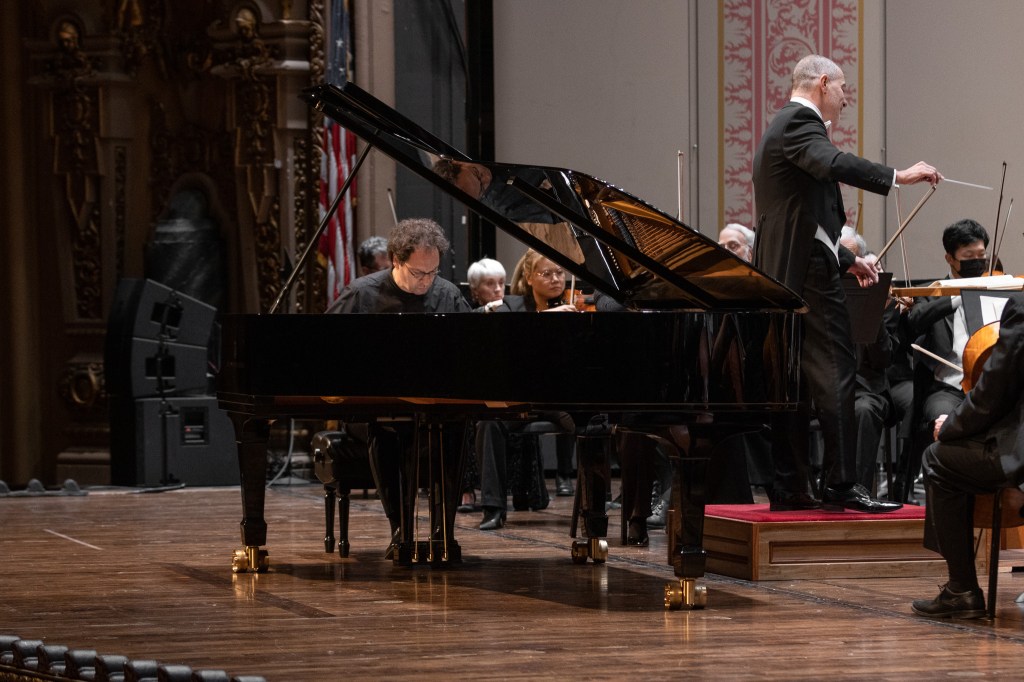
Brahms’ vast Second Piano Concerto made for a heavier contrast, and featured Israeli pianist Shai Wosner. A mellow horn call from principal Brian Mangrum made for a majestic opening to the weighty first movement. Wosner performed with intense, singular focus, though I felt his playing veered a bit too cautious and restrained. Although his technique wasn’t flawless, it nonetheless served well the daunting demands of the work. Both pianist and conductor Rossen Milanov seemed aligned in their conception of the grand, sweeping arc of the movement.

The scherzo that followed was hardly a trifle, still bearing much of the weight of the preceding, but sprightlier material contrasted. A deeply lyrical cello solo (Luis Biava) opened the Andante, and the piano entered with a gentle, song-like touch. The payoff came in the finale with its folk-inflected abandon, though hardly short on drama. As an encore, Wosner offered a lovely account of Schubert’s Hungarian Melody.

Dvořák’s Sixth Symphony was a milestone for the composer in that it was the first to published, and shows him blossoming into a mature symphonist. The spacious, expansive Allegro non tanto opened with a gentle, bucolic theme over pulsating accompaniment. It was certainly apposite to precede the symphony with Brahms as it bears the elder composer’s influence (particularly from Brahms’ own D major symphony), yet not without Dvořák’s individual hallmarks. 

A touching moment of repose was to be had in the Adagio, its thematic material charmingly introduced in the winds. The composer unmistakably revealed in his Czech origins in the lively furiant that followed, and the orchestra deftly negotiated the ever-changing meters, an energetic warmup of sorts for the jubilant finale.

Kibbey and Kenney delight in harp and violin duos at Chamber Music Columbus

Bridget Kibbey, harp
Alexi Kenney, violin
Southern Theatre
Columbus, OH
November 5, 2022

Saint-Saëns: Fantaisie in A major, Op. 124
Hu: Chamber Music Columbus Fanfare
CPE Bach: Sonata in G Minor, H 542.5
Bartók: Romanian Folk Dances
Larsen: Sun Strider
Biber: Mystery Sonata No. 1 (“Annunciation”)
Messiaen: Vocalise-étude
Dowland: Flow my Teares
Rodrigo: Madrigales amatorios
Falla: Siete canciones populares españolas
Currier: Night Time

Appealing as the combination may seem, music for harp and violin duo is an uncommon occurrence. Leave it Bridget Kibbey and Alexi Kenney to make a strong case for the medium in lovely program of duets at Chamber Music Columbus. Most of the selections performed were by necessity arrangements of other works, but the duo highlighted a few pieces written expressly for this combination, including a world premiere from Libby Larsen.

Alexi Kenney and Bridget Kibbey, photo credit Chamber Music Columbus

One such work with this instrumentation in mind was Saint-Saëns’ Fantaisie in A major. Graciously lyrical, the musical synergy between Kibbey and Kenney was apparent from the first bars. Impressive virtuosity served well the fantasy, improvisatory-like elements of the piece. Following was Ching-chu Hu’s Fanfare, a mainstay of all Chamber Music Columbus performances this season. After previously hearing it cast for brass quintet, it was quite fascinating to hear it undertaken by such vastly different forces.

A transcription of a sonata by CPE Bach opened with extravagant material for harp alone, and the violin later joined in imitation. A long-bowed violin melody over harp filigree made a touching Adagio, and the rapid finale was given with seamless cohesion. In place of the Clara Schumann Romances, Op. 22 listed on the program, the duo opted for the livelier Romanian Folk Dances of Bartók, a series of six miniatures (originally for piano, Sz. 56) boasting a folksy flair.

A co-commission from Chamber Music Columbus and the Schubert Club of Saint Paul, Minnesota (an ever older organization than CMC – celebrating 140 years this season!), Libby Larsen’s Sun Strider opened the second half. Matters gradually amassed, gathering energy, and the different characteristics of the strings of each instrument were exploited for contrast (a subject Larsen discussed during my interview with her). Novel sounds were drawn from the harp, taking full advantage of Kibbey’s peerless technique, and the work was at heart deeply lyrical – and generously so. The title evokes the sun’s journey across the sky; when sunset arrived, the music faded away, leaving only the vibrations of the strings.

A varied selection of shorter works followed, beginning with the first of Biber’s mystical Mystery Sonatas. Though separated by a few centuries. Messiaen’s Vocalise-étude occupied a similar sense of religious wonderment. For a Spanish sojourn, Rodrigo’s Madrigales amatorios were interwoven with selections from Falla’s Siete canciones populares españolas, works by turn feisty and jaunty or sultry and seductive.

Sebastian Currier’s 1998 work Night Time closed the recital – along with the Saint-Saëns and the new Hu and Larsen pieces, the only other work on the program conceived originally for harp and violin. Depicting the enigma of the night, its striking musical language seemed to be Currier’s response to Bartók’s “night music.” The second movement “Sleepless” was appropriately filled with jarringly irregular accents, though calm arrived in the concluding “Starlight” wherein matters drifted off into the depths of night.

ProMusica opens season with the brilliance of cellist Kian Soltani

ProMusica Chamber Orchestra
David Danzmayr, conductor
Kian Soltani, cello
Southern Theatre
Columbus, OH
October 8, 2022

Kernis: Musica Celestis
Haydn: Cello Concerto No. 1 in C major, Hob. VIIb:1
Vali: “The Girl from Shiraz” from Persian Folk Songs
Beethoven: Symphony No. 5 in C minor, Op. 67

ProMusica’s 2022-23 season opener was particularly auspicious in that it served as a platform for the local debut of Kian Soltani, a rapidly rising star in the cello world. The program began with the 1990 work for string orchestra Musica Celestis by American composer Aaron Jay Kernis. At the time of composition, the composer had been immersed in the work of Hildegard von Bingen, and the spirit of her work was woven into Kernis’ idiosyncratic texture. The piece unfolded glacially, with soaring passagework for both concertmasters. It reached celestial heights, ultimately arriving at peaceful resolution.

Kian Soltani, David Danzmayr, and ProMusica, photo credit ProMusica

A crisp, rhythmically punctuated introduction opened Haydn’s Cello Concerto No. 1. Soltani entered with a richly burnished tone, brimming with Viennese elegance, effortlessly fluent. Matters weren’t all pearly, however, with appropriate vigor given to the stormier sections. The cellist boasted a long-bowed, graceful melody in the central Adagio, and the finale rounded things off in the highest of spirits, with blistering virtuosity and vivacity.

Born in Austria of Iranian parentage, it was only fitting for Soltani to follow the Haydn with a work by Iranian composer Reza Vali – and Vali had in fact went to school with the cellist’s father in Iran. “The Girl from Shiraz,” a selection from the composer’s Persian Folk Songs – a work that just received its premiere earlier this year – made for an enticing contrast to the Haydn. A languid, winding melody in the cello introduced the titular melody, and the percussion scoring gave the work a decidedly non-Western feel. The latter section, known as “Love Drunk,” was a rambunctious and boisterous foil, pointing to a thunderous closing gesture.

Following the brilliance and intriguing programming choices of the first half, the balance of the program was rather more prosaic in Beethoven’s Fifth Symphony which nonetheless served as an exciting work with which to open the season. Danzmayr led a taut and focused performance, bringing out the work’s essential dramatic qualities.

Chamber Music Columbus opens 75th season in the splendor of the American Brass Quintet

American Brass Quintet
Southern Theatre
Columbus, OH
October 8, 2022

Hu: Chamber Music Columbus Fanfare: Celebrating 75 Years
Three English Fancies (edited by Raymond Mase)
       William Simmes: Fancy a 5
       John Ward: Fancy No. 11 “Cor Mio”
       Giovanni Coperario: Fancy a 5
Garrop: Helios
Hu: A Distant Hope
Tower: Copperwave
Higdon: Selections from Book of Brass
Maurer: Selections from Twelve Little Pieces for Brass                          
Ewazen: Frost Fire

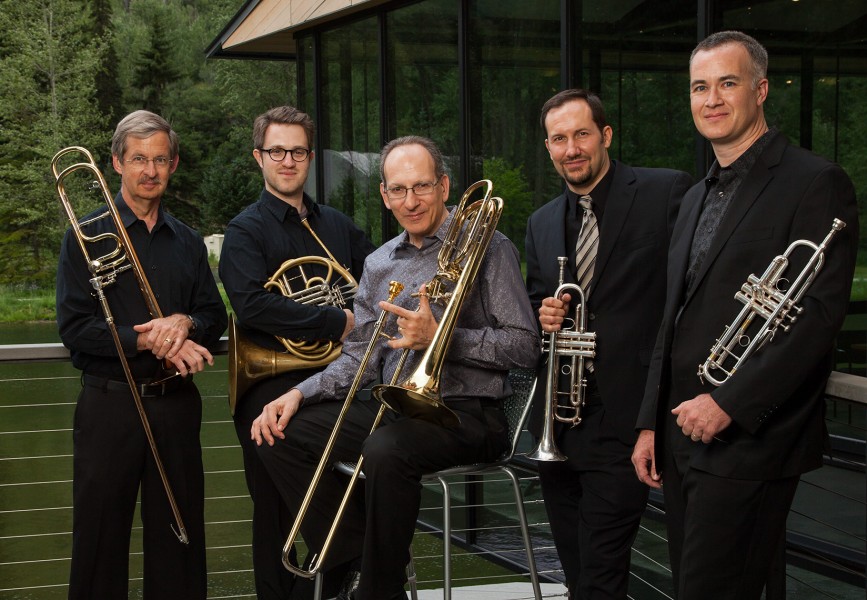
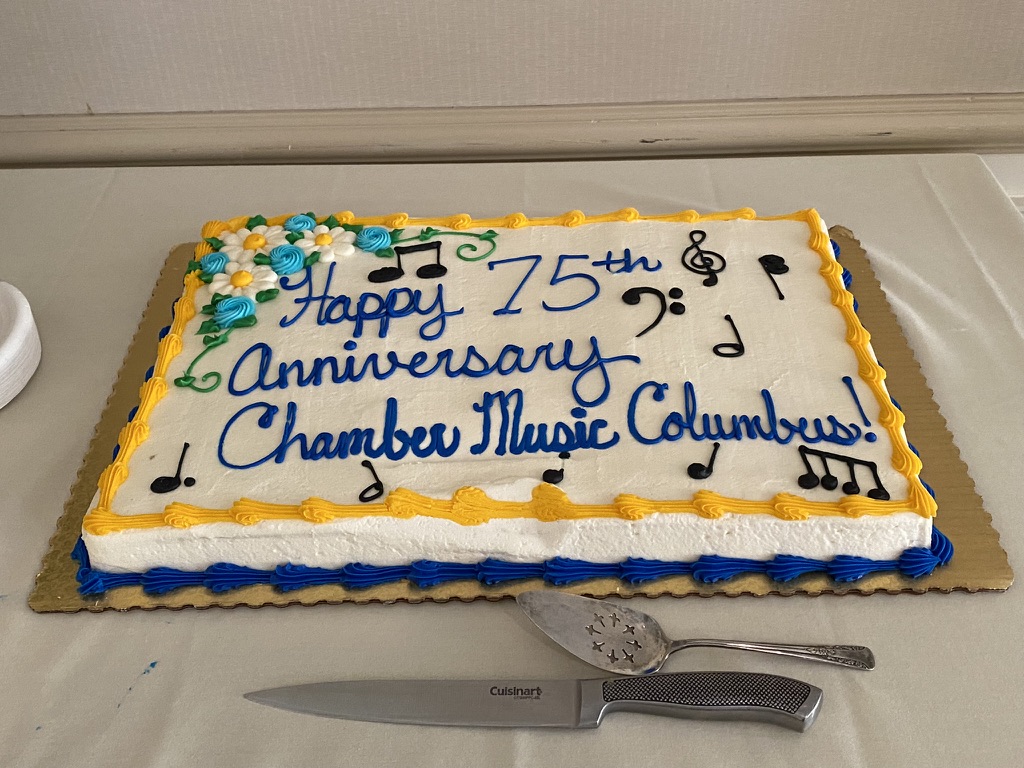
On the heels of the joint presentation with VIVO just over a month prior, Chamber Music Columbus’ 75th season proper officially opened with the dynamic American Brass Quintet. In the spirit of celebration, the first music heard was Ching-chu Hu’s Chamber Music Columbus Fanfare, a work which we will continue to revisit throughout the season for the various combinations of instruments on the docket. The brief work was fittingly celebratory, in this incarnation, leveraging the brightness of the brass to exciting effect.

American Brass Quintet, photo credit americanbrassquintet.org

The repertoire for brass quintet tends to fall into two categories: music for Renaissance brass ensemble recast for modern instruments, and contemporary works – with little in between. The next selections fell into the former category, collectively titled Three English Fancies which included a work from Simmes, Ward, and Coperario. Elegant, refined glances towards a distant time, they readily adapted to modern brass ensemble. Stacy Garrop’s 2011 work Helios followed. Dense textures opened, contrasted by a more solemn central section and a pensive conclusion. In introducing Hu’s A Distant Hope, receiving its world premiere, trumpeter Louis Hanzlik noted a personal connection to the composer who was his music theory TA at the University of Iowa. The work is an extension of the Fanfare; Hu described his objective as “deconstructing a fanfare” to create a work “hoping for hope.”

The opening “Skyward” began with the fanfare theme, a call to attention, but ultimately more mellow material took over, of a resonant lyricism. A busier texture was to be had in the closing “Voyaging,” with the uses of mutes offering a varied, colorful timbre, and an ebullient ending that inspired hope and celebration. Joan Tower’s 2006 work Copperwave was a striking close to the first half. The title evokes South American copper mines, and the work captivated in its rhythmic intensity and vast variety of color. ABQ performed with great energy and virtuosity with their individual talents highlighted by solo cadenzas.

Jennifer Higdon’s Book of Brass officially receives its world premiere at Bowling Green the following Wednesday, but Columbus audiences were treated to a preview of two movements from the suite. “Glide & Fade” was of arching lyricism and piquant dissonances; “Punch it Up” was apt description for its vivacity. Ludwig Maurer’s Twelve Little Pieces for Brass is the odd work from the 19th-century scored for brass quintet. ABQ offered five selections, charming vignettes – what they lacked in depth they made up for in appeal. Eric Ewazen’s 1990 work Frost Fire closed the program, its sonorous scoring making use of the energy and rich resources of the quintet, setting the stage for a tour de force ending. It’s worth noting that several of the featured composers have an Ohio connection – Hu is on faculty at Dennison, Garrop was recently featured as guest composer at Bowling Green’s New Music Festival, and Ewazen is a Cleveland native. An auspicious opening to a banner season!

Columbus Symphony opens season in the exuberance of Carmina Burana

Columbus Symphony Orchestra
Rossen Milanov, conductor 

Ashley Fabian, soprano 
Arthur W. Marks, tenor
Ethan Vincent, baritone 

Columbus Symphony Chorus 
Ronald J. Jenkins, chorus director 
Columbus Children’s Choir 
Jeanne Wohlgamuth, artistic director

Ohio Theatre
Columbus, OH
September 30, 2022

Orff: Carmina Burana

There’s only a handful of works from the twentieth century and later that generate an enduring popular appeal, and Orff’s 1937 cantata Carmina Burana is certainly one of them. A choice opener for the Columbus Symphony’s 2022-23 season, it also marked the first full-fledged return of the Chorus post-pandemic, having been relegated to more minor roles in the handful of repertoire last season that called for chorus. Adding to the sense of occasion on opening night was the presence of the League of American Orchestras CEO Simon Woods and Ohio Lt. Governor Jon Husted, introduced by CSO executive director Denise Rehg.

L-R Ronald J. Jenkins, Jeanne Wohlgamuth, Ethan Vincent, Ashley Fabian, Arthur W. Marks, Rossen Milanov with the Columbus Symphony & Chorus and Columbus Children’s Choir, photo credit Corinne Mares

The chorus is certainly the star of Carmina Burana, evident from the onset with the iconic “O Fortuna” that set the dramatic tone sustained for the remainder of the work. Finely prepared by Ronald J. Jenkins in his final season as chorus director, they negotiated no less than three languages – and dead languages at that: Latin, Middle High German, and Old French. The choral scoring more often than not puts the chorus in unison, and a strophic structure dominates, maximizing a directness of expression – this isn’t a work where one gets lost in a web of contrapuntal intricacies. Still, there were times where one wanted better projection over the large orchestra and greater clarity of diction (the texts and translations were fortunately provided in the program books).

It wasn’t all drama and bombast, however, with “Veris leta facies” bringing to life gentler, vernal delights, and the Round Dance sharply contrasting bacchanalia with the more introspective. The Columbus Children’s Choir under the direction of Jeanne Wohlgamuth offered a further choral layer in this lavish tapestry, almost angelic when in dialogue with soprano Ashley Fabian in “Amor volat undique.” Fabian was fittingly clothed in red, evoking the titular red tunic of “Stetit puella rufa tunica,” and served as a fitting foil to her male counterparts. She boasted an impressive command of labyrinthine melismas in “Dulcissime, totam tibi subdo me!”

Tenor Arthur W. Marks appeared offstage (and feathered) in “Olim lacus colueram”, dramatically one of the most striking moments of the work, singing high into his range in a pained dialogue with the masses of the chorus, although I felt the sense of tortured struggle could have been conveyed even more convincingly. I found baritone Ethan Vincent – who last appeared on this stage as Marcello in in La bohème – the most compelling of the trio of soloists. His first appearance in “Omnia Sol temperat” was given with charismatic delivery, and subsequently, he lumbered onstage, pantomiming inebriation in “Estuans interius” – yet ultimately, his delivery bordered on a sumptuousness more fit for Puccini. His command of the wide range demanded in “Dies, nox et omnia”, however, was where he was truly a standout.

Though the chorus rightly deserves the spotlight, the extensive orchestral forces were certainly an entity to be reckoned with. The dance movement for orchestra alone that opens “Uf dem anger” was given a vigorous workout, capped off with a silvery flute solo. “Were diu werlt alle min” was bursting with brassy splendor. The piano (Caroline Hong) features quite prominently in the score, perhaps most strikingly in “Veni, veni, venias.” The occasional uncoordinated entrance notwithstanding, music director Rossen Milanov commanded the disparate forces as a unified whole for a satisfying first entry of the season. As noted in both the program notes and Christopher Purdy’s preconcert lecture, Carmina Burana is in fact the first in a trilogy of related works. Despite the popularity of the first, the latter two remain largely uncharted territory – a potentially fascinating exploration for the CSO to undertake in future seasons.

VIVO closes festival in style with French repertoire, Choi premiere

Alicia Hui, violin †
Siwoo Kim, violin †‡
Henry Kramer, piano *‡
Jeffrey Myers, violin *
John Stulz, viola *†
Alice Yoo, cello *
Matthew Zalkind, cello †‡
Gabriel Campos Zamora, clarinet †

* Fauré / † Choi / ‡ Ravel

Southern Theatre
Columbus, OH
September 4, 2022

Fauré: Piano Quartet No. 1 in C minor, Op. 15
Choi: With Winds III
Ravel: Piano Trio

VIVO Music Festival closed the eighth edition of its annual chamber music celebration Sunday afternoon at the Southern Theatre, an event which also served to unofficially open Chamber Music Columbus’ banner 75th season. As with all of the elder organization’s upcoming concerts, Sunday’s included a newly commissioned work, as well as poem from the season’s poet laureate, Jennifer Hambrick – known to listeners of WOSU, as well as the host of VIVO’s “Beer & Beethoven” held a few nights prior. Hambrick’s entry “Stones to join the mountain with the rock” fit the spirit of the occasion, the joining of forces of two very fine chamber music organizations.

L-R: Jaehyuck Choi, Jeffrey Myers, John Stulz, Gabriel Campos Zamora, Alicia Hui, Alice Yoo, Siwoo Kim, Henry Kramer, Matthew Zalkind. Photo credit VIVO Music Festival

Fauré’s Piano Quartet No. 1 boasted dark-hued, dramatic beginnings, rather Brahmsian in persuasion, with the virtuosic piano writing and its tumultuous octaves (Henry Kramer) a standout. The scherzo was markedly more Gallic and of irresistible charm, while the Adagio was a gorgeous respite, with a particularly affecting and resonant cello line (Alice Yoo). The finale recalled the virtuosity of the beginning to bring the opening selection to an enthusiastic close.

South Korean composer Jaehyuck Choi was present to introduce his clarinet quintet With Winds III, the first of Chamber Music Columbus’ seven commissions to come to life. A taste of Choi’s work was sampled at the aforementioned Beer & Beethoven event in which violinist Alicia Hui performed his Self in Mind I. In addition to VIVO, violist John Stulz also counts himself a member of the Paris-based new music group Ensemble intercontemporain, and it was there he first became acquainted with Choi. Choi’s commission served as a tribute to CMC’s founder James N. Cain, and moreover, the clarinet quintet medium was apropos as one of the organization’s first performances featured the Walden Quartet with clarinetist Donald McGinnis. Choi spoke of finding influence from contrasting works of visual arts, a thread he discussed at length during my interview with him a few months prior.

Terse, rapid gestures in the strings opened, punctuated by a long-breathed tone in the clarinet (Gabriel Campos Zamora), emblematic of the work’s near obsession with pointed contrasts. The work’s dense textures made substantial use of extended techniques, pushing the capabilities of both the musicians and their instruments alike. A passage cast in the violin’s highest possible range was otherworldly in effect, while a mute in the clarinet provided yet another striking sonority in work’s final segment before matters evaporated into silence.

The afternoon closed with Ravel’s remarkable Piano Trio. The opening Modéré was dreamy and evocative, with the performers adroitly negotiating the 8/8 meter – suggestive of the Basque zortziko – complexities that felt all but effortless in this musical conversation amongst friends. What followed was a rare scherzo from Ravel, its gossamer textures almost like a work of Saint-Saëns. The Passacaille easily serves as the heart of the work, searching probing depths. A solemn statement, it was a juxtaposition of the austere and the deeply felt. Decorative filigree was abundant in the finale, given with meticulous attention to detail, and the self-assured piano in particular pointed towards a big-boned finish.

Brooklyn Rider offers healing through music at Chamber Music Columbus

Brooklyn Rider
Southern Theatre
Columbus, OH
May 21, 2022

Shaw: Schisma
Esmail: Zeher
Dutilleux: Ainsi la nuit
Beethoven: String Quartet No. 15 in A minor, Op. 132

In the concluding entry of Chamber Music Columbus’ 74th season, Brooklyn Rider presented a program drawing upon their recent commissioning project and subsequent album Healing Modes. Inspired by Beethoven’s Op. 132 quartet which the composer used as a means to express his profound gratitude upon healing from illness, the project engaged contemporary composers to explore the healing properties of music. The five works commissioned were premiered by Brooklyn Rider at various venues during the 2018-19 concert season.

Brooklyn Rider, photo credit Shervin Lainez

Caroline Shaw’s Schisma (literally translating from Greek to “cleft”) takes as inspiration the Greek islands which have become makeshift refugee camps for Syrians escaping war. The score was colored by harmonies and figures that wouldn’t have been out of place in a work by Philip Glass (a composer this quartet has recorded extensively), and Shaw made creative use of pizzicatos and the percussive potential of the string instruments’ wooden bodies. A brief work, but the textural variety made for a gripping listen. Reena Esmail’s Zeher (the Hindustani word for “poison”) reflects on the composer’s bout with a throat infection (the titular poison). The Hindustani vocal style was mimicked in the cello (Michael Nicolas – one of Esmail’s classmates at Juilliard), with astringent dissonances in the rest of the ensemble. The work ended with resolution and clarity, finally freed of the pathogen.

The first half was to include the remaining works of the Healing Modes project – traversing pieces of Gabriela Lena Frank, Du Yun, and Mantana Roberts, which I’m keen to explore on BR’s recording – but a previously unannounced program change instead offered a preview of the quartet’s next major endeavor, The Four Elements. The project will seek to explore the four classical elements in musical terms, with Dutilleux’s 1976 work Ainsi la nuit (“Thus the night”) representative of air. Cast in seven movements, Ainsi la nuit is one of the landmark works for string quartet from the late 20th century. A kaleidoscope of moods were traversed in this extensive meditation on the night. It’s a work that challenges the listener, but was made all the more approachable by way of Brooklyn Rider’s committed and incisive performance.

Beethoven’s penultimate string quartet was likewise a landmark of its own time, and certainly a work that continues to speak to listeners. Slow introductory material probed for meaning before the first movement took shape with energy and synergy, given with a poignant dramatic sweep. The minuet that followed was rather lighter fare before the great Heiliger Dankgesang. Even for a composer with so many profound and heart-wrenching slow movements to his name, this is certainly a standout, a gracious paean and the emotional core of the work. Far removed from those meditative musings was the jaunty but brief Alla marcia, and lastly, a darkly-hued, impassioned finale, with the quartet’s fiery playing making matters especially arresting.