Classical symphonies bookend wunderkind violinist at ProMusica

ProMusica Chamber Orchestra
David Danzmayr, conductor
Fiona Khuong-Huu, violin
Southern Theatre
Columbus, OH
January 28, 2024

Prokofiev: Symphony No. 1 in D major, Op. 25, Classical
Saint-Saëns: Introduction et Rondo capriccioso, Op. 28
Ravel: Tzigane
Haydn: Symphony No. 104 in D major, Hob. I:104, London

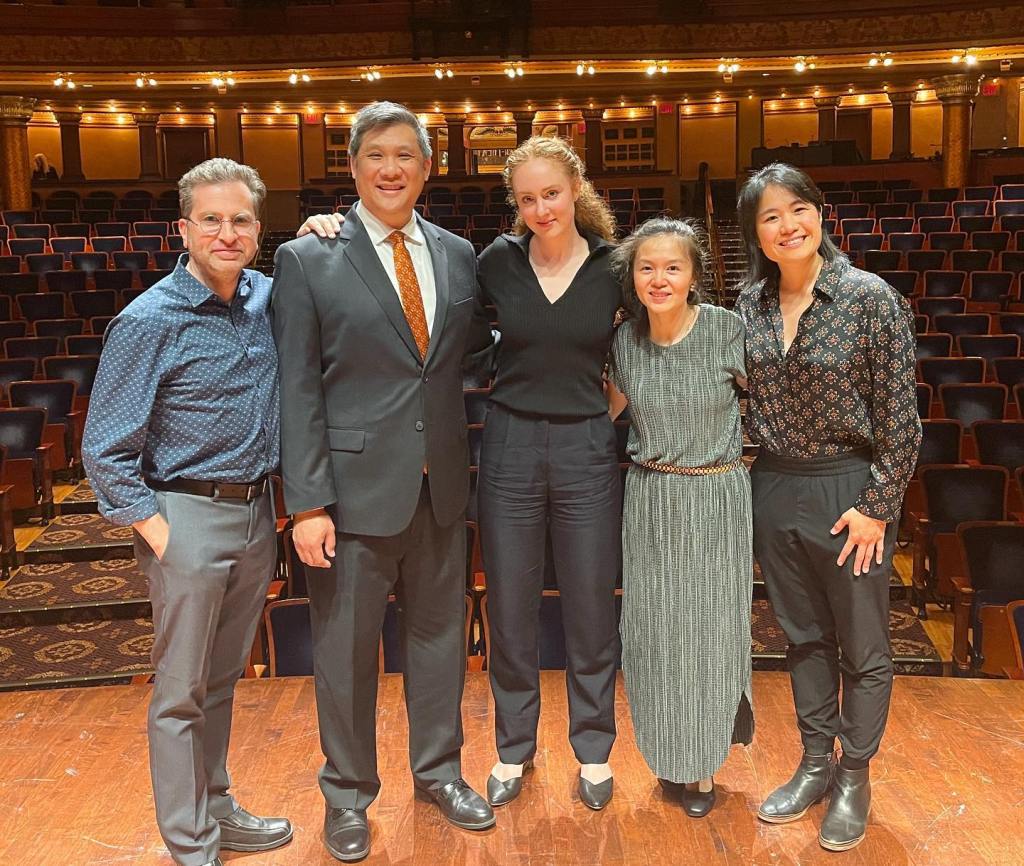
Last weekend’s ProMusica performances introduced Columbus audiences to the remarkable – and remarkably young – violinist Fiona Khuong-Huu. Just 16 years old, she has already scored a New York Philharmonic debut and is currently a student in Juilliard’s pre-college division. Additionally, she is recipient of the Fomin Scholarship Fund from the Chicago-area North Shore Chamber Festival, an organization helmed by ProMusica’s creative partner Vadim Gluzman.

Fiona Khuong-Huu, David Danzmayr, and ProMusica, photos credit ProMusica

Khuong-Huu offered two 10-minute or so virtuoso showpieces, beginning with Saint-Saëns’ Introduction and Rondo capriccioso. A long-bowed melody marked the introductory material, and the violinist played with a rich tone and a maturity beyond her years. The Rondo was elegantly ornamented, with Khuong-Huu self-assured across the range of her instrument. In a particularly striking moment, the soloist played a series of rapid, wide-ranging arpeggios as the theme surfaced in the winds.

Ravel’s Tzigane opened with a monologue for violin alone, replete with modal inflections in invocation of Romani music. It’s a work that made substantial technical demands, surmounted by the soloist with seeming effortlessness. It’s also a piece filled with novel timbres, from the rapid pizzicato passages to a substantial part for harp (Jeanne Norton). Khuong-Huu certainly has a bright future ahead of her, and a career I look forward to watching.

The evening began and ended with “classical” symphonies of various flavors – Prokofiev’s First, which consciously sought to emulate and imitate his symphonic forbears, and Haydn’s last, a veritable archetype of the form. The fizzy opening of the Prokofiev was further buttressed by a buoyant contrasting theme, almost weightless, though vigor was amassed as much was made from efficient use of the chamber-sized orchestra. The delicate inner voices were intricately brought out in the Larghetto, and the piquant dissonances of the haughty gavotte were given a stylish reading. The effervescence of the whirlwind finale was a worthy rival to Haydn himself.

A broad-stroked introduction began Haydn’s London symphony at the other end of the program, pointing towards an essay in equal parts energetic and elegant, epitomizing classical symmetry and balance. The irregularly dispersed accents and pauses of the minuet were of charming effect, as was the finale, derived from a Croatian folk song that sounded almost indistinguishable from a bona fide Haydn theme.

The preceding Friday night saw a further installment of Naked Classics, hosted by the ebullient and informed Paul Rissmann. Parallels and contrasts between the Haydn and Prokofiev symphonies were illuminated, culminating in a performance of both works. Here, the two symphonies were intertwined, with a movement of Prokofiev alternating with a movement of Haydn, an approach which may have helped illustrate comparisons but ultimately made for a disjointed listen.
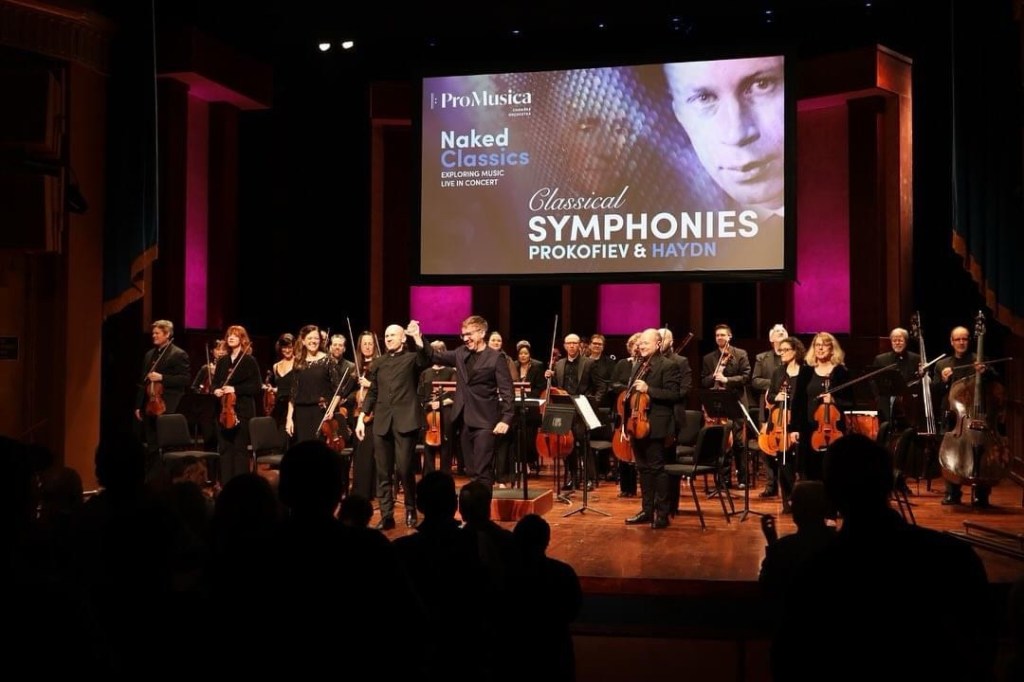
Paul Rissmann with David Danzmayr and ProMusica

Carpe Diem joins forces with guest violist

Carpe Diem String Quartet
Jacob Shack, viola
First Unitarian Universalist Church
Columbus, OH
December 16, 2023

Tucker: Ravenous
Bunch: String Circle
Brahms: String Quintet No. 2 in G major, Op. 111

Carpe Diem String Quartet began their December program in enterprising fashion with two contemporary works – including a world premiere. The premiere was a product of their 15 for 15 initiative, in which they have commissioned fifteen works to honor their fifteenth anniversary. Composer Akshaya Avril Tucker was on hand to introduce her piece entitled Ravenous, inviting the audience to picture a place without life – and then to imagine its return to life in ravenous regrowth. The piece followed the trajectory suggested by those remarks, beginning desolate, almost disembodied, steadily growing in vigor and fervor.

Guest violist Jacob Shack – who currently serves as associate principal of the Baltimore Symphony – was introduced for the next two selections. Kenji Bunch – also a violist – is a composer whose folk and populist influences abound, readily apparent in the 2005 work String Circle. Described as something of a chamber music “jam session”, the opening Lowdown began gently but not without rhythmic thrust. Syncopations decorated Shuffle Step, while the languorous central Ballad seemed to suggest Gershwin’s “Summertime”. Pointillist pizzicato made Porch Picking a fun listen, and the appropriately titled Overdrive closed the piece in exciting fashion.

Brahms’ String Quintet No. 2 was almost symphonic in heft – it was quite striking how the addition of just a single viola buttressed the quartet. Tremolos underpinned a warm cello melody, and the quintet did much to bring out the richness of the scoring, cutting into the heart of the spacious opening movement. The Adagio was beautifully resonant, with elegant ornamentations atop a stately chordal procession. Brahms’ individual stamp wandered through the penultimate movement, a downtempo affair in lieu of the more traditional scherzo; a further favorite device of the composer came in the Hungarian inflections of the vigorous finale. Shack gelled with Carpe Diem like an old friend, and the diversion into the string quintet literature was most welcome.

Seasonally appropriate, the evening concluded with a generous helping of ten or so holiday selections in skillfully crafted arrangements for quartet.

Columbus Symphony and Chorus riveting in Frank’s Conquest Requiem

Rossen Milanov, conductor
Columbus Symphony Orchestra

Jessica Rivera, soprano
Andrew Garland, baritone
Stephen Caracciolo, chorus director
Columbus Symphony Chorus

Ohio Theatre
Columbus, OH
November 17, 2023

Beethoven: Symphony No. 6 in F major, Op. 68, Pastoral
Frank: Conquest Requiem

Ahead of the Thanksgiving holiday, the Columbus Symphony offered a substantial program of two highly contrasting works, spaced apart by two centuries: Beethoven’s Pastoral Symphony and a recent work of Gabriela Lena Frank, the latter of which engaged the chorus and a pair of vocal soloists.

Music director Rossen Milanov opened the Pastoral at a relaxed tempo, drawing reserves of resonant sound out of the CSO. A bucolic scene was painted by the slow movement with its graceful, gentle melody inflected by elegant ornamentations. Dialogue between the winds and strings was well-executed, as was the pictorial series of bird calls. A folksy and charming movement followed, quite literally the calm before the storm which offered dark and tumultuous contrast, while the finale calmed matters in its hymn-like paean, some foibles in the horns notwithstanding.

Jessica Rivera, photo credit Tina Gutierrez

An ambitious programming choice occupied the reminder of the program, namely Gabriela Lena Frank’s 2017 Conquest Requiem. Written on commission from the Houston Symphony, it’s a work that has subsequently only been heard in Nashville and Boston ahead of last weekend’s Columbus premiere. The work is concerned with the Spanish conquest of the Aztec empire, and thus functions as a requiem for lost culture. With the broad framework of the Latin requiem mass informing the underlying structure, parts for the vocal soloists were variously in Nahuatl and Spanish – it was regrettable the program books didn’t include the full text by librettist Nilo Cruz, which may be viewed here. The clash of cultures is perhaps a natural subject for Frank, mirroring her own diverse background, inclusive of Chinese, Jewish, Eastern European, Peruvian, Spanish, and Quechua ancestry.

Soprano Jessica Rivera embodied the role of Malinche, an enslaved Nahua woman and mistress of Cortés, with whom she bore a son Martín, sung by baritone Andrew Garland. Both soloists were also engaged for the Houston premiere, and it was clear by the urgency and persuasion of their performances that this is a work they emphatically believe in. A descending gesture opened, with the solemn chorus a present force nearly from the onset, offering the Latin requiem text as a layer of the work’s rich tapestry. Interwoven with the requiem text were the soloists’ exclamations, beginning with Malinche who sang initially in Spanish. Rivera was both impassioned and conflicted, capturing the straddling of cultures.

Frank made effective use of a large orchestra – with some particularly striking scoring for percussion – in a musical language that was approachable without being derivative, especially evident in the strident and rousing Judex ergo or the chilling setting of the Dies irae that followed, wherein Garland introduced Martín with conviction. Material for strings and harp was an orchestral highlight, a calming passage before Rivera sang of Malinche’s inner turmoil in an agonizing climax. A duet saw the soloists blend their voices harmoniously, with the thought-provoking work landing on a plaintive if inconclusive Amen.

ProMusica celebrates Schubert – and the steel pan

ProMusica Chamber Orchestra
David Danzmayr, conductor
Andy Akiho, steel pan
Southern Theatre
Columbus, OH
November 11, 2023

Akiho: Beneath Lighted Coffers
 Encore:
 Akiho: Murasaki
Schubert: Symphony No. 9 in C major, D944, Great

Last weekend’s ProMusica performances offered a further installment in their admirable and illuminating Composer/Performer project, in which they shine light on that special breed of musicians who balance careers in both disciplines. Featured on the present program was composer and steel pannist Andy Akiho – who just the day before received no less than 3 Grammy nominations!

Andy Akiho and ProMusica, photos credit ProMusica

The work he offered ProMusica was a concerto for steel pan and orchestra entitled Beneath Lighted Coffers, written in 2015 on commission from the National Symphony Orchestra. The piece was inspired by time the composer spent in Rome, and in particular, the Pantheon with each of its five movements exploring a feature of the awe-inspiring edifice. Cascades in the pan alone started the opening “Portico” movement, and one was struck by Akiho’s thorough command of his instrument. Despite being essentially a foreign entity in the context of the Western classical orchestra, the pan naturally blended with the others under the composer’s skillful writing.

“Twenty-Eight” alluded to the Pantheon’s trapezoidal coffers, with strident, angular writing building these architectural elements in musical terms. Striking the edge of the pan, Akiho yielded a wide variety of timbre and color from the instrument. “Oculus” proceeded as meditative paean, and “Corelli” was a tribute to Baroque master buried at the Pantheon on an instrument the elder composer could scarcely have imagined. The composer’s adroitness at writing for orchestra was perhaps most convincing in the closing “Permanence” – a tuneful final statement abundant with virtuosic flourishes. Perhaps not the most profound score ProMusica has embraced, but a thoroughly enjoyable listen.

As an encore, Akiho offered his piece Murasaki, putting the capabilities and variety of the pan into focus – I was especially taken by the wide dynamic range. During the post-concert conversation, Akiho mentioned the inspiration came in the wee hours of the morning following a late shift at his father’s sushi restaurant – and a nod to reggae and Bob Marley.

Schubert’s final completed symphony was a weighty end to the evening. The broad stroked introduction evidenced the heft and proportion of the work (which Schumann would famously dub “heavenly length”), although here I prefer a bit more indulgent tempo and spacing than what Danzmayr offered. The first movement proper was given an energetic, vivacious workout, a spirited and life-affirming statement, and the trombone – novel in the symphony during Schubert’s time – provided a muscular backbone. The solo oboe of the slow movement proceeded as a gorgeous song without words, answered by a prayer-like passage in the strings.

The scherzo that followed was certainly no trifle, just as long as any of the other movements. It had a driving energy, and a recurrent tension between the fiery and the lyrical, contrasted by the loveliest of trios. Danzmayr and ProMusica romped through the vivacious finale with joy and abandon.

Carpe Diem offers a heartfelt afternoon of string quartets

Carpe Diem String Quartet
First Unitarian Universalist Church
Columbus, OH
November 5, 2023

Gabriella Smith: Carrot Revolution
Mayer: String Quartet in G minor, Op. 14
Vali: CHAS
Shostakovich: String Quartet No. 9 in E-flat major, Op. 117

Last weekend marked the opening of the Carpe Diem String Quartet’s first season with violinist Sam Weiser. The varied program was a a sign of good things to come, balancing contemporary works with earlier ones – one of which has been long forgotten. A wonderfully energetic and exciting opener was had in Gabriella Smith’s Carrot Revolution, a 2015 work written for the Aizuri Quartet. Rarely does a string quartet sound so percussive! The body of the cello was repurposed as a percussion instrument, and guttural sounds from the second violin did much to explore a vast range of textures, given with an unwavering rhythmic intensity.

With a life spanning 1812-1883, Emilie Mayer was an exact contemporary of Wagner and Liszt. Her String Quartet in G minor was an intriguing discovery, evidencing Mayer to be a highly accomplished and skilled musical voice. Marked by a recurrent sighing gesture, the first movement was sweeping and passionate. A slow movement was quite touching, the dotted rhythms of its main melody elegantly articulated. Despite ending firmly in the minor, the finale was largely and a warm and genial affair. Carpe Diem’s committed advocacy has piqued my interest in exploring more of Mayer’s body of work.

The second half opened with the premiere of CHAS, a moving work by Reza Vali written in memory of Charles Weatherbee. Vali has had a long relationship with Carpe Diem – violist Korine Fujiwara spoke fondly of a 2012 festival of Persian music in which quartet and composer first collaborated; several recordings of his works have followed. The letters of CHAS were spelled out in music (using the German nomenclature), as individual entities and then layered on top of each other, creating an aura of inward contemplation. A viola melody perhaps evidenced the composer’s Persian roots in its inflections, and another statement of the titular theme in the quartet’s highest register was of striking effect in its otherworldly harmonics.

Shostakovich was another composer who employed the spelling of his name (DSCH) as a musical theme, and it was his Ninth Quartet which closed the program. The 1964 work was cast in five movements, alternating fast and slow, almost in the manner of a Baroque suite. Carpe Diem gave it a poignant reading, evident from the searching, wandering theme which opened. The second movement Adagio was particularly mournful, while the following Allegretto was Shostakovich at his blistering, sardonic best. The finale spanned more than twice as much time as any of the preceding movements, a quantity which cellist Ariana Nelson introduced as a “200 bar crescendo”, and indeed, it brought the recital to a bold, uncompromising finish.

Academy of St. Martin in the Fields players delight in an evening of chamber music

Academy of St. Martin in the Fields Chamber Ensemble
Tomo Keller, violin
Harvey De Souza, violin
Robert Smissen, viola
Richard Harwood, cello
Lynda Houghton, double bass
Timothy Orpen, clarinet
Julie Price, bassoon
Stephen Stirling, horn

Southern Theatre
Columbus, OH
November 4, 2023

Nielsen: Serenata in vano, FS 68
Dvořák: String Quintet No. 2 in G major, Op. 77
Beethoven: Septet in E-flat major, Op. 20

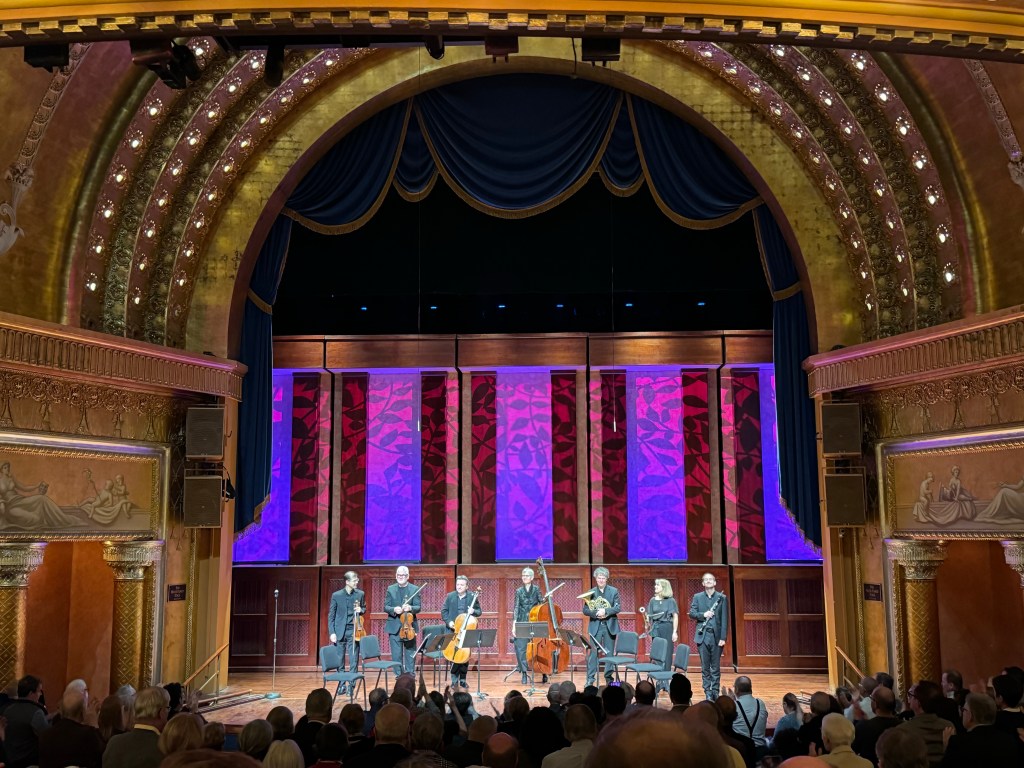
Eight members of the illustrious Academy of St. Martin in the Fields made their way to Columbus Saturday evening for a varied program of chamber music. Matters began with Carl Nielsen’s Serenata in vano (“Serenade in Vain”), a quintet scored for the unusual combination of clarinet, bassoon, horn, cello, and double bass – an instrumentation that intentionally overlaps with that of the Beethoven Septet with which it was written to be paired, as was indeed the case at present.

ASMF Chamber Ensemble at the Southern Theatre

Pizzicato strumming in the strings underpinned the dominant clarinet (Timothy Orpen) melody (Nielsen was certainly a composer who knew how to write for clarinet, as epitomized by the significant Clarinet Concerto). The cello (Richard Harwood) was later granted a richly singing melody, enhanced by the warmth of the horn (Stephen Stirling). A lovely opener that showcased the individual personality of each instrument.

Dvořák’s String Quintet No. 2 in G major was a watershed work for the composer, capturing the attention of Brahms and vastly expanding his reputation. Like the Eighth Symphony in the same key that would follow some years later, it’s a warm and bucolic work, the jovial first movement in particular being given with flexible abandon, and always lyrical at heart – even during the heightened drama and tension of the development. The inclusion of double bass in place of the a second viola or cello as is more typical for a string quintet gave the work an added heft.

The scherzo was noted for its Bohemian inflections in its rhythmic vitality – a device that would become one of Dvořák’s signatures. The flowing, lyrical melody of the slow movement showed the quintet in deft balance, as they were perhaps even more so in the joyous finale that brought the first half to an energetic close.

Like the preceding, Beethoven’s Septet was a work that did much to enhance its composer’s renown. Following a bold, quasi-orchestral introduction, delicate filigree from violinist Tomo Keller served to bridge the elegant main theme. The Adagio cantabile boasted a long-breathed melody, first in the clarinet and then answered by the violin, while the horn and bassoon interlocked with an intricately-crafted countermelody. A bouncy minuet followed, perhaps more familiar from its use in the Op. 49 No. 2 piano sonata.

A theme and variations comprised the fourth movement, with a stately presentation of the theme preceding an increasingly florid set of embellishments. The mournful intro of the finale took the manner of a funeral march (a style the composer would often revisit), but quickly gave way following some fiery violin work, with the ensemble offering cohesion and chemistry even at its blistering Presto.

ProMusica opens 45th season with burnished Bruch and bold Beethoven

ProMusica Chamber Orchestra
David Danzmayr, conductor
Simone Porter, violin
Southern Theatre
Columbus, OH
October 7, 2023

Simon: Fate Now Conquers
Bruch: Violin Concerto No. 1 in G minor, Op. 26
Beethoven: Symphony No. 2 in D major, Op. 36

ProMusica Columbus opened its 45th season with what they do best: a work by a contemporary composer, a concerto with a star soloist, and a cornerstone symphony. Beginning the evening was Carlos Simon’s 2020 piece Fate Now Conquers. Since being premiered by the Philadelphia Orchestra, it’s a work that has quickly made rounds from ensembles across the country (I caught a performance in Indianapolis just about a year ago). The work is an homage to Beethoven, suggesting the harmonies of the Seventh Symphony’s Allegretto, and moreover, its title alludes to a passage from Homer’s Iliad which Beethoven had quoted in his diary.

Simone Porter and David Danzmayr with ProMusica, photo credit ProMusica

Terse, motivic gestures in lieu of singable melody marked the piece, very much à la Beethoven. There was a singular rhythmic drive that purveyed a Beethovenian fury, briefly countered by a lyrical cello before its forceful end – certainly packing a punch in a mere 5-minute duration. Bruch’s evergreen Violin Concerto No. 1 in G minor was vividly brought to life by the talents of Simone Porter. A plaintive, longing orchestral passage set the stage for the violin’s entrance; one was struck by Porter’s burnished tone from the onset, articulate and projected with assuredness. In the stately Vorspiel with which the concerto began, Porter made the technical demands look all but effortless, and conductor David Danzmayr offered an orchestral accompaniment that had just the right spark.

This opening prelude served as preparation for the heart of the work, a lyrical and languid Adagio – one hardly wanted this moment of serenity to end. The sprightly finale resided at the other end of the spectrum, however, given with verve and vivacity, and its Hungarian inflections recalled the finale of Brahms’ violin concerto – heard at ProMusica last season.

In his prefatory remarks, Danzmayr suggested a possible thematic connection between Simon’s Fate Now Conquers and Beethoven’s Second Symphony in that the latter was composed at a time when Beethoven was profoundly grappling with fate, as documented in the heart-wrenching Heiligenstadt Testament. In any case, this early entry in Beethoven’s symphonic corpus was marked by a broad introduction that gave way to buoyant theme – airy and joyous, but not without without an underlying sense of drama not far beneath the surface. Though his maturity as a symphonist began with the Eroica, the present work’s expansive and exploratory development made the case that it can’t be dismissed as merely imitative.

A graceful and delicate Larghetto countered, a finely detailed – a few brass flubs notwithstanding. The witty scherzo showed a certain indebtedness to Haydn, though I found Danzmayr’s tempo a bit brisk; I suspect a bit more breathing room wouldn’t have diminished the drama. The finale was as playful and high spirited as anything Beethoven wrote: it was mentioned that ProMusica recently acquired a new set of timpani modeled after those used in Beethoven’s time, and here they resounded to great effect.

ProMusica closes season with celebration of Caroline Shaw

ProMusica Chamber Orchestra
David Danzmayr, conductor
Caroline Shaw, vocals
Southern Theatre
Columbus, OH
May 13, 2023

Shaw: Blueprint
Shaw: Is a Rose
Shaw: Entr’acte
Brahms: Symphony No. 1 in C minor, Op. 68

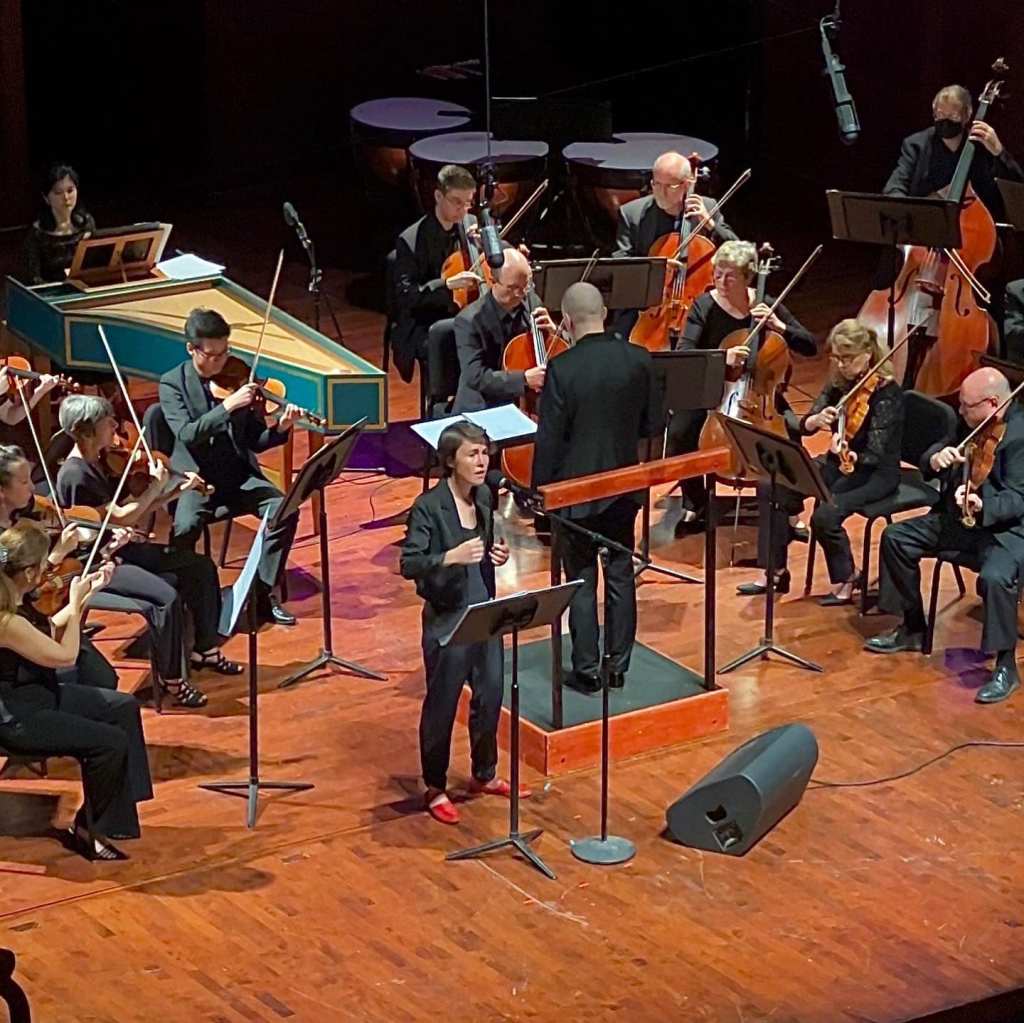
Ever keen to celebrate living composers, ProMusica’s final performance of the season explored the work of the remarkable Caroline Shaw. In addition to being featured as composer, the multi-faceted Shaw was additionally seen as vocalist in one of her own works, and as violinist, joining ProMusica’s ranks for the Brahms symphony which closed the evening. Originally scheduled to take place prior to the pandemic, it was well worth the wait, and further to the convivial spirit of the evening, Shaw revealed a few touching Columbus connections: she had studied violin with ProMusica concertmaster Katherine McLin, and her mother sang in the Columbus Opera chorus in the 1970s.

Caroline Shaw performing Is a Rose with David Danzmayr and ProMusica, photos credit ProMusica

Scored for string quartet, Blueprint featured McLin along with Jennifer Ross, Mary Harris, and Cora Kuyvenhoven. Inspired by Beethoven, it captured the spirit of the elder composer indirectly and obliquely, not relying on obvious allusions. Snappy pizzicatos gave variety to the texture, and much was made of the empty space that separated its terse gestures, a sure sign of the quartet’s seamless cohesion.

Is a Rose constitutes a short song cycle, intriguingly scored for string orchestra with the addition of oboe and harpsichord. The three songs respectively set texts by Jacob Polley, Shaw herself, and Robert Burns, and it was really treat to hear Shaw sing her own work, an adept performer offering the insight of a composer. In “The Edge,” the oboe complemented the richness of the strings, with a gentle vocal line rising in intensity in mirror of the text. The harpsichord opened “And So,” here, the lyricism of Shaw’s voice complemented her lyrical text. In a clever orchestration, the words “borrowed time” were marked with pizzicato strings, sounding like a ticking clock. The closing setting of Burns’ “Red, Red Rose” made for a melancholy farewell.

As Blueprint looked towards Beethoven, Entr’acte drew inspiration from Haydn, take the minuet rhythm – a key element of much of Haydn’s output – as a departure point. Cast for string orchestra, its crunchy dissonances and use of harmonics offered Haydnesque wit fit for the 21st century – very much in Shaw’s own voice, but no less charming.

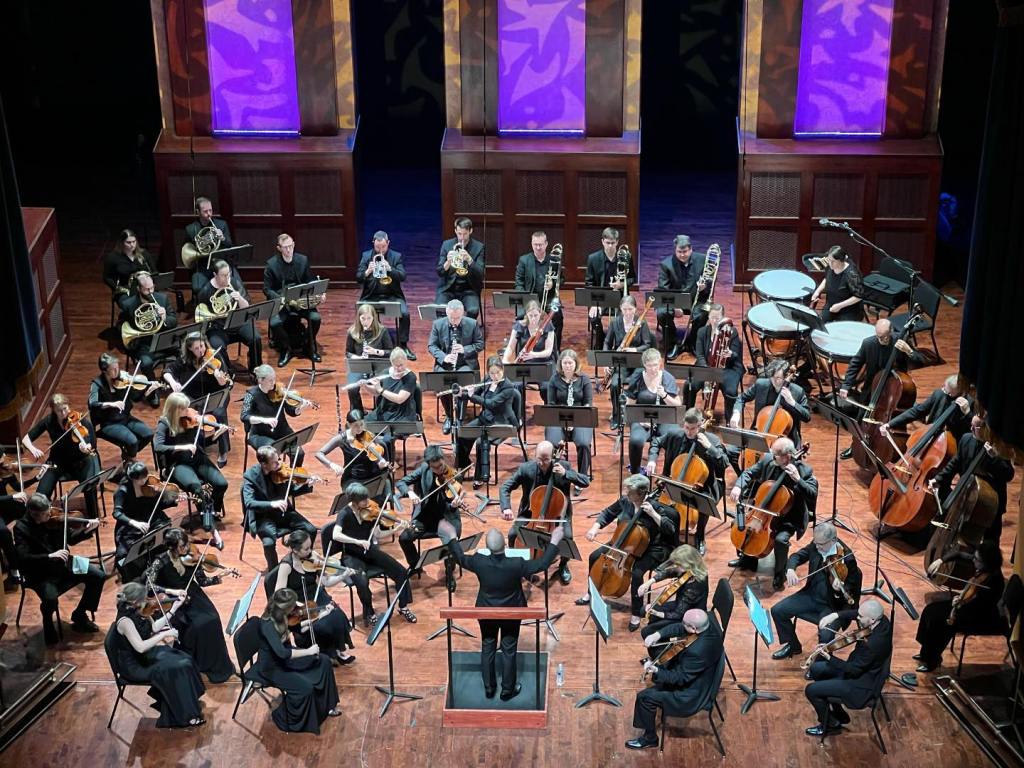
Conductor David Danzmayr noted that one may be surprised to see a Brahms symphony on a program from the chamber-sized ProMusica, but explained that Meiningen Hofkapelle that premiered some of Brahms’ symphonies was comparable in size. Thunderous, brooding beginnings opened this C minor First Symphony, though perhaps still a bit thinner sounding to contemporary areas accustomed to much larger ensembles. The first movement’s primary theme was articulated crisp and dramatic, taken at a rather brisk tempo.

The Andante sostentuo was a lyrical look inward, though it could have benefitted from greater dynamic contrast had Danzmayr brought down the dynamics down a bit more. Mellifluous clarinet marked the scherzo, but I felt the movement’s rustic charm needed to breathe more and a less-hurried tempo choice would have better suited. Gleaming brass opened the weighty finale, with lyrical strings intoning a melody that bore more than a passing resemblance to Beethoven’s Ode to Joy – a fitting nod to the evening’s beginning which saw students from ProMusica’s admirable Play Us Forward program performing a string arrangement of the Ode to Joy. Intense and articulate, Danzmayr guided the orchestra to a bold finish.

ProMusica performs Brahms’ Symphony No. 1 (spot Shaw on the far left!)

A hearty Russian afternoon from Milanov and the Columbus Symphony

Columbus Symphony Orchestra
Rossen Milanov, conductor
Zhu Wang, piano
Ohio Theatre
Columbus, OH
May 7, 2023

Mussorgsky: Dawn on the Moscow River from Khovanshchina
Rachmaninov: Piano Concerto No. 2 in C minor, Op. 18
Tchaikovsky: Symphony No. 5 in E minor, Op. 64

For the penultimate installment of the Masterworks series, Rossen Milanov and the Columbus Symphony turned towards the Russian repertoire in a program anchored by favorites of Rachmaninov and Tchaikovsky. The afternoon began, however, with Mussorgsky’s Dawn on the Moscow River, a quantity which serves as the prelude to his opera Khovanshchina. The CSO opted for its orchestration by Rimsky-Korsakov, though some years later Shostakovich devised an effective version as well. A gentle ebb and flow made for a touchingly restrained musical sunrise – quite a contrast to the sunrises one might find in a Strauss tone poem!

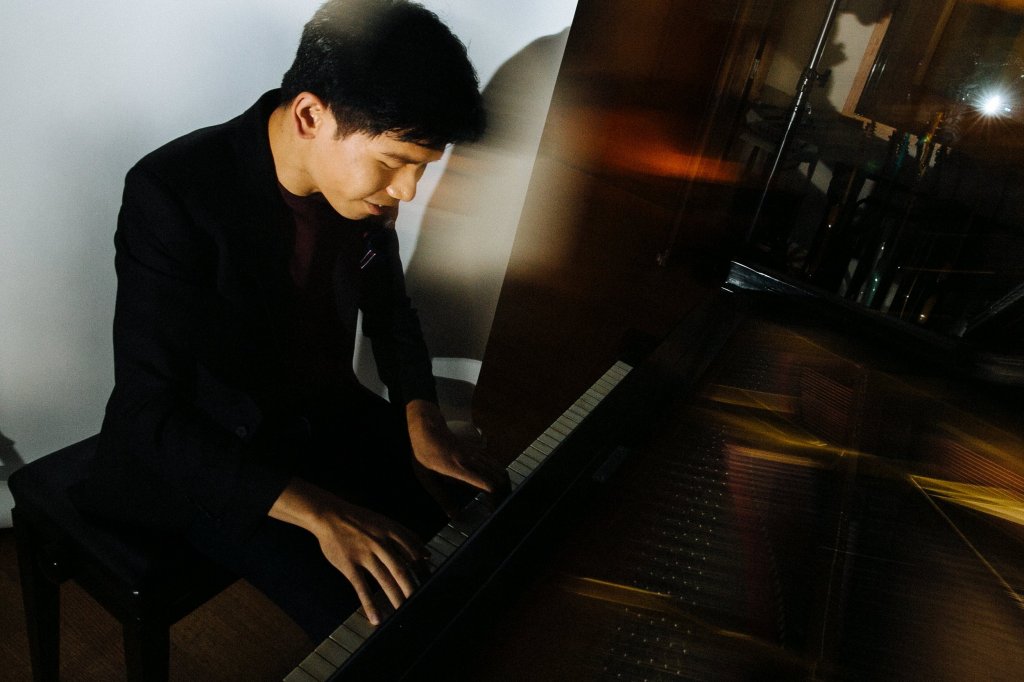
Zhu Wang, photo credit zhuwangpiano.com

Rachmaninov’s evergreen Second Piano Concerto followed with pianist Zhu Wang. Wang’s fluid playing blended well with the orchestra, probing at its lyrical heart. Still, one wanted more dramatic tension, and I found his reading a bit too cool and reserved. The slow movement was sweetly nostalgic and had the pianist in lovely dialogue with the clarinet, though it bordered on the sentimental. Wang gave the finale with vigor and virtuosity, balancing out the more extrovert material with the composer’s quintessentially lush melodies.

Hollow winds opened Tchaikovsky’s Fifth Symphony for a haunting statement of the fate motif that binds the work, and soon surged to great passions. Darkly resonant material began the slow movement with a gorgeous horn solo from Brian Mangrum. Deeply affecting, this movement saw perhaps the most inspired playing of the afternoon. A gently lilting Valse was contrasted with more animated material, and the fate motif returned, pointing inexorably towards the driving finale.

Merz Trio brings Chamber Music Columbus’ 75th season to an impassioned close

Merz Trio
Southern Theatre
Columbus, OH
May 6, 2023

Hu: An Eternal Hope
Rachmaninov: Trio élégiaque No. 1 in G minor
Al-Zand: Lines in Motion
Shostakovich: Piano Trio No. 1 in C minor, Op. 8
Schumann: Piano Trio No. 2 in F major, Op. 80

Encore:
Piaf: La Vie en rose

Chamber Music Columbus’ 75th season has now come to a close, and what a celebration it has been. Seven momentous concerts, each featuring a newly commissioned work, and the season finale from the Merz Trio certainly closed matters on a high note. A particularly lush program, leaning heavily into the Romantic repertoire, it was an evening of energetic and virtuosic performance.

Merz Trio with Karim Al-Zand and Ching-chu Hu, photo credit Merz Trio

Ching-Chu Hu is certainly a familiar presence at the Southern Theatre by now, and the Merz Trio presented the final piece of his season-long fanfare, titled An Eternal Hope. In his spoken remarks, Hu noted the work conveys a hope for growth, beautifully timed with the advent of spring here in early May. A busy piano part made this rather more extrovert than some of the previous installments. It evoked a certain radiance and built to a bold finish. The trio has recently undergone a changing of the guard with a new pianist; one would never have guessed she was new to ensemble given how seamlessly she gelled with her string colleagues.

Rachmaninov’s first Trio élégiaque opened with a soft, undulating gesture in the strings, setting up a distinctly Russian melody in the piano. Though the composer was a mere 18 year old when writing the work, its sumptuous melody and surging passions left little doubt as to who the composer was, with the work fulfilling the promise of its title in leading to a somber, funereal close. Another early work from a major Russian composer followed in a C minor trio from the pen of a 16 year old Shostakovich. Though there were hints of his idiosyncratic wit and sarcasm, it was largely a Romantic work, with meditative beginnings and particularly lovely passage in thirds on the piano.

Sandwiched between the Russian works was Lines in Motion, a commission from Karim Al-Zand, first performed this past January at Chamber Music Houston, where the composer is based. A he discussed in our interview, Al-Zand has a particular affinity for extramusical inspirations. Lines in Motion was no exception, with the composer pointing to selected black and white woodcut illustrations (helpfully reproduced in the program books), corresponding to each of the three movements. As the title suggests, each of prints in question striking use geometric lines to convey a sense of motion on the printed page.

The opening On the Big Sea took inspiration from René Quillivic’s En pleine mar. Roiling piano figurations were answered by calming lines in the strings, and I heard shades of French Impressionism which often used water and the sea as subject material. Angular gestures and bright, brilliant textures dominated In the Big City, capturing the busy skyscraper scene of Frans Masereel’s America. At the Spirit Dance (a nod to Rhythms by Wharton Esherick) was of energetic, driving dance rhythms for a rollicking close. This is a work I certainly look forward to hearing again.

The latter half was devoted to Schumann’s F major piano trio, a work uncharacteristically cheery and optimistic for the often depressive composer. The ensemble purveyed an attractive, singing tone in articulating the bounty of beautiful melody the composer provided. Sophisticated contrapuntal passages provided some textural contrast, delivered with nuanced clarity. The second movement bears the marking Mit innigem Ausdruck (“with innermost expression”), and it was indeed a look inward, lovingly conveyed.

The following movement was marked by a loose suggestion of a waltz figure, while the finale excited in its further use of counterpoint, giving each individual voice of the trio the space to shine. An well-deserved encore was offered, namely, an arrangement of Edith Piaf’s song La Vie en rose, wistful and nostaglic. A memorable close to a memorable season!