Columbus Symphony closes season in the splendor of Mozart

Columbus Symphony Orchestra
Rossen Milanov, conductor
Aubry Ballarò, soprano
Hilary Ginther, mezzo-soprano
David Walton, tenor
James Eder, bass

Stephen Caracciolo, chorus director
Columbus Symphony Chorus

Ohio Theatre
Columbus, OH
May 24, 2024

Mozart: Mass in C minor, K427, Great (completion by Ulrich Leisinger)

For the final program of the 2023-24 Masterworks season, the Columbus Symphony offered a single work in a brief but affecting program, an evening dedicated to Mozart’s C minor mass. Like the Requiem, Mozart never completed the Mass, and the CSO presented the work in a 2019 realization by Ulrich Leisinger, which eschews a liturgically complete mass in favor of only minimal additions to Mozart’s extant corpus.
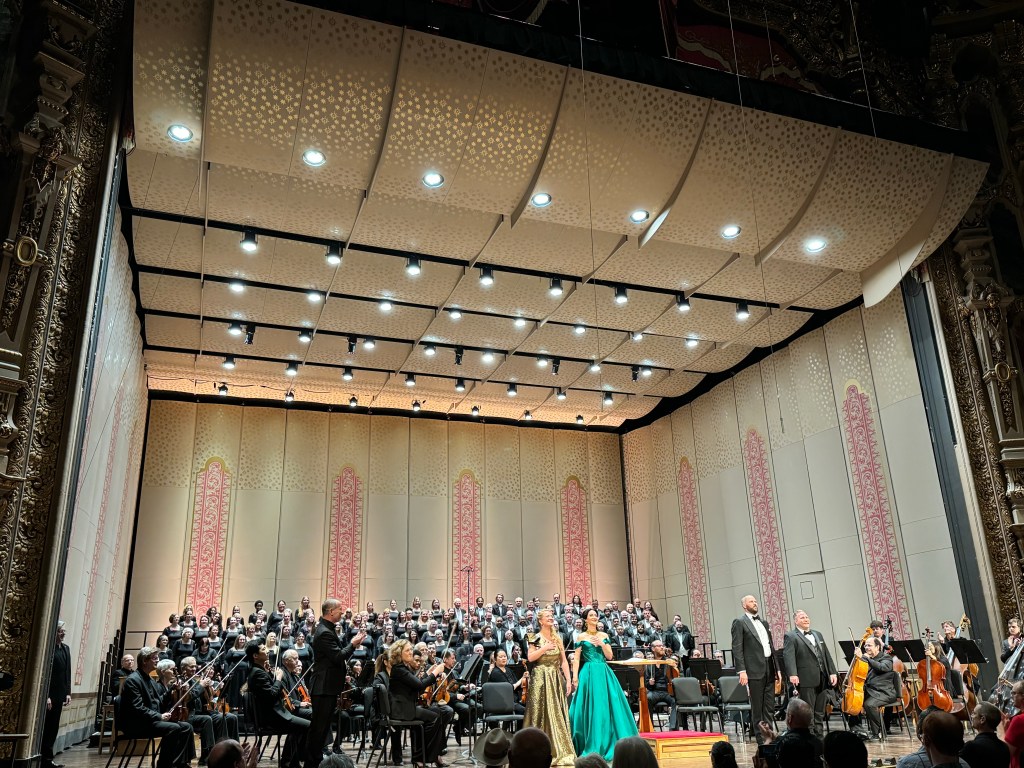
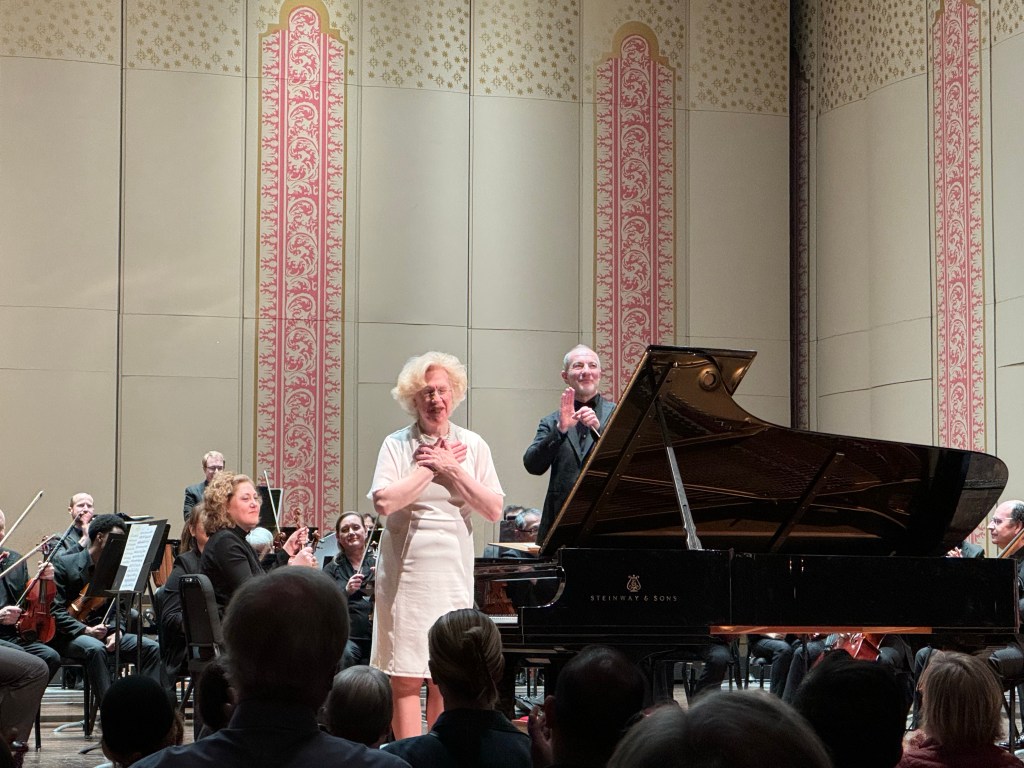
L-R: Rossen Milanov, Aubry Ballarò, Hilary Ginther, David Walton, and James Eder with the Columbus Symphony & Chorus

Under Rossen Milanov’s baton, the opening Kyrie began intimate and inward, quite striking for such a grandiose conception. Matters quickly grew in urgency, however, with the Chorus – prepared by Stephen Caracciolo – filling the cavernous Ohio Theatre. “Christe eleison” was intoned by soprano Aubry Ballarò, with flowing, extended melismas yielding a resonant effect – and I couldn’t help being reminded of the passage’s use in Amadeus.

The extensive Gloria began resplendent and exultant, structured such that the chorus alternated with the soloists, either as individuals or in various combinations. Hilary Ginther offered a second soprano voice in “Laudamus te,” articulate, and in command of the vocal intricacies, while “Dominus Deus” saw her in harmonious blend with Ballarò. In “Qui tollis,” the chorus was rapt and pious in the minor key profundities. The women were combined with tenor David Walton in “Quoniam,” the latter a bit overshadowed, and the final passage of the Gloria was given to the chorus, resplendent in its exacting counterpoint.

In the Credo, a soprano solo (Ballarò) prefaced an orchestral interlude, notable for fine playing from the winds. This was somewhat lighter fare compared to the preceding, but still certainly no trifle. The Sanctus was brightened by the brass – with the trombones especially striking – and the closing Benedictus was given heft with the sole appearance of bass James Eder, though it was the chorus who ultimately brought the work to its resonant close.
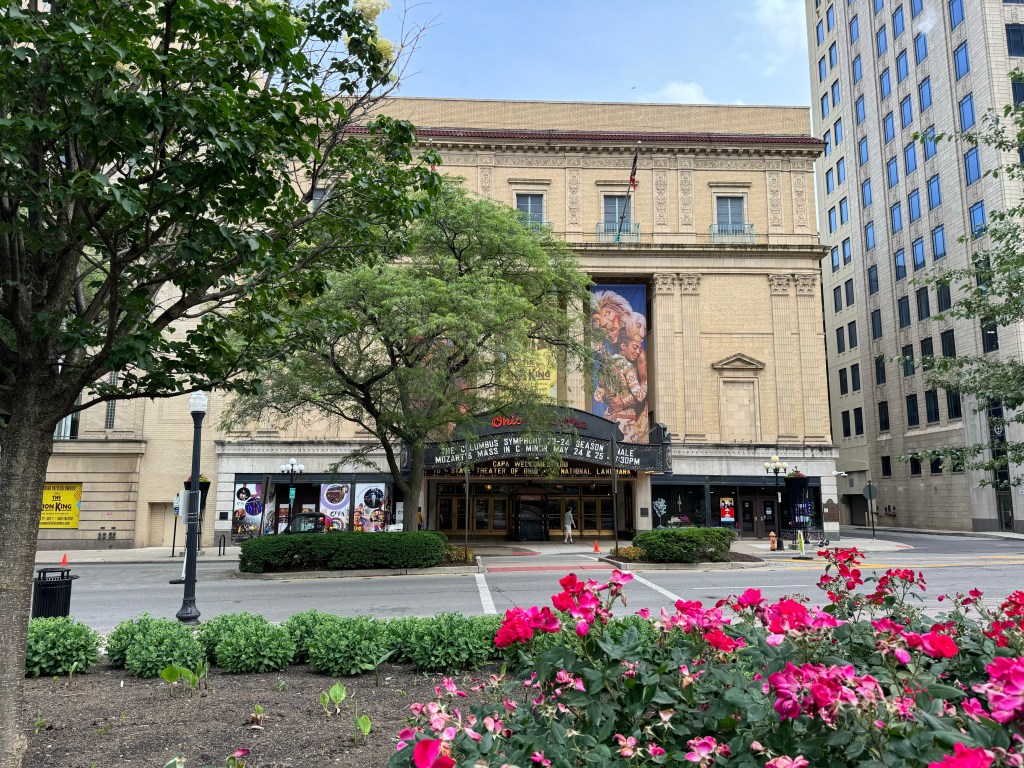
Ohio Theatre ahead of Friday’s performance

Guest conductor, cellist feature in Columbus Symphony program

Columbus Symphony Orchestra
Kenneth Bean, conductor 
Tommy Mesa, cello
Ohio Theatre
Columbus, OH
May 17, 2024

Mendelssohn: The Hebrides, Op. 26
Montgomery: Divided
Tchaikovsky: Variations on a Rococo Theme, Op. 33
Beethoven: Symphony No. 2 in D major, Op. 36

The penultimate offering of the Columbus Symphony season saw a local podium debut from Kenneth Bean, currently an assistant conductor at the Princeton Symphony Orchestra (CSO music director Rossen Milanov’s other ensemble). The evening began with Mendelssohn’s Hebrides overture, a bit rushed here for my taste, not quite capturing the foggy mystery of the Scottish coast. Matters improved, however, with more measured drama, and fine solo passages from the clarinets.

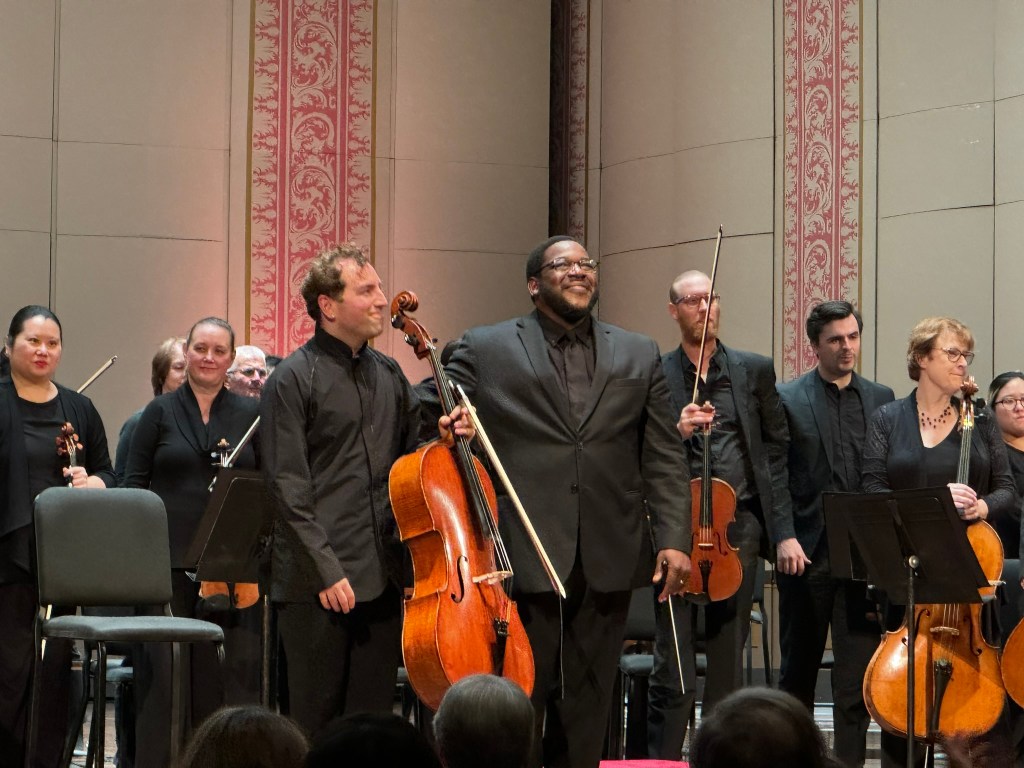
Tommy Mesa and Kenneth Bean with the Columbus Symphony

Two works for cello and orchestra followed, bringing forth Cuban-American cellist Tommy Mesa. Both works fell short of a full-fledged cello concerto, but said much in the space of their more modest dimensions. Mesa himself gave the premiere of Jessie Montgomery’s Divided with the Sphinx Ensemble at Carnegie Hall in 2022. The work’s title refers to the divisions and inequalities rampant in American society, with the cello often at grating odds with the orchestra. A drone from the soloist in the manner of a lamentation opened. The orchestra joined as if in conflict with the soloist, but the cello part became more declamatory and impassioned, a lyricism that suggested tepid resolution.

Tchaikovsky’s Rococo Variations began with an elegant presentation of the alluring theme following a brief orchestral introduction. The variations that succeeded further elaborated on the theme, and displayed Mesa’s limber technique – though his intonation at times left something to be desired. A slow variation offered contrast, and Mesa was perhaps at his best in a pensive section ahead of the ebullient conclusion.

Though still an early work, Beethoven’s Second Symphony is very much recognizable as the composer’s own, an epoch-defining musical language that had already begun to crystallize. A weighty introduction was anchored by the timpani before the first movement proper took flight with a jovial theme interwoven with drama. It was in this work that Bean seemed to gel best with the CSO. An extended Larghetto was calm and bucolic, though not quite of the heart-wrenching depths Beethoven would aspire to in his slow movements to come. The Second is noted for using a scherzo in place of the time-honored minuet, something that would certainly become one of the composer’s hallmarks, and the jocular finale brought the work to a bold finish.

ProMusica celebrates a decade of artistic partnership to close season

ProMusica Chamber Orchestra
David Danzmayr, conductor
Vadim Gluzman, violin
Southern Theatre
Columbus, OH
May 11, 2024

Silvestrov: Hymn – 2001
Tchaikovsky: Violin Concerto in D major, Op. 35
 Encore:
 Bach: Sarabande from Violin Partita No. 2 in D minor, BWV 1004
Brahms: Symphony No. 2 in D major, Op. 73

There was a celebratory air to ProMusica’s closing performances of their 45th season in marking a decade of having both David Danzmayr and Vadim Gluzman in the fold as music director and creative partner respectively. As has become tradition, the final weekend was opened with a short performance by students from the Play Us Forward program – this year, an excerpt from Vivaldi’s Autumn – celebrating ProMusica’s impact in the greater Columbus community.

Vadim Gluzman performs with David Danzmayr and ProMusica, photo credit ProMusica

Valentin Silvestrov’s Hymn – 2001 began ProMusica’s program with a lush essay for string orchestra. There were fine solo passages from concertmaster Katherine McLin and principal second violin Jennifer Ross. Meaning was also drawn from punctuated moments of silence, with the Ukrainian composer acknowledging Cage’s 4’33” as an inspiration for this lyrical paean.

Tchaikovsky’s evergreen Violin Concerto served as the evening’s centerpiece, and put on full display the collaborative spark between Danzmayr and Gluzman. It’s a particular pleasure to see Gluzman play this work as he performs on a violin once owned by Leopold Auer, the concerto’s original dedicatee – in other words, the very violin this concerto was written for. I have fond memories of Gluzman performing this work with The Cleveland Orchestra and the late Michail Jurowski a few years ago – a privilege to hear this instrument in this work again.

Matters began with graceful charm, and the violinist filled the Southern with a resonantly lyrical tone. Gluzman gave an impassioned performance, and I was often simply in awe of the sound he drew from his storied instrument (Tchaikovsky must have liked it too!). Fleet fingers pulled off the more rapid passegework, further encouraged by a taut communication with Danzmayr, the product of a fruitful decade.

A choir of winds opened the central slow movement, and Gluzman answered with a long-bowed, somber melody, an articulate dialogue between soloist and orchestra. The finale was of rapid fire excitement, though a downtempo section of distinctly Slavic inflection contrasted before the blistering finish. An enthusiastic ovation brought the violinist back for an encore by Bach, a lovely pendant to the concerto, with Gluzman noting it an apropos choice given Silvestrov’s affinity for Bach.

Last season closed with a Brahms symphony, a feat reprised this past weekend with attention turned to the sunny Second. Once again, ProMusica, buttressed by an expanded string section, proved that the Brahms symphonies can be convincingly performed by a chamber-sized orchestra. A dip in the strings opened, warmly answered by horns and winds, with a particularly rich theme in the cellos to follow. Danzmayr opted out of the long repeat of the exposition, delving right into the energetic development. The slow movement proceeded as a beautifully lyrical paragraph, though seemingly all cares were left behind for the Allegretto grazioso, given with an abandon that was only a warmup for the jubilant finale.

Columbus Symphony offers invigorating survey of 20th- and 21st-century works with Natasha Paremski

Columbus Symphony Orchestra
Rossen Milanov, conductor 
Natasha Paremski, piano
Ohio Theatre
Columbus, OH
May 3, 2024

Lutosławski: Symphony No. 1
Rachmaninoff: Rhapsody on a Theme of Paganini, Op. 43
Clyne: This Moment
Strauss: Suite from Der Rosenkavalier, Op. 59

Last weekend’s Columbus Symphony program was of particularly inspired and enterprising programming, traversing three works from various points of the 20th-century, and a fourth work composed just last year. Witold Lutosławski was at the vanguard of midcentury modernism, and like Shostakovich and Prokofiev, saw his works heavily repressed by the communist authorities. Such was certainly the case for his First Symphony, composed 1941-47 – during and in the immediate aftermath of WWII – which was suppressed for a decade after its first performance.

Natasha Paremski, Rossen Milanov, and the Columbus Symphony

It’s a landmark work, to be sure, brimming with the composer’s individual voice but readily accessible, and kudos to Milanov for giving the first Columbus hearing. In his spoken introduction, the conductor reminisced about meeting Lutosławski while a student in Pittsburgh. Cataclysmic beginnings were to be had in the work, uncompromisingly expressing the bleak spirit of the times – much to the chagrin of the Soviet apparatchiks. The brass provided a certain sheen of brightness, and piano and harp further added to the colorful scoring.

An extended slow movement saw low strings underpinning a horn solo, giving some semblance of peace after the cacophony of the preceding, but not without a certain unease with its pained lyricism. A flowing solo passage from concertmaster Joanna Frankel ranged from the subdued to the impassioned. The Allegretto misterioso was eerie and mysterious, and its fleeting quality reminded me of the Schattenhaft from Mahler’s Seventh. A shimmering interlude near the movement’s close was quite striking before the finale returned to the vigor of the opening. Hats off to the CSO for a blistering performance of a complex score.

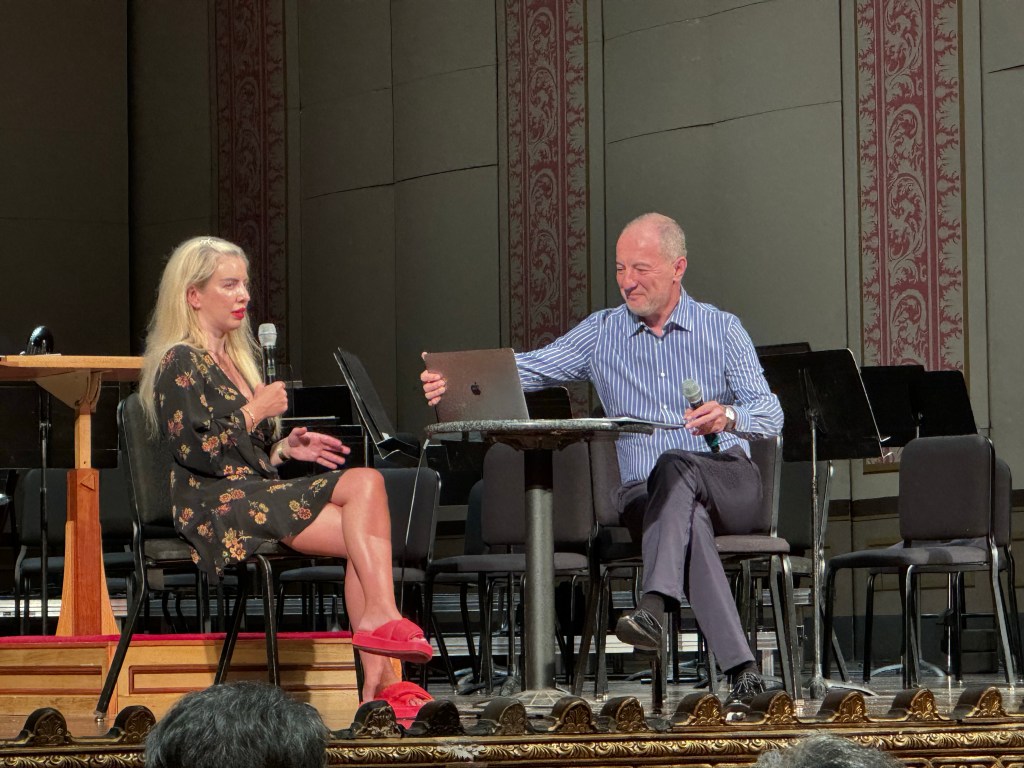
Rachmaninoff’s Rhapsody on a Theme of Paganini was certainly more familiar territory, and brought forth Natasha Paremski as soloist. Paremski was further on hand for a preconcert interview with Milanov (as a sidebar: could Milanov please let his guests speak uninterrupted?). Matters began with a thundering articulation of the skeleton of the ubiquitous theme, and Paremski took things at a rapid, unsentimental tempo, supported by her impressive fingerwork. Variation 7 introduced the Dies irae theme in a meditative manner before building to crashing double octaves. Variation 18 was suitably sumptuous while skirting the saccharine, and Paremski had no shortage of pianistic fireworks in the final variations before the flippant closing gesture.

Anna Clyne’s This Moment came about on commission from the League of American Orchestras, as part of an initiative to proliferate music by women composers. The title alludes to a quote from Buddhist monk Thich Nhat Hanh: “this moment is full of wonders.” The work further invokes quotes from the Kyrie and Lacrimosa of Mozart’s Requiem, which Milanov helpfully had orchestra members demonstrate (and in the present context, perhaps also offered a thematic connection to the Dies irae from the Rachmaninoff). Meditative stillness seemingly stretched the moment, building to more strident material. It’s an appealing piece, but ultimately its six-minute duration didn’t make the strongest impression as a standalone work.

A suite from Strauss’ opera Der Rosenkavalier closed the evening. From bar one, the Ohio Theatre was enveloped in its lush, honeyed, excess. I was struck by the richness of the strings, as well as fine playing from the winds with a standout oboe solo. The Ochs-Waltzes were elegant, stylish, and echt-Viennese, and the suite crested to searing passion.

Preconcert interview with Paremski and Milanov

Sara Davis Buechner joins Columbus Symphony in Viennese program

Columbus Symphony Orchestra
Rossen Milanov, conductor 
Sara Davis Buechner, piano
Ohio Theatre
Columbus, OH
April 5, 2024

Haydn: Symphony No. 82 in C major, Hob. I:82, The Bear
Mozart: Symphony No. 31 in D major, K297, Paris
Beethoven: Piano Concerto No. 1 in C major, Op. 15

Encore:
Gershwin: The Man I Love

This weekend’s Columbus Symphony program traversed Haydn, Mozart, and Beethoven, all of whom spent most of their professional life in Vienna, and crystallized and embodied what we now know as the Classical style. Though a Viennese evening, the first two selections were associated with Paris, beginning with Haydn’s Symphony No. 82. The first of the six so-called Paris symphonies, it and its successors were written on commission for performances in the French capital throughout 1786.

Sara Davis Buechner, Rossen Milanov, and the Columbus Symphony

Despite its numerical order, No. 82 was the last of the Paris symphonies to be composed. The rather heavy-handed opening lumbered forward, soon to be countered by a gentler theme in a back and forth with the more martial material. The development introduced some piquant dissonances that to my ears seemed to anticipate those in Beethoven’s Eroica. Haydn showed himself master of the double variation in the Allegretto. The finale was marked by a sustained drone, giving rise to the work’s ursine nickname, imitating the music used to accompany the barbaric practice of dancing bears, in any case, themes of folk inflection gave the symphony a spirited close.

Though the program was presented chronologically by composer, Mozart’s Paris symphony (no. 31) predates Haydn’s by almost a decade. A bold opening – and perhaps a bit overbearingly so Friday night – showcased the expanded orchestra (inclusive of clarinets, the first Mozart symphony to employ them), a quantity that must have dazzled Parisian audiences at the time. Delicately drawn-out melody made the central slow movement especially lyrical, and the finale was a pristine balance of both abandon and sophistication.

The first of Beethoven’s five genre-defining piano concertos brought forth Sara Davis Buechner as soloist. A gentle theme brimming with playful potential was heard from the orchestra, though the time-honored tradition of an orchestral introduction is a device the composer would jettison in his later works in the medium. Buechner’s entry was an elegant affair, deftly ornamented and replete with smooth runs across the keyboard, engaging in an energetic conversation with the orchestra. Though the work still very much bears the influence of Mozart, a lyrical flourish several minutes in unmistakably showed Beethoven’s individual stamp. Buechner’s snappy rhythmic punctuations and dynamic contrasts imbued the performance with excitement, and especially so in the wide-ranging cadenza of her own device (though perhaps not as wide-ranging as the one Alkan supplied for the Third Concerto!).

The Largo was gorgeous and serene, a mood sustained by the delicate cantilena in the piano. Quite a contrast to the Allegro scherzando finale which rivaled the mischievousness of his teacher Haydn – and moreover, in this case a nod to one Andreas Hofer – and Buechner offered a reading with flexibility and freedom. An enthusiastic reception brought her back for an encore which she introduced as “an unnecessary delay before my first martini” – a delay we’re grateful for, as it proved to be a lovely and sultry account of Gershwin’s The Man I Love.

Buechner and Milanov during the preconcert conversation

Rare Rachmaninoff anchors Columbus Symphony’s decidedly D minor program

Columbus Symphony Orchestra
Rossen Milanov, conductor
Elina Vähälä, violin
Ohio Theatre
Columbus, OH
March 22, 2024

Mozart: Overture to Don Giovanni, K527
Sibelius: Violin Concerto in D minor, Op. 47
Rachmaninoff: Symphony No. 1 in D minor, Op. 13

All three works on last night’s Columbus Symphony program were cast in the stormy key of D minor, a programming choice that seemingly mirrored the gloomy, rainy conditions outside the Ohio Theatre (Beethoven also chose that key for his Tempest sonata). The overture to Mozart’s great opera Don Giovanni is always an effective and attention-grabbing curtain-raiser. Beginning unequivocally bold and tragic, contrasting material was given briskly and with crisp articulation.

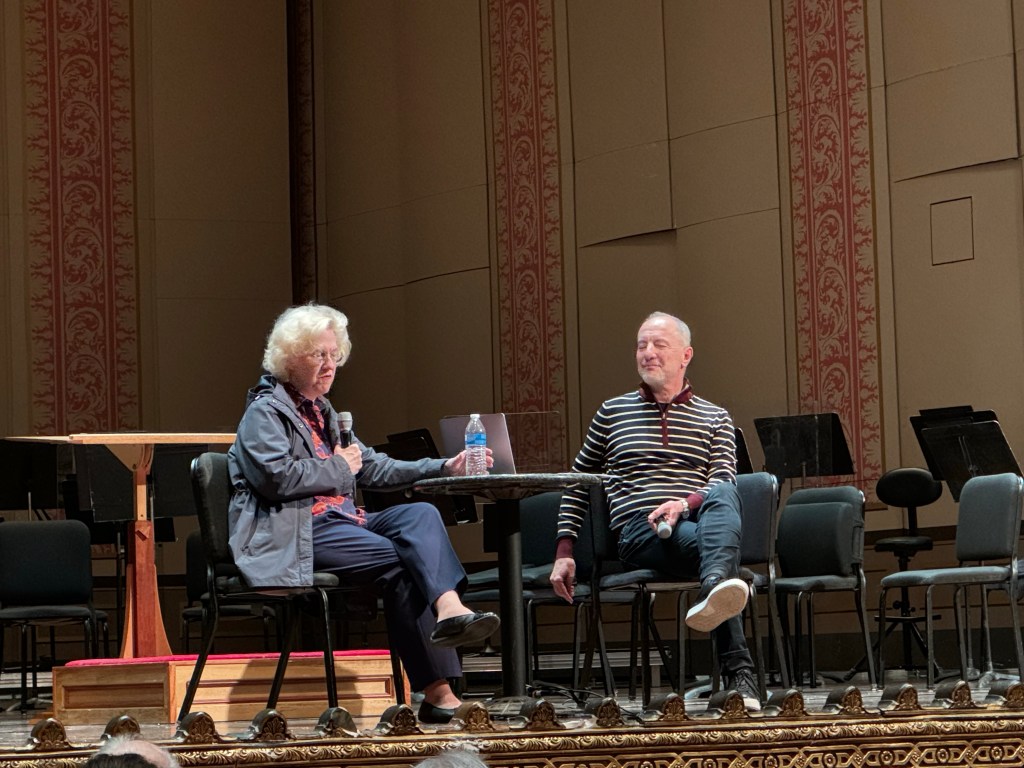
Preconcert conversation with Elina Vähälä and Rossen Milanov

Jean Sibelius’s Violin Concerto brought forth soloist Elina Vähälä who shares the composer’s Finnish heritage (though she spent the first part of her childhood in Iowa). Hesitant tremolos in the orchestra opened, with Vähälä’s lyrical, dark-hued solo line taking shape. She delivered with a passion that was fiery yet never showy, not the least in the extended cadenza. A slow movement followed in songful fashion, growing in intensity with a series of searing, rising trills. The foot-tapping rhythmic vitality of the finale left one in good spirits after the Nordic chill of the preceding.

The premiere of Rachmaninoff’s First Symphony is one of music history’s greatest disasters. The most ambitious work to date from the composer then in his early twenties, the first performance of the complex score suffered from inadequate rehearsal time and a purportedly inebriated Alexander Glazunov at the podium. The symphony – despite showing enormous promise – was all but forgotten until after the composer’s death, and Rachmaninoff fell into a deep depression that impeded his ability to write for the next few years. Friday night marked its very belated Columbus premiere, and credit to Milanov and the CSO for shedding light on an unjustly neglected work.

A triplet motif opens all four movements; in the first, it signaled a plunge into darkness. Despite being a youthful work, so many of the hallmarks one associates with Rachmaninoff are already very much apparent: sweeping melodies, colorful orchestrations, folk-inflected themes, and use of the plainchant Dies irae. This is in fact the composer’s first appropriation of Dies irae, a theme that would virtually become his calling card, wandering through so much of his output – and here it was given a particularly scintillating treatment about halfway through the opening movement.

The lilting Allegro animato was a bit gentler, though not immune from the somber Dies irae which acted as a binding agent throughout the work. A Larghetto was a calming interlude, if not quite reaching the heartwrenching heights of the slow movements the composer would become famous for, though an extended clarinet solo seemed to predict that of the Second Symphony. Delicate dialogue between concertmaster Joanna Frankel and principal cello Luis Biava was a further highpoint. A swashbuckling march theme opened the finale, swelling to searing melody in true Rachmaninoff-ian fashion. In the closing moments, the tempo slowed considerably for a coda with gravitas – and at long last, a brief glimpse of D major.

Vadim Gluzman returns to ProMusica to lead neighborhood series

ProMusica Chamber Orchestra
Vadim Gluzman, violin & leader
Donna Conaty, oboe
Nadine Hur, flute
Aya Hamada, harpsichord

St Mary Catholic Church
Columbus, OH
February 25, 2024

Bach: Concerto for Oboe and Violin in C minor, BWV 1060
Silvestrov: Excerpts from Silent Music
Bach: Brandenburg Concerto No. 5 in D major, BWV 1050
Mendelssohn: String Symphony No. 10 in B minor

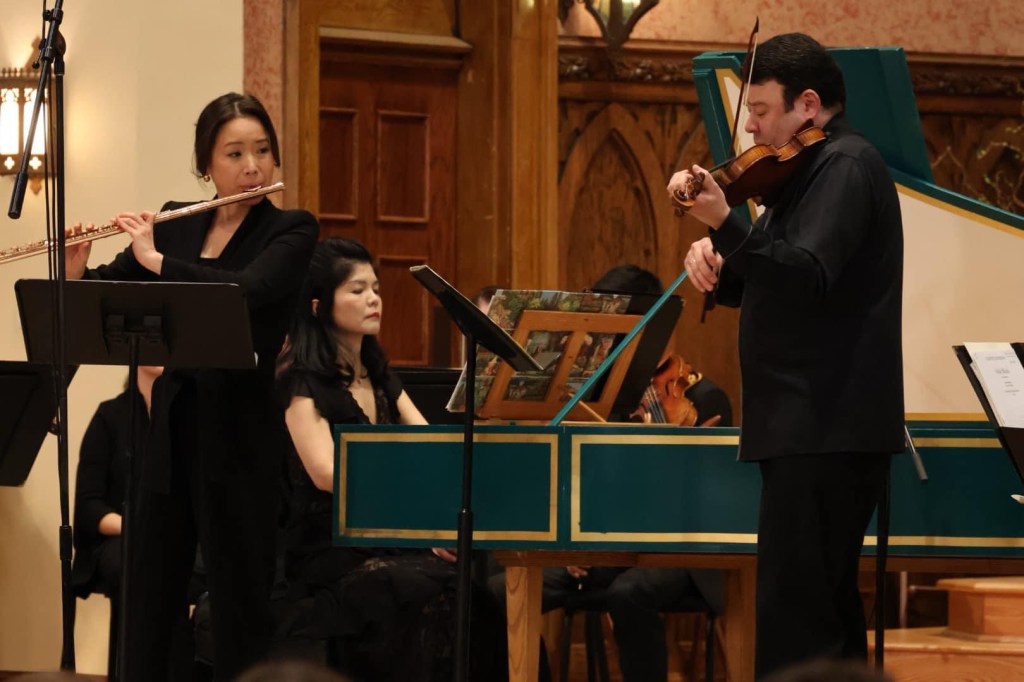
In his first appearance of the current concert season, ProMusica’s creative partner Vadim Gluzman led the ensemble in the Neighborhood Series, an event that sees the group perform outside the confines of their usual home in the Southern Theatre. Sunday’s afternoon performance in German Village drew a capacity crowd for a program that featured ProMusica players as soloists in Bach concertos, interspersed with works scored for string orchestra.

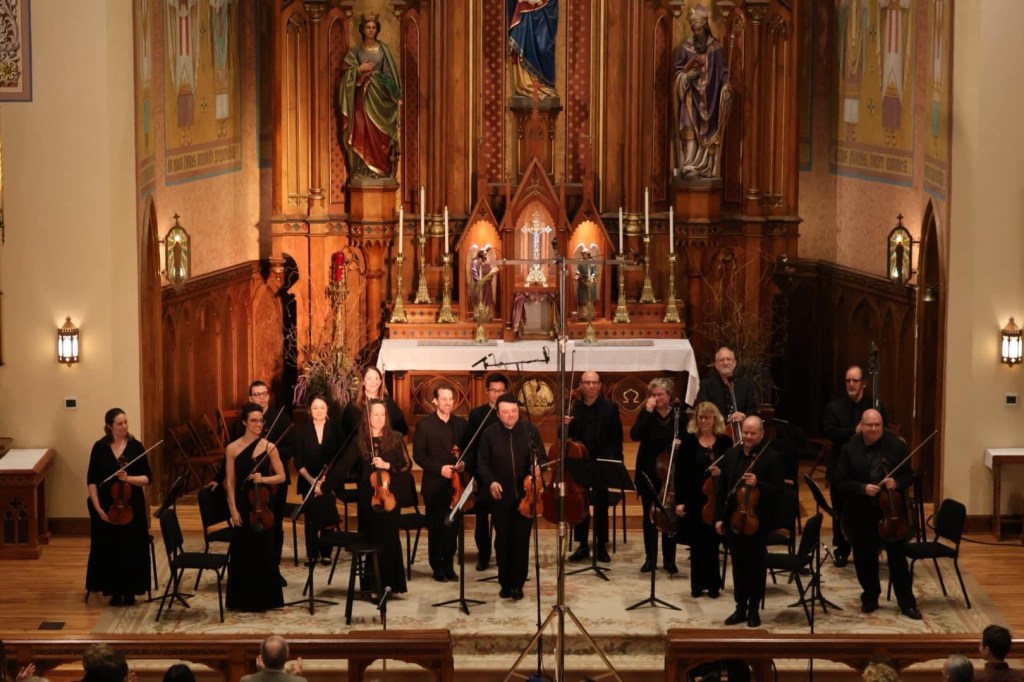
ProMusica at St Mary, photos credit ProMusica

Bach’s Double Concerto for Oboe and Violin brought forth Gluzman along with oboist Donna Conaty. Gluzman served dual role as a dynamic leader and charismatic soloist, sparking a fine chemistry with Conaty. The pair gave the piece an energetic workout, though perhaps most touching was the slow movement’s singing line in the oboe deftly answered by the violin.

This weekend marked the two year anniversary of the Russian invasion of Ukraine, and meaningfully, a work from Gluzman’s Ukrainian compatriot Valentin Silvestrov followed, as the conductor-violinist put it, “in hope of a better tomorrow.” The deeply reflective Silent Music dates from 2002, and is cast in three movements – though ProMusica opted to play only the first two. Solemn strings opened the Waltz of the Moment, and a wistful waltz gesture eloquently took shape. Evening Serenade occupied a similar space, marked by a melody gently cascading.

Bach’s Brandenburg Concerto No. 5 was quite a contrast, being in the highest of spirits. It boasted substantial solo parts for flute (Nadine Hur) and harpsichord (Aya Hamada). The flute offered a lyrical presence throughout, and the sparkling, bright effect of the harpsichord captured one’s attention, above all, in the cadenza. One of the single most impressive moments in all of Bach’s keyboard writing (which is saying a lot!), Hamada purveyed a self-assured virtuosity.

Between the ages of twelve and fourteen, the astonishingly precocious Mendelssohn wrote a set of twelve string symphonies. No. 10 closed the afternoon’s program, a single movement conception that opened in the lushness of the strings. More animated material took flight, providing glimmers of the gossamer textures that would come to define the very word Mendelssohnian.

Nadine Hur, Aya Hamada, and Vadim Gluzman perform Bach

Isidore String Quartet makes Chamber Music Columbus debut in wide-ranging program

Isidore String Quartet
Southern Theatre
Columbus, OH
February 24, 2024

Dinuk Wijeratne: The Disappearance of Lisa Gherardini
Aida Shirazi: umbra
Bach: Contrapunctus I-IV from The Art of Fugue, BWV 1080
Britten: String Quartet No. 2 in C Major, Op. 36

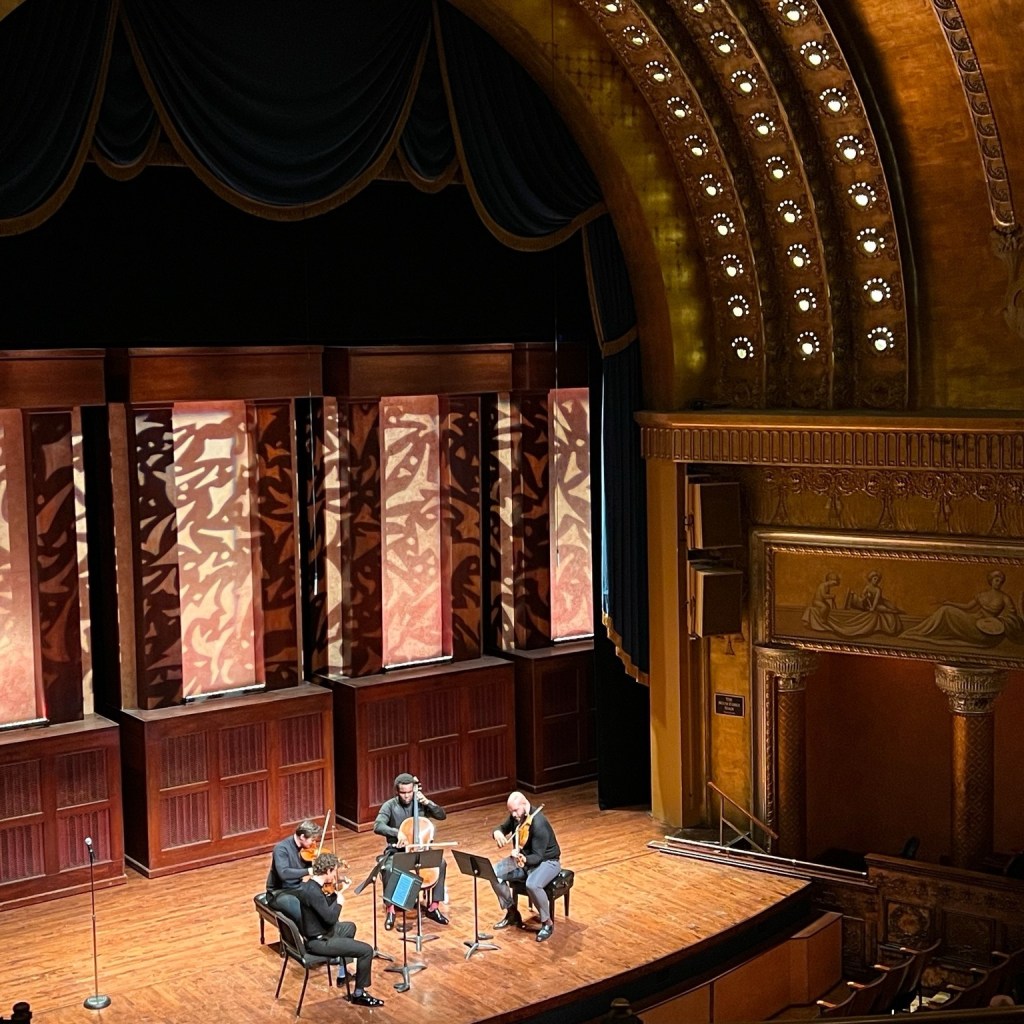
Chamber Music Columbus’ February program introduced the youthful Isidore String Quartet. All recent Juilliard grads, the quartet has already been acknowledged with an Avery Fisher Career Grant and first prize at the Banff International String Quartet Competition. Their Saturday night program at the Southern Theatre was refreshingly diverse and enterprising.

Isidore Quartet at the Southern Theatre, photo credit Chamber Music Columbus

A 2022 work from Sri Lankan composer Dinuk Wijeratne opened, a quantity this ensemble first encountered at the Banff Competition. The Disappearance of Lisa Gherardini recounts in musical – and quite theatrical – terms the 1911 heist of the Mona Lisa from Louvre. A cello melody opened, suggesting the genesis of the painting, with the others dispersed around the stage, playing gestures that in the composer’s own words “evoke gentle brushstrokes.” A central section suggested the heist, scheming and unsettling, while the cello resounded again in the concluding material, signifying the painting at last returned to its rightful place.

Iranian composer Aida Shirazi was represented with the 2011 work umbra, a title meant to evoke “a process in which the musical events unfold glacially.” Extensive use was made of extended techniques – harmonics and quarter-tones which painted an otherworldly soundscape, all but dissipating into the ether upon its conclusion.

Though generally performed on the keyboard, Bach’s crowning Art of Fugue has a long tradition of being appropriated for other instruments. The first four Contrapunctus were given in exacting transcription for string quartet. The second violin introduced the stately theme, with the transcriptions arranged in such a way that each instrument rotated giving the first presentation of the subject. The quartet boasted a sharp contrapuntal clarity, particularly evident in the fearsome complexities of the final selection. The string quartet is a medium that came after the composer’s time, but Isidore certainly made a compelling case for listening to Bach through this lens.

The program closed with Britten’s String Quartet No. 2, dating from 1945 – a watershed year in British history as well as the 250th anniversary of Henry Purcell’s death, both of which are central to the quartet. Wide-spaced texturing characterized the opening movement, a plaintive atmosphere in due course interrupted by more energetic material. The scherzo movement was in turn a ferocious if brief affair, putting Isidore’s virtuosity on full display.

The closing Chacony (as chaconne would have been spelled in Purcell’s time and place) is the most overt nod to the elder composer, and the heart of the work, clocking in at more than the first two movements combined. Its theme was derived from Purcell’s Chacony in G minor, Z730, and three groups of six variations respectively explored the source material’s harmony, rhythm, and counterpoint. Solo cadenzas punctuated each grouping, and a final set of three variations offered a lush chordal finale.

Pianist Claire Huangci returns to Columbus Symphony with Tchaikovsky

Columbus Symphony Orchestra
Carl St. Clair, conductor
Claire Huangci, piano
Ohio Theatre
Columbus, OH
February 23, 2024

Wineglass: Alone Together
Tchaikovsky: Piano Concerto No. 1 in B-flat minor, Op. 23
 Encore:
 Gershwin/Wild: Embraceable You
Brahms: Symphony No. 4 in E minor, Op. 98

Last weekend’s Columbus Symphony concerts brought forth guest conductor Carl St. Clair, currently – and remarkably – in his 34th season as music director of the Irvine, California-based Pacific Symphony. Headlining the performance was pianist Claire Huangci, returning to the Ohio Theatre following a memorable debut two seasons ago. Prefacing the pianistic centerpiece was a local premiere by John Wineglass, perhaps best known for his work in television scoring – most notably for All My Children, garnering him six Emmy nominations.

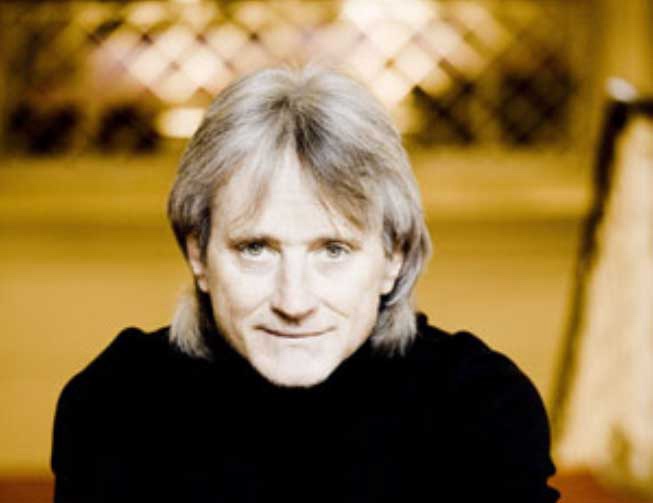
Carl St. Clair, photo credit pacificsymphony.com

Alone Together dates from 2021, in the throes of the pandemic, and was premiered virtually by St. Clair and his California ensemble on the first anniversary of the murder of George Floyd. Scored for strings, harp, and percussion, it documents a challenging time in recent history (a recording may be heard here). The opening “Strange Pandemic Times” was marked by unsettling harmonics, though generally lushly tonal and reflective. A pulsating drum ominously sounded, taking a darker turn before the closing “A Ray of Hope.” The harp had a calming effect and introduced an appealing melody, but ultimately felt to this listener more akin to “feel-good” music than a work that fully captured the depth of the subject matter.

Tchaikovsky’s evergreen First Piano Concerto was a fitting platform for Huangci’s virtuosity. A bold, brassy opening pointed to the thunderous chords in the piano, but I found the pianist’s approach perplexing at best. She was wont to rapidly release her hands from the keyboard, almost as if the keys were hot to the touch. Not only did this make for an odd visual, but the tone yielded was rarely more than surface-level, inadequate to project over the large orchestra and throughout the cavernous theater – especially apparent in the rapid double octaves which came off rather feeble. Still, I found her technique impressive and effective in the elegant cadenza.

The Andantino semplice opened with pizzicato strings and a lovely flute solo. The pianist seemed at her finest in these more lyrical and restrained moments, including a touching bit of dialogue with cellist Luis Biava. The fiery finale was at heart a lively folk dance, likely of Ukrainian origin. As an encore, Huangci offered the great Earl Wild’s transcription of Gershwin’s Embraceable You – impressive fingerwork colored by sweet, jazz-inflected harmonies.

Brahms’ Fourth Symphony concluded the program. The work’s long journey embarked with a gentle dip in the strings. St. Clair had a keen sense of structure and pacing, though there was something to be desired with regard to balance, given that the brass were often too much in the foreground. The slow movement boasted some lovely string playing, contrasting the stentorian brass, while the scherzo saw jubilation amidst the work’s severity. Eight powerful chords made the spine of the closing passacaglia, its variations unfolding with dignified purpose.

Unfamiliar Dawson symphony highlights Columbus Symphony’s eclectic program

Columbus Symphony Orchestra
Rossen Milanov, conductor
Steven Banks, alto saxophone
Ohio Theatre
Columbus, OH
February 4, 2024

Stravinsky: Suite from The Firebird (1919)
Tomasi: Concerto for Alto Saxophone
Dawson: Negro Folk Symphony

Last weekend saw the Columbus Symphony opening their program with an orchestral favorite before courageously veering firmly into unfamiliar territory. Stravinsky’s Firebird, presented in its most commonly heard 1919 suite, made for a glittering opening. Ominous rumbling in the low strings set the mood and built tension. A warm and gracious theme of folk origin marked the “Dance of the Princesses”, most prominently heard in the oboe. The vigor was substantially ramped up in the “Infernal Dance”, with thunderous punctuations from the bass drum, ultimately pointing to the resplendent finale. In his preconcert talk, Christopher Purdy noted that Stravinsky himself conducted the CSO on one occasion in 1968.

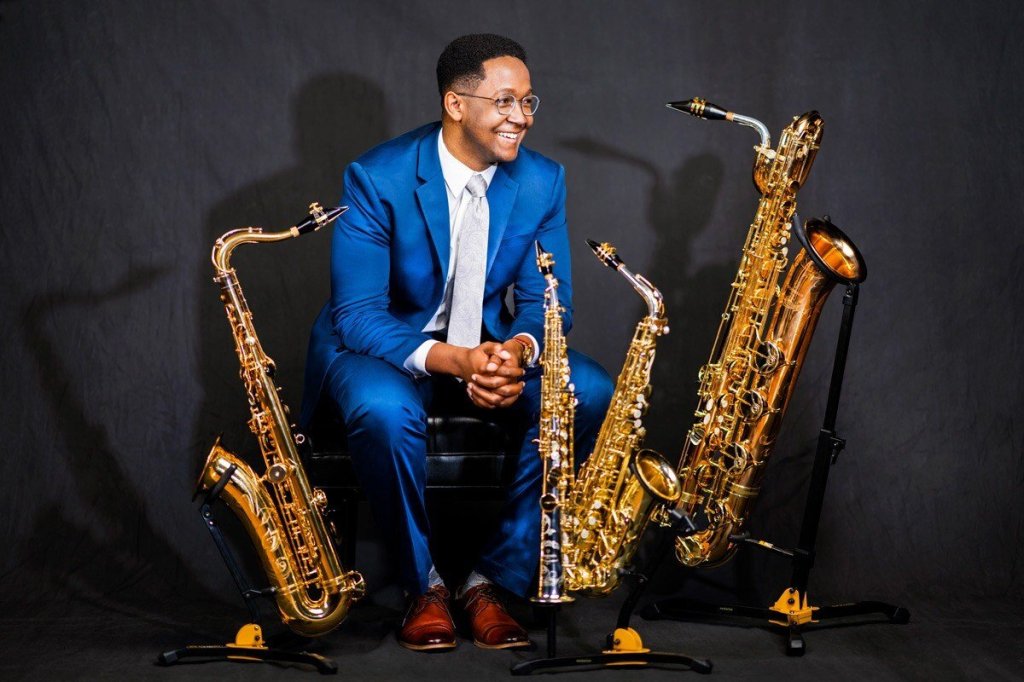
Steven Banks, photo credit steven-banks.com

Henri Tomasi’s 1949 Concerto for Alto Saxophone brought forth an excellent soloist in Steven Banks. Its misty opening in the orchestra gave way to the lyrical tone of the sax, making the case that this is an instrument that has a place in the concert hall as well as the jazz club. Banks impressed in his rapid fingerwork during the extended cadenza, and the timbre of his instrument offered striking contrast to the rest of the orchestra in this colorful midcentury score. The closing “Giration” again showcased the soloist’s limber flexibility, broadening to a clangorous coda. As an encore, Banks performed “The Lord’s Prayer”, a plaintive spiritual that further showcased the saxophone’s range and variety.

The major discovery of the program came in William Dawson’s Negro Folk Symphony. A substantial work, it puts Dawson in same pantheon as fellow Black composers Florence Price, William Grant Still, or Julia Perry – and served as a meaningful acknowledgment of Black History Month. Written in 1934, it was premiered to acclaim by Leopold Stokowski and the Philadelphia Orchestra, only to soon recede into obscurity. Dawson would revise the work decades later, further fleshing out the percussion section after being inspired by a trip to the African continent. In very recent years, orchestras have begun to rediscover the score – and Philadelphia returned to it once again, producing a Grammy-nominated recording.

The three movements each take their titles from spirituals, and the work is an amalgamation of themes based on spirituals and those of Dawson’s own device. In this regard, he very much took cue from Dvořák who found great inspiration in the spiritual and encouraged American composers to embrace its authenticity. The Bond of Africa opened with a horn call, leading to a paragraph spacious and earthy, and in no hurry to arrive at the percussive coda. The work bore Dawson’s individual stamp and I was struck by the composer’s skillful orchestration and control of form – a shame he didn’t write more.

The crepuscular Hope in the Night was more introspective, and with a prominent passage for English horn (also a favorite instrument of Dvořák). It swelled to climaxes strained and pained – with a striking orchestration for bells. Glimmers of hope shone through in more playful material, but the bells resurfaced in a particularly gripping passage, underpinned by eerily pulsating percussion. I found the closing O, Le’ Me Shine, Shine Like a Morning Star! to be the least convincing, but a warm brass chorale helped bring the work to a radiant close.