Cleveland Orchestra Daniel Reith, conductor Mandel Concert Hall Severance Music Center Cleveland, OH May 19, 2023
Joplin: Overture to Treemonisha Perry: Short Piece for Orchestra Still: Darker America Herrmann: Suite from Vertigo Chacon: Voiceless Mass Varèse: Amériques
In one of the most intriguing entries of The Cleveland Orchestra’s wide-ranging American Dream festival, the orchestra offered a truly fascinating program of works that respond to the concept of the American dream in some fashion, unearthing selections that lie far beyond the confines of the standard repertoire. An engaging pre-concert discussion led by musicologists Kira Thurman and Douglas W. Shadle provided thought-provoking insight into the works to be performed.
Opening of Joplin’s Treemonisha
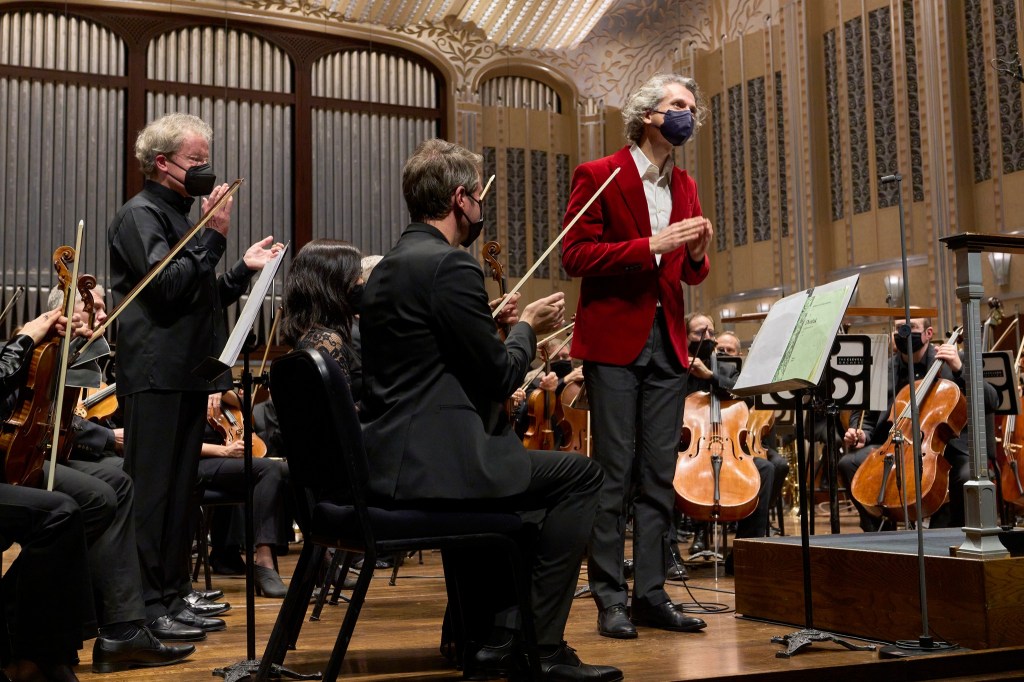
An indisposed Franz Welser-Möst was obliged to bow out Friday evening (but fortunately was well enough to conduct the closing performance of La fanciulla del West the following night), leaving the reins in the able hands of assistant conductor Daniel Reith. I’ve long been intrigued by Scott Joplin’s 1911 opera Treemonisha, a major contribution to American music – and unjustly neglected. It’s really quite unprecedented for a major orchestra to perform Joplin, so kudos to the TCO for opening the evening with the opera’s overture. It began energetically with carefree abandon, contrasted by an arching lyricism and the composer’s penchant from chromaticism. The brass warmly conveyed slower, more poignant material, a theme that resurfaces in the opera in the closing A Real Slow Drag.
Julia Perry has been a fascinating discovery to this listener. It seems there’s been a resurgence of interest in her as of late here in Ohio – and rightly so, as she spent much of her life in Akron. A recent Columbus Symphony performance of Study for Orchestra was quite eye-opening, and TCO’s inclusion of the Short Piece for Orchestra was no less revelatory – a quantity which Columbus’ ProMusica also has on tap for next season. Terse, strident gestures marked Perry’s sophisticated language, given by TCO with exacting clarity. An intense, unforgiving work, ending definitively in a crash.
Perry completed formative studies abroad in Europe; likewise William Grant Still turned towards European influence in studying with Edgard Varèse (and Joplin was taught music by a German immigrant, who would introduce him to the operas of Wagner – later to become an inspiration for Treemonisha). In the pre-concert talk, it was suggested that for Black Americans, as with these three composers, the American dream was escaping, and look to Europe which was comparatively more enlightened in terms of racial oppression. TCO selected Still’s 1924 tone poem Darker America, his first major orchestral work. A generally restrained work, it opened with a lyrical gesture in the low strings, with some fine solo passages from the flute and clarinet. Blue notes shaping the melodic line caught one’s ear, sounding not unlike Gerhswin’s Rhapsody in Blue, written the same year.
At first glance, the suite from Bernard Herrmann’s score to the Hitchcock film Vertigo seemed like a misfit. But, film scores constitute a significant chapter of American orchestral music, and the film in question deals with dreams in its way. Neatly divided into three movements, the suite’s opening “Prelude” was awash in lush, colorful scoring, gleaming in cinematic brilliance. Chilling dissonances brought “The Nightmare” – a direct reference to the dreamworld – to life, while the closing “Scène d’amour” surged with lavish chromaticism, reminding one of TCO’s 2018 festival centered around Tristan und Isolde.
In 2022, Raven Chacon became the first Native American to be awarded the Pulitzer Prize for Music, granted for his remarkable work Voiceless Mass. Reduced to chamber-sized scoring for organ, flute, clarinet, bass clarinet, two percussionists, strings, and sine tones, the musicians were dispersed throughout the hall, with Reith conducting faced towards the audience, achieving a surround-sound effect. The twenty minute essay was often of meditative stasis, though a pulsating bass drum was ominous and omnipresent. With the lights dimmed, a remarkable atmosphere was sustained until matters drifted away to silence. For the indigenous population, the reality of the American dream often proved to be more of a nightmare; Chacon’s somber work gives one the space to reflect on a such a stark contrast.
After Chacon’s barren minimalism, matters turned sumptuously maximalist in Varèse’s Amériques, presented in its 1929 revision (a work also captured on TCO’s A New Century recording). A wandering alto flute solo opened, giving way as the vigor and energy of a bustling metropolis was amassed, replete with percussive bursts and screeching sirens. Thrilling orchestral effect abounded in this dizzyingly intricate tapestry, given with singular intensity.
Maria João Pires, piano Mandel Concert Hall Severance Music Center Cleveland, OH May 3, 2023
Schubert: Piano Sonata No. 13 in A major, D664 Debussy: Suite bergamasque, L75 Schubert: Piano Sonata No. 21 in B-flat major, D960
Encore: Debussy: No.1 from Deux arabesques, L66
The Cleveland Orchestra’s inaugural recital series came to a divinely inspired close Wednesday evening, with Maria João Pires showing herself a true poet of the piano in works of Schubert and Debussy. Pires officially retired from the concert stage in 2017 – I sorely regretted missing her Cleveland appearance the previous year upon hearing that news – making the present recital all the more wonderful of an occasion, evidenced by the sizable and enthusiastic audience.
Maria João Pires at Severance Hall
Pires began with Schubert’s Piano Sonata No. 13 – middle period Schubert, still very much in the classical style insofar as it predated the sublime late sonatas, but not without the composer’s individual hallmark markedly apparent. Matters opened gracious and gentle, but colored by passing shadows in quintessentially Schubertian effect. Pires deftly shaped the phrasing and melody; stormier material in the development offered contrast but only for a fleeting moment before we returned to sunny A major. The Andante showed the pianist’s detailed voicing and nuance; the finale’s sprightly fingerwork playfully contrasted.
Debussy’s Suite bergamasque followed. The opening Prélude was given confident, self-assured beginnings, but not without an essential lyricism. Distinctive dance rhythms marked the Menuet, burgeoning to more impassioned material. Though Clair de lune is often presented as a standalone piece, it was quite intriguing hearing it in the context of the whole suite. Familiar a work as it may be, Pires’ lovely reading was anything but routine. A foil to its shimmering stasis came in the Passepied, an essay of near perpetual motion.
Schubert’s transcendent final piano sonata occupied the second half, and it truly was nothing short of a spiritual experience. An elegantly sculpted melodic line wondrously took shape, punctuated by profound silence after its first statement. Pires was particularly remarkable in the way she varied bringing out the inner voices, never content to merely repeat a phrase in the same way twice, and her keen attention to balance and coloring kept one in rapturous attention. The pianist took the long repeat of the first movement exposition, offering its dramatic first ending that would otherwise have been jettisoned. Distant keys were explored in the development before the movement’s serene close.
Pires opted for minimal pedaling in the Andante sostenuto, allowing the dotted rhythmic gesture to be strikingly detached, seemingly making the sumptuously gorgeous central section resound all the more lyrical. The scintillating scherzo was wonderfully charming, and the myriad guises in which the main theme recurred in the closing rondo oscillated between the insouciant and the dramatic.
For a lone encore, Pires returned to Debussy in the first of the Arabesques, an account limpid and lithe. Certainly a high bar on which to conclude the recital series, and kudos to the Cleveland Orchestra administration for such a successful endeavor. Next season’s offerings provide much to look forward to with solo recitals or chamber collaborations from Marc-André Hamelin, Emanuel Ax, Yefim Bronfman, and Evgeny Kissin.
Mitsuko Uchida, piano Mandel Concert Hall Severance Music Center Cleveland, OH February 26, 2023
Beethoven: Piano Sonata No. 30 in E major, Op. 109 Beethoven: Piano Sonata No. 31 in A flat major, Op. 110 Beethoven: Piano Sonata No. 32 in C minor, Op. 111
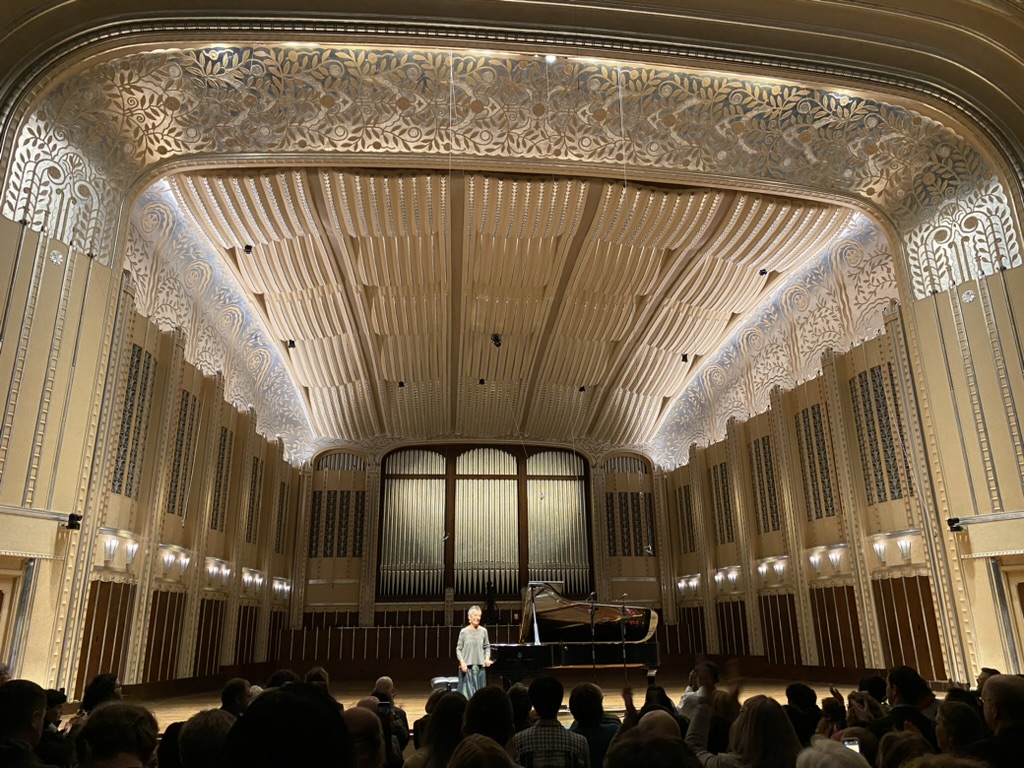
After seeing the stage of Severance Hall filled to the brim the night before for an opulent Strauss tone poem, it was quite a contrast to enter Sunday afternoon to the sight of a lone grand piano. A welcome sight to be sure, however, the setting for one of Cleveland’s most cherished musical guests to offer the next installment of this season’s piano series. This is the always remarkable Mitsuko Uchida, presenting perhaps the weightiest of all solo piano programs: the final three piano sonatas of Beethoven – and a fitting follow-up to her 2019 program of Schubert sonatas on the same stage.
Mitsuko Uchida in recital at Severance Hall
The bright E major of op. 109 opened graciously and generously lyrical, soon to be contrasted by the rhythmic snap and punch of the Prestissimo. A noble, expansive set of variations closed the work, with the singing theme showing the notoriously stormy composer wholly at peace with the world. Uchida did much to bring out the distinct character and nuance of each variation, and it was quite striking how much musical ground was traversed in a mere six variations. A fugue surfaced in the fifth variation, a signal of the importance of the form to this sonata trilogy and to late Beethoven more broadly speaking.
Thought certainly worthy of applause, Uchida requested the audience to withhold following op. 109 – a directive not followed, and it seemed to take her some time to get back in the zone. Once she did, op. 110 opened in amber warmth, and a sublimely songful melody decorated by fleeting arabesques given with utter weightlessness. I was reminded of Evgeny Kissin’s performance of the sonata on his program here last April. A fiery scherzo followed, sharply accented.
Thus far, the work very closely mirrored its predecessor. The Adagio ma non troppo that followed served as something of a spiritual contemplation – with a longing melody of deepest tenderness – as if the composer was pondering what direction to go next. A fugal finale then broke through, clearly the destination all along. Uchida cut through the counterpoint with exacting clarity, though in no way sacrificing its wondrous musicality.
Op. 111 was certainly worthy of occupying the entire second half. Many pianists will play the opening octaves with both hands instead of the left hand alone as Beethoven notated, but Uchida respected that wish as the composer wasn’t one to create technical challenges without valid musical reasons. Arresting beginnings plunged us into the darkness of C minor, with Uchida unrelenting in weight and power, and even more so in the penetrating, unforgiving fugato.
There’s few things in the repertoire more calming than the opening gesture of the Airietta, an Everest in of itself. There was entrancing purity in the simplicity of the theme, though rhythmic complexities amassed on the note-spattered pages – and while the virtuosity was there in spades, it always took a backseat, in service of the composer, not the pianist. Only Beethoven could make something as seemingly mundane as a trill, the mere oscillation of two consecutive pitches, sound so utterly transcendent. The climax of the movement pushed towards an even higher spiritual plane, only to a retreat to a direct, unadorned final statement to close this spellbinding performance.
Cleveland Orchestra Klaus Mäkelä, conductor Nikolaj Szeps-Znaider, violin Mandel Concert Hall Severance Music Center Cleveland, OH April 23, 2022
Sibelius: Violin Concerto in D minor, Op. 47 Encore: Bach: Partita No. 2 in D minor, BWV 1004 – Sarabande Shostakovich: Symphony No. 10 in E minor, Op. 93
Following one of the most memorable debuts in recent seasons, the amazingly youthful Finnish conductor Klaus Mäkelä made a much-anticipated return to Cleveland in a meaty program of Sibelius and Shostakovich. Sibelius was represented by way of his towering Violin Concerto, a work first performed in Cleveland in 1922 by Ferenc Vecsey, the concerto’s dedicatee. The work opened shrouded in mysterious tremolos, with soloist Nikolaj Szeps-Znaider pointing the way with resonant lyricism. Thornier material swiftly multiplied virtuoso demands, played with aplomb and searing passion – and the energetic orchestral accompaniment evidenced Mäkelä’s innate understanding of his fellow Finn.
Nikolaj Szeps-Znaider, Klaus Mäkelä, and The Cleveland Orchestra, photo credit Roger Mastroianni, courtesy of The Cleveland Orchestra
Szeps-Znaider’s command of his instrument was on full display in the extended cadenza, intriguingly placed in the center of the movement in emphasis of its structural significance. Much-need repose was to be had in the central Adagio di molto, noted for its wonderfully long-breathed melody. Contrast was once again found in the finale with its foot-tapping polonaise rhythms. As an encore, the violinist offered a deeply poignant Bach sarabande which he noted to be his token of gratitude for being back in Cleveland for the first time post-pandemic.
Quiet rumblings began Shostakovich’s mighty Tenth Symphony, reaching towards ponderous depths. A forlorn clarinet solo – which has been astutely compared to Mahler’s Urlicht – was profoundly moving, and the climaxes scaled cataclysmic heights – a pacing that benefitted from the conductor’s singular sense of architecture. An unexpected physical manifestation of the intensity with which he conducted came when he inadvertently knocked over the concertmaster’s music stand! The brief Allegro, often thought to be a portrait of Stalin, was unrelenting and uncompromising, not in the least during the machine gun fire of the percussion.
Rather flippant by comparison, the Allegretto introduced the DSCH motive, with the politically engaged composer ever keen to willingly inject himself into the commentary. The gleaming Elmira motive in the horn further solidified the composer’s personal connection to the work. A slow introduction – the closest thing to a proper slow movement in this symphony – opened the finale, as if the composer was gathering together his final thoughts. The DSCH returned in incessant prominence, hammered home for a powerhouse conclusion. Just a stunning performance from this dynamic podium presence.
Cleveland Orchestra Herbert Blomstedt, conductor Mandel Concert Hall Severance Music Center Cleveland, OH February 12, 2022
Nielsen: Symphony No. 4, Op. 29, The Inextinguishable Beethoven: Symphony No. 5 in C minor, Op. 67
An appearance from the remarkably indefatigable Herbert Blomstedt is virtually guaranteed to yield stupendous results, and Saturday night’s performance was certainly no exception. The Swedish-American conductor paired major symphonies of Nielsen and Beethoven, the same two composers which comprised his debut program with this orchestra in April 2006. It’s a fitting coupling to be sure, both composers major symphonists of their respective generations, and in the present case, both works employed a progressive tonality, taking the listener on a journey to a distant destination rather than coming full circle.
Herbert Blomstedt and The Cleveland Orchestra, photo credit Roger Mastroianni, courtesy of The Cleveland Orchestra
Nielsen’s musical language can be somewhat intractable and austere, but The Cleveland Orchestra is well-equipped for the challenge. A compelling performance of the Fifth Symphony was given a few seasons ago, and this weekend the orchestra rose to the task even more under Blomstedt’s incisive guidance. The clangorous introductory material was given with clarity and inexorable drive. Nielsen’s palette is resolutely tonal though craggy and unforgiving; some respite was to be had when the conductor coaxed a piquant lyricism from the woodwinds. Despite the first movement’s busyness, matters closed in a simple grandeur, with the pulsating of the timpani foreshadowing their role to come.
The gentle and folksy nature of the Poco allegretto seemed to take its cue from the analogous movement of a Brahms symphony. Dulcet clarinets were the highlights in this movement scored for winds alone, occasionally buttressed by touches of pizzicato strings. Pained and discursive strings opened the slow movement. A lyrical dialogue was had between concertmaster Peter Otto and principal viola Wesley Collins before the material built to a stentorian climax. The finale opened in rapid-fire energy and the dueling timpanists (Paul Yancich and Tom Freer) on opposite ends of the stage were to thrilling effect. Blomstedt has an uncanny ability to get the expansive orchestra to morph into a single organism, and nowhere was this more apparent than in the unambiguously triumphant ending.
It’s a great challenge to make Beethoven’s Fifth – surely the most frequently performed symphony in the repertoire – sound more than merely routine, but Blomstedt certainly did. This weekend also served as something of a capstone to his memorable all-Beethoven program presented at Blossom last summer. The Allegro con brio was commanding and authoritative, its energy taut, focused, and searingly intense. Long, flowing lines in the low strings brought out the warmth of the slow movement with thoughtful contrasts illuminating the double variation structure. The scherzo, though weighty in its own right, served as something of a preface to the grandiose finale, a glorious race to the finish line of this archetypal journey from darkness to light.
Cleveland Orchestra Franz Welser-Möst, conductor Mandel Concert Hall Severance Music Center Cleveland, OH January 15, 2022
Mozart: Symphony No. 36 in C major, K425, Linz Deutsch: Intensity Dvořák: Symphony No. 8 in G major, Op. 88
Under the baton of music director Franz Welser-Möst, The Cleveland Orchestra offered familiar and appealing symphonies of Mozart and Dvořák as bookends to a compelling premiere from its current composer in residence. Mozart’s Linz symphony made for a pearly opener. The dotted rhythms which opened the slow introduction were punctuated with heft while the ensuing Allegro spiritoso was a fittingly lighter affair, given with such energy as to mirror the frenetic pace at which it was composed. The Andante was delicate and intricately refined by way of Welser-Möst’s exacting attention to articulation and dynamics. In the Menuetto, one was struck by the rhythmic swagger, and the bold, big sound of the modern orchestra which the conductor cultivated – something of a foil to Nicholas McGegan’s airier and comparatively more historically-informed performance of the work a few seasons ago. Contrast was further sharpened by the rather more genial trio, and the finale was given with crystalline clarity even at breakneck tempo.
Bernd Richard Deutsch and The Cleveland Orchestra, photo credit Roger Mastroianni, courtesy of The Cleveland Orchestra
Bernd Richard Deutsch’s Okeanos made a strong impression on this listener when performed by the orchestra in March 2019 (and captured on the excellent A New Century). As the current Daniel R. Lewis Young Composer Fellow, Deutsch was commissioned to write a new work for TCO, originally slated for a May 2020 performance but inevitably postponed until this weekend. The product of this residency was Intensity, an aptly titled twenty-minute fantasy scored for massive orchestral forces – including a particularly extensive percussion battery. A sense of wound-up energy, pregnant with potential permeated the opening bars, and the colorful timbres of the percussion were utilized from the opening notes. Lyrical interludes at various interludes offered an anchor in otherwise stormy waters. The middle of the work’s three sections was spectral and dissipated, achieved through the striking aural palette of high strings, muted brass, percussion, and celesta. The namesake intensity ramped up again in the final section, encouraged by the boisterous percussion and finally culminating in a blast in the brass. A fitting tribute to the virtuosity and technical prowess of the The Cleveland Orchestra, and I hope a recording is released in the near future.
Dvořák’s Symphony No. 8 is certainly one of the most popular in the repertoire, but this performance was refreshingly far above the routine and pedestrian. Passionate beginnings, as coaxed from the resonant cellos, persisted for only a moment before the work’s sunny disposition shone through. Joshua Smith’s solo flute passages were a highlight, and Welser-Möst opted for a brisk tempo, keenly avoiding over-sentimentalizing. The Adagio showed Dvořák at his most lyrical, although a brilliant brass section added bold contrast. The Allegretto grazioso positively sparkled in its lilting textures, while clarion trumpets heralded the finale wherein the conductor guided the orchestra with conviction through the myriad of guises of this rousing theme and variations.
Cleveland Orchestra Herbert Blomstedt, conductor Garrick Ohlsson, piano Blossom Music Center Cuyahoga Falls, OH August 1, 2021
Beethoven: Piano Concerto No. 4 in G major, Op. 58 Beethoven: Symphony No. 7 in A major, Op. 92
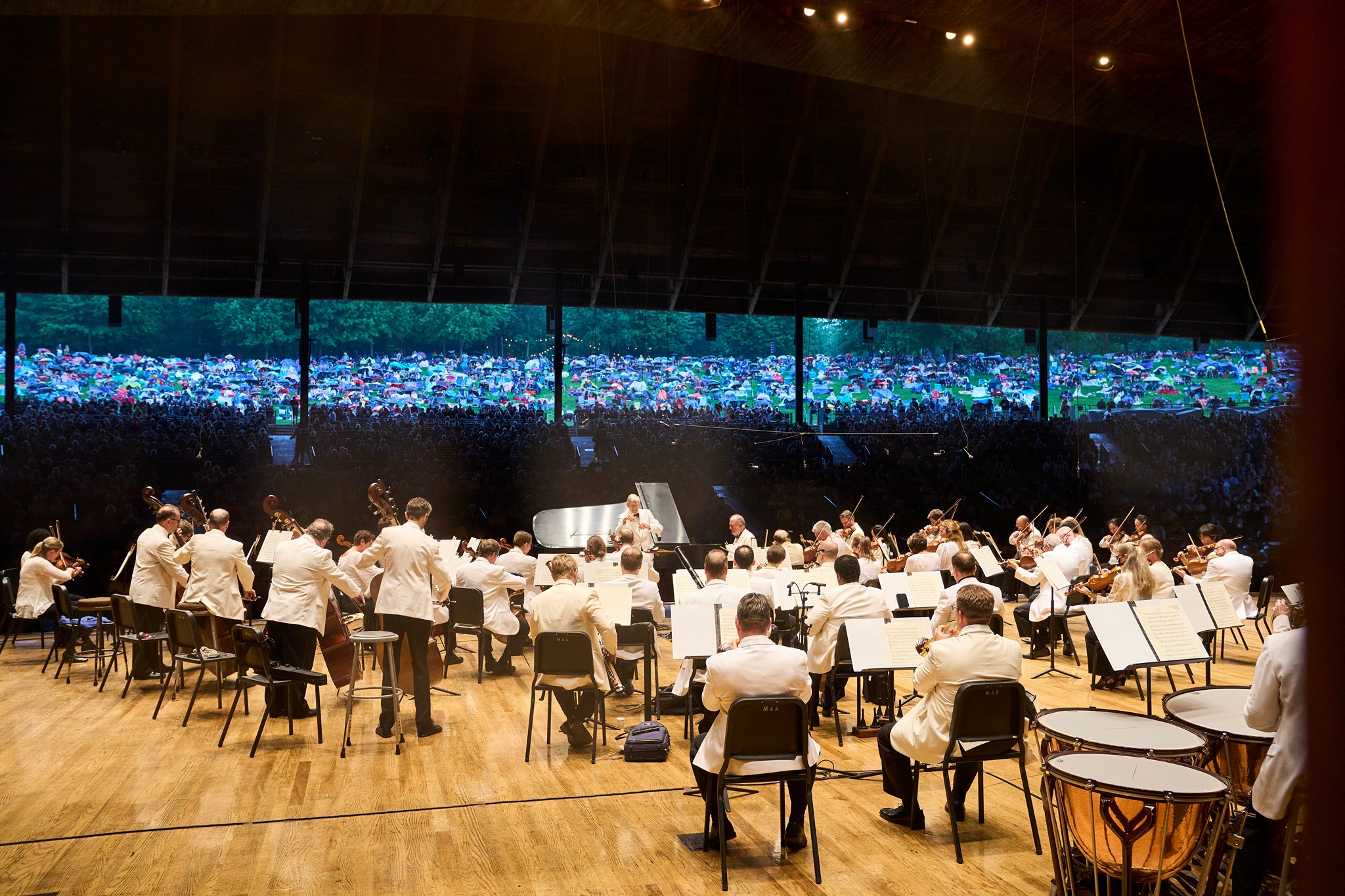
Two of The Cleveland Orchestra’s veteran collaborators – Herbert Blomstedt (now a remarkable 94 years old!) and Garrick Ohlsson – combined forces for a memorable summer evening at Blossom, offering an emblematic piano concerto and symphony of Beethoven. On a personal note, this was my first time seeing a full orchestra in person since before the pandemic, and what a pleasure it was to be back in the audience.
Blomstedt, Ohlsson, and The Cleveland Orchestra at Blossom, photo credit Roger Mastroianni, courtesy of The Cleveland Orchestra
The entire trajectory of the Fourth Piano Concerto is set by the brief but beguiling opening statement in the piano. Ohlsson offered a gentle sound, deftly voiced and articulated. A lyrical presentation of the movement’s primary themes followed in the orchestra, a supple accompaniment encouraged by Blomstedt’s graceful direction. Ohlsson blended beautifully with the orchestra with his sterling technique being used for the noblest of causes. Still, the stormier passages were perhaps a bit too genial, certainly when considering what one might expect from the often fiery playing of a pianist known for his mastery of the Romantic repertoire. A wondrous purity of tone was cultivated in the slow movement, and what ensued was an enigmatic dialogue between pianist and orchestra. At this point, the clouds opened up for a heavy rainstorm, but the performers onstage remained unfettered. The finale served as a fitting foil to the seriousness of the preceding, jocular and elegant.
While the Seventh Symphony had bellicose beginnings, it was the gracefulness of Blomstedt’s baton-less conducting that made the strongest impact; the rhythmic motifs that propelled matters forward were lithe and stylish. Top-drawer playing was heard throughout the orchestra, although it was the winds that made for particular standouts with Joshua Smith’s pivotal flute solo pointing the way to the heart of the symphony. The indelible Allegretto was of chilling effect, intensified by the long-bowed strings. In the latter two movements, Blomstedt did much to capitalize on the vivaciousness of the omnipresent dance rhythms, music as joyous and vigorous as anything Beethoven wrote.
Gartner Auditorium Cleveland Museum of Art Cleveland, OH July 29 – August 1, 2021
Inevitably postponed last summer due to the pandemic, the Cleveland International Piano Competition has made a remarkable comeback here in 2021, a wonderfully exciting return to in-person performances. An initial pool of over 250 applicants from more than 40 countries was pared down to 26 contestants, all of whom performed in the Competition’s first two rounds. Owing to the travel and health restrictions that still persist, these rounds were conducted virtually, filmed at venues across the world – and available for free viewing on YouTube. Eight outstanding semi-finalists were selected to proceed onsite in Cleveland, a cohort to be further narrowed down to four finalists who will perform a chamber music round with the Escher Quartet and a concerto round with The Cleveland Orchestra under the baton of Jahja Ling.
Gartner Auditorium before Session 1 of the Semi-Final Round
Compared to the relative brevity of the first two rounds, the semi-finals offer an even more in-depth portrait of each artist, performing a recital of approximately 40 minutes. A few new and welcome additions for this year’s edition: each semi-finalist included in their program a popular song transcription commissioned from composer Alexey Kurbatov. Four selections were available, namely “America” from Bernstein’s West Side Story, Queen’s “Bohemian Rhapsody”, themes from Mission Impossible, and John Williams’ Olympic Fanfare. Regrettably, none of the eight selected the Williams piece, but perhaps a recording can be posted in due course. I also hope publication of these scores is imminent as they undoubtedly can serve as particularly enjoyable encore pieces.
Also for the first time was the inclusion of piano duets – the two performers from each session teamed up following their solo material for either the Fantasie in F minor by Schubert or Mozart’s Sonata for Two Pianos in D major. A lovely addendum that not only tested the contestants’ ability to collaborate with another pianist, but encouraged a spirit of camaraderie. Finally, excellent program notes for every piece performed – from the first round to the finals – were provided by Marissa Glynias Moore, Anna M. O’Connell, and Marco Ladd. Indispensable reading for attendees and a veritable crash course in piano literature. Below are some brief impressions I had of each semi-finalist.
Session 1 July 29, 2021
Ying Li Mozart: Piano Sonata No. 13 in B-flat Major, K. 333 Grainger: “Ramble on Love” from Der Rosenkavalier Bartók: Piano Sonata, Sz. 80 Schifrin: Themes from Mission Impossible (arr. Kurbatov)
Honggi Kim Schifrin: Themes from Mission Impossible (arr. Kurbatov) Chopin: Twelve Etudes, Op. 25
Schubert: Fantasie in F Minor, D. 940
Ying Li (China) opened the semi-final round with a Mozart sonata, delicate and balanced, exuding the pearly classical style. I found her pacing of the slow movement a bit hard to follow but was quite taken by the sprightly finale. Grainger’s so-called Ramble on Love, paraphrasing themes from Strauss’ Rosenkavalier, gave sumptuous treatment to the source material’s lush and languid melody. Bartók’s Piano Sonata was for me the highlight of her performance, opening with a manic energy – and the live video screens did much to enhance the audience experience, offering close-ups of the intricate hand-crossings.
Honggi Kim (South Korea) opened with the same piece with which Li closed, namely the Kurbatov Mission Impossible transcription. Kim was perhaps a bit more percussive than Li; both displayed how the composer brilliantly interpolated the familiar themes. All contestants are required to present a Chopin etude in the first two rounds – here in the semi-finals, Kim offered all twelve etudes from Op. 25. An ambitious undertaking to be sure, though I found his playing fitfully uneven. No. 2, for instance, would have benefitted from greater clarity, although I did like the way he brought out melodic material in the left hand. In No. 5, one wanted more accentuated contrast between the dissonant sections and the lyrical. The rapid double thirds of No. 6 were quite impressive, however. Op. 25 is certainly an end-weighted set, and perhaps one’s performance should be judged primarily on the final three which concluded on a high note: the rapid octaves of No. 10, a chillingly dramatic “Winter Wind”, and a rather marvelous finish in the intense depths of the “Ocean” etude.
Li and Kim were impressive four-hands partners in the Schubert Fantasie, bringing out contrasts from the brooding to the dancing.
Session 2 July 30, 2021
Jiarui Cheng Scarlatti: Sonata in B Minor, K. 87 Chopin: Barcarolle in F-sharp Major, Op. 60 Rachmaninov: Variations on a Theme of Corelli, Op. 42 Bernstein: “America” from West Side Story (arr. Kurbatov)
Yedam Kim Chopin: Polonaise-Fantaisie in A-flat Major, Op. 61 Prokofiev: Sonata No. 4 in C Minor, Op. 29 Mercury: Bohemian Rhapsody (arr. Kurbatov)
Mozart: Sonata for Two Pianos in D Major, K. 448
Jiarui Cheng (China) selected one of the more introspective of the Scarlatti sonatas, emphasizing its lyrical quality. Continuing the thread, he did much to bring out the wistful melancholy in Chopin’s late gem, the Barcarolle. In Rachmaninov’s Corelli Variations, Cheng sculpted an individual character in each variation – an excellent performance. Kurbatov’s transcription of Bernstein’s “America” ended matters on a jovial note.
Yedam Kim (South Korea) opened with a mesmerizing account of Chopin’s Polonaise-Fantaisie – contemporaneous with the previously-heard Barcarolle – the composer’s crowning achievement in the polonaise form. A commanding performance of Prokofiev’s Fourth Sonata followed, with searching, unsettling material leading to a bright and brilliant finale. In the Queen original, “Bohemian Rhapsody” is something of a mini tone poem with its wealth of thematic material and operatic narrative and dramatic flow – qualities very much brought out in Kim’s performance, perhaps the most impressive of the Kurbatov transcriptions.
Session 3 July 31, 2021
Rafael Skorka Bernstein: “America” from West Side Story (arr. Kurbatov) Leighton: Fantasia Contrappuntistica, Op. 24 (“Homage to Bach”) (1956) Brahms: Sieben Fantasien, Op. 116
Martín García García Schubert: Wanderer-Fantasie in C Major, D. 760 Liszt: “Les cloches de Genève (Nocturne)” from Années de Pèlerinage I, S. 160 Liszt: Étude de Concert, S. 145, No. 2 (“Gnomenreigen”) Liszt: Transcendental Etude, S. 139, No. 10 Mercury: Bohemian Rhapsody (arr. Kurbatov)
Schubert: Fantasie in F Minor, D. 940
Rafael Skorka (Israel) had confident beginnings with a memorable account of Bernstein’s “America”. The most intriguing discovery during the semi-final round came in the shape of Kenneth Leighton’s Fantasia Contrappuntistica, a 1956 homage to Bach (and to Busoni, given the elder composer’s monumental work of the same title). A virtuosic opening gave way to a pensive chorale and a pair of fugues rounded off the work. Skorka deftly negotiated the contrapuntal intricacies to bring matters to a vigorous close. The pianist continued to make a strong showing in Brahms’ Fantasies, Op. 116, just as convincing in the lyrical selections (nos. 2, 4, and the touching chorale of no. 6) as the more extrovert ones, giving the first piece an energetic workout and reserving the most overt virtuosity for the seventh and final fantasy.
Martín García García (Spain) offered an arresting account of Schubert’s ingenious Wanderer-Fantasie. While his tone at times veered a bit too percussive for my taste, he did much to bring out a wide dynamic and dramatic contrast and a keen sense of the work’s large-scale architecture. An interesting selection of three Liszt pieces followed. Deft use of the pedal did much to bring out the sonorities of the titular bells in Les cloches de Genève while García conveyed much charm in the impish legerdemain of Gnomenreigen. The Transcendental Etude No. 10 was technically impressive, although I found myself longing for even more firepower.
Session 4 August 1, 2021
Byeol Kim C. Schumann: Notturno in F Major, Op. 6, No. 2 Schumann: Arabeske in C Major, Op. 18 Mendelssohn: Fantasie in F-sharp Minor, Op. 28 Mercury: Bohemian Rhapsody (arr. Kurbatov) Jalbert: Toccata (2001) Gottschalk: The Union, Op. 48
Lovre Marušić Scarlatti: Sonata in E Major, K. 380 Schumann: Kreisleriana, Op. 16 Mercury: Bohemian Rhapsody (arr. Kurbatov)
Mozart: Sonata for Two Pianos in D Major, K. 448
Byeol Kim (South Korea) assembled the most diverse and wide-ranging semi-final program, beginning with music from both the Schumanns. Clara’s Notturno boasted a haunting, Chopinesque melody, a performance which should put Kim in the running for the Female Composer Prize, one of over a dozen special prizes being offered. A limpid account of Robert’s Arabeske followed, and Mendelssohn’s Fantasie in F sharp minor was given a passionate and dramatic performance. I really enjoyed the way Kim brought out the sweeping lyrical main theme in her take on the “Bohemian Rhapsody” transcription. Jalbert’s Toccata was a breathless study in perpetual motion, and Gottschalk’s Union, a wonderfully inventive cornucopia of Americana, put Kim’s searing virtuosity and vast dynamic range on full display. A clear audience favorite, she was the only one of the eight to receive a standing ovation.
Lovre Marušić (Croatia) began with a stately account of Scarlatti’s K380 sonata. Schumann’s extensive Kreisleriana followed. I felt Marušić’s reading would have been even more engaging with sharper contrasts between the wide range of expressions the work explores, but I certainly sensed the pianist becoming increasingly self-assured as the work progressed. Sunday’s session was a high note on which to conclude the semi-finals as we await the jury’s announcement of the four finalists, and the fine level of pianism we can expect from them in the subsequent chamber and concerto rounds.
St. Paschal Baylon Highland Heights, OH April 27, 2021
Bach: Sonata for Violin and Keyboard No. 3 in E major, BWV 1016 Strozzi: L’Eraclito amoroso – No. 14 from Cantate, ariette e duetti, Op. 2 (arr. Kenney) Messiaen: Thème et variations Kurtág: Hommage à J.S.B., from Signs, Games and Messages Messiaen: Louange à l’Immortalité de Jésus, from Quatuor pour la fin du temps Schumann: Fantasiestücke, Op. 73 Mozart: Violin Sonata No. 35 in A major, K526
Encore: Paradis: Sicilienne
In a sure sign of light at the end of the tunnel, the Cleveland Chamber Music Society returned to live, in person performances Tuesday evening. Instead of the usual venue at Plymouth Church, an alternative was to be found in the bright and airy St. Paschal Baylon in Highland Heights, a space rather more conducive to the requisite social distancing (the remaining two performances on the calendar will take place here as well). Violinist Alexi Kenney and pianist Renana Gutman offered a thoughtfully-curated recital, generously filled with curiosities and discoveries.
Alexi Kenney, photo credit alexikenney.com
Renana Gutman, photo credit Carlos Andrés Dueñas
Bach is always a fine choice with which to begin a recital, and the Sonata for Violin and Keyboard No. 3 was indeed such a selection. The bright E major tonality made for a stately opening, and the lively Allegro that followed purveyed seamless blending of violin and piano: these duo sonatas were pivotal amongst the composer’s output insofar as they gave both instruments roughly equal prominence. A passacaglia movement served as the emotional core of the work, given a heartfelt reading, while the finale was as uplifting as anything Bach wrote. Barbara Strozzi’s brief song L’Eraclito amoroso was presented in a transcription by Kenney. Long-breathed playing drew out a beguiling melody, delicately ornamented.
Following Baroque beginnings, the balance of the first half was rounded out by works from the 20th century. Messiaen’s Thème et variations is an early work, dating from 1932. Even in this early incarnation, the rich chromaticism made its composer unmistakably recognizable, with splashes of color hinting at all that was to come. Despite its the work’s brevity in five variations,Messiaen nonetheless found the space and time for matters to crest to a searing passion. Kurtág’s Hommage à J.S.B. (J.S. Bach, that is) made for a thoughtful connection to the program’s opening. A monologue for violin, the textures obliquely hinted at Baroque dance rhythms. (Local audiences might recall Isabelle Faust memorably presenting a Kurtág piece from the same collection during a Cleveland Orchestra performance a few seasons ago).
The duo revisited Messiaen once more in Louange à l’Immortalité de Jésus, the final movement from Quatuor pour la fin du temps. Though written for clarinet, violin, cello, and piano (the instruments available to him composing while imprisoned in a German POW camp), most movements are scored for various subsets of the quartet, with the closing movement distilled to violin and piano. This performance had an otherworldly effect. The music proceeded at a wondrously glacial pace, ending high in the stratosphere.
The latter half retreated to rather more familiar territory, but hardly less insightful. The first of Schumann’s three Fantasiestücke was brooding and passionate in its flights of fancy, while the middle piece made for a playful, light-hearted foil before the blistering finale. Mozart’s Violin Sonata in A major, K526 was his last of a long series of violin sonatas (notwithstanding the very brief K547), and served as a substantive conclusion. Sparkling, pearly playing in the opening Molto allegro was further encouraged by Gutman’s stylish accompaniment. There was a nuanced beauty of tone in the lyrical slow movement, always tinged with an ineffable melancholy. The closing Presto was a high-octane affair, though its vigor was deftly interlaced with more lyrical material. As an encore, the duo offered the Sicilienne by Maria Theresia von Paradis (purported dedicatee of Mozart’s Piano Concerto No. 18): a beautiful pendant to a wonderful program.
It wasn’t long ago that a world in which cultural life – amongst virtually everything else – dictated by a microscopic pathogen seemed almost unimaginable, more likely to be the plot of a dystopian novel than day-to-day reality. Among the casualties was nearly a third of the concert season, cancellations as necessary as they were heartbreaking given the musical riches foregone. Perhaps most regrettable was The Cleveland Orchestra’s festival centered on Berg’s opera Lulu, in what was to be a fascinating exploration of works suppressed by the Nazis. The summer season as well has been jettisoned, and looking ahead, I suspect the fall season too hangs in tenuous balance. Nonetheless, such unprecedented action allows for better times to come, and moreover, the extant torso of the 2019-20 season had more than a few high points to speak of, my picks of which are detailed below.
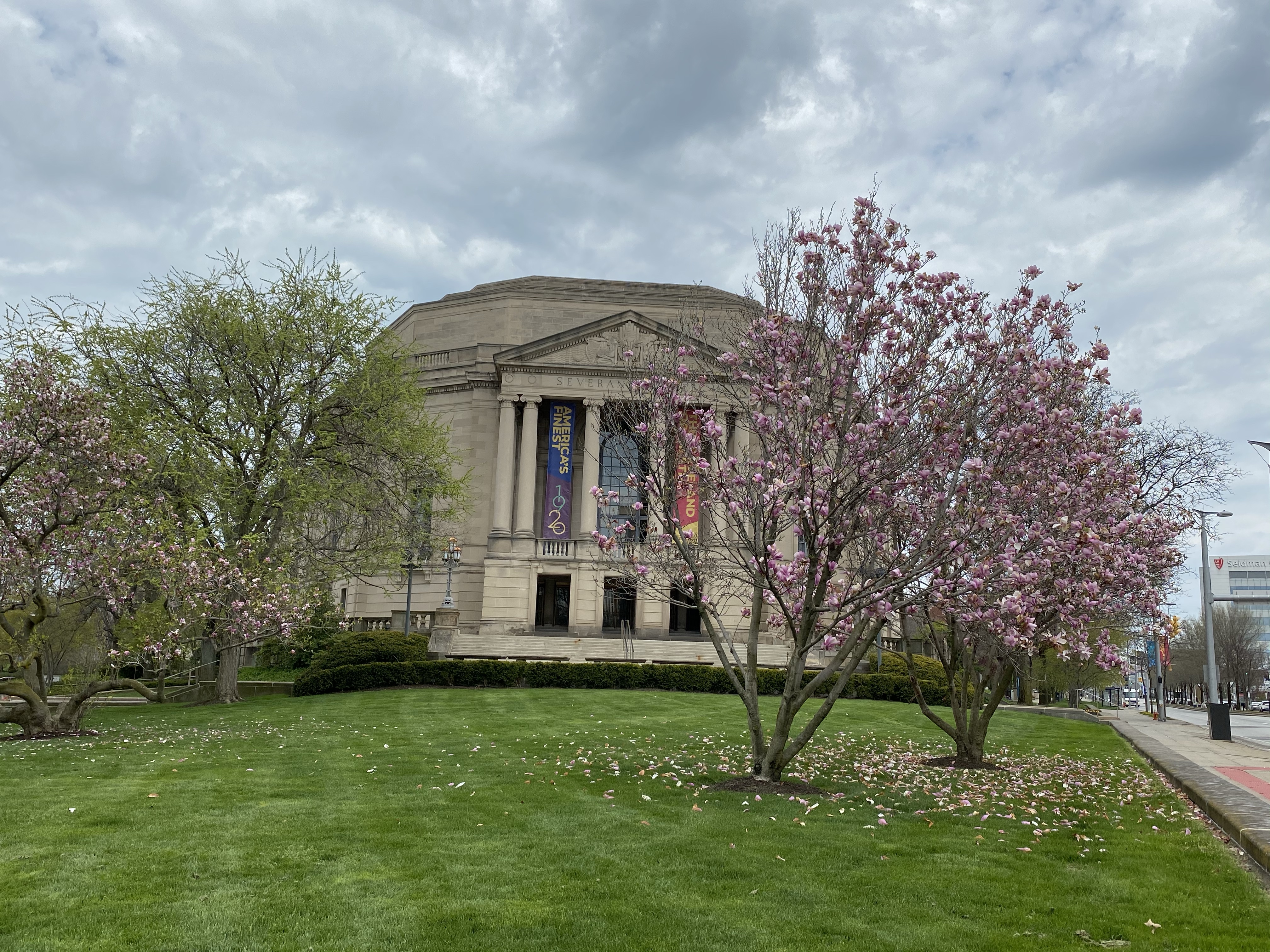
Severance Hall on May 2, 2020 – by which point the music inside had all but stopped
Top 10 classical music performances in Cleveland, 2019-20
Blomstedt’s Bruckner – At 93 years old, Herbert Blomstedt is showing no signs of slowing down, and his reading of Bruckner’s Fifth was simply to die for. Amber brass, arching strings, and the proverbial cathedrals of sound gave one goosebumps for its hour-plus duration.
Uchida plays Schubert – One of my fondest musical memories of living in Chicago is the Sunday afternoon piano recitals at Orchestra Hall. Solo recitals from pianists of stature are comparatively rarer here in Cleveland, but Mitsuko Uchida’s mesmerizing performance of Schubert piano sonatas broke the trend – and certainly whetted one’s appetite for more. I hope that in future seasons piano recitals can become an increasingly integral part of the offerings at Severance Hall.
Mahler 5 – Welser-Möst and Mahler seems to be at least an annual union with this season turning attention towards the Fifth – later performed in New York and Miami. Imposing, powerful, and grippingly intense, it not only showed the orchestra at peak performance, but served as a daunting initiation for newly-appointed principal horn Nathaniel Silberschlag. FWM thoughtfully paired the Mahler with an intriguing work from Olga Neuwirth.
MTT – Exemplifying his dual role as composer and conductor, the first half of Tilson Thomas’ program was devoted to his own very recent composition, the Meditations on Rilke. Something of a Mahler-meets-Copland panoply, the work was as thought-provoking as it was enjoyable, and since the Cleveland performance has been recorded with the San Francisco Symphony. The remainder of the evening gave us a dynamite Symphonie fantastique, one of MTT’s specialities.
Phaeton Piano Trio – The Rocky River Chamber Music Society outdid themselves, providing some of the finest chamber music locally in recent memory with the Phaeton Piano Trio. The German trio gave definitive performances of pillars of the piano trio literature – Beethoven’s Ghost, Mendelssohn’s D minor, and Dvořák’s Dumky – ending with the loveliest of encores in the slow movement of Beethoven’s Op. 11.
Lorenzo Viotti & Yuja Wang – Over the Thanksgiving weekend, Lorenzo Viotti made a very fine TCO debut, filling Severance Hall with delights from the French and Russian repertoires. The incomparable Yuja Wang joined forces for Rachmaninov’s “forgotten” Fourth Piano Concerto.
Babayan/Trifonov – As a gala concert for CIM, two of the most distinguished pianists associated with the Institute teamed up for a duo recital which included both the Rachmaninov suites and an assortment of shorter pieces. An evening of steel-fingered, powerhouse pianism.
Ehnes plays Beethoven – Perhaps the most noteworthy local acknowledgement of Beethoven’s 250th (sestercentennial, apparently), was James Ehnes’ cycle of the composer’s violin sonatas with pianist Andrew Armstrong at the Cleveland Chamber Music Society. Alas, the final of three projected installments was inevitably canceled, but one couldn’t have asked for finer interpreters, culminating in a robust Kreutzer sonata.
Schubert/Prokofiev – TCO’s season opened with a further installment of FWM’s dual exploration of Schubert and Prokofiev. Schubert was represented in the charming Third Symphony, Prokofiev in the complete first act of Romeo and Juliet, the latter a quantity much more representative of the composer’s ambition than the perennial, pedestrian suites.
Lobgesang – The unexpected end to the Cleveland Orchestra season, but on gratifyingly high note with two rarities: Křenek’s Statisch und Ekstatisch and Mendelssohn’s Lobegesang, the latter calling upon the lush resources of the Chorus. A premature farewell, and also, given the repertoire, a preview for the above mentioned festival that never came to be.
Honorable mentions
Apollo’s Fire began its season with a colorful evocation of the rich musical tradition of Venice. The O Jerusalem! program was successfully reprised – and served as essentially the final public performances in town before venues began shuttering.
At the Cleveland Chamber Music Society I deeply enjoyed Till Fellner‘s piano recital of Schubert and Schoenberg. The Dover and Apollon Musagète quartets both made strong impressions, and I hope to see these youthful ensembles become mainstays at CCMS. This also marked the Society’s landmark 70th season: kudos to the industrious archivist who included images of past programs in the emails sent out this season, offering a fascinating glimpse into their distinguished history.
I would be remiss not to mention Jakub Hrůša’s Cleveland Orchestra appearances. This season he was deservedly granted a two-week stint, opening with a program pairing Beethoven and Shostakovich, and concluding with another thoughtful counterpoint in Adams and Mahler.
With all the attention to Beethoven this year, there’s another anniversary of a composer still very much alive to be recognized: George Crumb’s 90th. Students from the New Music Ensemble at the Cleveland Institute of Music gave a stunning performance of his iconic Black Angels (available for viewing here).
Pianist Pierre Réach is familiar to me by way of a noteworthy disc of Alkan (a quantity which includes the namesake of the present blog!). Appearing through Tri-C Presents, he showed himself to be a thoughtful interpreter of Beethoven in a recital comprised of four of the composer’s piano sonatas.
A highlight of Arts Renaissance Tremont has been the Amici Quartet‘s ongoing cycle of the complete Beethoven string quartets. This season’s penultimate installment included the Harp and Op. 18 No. 1.
Notable debuts
Two youthful conductors made TCO and/or Severance Hall debuts this season – both strong showings which should surely earn them an invite back: the aforementioned Lorenzo Viotti, along with Klaus Mäkelä who surfaced as a late substitute for Jaap van Zweden in a program that concluded in a particularly rousing Beethoven 7.
In the meantime…
While live performance remains in limbo, The Cleveland Orchestra in particular has been assiduous about providing alternate avenues, the three of which highlighted below are absolutely essential listening:
A New Century – This 3-CD box set is emblematic of TCO’s adventurous repertoire choices, traversing works by Beethoven, Varèse, Staud, Strauss, Deutsch, and Prokofiev, and preserves many fine concert memories from the past few seasons.
On a Personal Note – A fascinating podcast, comprised of detailed and colorful interviews from Welser-Möst and several orchestra members.
TCO Classics – A treasure trove of live recordings from seasons past, many not aired before, with the selection available rotating the third Thursday of each month.






 quasi-faust