
Marc-André Hamelin, piano
EJ Thomas Hall
Akron, OH
October 21, 2025
Beethoven: Piano Sonata No. 29 in B-flat major, Op. 106, Hammerklavier
Schumann: Waldszenen, Op. 82
Ravel: Gaspard de la nuit
Encore:
Debussy: Reflets dans l’eau (No. 1 from Images, Book 1)
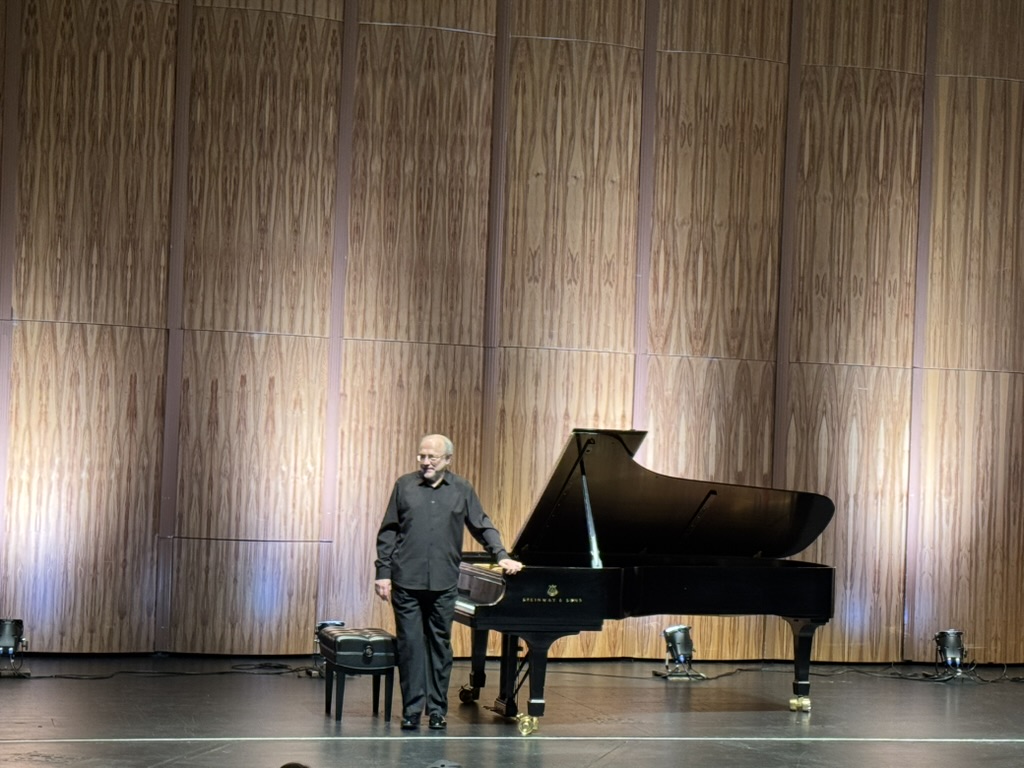
No part of Marc-André Hamelin’s recital at Akron’s Tuesday Musical was for the faint of heart. The repertoire spanned a mammoth Beethoven sonata, the rewarding Romanticism of Schumann, and Ravel at his most mercurial and ferocious. Opening night of Tuesday Musical’s 138th(!) season, Hamelin served as the annual Margaret Baxtresser Pianist, in which capacity he led a masterclass at Kent State the following day. Additionally, the evening performance began with a rippling account of Liszt’s La leggierezza by local high school student Saya Uejima.
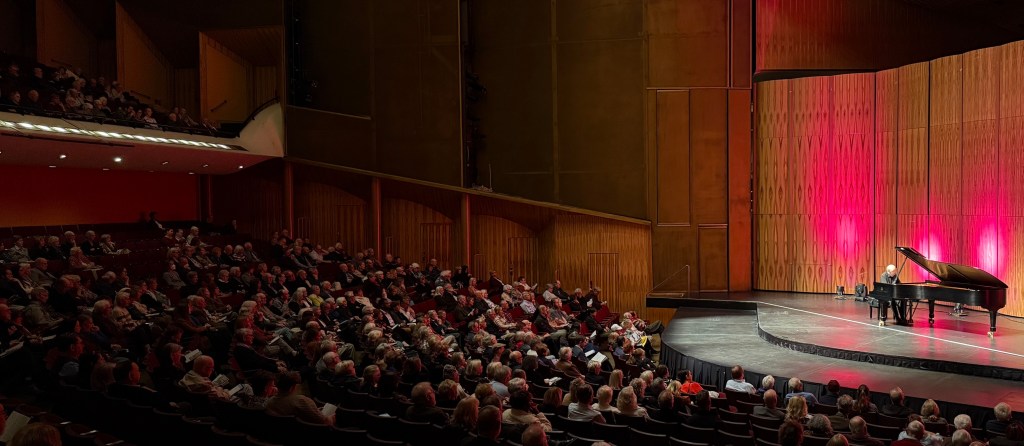
Along with the Diabelli Variations, the Hammerklavier is Beethoven’s largest and most demanding work for solo piano. A granite monument of the piano literature, Hamelin has recently recorded it to acclaim. As if totally unfazed by its technical demands, it comprised merely the first half of Tuesday’s recital. The bold Allegro movement made for a commanding beginning. Hamelin opted to strike the opening bass note with the right hand rather than the left for added power. Textures were crisp and brisk, with deft voicing of its intricacies, balancing the exuberant with more graceful material. The development saw some spiky contrapuntal passages, a preview of sorts for what was to come, before the movement’s blistering, uncompromising coda.
Though short in length, the scherzo that followed was hardly a trifle. Hamelin conjured a tempest, though an impulse towards restraint here kept the otherwise tumultuous writing in check. What followed was the work’s magnificent slow movement. Drawing on deep reserves of emotion, Hamelin sustained a spellbinding atmosphere over its nearly twenty-minute duration. Worlds apart from the robustness of the outer movements, here Hamelin purveyed a velvety touch to striking effect, landing on the profound sequence of chords that closed, beautifully voiced. With meditative, improvisatory beginnings, the massive fugue that concluded the sonata saw Hamelin at his best — a dazzling technique used in service of the music.
Schumann’s Waldszenen (Forest Scenes) made for a genial opening to the second half. Eintritt (Arrival) extended a warm and gracious entry into the forest, played with rippling lyricism. Hunting songs came second and second-to-last in this nine-part suite, in both cases given with vigorous flexibility. I was touched by the delicate nostalgia of Einsame Blumen (Lonely Flowers) and the uber-Romantic lushness of Herberge (Wayside Inn). The closing Abschied (Farewell) bid adieu with the same warmth with which it began.
The evening concluded with another work famous for its extraordinary technical demands in Ravel’s Gaspard de la nuit. Though a mainstay of Hamelin’s recital programs for years, it’s the only work of the present selection he has not yet recorded. The work brings to life in musical terms poems by Aloysious Bertrand, all of which deal with fantastical, rather demonic figures — a seasonally appropriate selection for late October! Ondine positively shimmered in this remarkable soundworld of the titular water nymph, building to an ecstatic climax. Le Gibet was a striking contrast in its funereal stasis ahead of Scarbo, closing with a spattering of iridescent colors and ferocious virtuosity.
Hamelin offered just a single encore in Debussy’s Reflets dans l’eau, which like Ondine, paints a mesmerizingly impressionist aquatic scene. A clip of Hamelin discussing the work can be viewed here.
Two years ago, I saw Hamelin play a very similar program in Cleveland with another massive piano sonata — Charles Ives’ Concord — in place of the Hammerklavier. See review here. Lastly, Hamelin was on hand ahead of his Akron recital for a brief but affable interview with WCLV’s Jacqueline Gerber, available for listening here.
 quasi-faust