
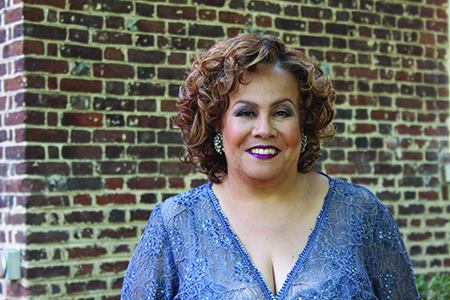
Louise Toppin, soprano
Southern Theatre
Columbus, OH
January 28, 2023
Hu: The Clarity of Hope
Saint-Georges: String Quartet in C minor, Op. 1 No. 4
Lomax: A Prayer for Love
Price: String Quartet No. 2 in A minor
Encore:
Washington: Midnight Child
Chamber Music Columbus’ first program of the new year brought forth the Cleveland-based Cavani String Quartet in an afternoon of diverse string quartets by an equally diverse body of composers – none of whom fit the “dead white male” archetype all too prevalent in classical music, perhaps the vaunted string quartet even more so. The program opened with the next iteration of Ching-chu Hu’s fanfare for the organization’s 75th anniversary, styled here as The Clarity of Hope.

In this guise, one was taken by the intimate warmth of the strings – rather different than the initial casting for brass quintet – and the scoring afforded each member of the quartet a moment in the spotlight. Cavani next turned to the work of the fascinating figure sometimes referred to as the “Black Mozart”: namely, Joseph Bologne, Chevalier de Saint-Georges, born in Guadeloupe a decade before Mozart to a French father and Senegalese mother. The brief C minor quartet had an opening filled with longing of that tragic key (a tonality later favored by both Mozart and Beethoven for their most personal, profound creations), but an elegance at its core as encouraged by Cavani’s detailed reading. The closing Rondeau was a lively foil, in due course arriving at a bright C major.
The next of the 75th anniversary commissions turned toward one of Columbus’ own, the multi-faceted Mark Lomax II. A Prayer for Love intriguingly adds soprano voice to the quartet, singing the text of “A Prayer” by Claude McKay, Jamaican-born poet of the Harlem Renaissance. Searching, richly chromatic harmonies opened, and the work’s rhythmic complexities were astutely articulated by Cavani – surely Lomax’s background as as drummer encouraged his keen attention to rhythm. Louise Toppin’s lyrical soprano soared over the uncertain, often jagged accompaniment, at last giving way to peaceful resolution. In his interview with me, Lomax noted inspiration from Mahler’s blending of voice with orchestra, and the intimacy that creates in the context of a vast symphony. The taut communication here between soprano and strings conveyed, in a similar vein, an inward-looking affinity.
In recent years, a renewed attention has been given to the work of Florence Price – a major talent and essential voice of American music – and Cavani closed the printed program with her substantial String Quartet No. 2, dating from 1935. A wistfulness wandered throughout the opening Moderato, encouraged by the warm resonance of the strings: an eloquent statement, often bracing. Though in the European tradition, the work exuded a distinctly American flavor with stylistic echoes of Dvořák’s “American” quartet, though arguably more authentic.
The richly voiced Andante cantabile served as a calming spiritual, while the third movement Juba was of good-natured charm, brimming with syncopations that invoked ragtime and were played with abandon. The finale was a largely energetic affair, though still lyrical at its core, and led towards a blistering coda. As an encore, the quartet selected a work by Columbus native Charles Washington called Midnight Child, based upon the spiritual “Sometimes I Feel Like a Motherless Child”: freely incorporating jazz elements, it made for a delightful close to the afternoon.
 quasi-faust