
I had a chance to speak with South Korean composer Jaehyuck Choi ahead of the premiere of his clarinet quintet With Winds III, scheduled for Sunday, September 4 – an event which both closes the VIVO Music Festival and kicks off the landmark 75th season of Chamber Music Columbus. Below are some highlights from our fascinating conversation wherein Choi discusses his development as a composer, parallel career in conducting, and a multi-faceted array of influences and inspirations.
[My work] is an interpretation or emotional reaction to painting that crystallizes in the form of sound.
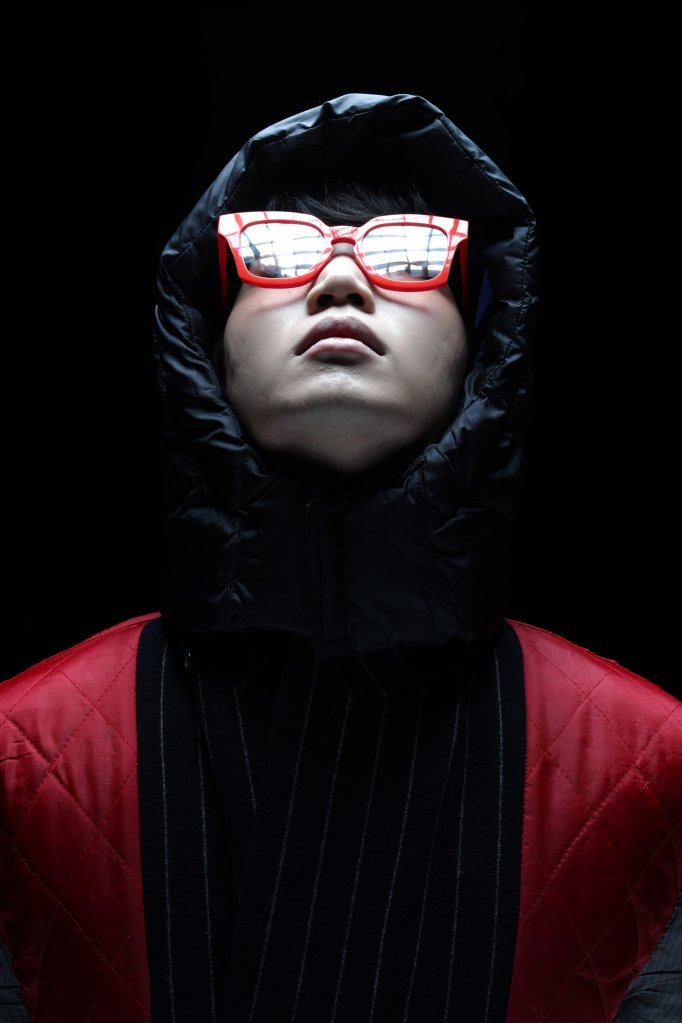
You have the makings of a rising star. Tell us about how you got to where you are today, and some highlights along the way.
My professional career as a composer and as a conductor started off by winning the Composition Prize at the Geneva International Music Competition in 2017. And that gave me opportunities to write for more people and organizations. One big thing right after winning the competition was that the Menuhin Competition asked me to write for them a short violin solo piece, which the finalists of the junior division had to play along with Vivaldi’s Four Seasons. And that was the first sign after winning the competition that things were starting to happen in front of an audience, rather than just at my desk.
I also had to write for the Perigord Noir Festival in France, and then last year, the Parker Quartet and the Banff Music Center in Canada asked me to write a piece for their festival. And also, applying here and there for opportunities in Korea, in the US, or in Europe, had brought me some more prospects. I have an attachment to France, because my previous professor at Juilliard was French. And his ensemble, the Ensemble intercontemporain, has played some of my music with him conducting. So that’s how my music has gotten to know more international audiences. I am currently based in Seoul and in Berlin, where I am continuing composition studies at the Barenboim-Said Akademie.
At what point did you know that you wanted to become a composer? Was there any experience you can point to that made you realize writing music was your calling?
As a kid, I had learned violin for a couple of years. There were many amateur youth orchestras in Seoul, and I joined one of them. Luckily, I played in the first violin section, which meant I got to play the melody part. Especially when it came to Haydn or Mozart, I found the melody charming and pretty, but at the same time, even from a child’s perspective, it was very simply composed, nothing complex. So I thought to myself, maybe I can try writing something like this, it doesn’t look so hard. And that’s how I encountered in the world of composing, as a game to catch up to Mozart’s prettiness. It was nothing serious, just a fun game to myself. And actually, now too, it is still fun – and that’s how it’s kept going.
What do you find inspires you when you’re writing a new piece?
The ideas I get now are usually from visual art works. So paintings or sculptures, or even movies, video clips, dance, and so on. But mostly painting and sculpture. I find it fun to imagine when looking at a painting what kind of sound that painting would be hiding behind the canvas. And, obviously, imagining that process is my interpretation of the painting. And so it is not a transcription of a painting into sound, but rather, an interpretation or emotional reaction to the painting that crystallizes in the form of sound.
I think the meaning of beauty changes all the time.
I’m really fascinated by these connections between sight and sound. Can you talk more about how you translate your interpretation of an artwork into music?
A couple years ago, I wrote a piece called Dust of Light for ensemble. It was to be played in Paris with the Ensemble intercontemporain. Back then I was living in New York, and I occasionally went up to MoMA or the Guggenheim. At MoMA, I found a painting by Marcos Grigorian. And the canvas had not oil nor acrylic, but dirt, all dried up. So it has some cracks, it has some textures. Not the prettiest form of art, but evocative, and it brought out some of my inner emotions. The kinds of emotions that words cannot describe, I could feel something like that from the painting and the textures. So I considered both the textures and my emotional reaction from the painting: does a particular texture suggest a more crunchy sound in music, or does it bring a more fluffy sound, because of the emotion that covers up the texture of the painting? So I searched for sound by looking at the painting. I took a picture of it, came back home, and kept looking at it imagining what could be behind the painting.
These days I am combining my two musical languages which come from the paintings of Grigorian as well as Ufan Lee. I consider Grigorian a maximalist not in the sense of many materials on the canvas at the same time, but how textures are neatly or roughly placed by intention, and it is very dense. On the other hand, Lee’s painting has a lot of spaces on the canvas, spaces composed by the artist. It comes from thin air, and it evaporates back into thin air. The mixture of these two aesthetics is what I’m trying to achieve, without combining them like oil and water, but merging them together to make one piece out of it.
I have an upcoming project which is a collaboration between composers and fashion designers. We’re going to be participating in the Milan Fashion Week, making clothes and music at the same time. The designer is sending me samples; based upon the textures I think about what music it sounds like. I compose a little bit and send it back to her, and she needles more.
For people hearing your music for the first time, what is something you want them to know about it?
Beauty – but not in the sense of the traditional meaning of beauty. I think the meaning of beauty changes all the time. For me, the beauty is not how it looks or how it sounds. But if a look or sound can move you – negative or positive – I find that beautiful, because that means the listener is affected.
Which composers would you cite as your greatest musical influences?
Many, but Beethoven, of course, comes number one. His imagination, his ideas, but above all, his compositional technique. Anyone can have an idea, but you need a technique to formalize it and make it a reality, and I think Beethoven had the best technique out of all. But I also pick Morton Feldman, some my aesthetic ideas came from him. Along with Feldman, Beat Furrer is a big influence, as is Salvatore Sciarrino. Sciarrino can be seen as an extension of Feldman in the way the emotion – not the texture, not the music itself, but how audiences perceive it — has a very similar effect.
Hearing [my] music live and having it alive in the air gives me a very deep, rewarding feeling.
Which of your compositions are you most proud of and/or feel represent you best?
Dust of Light represents different sides of my voice very well. Self in Mind (especially #1 and #3) might be easier than other things to attach to – it’s a series for solo instruments (I just finished #5), much like Luciano Berio’s Sequenzas. Both works are very different in the character of sound: Dust of Light is more active, and Self in Mind is loose and meditative.
Self-portrait was a series composed during my Juilliard undergrad years. The first was inspired again by a painting – a work of Picasso that showed two images of the same person. But the two figures looked different, even though they were the same person: the ideal image of how one looks at one’s self, and the reality image. I composed the piece for two cellos, imitating each other or betraying each other, or playing music which seemed completely different, but came from same root composition underneath. I wanted to capture what Picasso had painted on the canvas. But as the series grew, I got freer from that idea, and I just tried to put all my imagination in the music with no restrictions. Because once you’re in school, you are faced with a lot of restrictions and limitations. But in this work, I could escape from that.
You also maintain a parallel career as a conductor. How does conducting inform your work as a composer and vice versa?
It helps both ways. Composers are greedy – they want to achieve everything just by saying the minimal words on the paper, and they expect the performers to achieve it and to know how they imagined it. But coming from a conductor’s perspective, it is more practical, and from a performance point of view. Does that really explain what I’m going to do? Or is that not enough? A composer has to know how to control all the situations in order to achieve what he or she had imagined and get it across to the audience. Many practical questions come from the conductor’s point of view.
On the other hand, conductors coming from a composer’s point of view can guess a little bit better about the composer’s intentions. When you look at Stravinsky’s Petrushka or Rite of Spring, he has multiple revisions, which I think came from the conductor’s point of view. If you look at the first version, it sounds the same as the last version, but what he changed is just purely the notation of the score – how it looks and how comfortable it is to play. So I think we have a little bit of an advantage having two minds at the same time.
When I was an undergrad at Juilliard, I founded ensemble blank with fellow Korean students. It now has 35 members so it’s grown quite a bit. One interesting project we did a couple years ago was a series of programs based upon the theme what if Beethoven had had lived now? Starting from that idea, I came up with programs and music that may be what Beethoven would have written had he lived in this century. And we also programmed the Große Fuge, Beethoven’s most contemporary work – which some audience members felt sounded even newer than Stockhausen!
Thinking long term, what do you aim to accomplish as a composer and conductor?
I want to split my time 50/50 between composing and conducting. Composing is somewhat more difficult than conducting because it is very lonely work at your desk. But after all the work, hearing the music live and having it alive in the air, gives me a very deep, rewarding feeling, and it is just so fun to make music with an orchestra. You could say I’m simply addicted to both parts of music making!
Key Works:
Dust of Light
Self in Mind
Self-portrait
 quasi-faust
Pingback: VIVO closes festival in style with French repertoire, Choi premiere – quasi-faust