
Cleveland Orchestra
Franz Welser-Möst, conductor
Severance Hall
Cleveland, OH
October 5, 2017
Mahler: Symphony No. 6 in A minor, Tragic
The Cleveland Orchestra is pulling all the stops in opening their centennial season, with this week’s attention turned toward a monumental Mahler score in addition to Saturday night’s gala. Before the music began, Thursday’s performance saw the annual presentation of the Distinguished Service Award, this year given to Chair of the Board of Trustees Dennis W. LaBarre. Following that moment of celebration, Welser-Möst and the orchestra embarked on a journey through darkness with Mahler’s Sixth Symphony, unique amongst the composer’s symphonic corpus in that it ends in unresolved tragedy.
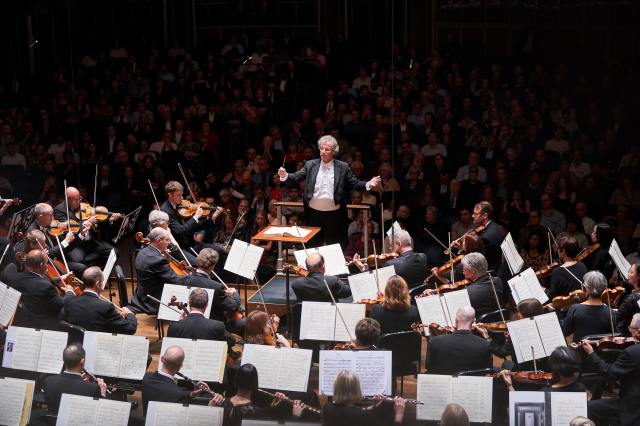
There has long been contention regarding the ordering of the two inner movements. The critical edition places the scherzo ahead of the Andante, while Mahler changed his mind during rehearsals and opted to conduct the Andante first. Welser-Möst honored Mahler’s decision, not just with regards to the Sixth’s chronology, but in terms of tempo as well – as he remarked in the program notes, its 1906 premiere with the composer conducting spanned 77 minutes, and Thursday’s performance clocked in at that on the dot. The Andante is in the distant key of E flat major, a tritone apart from the A minor of the other movements, and indeed, it occupied a peaceful world far removed from the surrounding tumult. One was struck by the genial warmth of the clarinets, and in due course, gleaming solos in the cor anglais and horn.
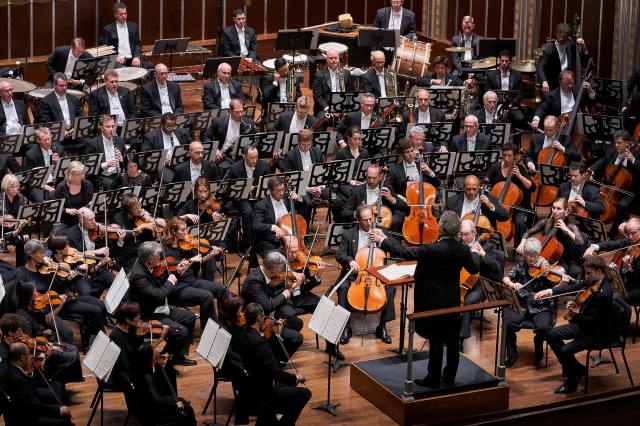
The march theme from the first movement returned in the scherzo, this time mutated into the grotesque and exhibiting a manic energy. The percussion added a particular grimness, while the pair of trios provided some lighter moments, if only relatively speaking. Afendi Yusuf’s solo clarinet passages were filled with rhythmic swagger though perhaps a notch too loud, and answered by the uneasiness of the col legno strings. Otherworldly sounds in the celesta opened the finale, thus beginning the plunge into infinite darkness. A stentorian brass chorale of enormous power, again embodying the decay from major to minor, initiated the movement’s epic, monumental fight, albeit one that would ultimately end in futility. Moments with the apparent potential of victory were quickly snuffed out by the two crashing hammer blows, the second with even more finitude than the first, signifying the point of no return. Some tender moments in the oboe from Frank Rosenwein suggested the possibility of respite, but overtaken as if with inevitability by the hollow emptiness of the conclusion, an unmitigated tragedy after which Welser-Möst held the audience spellbound in reverential silence.
 quasi-faust
Pingback: The Cleveland Orchestra’s 100th season: Top 10 Performances – quasi-faust