Vocal and visual spectacle in Lyric Opera’s Les Troyens

Lyric Opera of Chicago
Civic Opera House
Chicago, IL
December 3, 2016

Berlioz: Les Troyens

Christine Goerke, Cassandra
Susan Graham, Dido
Brandon Jovanovich, Aeneas
Okka von der Damerau, Anna
Lucas Meachem, Chorebus
Christian Van Horn, Narbal

Sir Andrew Davis, conductor
Chicago Lyric Opera Orchestra
Tim Albery, director
Tobias Hoheisel, set designer

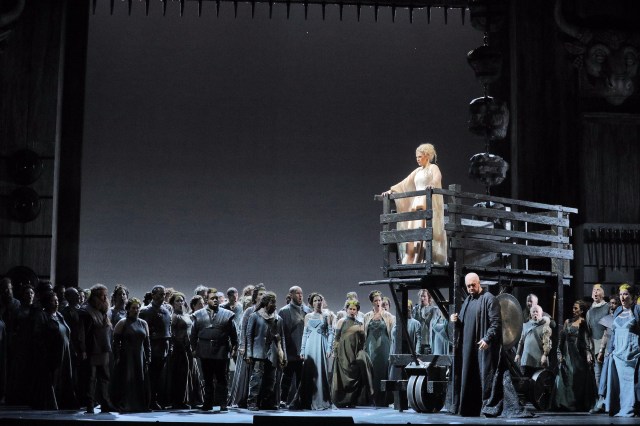
With works on the scale of La damnation de Faust and Roméo et Juliette to his credit, one would certainly expect an opera from Berlioz to be of the grandest proportions.  Les Troyens certainly does not disappoint on that front, and Lyric Opera of Chicago’s first traversal of this epic – lasting nearly five hours – was a major achievement.  Scored for a large cast, massive choir, sumptuous orchestra, and corps de ballet, this lavish production directed by Tim Albery and designed by Tobias Hoheisel was given a run of just five performances as it was no doubt a costly investment for Lyric.

A
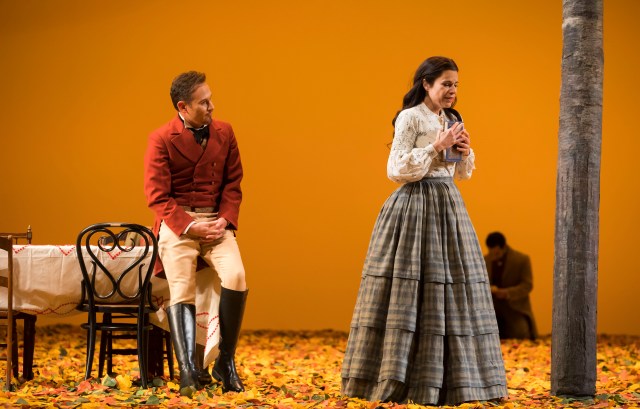
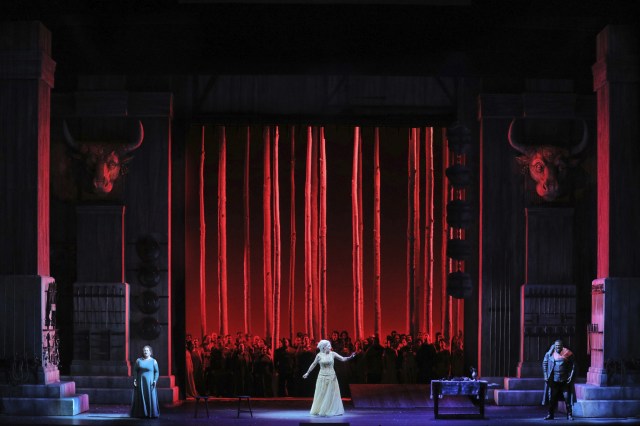
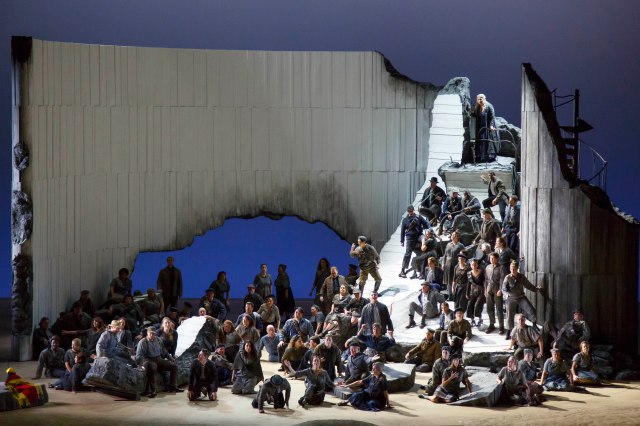
Lyric Opera’s Les Troyens, photo credit Todd Rosenberg

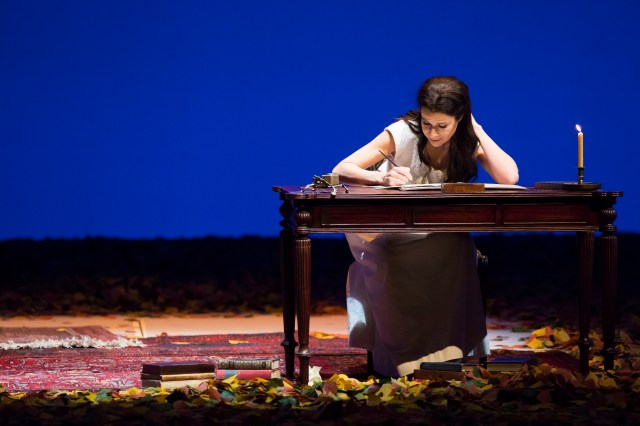
Berlioz had something of an obsession with Virgil’s Aeneid on which the opera is based, and accordingly provided his own libretto, notable for its directness.  The opera is conceived in five acts, further divided into two parts (The Taking of Troy and The Trojans at Carthage respectively).  The central image on stage through the duration was of a mighty wall, crumbling and dilapidated in Troy, opulent and shining in Carthage, yet in a continuing arc it was the same wall, suggesting the cyclical rise and fall of human civilization.  On that note, one was struck by the suggestion of the Trojan refugees crossing the Mediterranean in flight of their destroyed city, evocative of the plight of the Syrian refugees in today’s no less tumultuous political climate.

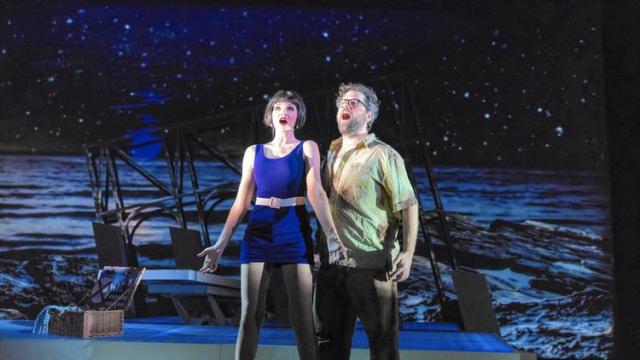
The latter part begins at the third act, and it was here the wall was rebuilt, brilliantly shrouded in pearly white light, allowing for a striking visual effect of shadows on the wall.  Act IV was a highpoint with its tender moments in an otherwise bloody drama.  The corps de ballet beautifully portrayed nymphs and satyrs, and Mingjie Lei’s dulcet tones depicted the poet Iopas, accompanied by the harp and oboe.  The act built up to the soaring duet between Dido and Aeneas (“Nuit d’ivresse”), the otherworldly atmosphere further enhanced by celestial images of the stars and planets.  In the last act, Susan Graham’s Dido was impassioned and heartwrenching in her final, desperate cries, and the opera ended with the word “ROMA” projected on the wall suggesting her parting vision of Carthage being destroyed by Rome.

A
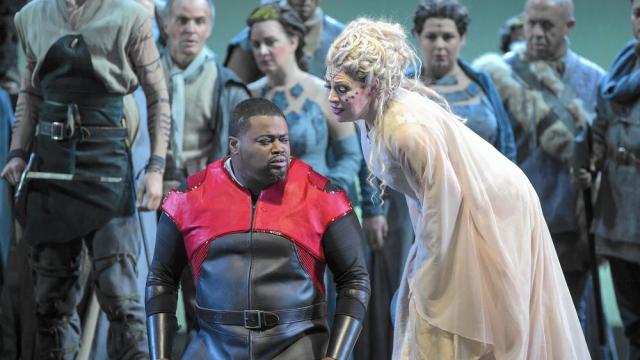
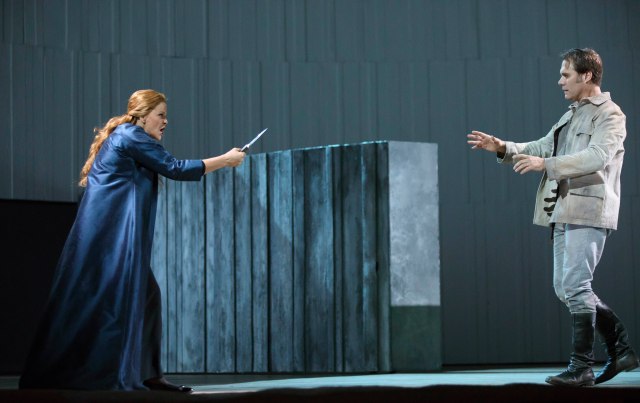
Susan Graham (Dido) and Brandon Jovanovich (Aeneas), photo credit Todd Rosenberg

Dido was originally to be sung by Sophie Koch who withdrew for personal reasons, and fortunately for local audiences a seasoned a Dido as Graham was on hand to take her place, and she provided a bounty of beautiful singing.  Brandon Jovanovich’s Aeneas was imposing and authoritative, amply filling the dimensions of this substantial role.  Also worthy of note was Christine Goerke as Cassandra, the daughter of Priam (king of Troy), appearing only in the first part to haplessly warn of city’s impending destruction.  The chorus and orchestra, led by Michael Black and Sir Andrew Davis respectively, were major forces to be reckoned with, serving effectively as dramatic characters in their own right – unwieldy as the work may be, all the moving parts came together in tight control.

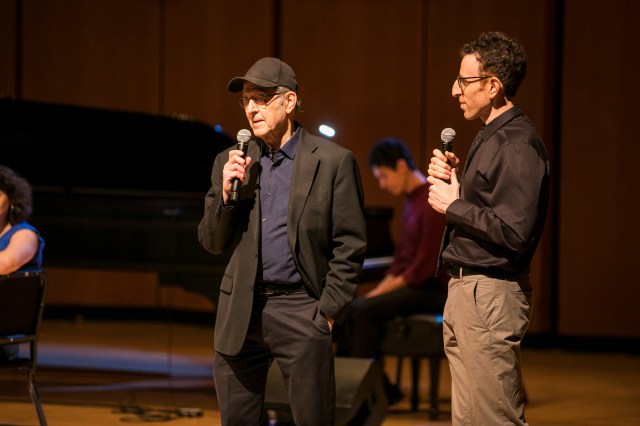
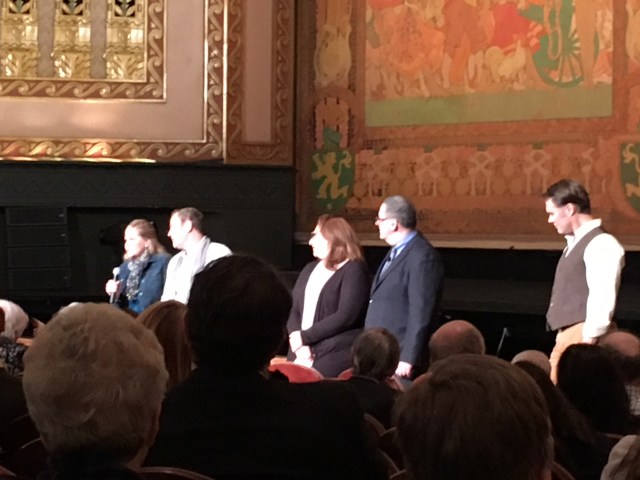
Following the curtain, there was a Q&A session moderated by general director Anthony Freud with Brandon Jovanovich, Susan Graham, Christine Goerke, and Lucas Meachem – thanks are in order to them for providing a fascinating perspective on the heels of what was surely a physically exhausting performance.

img_3493
Post-opera Q&A, L-R: Susan Graham, Lucas Meachem, Christine Goerke, Anthony Freud, Brandon Jovanovich

Van Zweden, Trifonov, and the Cleveland Orchestra find fresh inspiration in Mozart and Beethoven

Cleveland Orchestra
Jaap van Zweden, conductor
Daniil Trifonov, piano
Severance Hall
Cleveland, OH
November 27, 2016

Britten: Sinfonia da Requiem, Op. 20
Mozart: Piano Concerto No. 23 in A major, K488
Beethoven: Symphony No. 5 in C minor, Op. 67

Over the Thanksgiving weekend, the Cleveland Orchestra presented a sumptuous program anchored by seminal works of Mozart and Beethoven.  After being heralded earlier this year as the New York Philharmonic’s music director-designate, all eyes have been on Jaap van Zweden.  The program played on his strengths, and even the most familiar of repertoire sounded dynamic and anew under his probing guidance.

Antwerp_JvZ1-263x200.jpg
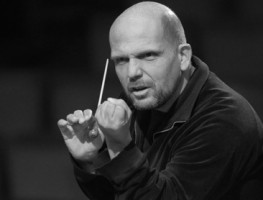
Jaap van Zweden, photo credit Bert Hulselmans

The afternoon began in somewhat less familiar territory with Britten’s Sinfonia da Requiem, a work the orchestra has not performed since the 1970s.  A triptych of succinct, interconnected movements, it encapsulates the composer’s pacifist leanings and is an important precursor to the watershed War Requiem.  The opening Lacrymosa began quite strikingly in the timpani and piano, keyboardist Joela Jones providing an unrelenting, anxious ostinato.  The oboe passages of principal Frank Rosenwein were strained and pained in a texture that built to surging brass climaxes in its ethos of despair.

Nervous flutes opened the Dies irae but the heart of the piece was in the concluding Requiem aeternam.  While in lesser hands it can sound like a plodding passacaglia, under van Zweden’s baton it was peaceful and plaintive, building to an arching lyricism in serene resolution, worlds apart from the austerity of the opening.

Mozart’s Piano Concerto No. 23 brought forth the remarkable young pianist Daniil Trifonov, who has an important connection to the city having studied at the Cleveland Institute of Music.  The concerto opened in the airy textures of the strings, with a gesture as gentle as an exhale, and it was with that naturalness the music flowed.  Trifonov’s entrance was unassuming and graceful, and he emphasized the work’s lyrical beauty and dramatic contrasts as per his propensity to the Romantic repertoire, though never in excess.  The cadenza was fleet and deftly balanced, displaying Trifonov’s astonishing dexterity.

7714
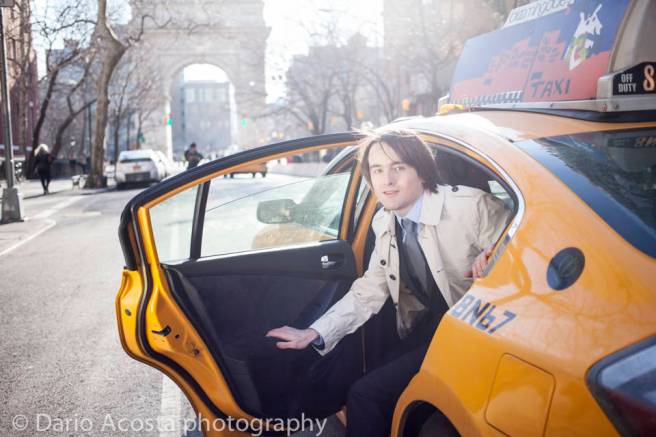
Daniil Trifonov

Cast in the relative key of F sharp minor, the slow movement was filled with longing, and the winds were almost decadent in the splendor of their singing lines.  Trifonov would often glance heavenward as if seeking some divine inspiration, fitting for music this sublime.  The sprightly rondo finale is inherently familiar to many Clevelanders, in its frequent appearances as theme music on WCLV.  Although there were shades of darkness in its minor key episodes, the overall mood was of pure joie de vivre.

Perhaps the greatest interpretative challenge of Beethoven’s Fifth Symphony is making one of the most popular pieces in the literature sound anything but trite and clichéd.  Van Zweden proved amply up to the challenge as was apparent right from the crispness of the arresting opening, in a first movement that was lean and taut.  Its violent contrasts were emphasized, keeping the audience on the edge of their seats as it seemingly could devolve into wild abandon at any moment, yet matters were always tightly controlled.

The slow movement began with some especially lovely tones in the cellos, and the interplay between the martial and lyrical themes was cleanly delineated.  I was especially struck by the clarity of the third movement’s fugato section, the contrapuntal lines weaving in and out of the strings.  The finale was an exuberant and joyous affair, and the noteworthy addition of the trombone and the piccolo heightened its sense of drama to bring the concert to a rousing close.

Simon Rattle and the Berlin Philharmonic: in Mahler’s wake

Berliner Philharmoniker
Sir Simon Rattle, conductor
Hill Auditorium
Ann Arbor, MI
November 13, 2016

Schoenberg: Fünf Orchesterstücke, Op. 16
Webern: Sechs Stücke für Orchester, Op. 6b
Berg: Drei Orchesterstücke, Op. 6
Brahms: Symphony No. 2 in D major, Op. 73

Sunday afternoon’s concert picked up right where Saturday’s left off, with the first half comprised of the sets of orchestral pieces of Schoenberg and his disciples Webern and Berg.  These three composers were faced with the not insubstantial question of what one could possibly write in the wake of Mahler, and while it erred dangerously close to an overdose of the Second Viennese School, programming all three sets gave the listener an intriguing look at the direction Mahler might have gone had he lived a few more years.  Rattle elected to perform them without pause between, and in his spoken introduction invited the audience to conceive of it as “a 14 movement suite” or “Mahler’s eleventh symphony.”

Each of the 14 pieces are relatively brief, as if a shard of broken Romanticism, distilled to its essential meaning.  Schoenberg’s Five Pieces were given with an intensity that rivaled that of James Levine’s performance I saw in Chicago just the previous week.  The repeated figure in the celesta made the titular reminiscences of Vergangenes all the more unnerving, and Farben was a shimmering exposé in orchestral color.  A calmer moment in Peripetie was given by principal flutist Mathieu Dufour, a familiar face to this listener as he previously held that position with the Chicago Symphony.

Webern’s Six Pieces were presented in the revised 1928 version, scored for a somewhat slimmer orchestra.  Surprising lyricism was to be found in the otherwise terse and aphoristic opening selection while the third was characterized by a viola solo.  The fourth was the most extended, with rumbling percussion building to a massive, unrelenting crescendo, contrasted by the clarinet passagework of principal Wenzel Fuchs.

Berg’s Three Pieces were the most patently Mahlerian.  The opening Präludium, while otherwise impressionistic, began and ended with the percussion evoking a military band, a familiar device from a Mahler symphony.  Daishin Kashimoto assumed concertmaster duties for the Sunday performance and was prominent in Reigen, obliquely suggesting the waltz and the ländler as obfuscated through the distorted lens of expressionism.  The ferocious Marsch was firmly in the realm of the grotesque, ending with a cataclysmic hammer blow, suggesting Mahler’s Sixth Symphony of which Berg was a staunch admirer.

More familiar territory – and a welcome relief – came after intermission with Brahms’ genial Second Symphony.  While Brahms is often thought of as a dean of conservatism, this was another clever programming choice as an article from Schoenberg’s pen once provocatively christened Brahms a progressive.  It began unassumingly with a gentle dip in the cellos, unhurried and basking in its pastoral beauty.  Rattle eschewed the repeat of the exposition, instead opting for a tauter structure.  The lushness of the low strings opened the slow movement, and music of gorgeous serenity poured from the orchestra.  The winds were in top form during the scherzo, contrasted by the quicksilver energy of the strings which set the stage for the exultant finale, leaving Sunday’s audience uplifted in its celestial radiance.

Mahler in Michigan: Rattle and the Berliners thrill in Ann Arbor

Berliner Philharmoniker
Sir Simon Rattle, conductor
Hill Auditorium
Ann Arbor, MI
November 12, 2016

Boulez: Éclat
Mahler: Symphony No. 7 in E minor

Last weekend saw the illustrious Berlin Philharmonic in Ann Arbor during a residency that included a pair of performances at Hill Auditorium as well as instrumental masterclasses with University of Michigan music students (I caught the session with principal flute Emmanuel Pahud).  The stop in Ann Arbor was part of an extensive US tour, expected to be the orchestra’s last with its celebrated music director Sir Simon Rattle before he leaves Berlin for London and passes the baton to Kirill Petrenko.  Both concerts were filmed by CBS’ 60 Minutes for a forthcoming segment on Rattle.

Berlin Philharmonic 1 by Sebastian Haenel.jpg
Berliner Philharmoniker, photo credit Sebastian Haenel

Saturday evening’s program began with a tribute to the late Pierre Boulez, the extraordinary visionary the world lost at the beginning of the year.  Boulez had a long and fruitful relationship with the Berliners, and it was a testament to their mutual admiration that the orchestra took one of his compositions on the road, despite his often abstruse language having the potential to alienate many audience members.  I certainly do not claim to have a thorough grasp of Boulez’s idiom, but nonetheless found the performance to be an altogether engaging aural experience and striking experiment in orchestral color.

Éclat dates from 1965 and is scored for a modest ensemble of fifteen instruments.  It is concerned with a dialogue between instruments with a resonance that abruptly fades (notably, piano, mandolin, guitar, and cimbalom), and the strings and winds, which can be sustained indefinitely.  The work opened with aggressive and virtuosic playing from pianist Majella Stockhausena before the latter category of instruments added their voice.  Rattle’s conducting was razor sharp, giving every phrase a sense of purpose regardless of how disconcerting it might sound to the ear to make the piece coalesce into more than just a collection of the fragments suggested by the title.  Yet by the same token, one was also struck at the interpretative latitude Rattle gave the musicians within the overarching structure to promote a lively conversation.

The bulk of the program was devoted to Mahler’s Seventh Symphony, itself an evening’s worth of music in its own right.  Easily the most enigmatic of Mahler’s symphonic corpus, it served as perhaps another tip of the hat to Boulez who had a revelatory and unashamedly modernist conception of the piece, as documented in his recording with the Cleveland Orchestra.  Rattle’s interpretation sought middle ground between Boulezian modernism and the hyper-Romantic reading of a Bernstein, for instance.  Impressively, Rattle conducted the entire score from memory, and his overall tempo choices were moderate with a total performance time clocking in just below the 80 minute mark.

Mahler famously said that a symphony should encompass the world; in the Seventh, the vast first movement alone embodies that scope.  Its opening was arresting in the richness of the tenor horn cast over an unsettling accompaniment, the rhythm of the latter purportedly inspired by the oars of a boat dipping into the water.  Contrast was to be found in the soaring melodies of the strings – with the violins split on either side of Rattle – in music of aching lyricism.  Most striking was the pastoral idyll at the movement’s midpoint, a beckoning to the providential vision of the Austrian countryside.  The level of intensity was ramped up for the coda in a thrilling conclusion.

The first of the two movements labelled Nachtmusik opened with a yearning horn call from principal Stefan Dohr before a lilting waltz in the cellos.  Distant cowbells were heard offstage, this wistful alpine dream serving as respite from the fractured psyche of fin de siècle Vienna.  The middle movement of the large-scale symmetrical architecture was a ghostly retreat to the shadows, notable for the orchestra’s mercurial playing.  In the latter Nachtmusik, there was delicate and refined playing from concertmaster Noah Bendix-Balgley, and the texture was made all the more sumptuous by harpist Marie-Pierre Langlamet.  The mandolin and guitar aren’t instruments that regularly appear in the standard orchestral literature, so it was a case of clever and certainly efficient programming that they were featured in both the evening’s works, with Detlef Tewes and Matthew Hunter respectively.  The pair were in fine form and gave the movement the feel of a lovely serenade.

The finale has perennially perplexed audiences, its seemingly unbridled optimism circumventing the enigmas confounded by the preceding.  Rattle seemed utterly convinced that this wasn’t music to be taken at face value and probed beneath the surface, emphasizing its parody and irony.  The thunderous timpani awakened matters from the night, and the sunrise first appeared in the shining brass.  Its obvious homage to Wagner’s courtly Meistersinger was tempered through a more rustic sensibility, the type of garish juxtaposition Rattle was keen to accentuate.  With a propulsive forward drive, the movement proceeded to a well-earned, glorious conclusion, the capacity crowd (no small feat given that the concert coincided with the Michigan vs. Iowa game!) responding with a tumultuous ovation.

simon-rattle-4-by-stephan-rabold
Sir Simon Rattle, photo credit Stephan Rabold